Q: Our homeowners association has decided to boot vehicles instead of having them towed for various violations. Our community has single car garages and a space in front of the garage for the second car. Could the association and tow company be at risk for a lawsuit if both cars are out of service in case of an emergency, the booted one and the one trapped in the garage? — Eric
A: Your community association can tow or boot your car if the association’s rules allow it.
That said, your community and their towing vendor must follow those rules.
Also, depending on where you live, laws or ordinances may hold the towing company, and your association, liable if the tow or immobilization was done improperly and causes you harm.
Your situation is more complicated because booting the vehicle in the driveway will also immobilize the properly parked vehicle in the garage.
In the hypothetical scenario where both vehicles are immobilized due to the homeowners association’s decision to boot vehicles instead of towing them, the association and the tow company would be at risk for a lawsuit if their decision led to damages or injuries for several reasons.
First, the rules under which community associations operate emphasize the protections of the residents’ rights, while not unduly impairing the ability of the association to carry out their responsibilities to the community as a whole.
This means that your association must carry out its duty to ensure proper parking in a way that does not infringe on the rights and safety of its residents.
While booting a car may be an appropriate remedy to curb parking violations, booting a car that also immobilizes other non-offending vehicles is inappropriate.
Your association could also be liable for negligence if booting the car created the foreseeable risk of immobilizing your “non-offending” car in the event of an emergency.
In other words, your community might have the right to take “remedial” action to remedy your parking violation, but if they overstep and take “punitive” action to punish you by immobilizing both cars, and you are damaged as a result, they could be liable for causing that unnecessary or negligent harm to you.
In this scenario, it may make more sense for your community to tow the offending car so that the car in the garage does not get blocked in.
Civil Code Section 5551 requires a visual inspection of “exterior elevated elements” (“EEE’s”) by January 1, 2025. That deadline has expired, leaving a liability risk for unaware or otherwise noncompliant HOAs.
The statute arose from 2019’s Senate Bill 326, sparked by the collapse of a dry rotted balcony which in 2015 killed six people in Berkeley. Apartment landlords are subject to a similar Health and Safety Code statute from SB 721, enacted in 2018.
Section 5551 applies to HOAs with buildings consisting of at least three attached units (so duplex-type condominiums are excluded), and only to areas which are the HOA’s responsibility to maintain or repair. “EEE’s” are defined as wood-supported elements over six feet above ground level which include walking surfaces and which extend out from the exterior walls of the building. So, in addition to balcony decks, wood-supported stairs and wood bridges connecting buildings could also be EEE’s.
HOAs must every nine years obtain visual inspections of “EEE’s” by either a licensed civil engineer, structural engineer, or architect. The inspection can be purely visual, so dismantling of building locations is not required. Inspectors will prepare a written report, and if an immediate threat to safety is discovered the inspector must notify both the HOA and the local building code enforcement authority.
Some HOAs where the only EEE’s are balconies are amending their CC&Rs to reallocate balcony responsibility to individual homeowners. Other HOAs are hiring inspectors to comply with Section 5551. Still other HOAs are pursuing a more comprehensive inspection of the buildings and are making widespread repairs. However, unfortunately, many HOAs are violating Section 5551 despite four years’ advance notice.
There is a persistent and completely false rumor that the Legislature passed a one-year postponement of Section 5551’s deadline to 2026. What is true is that the SB 721 (not SB 326) deadline was extended by 2024’s AB 2579, which amended only the Health and Safety Code regarding apartments. AB 2579 excluded HOAs – subpart “(n)” of that bill says “This section shall not apply to a common interest development, as defined in Section 4100 of the Civil Code” (Section 4100 is part of the Davis-Stirling Act). HOAs still are under Civil Section 5551 and its January 1, 2025 deadline.
Noncompliance is very dangerous, because the statute essentially creates a standard of care. What if, after failing to obtain the inspection required by Section 5551, an HOA has a failure of an EEE that might have been caught by that inspection? What if someone is injured in that failure? Could the HOA and its board be liable for negligence, or even reckless behavior?
Some HOAs may seek to excuse their lack of compliance by invoking financial hardship. However, just as with the rest of the Davis-Stirling Common Interest Development Act, the HOA’s inability to pay is not an excuse from Section 5551’s inspection requirements.
HOAs delaying compliance with Section 5551 are gambling. Is the risk of loss of insurance coverage, loss of immunity, punitive damages, and the risk of possibly avoidable injury to residents a gamble your HOA is willing to take?
Condominium buyers and their Realtors® are starting to demand a copy of the EEE inspection report as a condition of the purchase – expect that to become more widespread.
Does the stakeholder approach to business still matter in a climate dominated by raw, power-play decision-making?
Stakeholder proponents like Darden School of Business Professor Ed Freeman say the answer is yes, even as corporate executives pull back on commitments to workers and political leaders today enact massive changes that will deeply affect employees and other stakeholders.
“The opportunity for businesses to step up is huge,” Freeman said.
New research suggests that is exactly what people want.
A recent survey gauging what people expect from corporate America ranked ethical leadership as the No. 2 expectation people have for business. That result was up from the No. 7 spot last year.
Similarly, respondents listed the expectation that corporations “communicate transparently” rose to the No. 4 rank this year, from No. 12 the previous survey.
The No. 1 result: People expect and want fair, living wages.
The annual Americans’ Views on Business Survey, conducted by JUST Capital, is intended to identify what the public expects from business, what issues matter most, and where there are opportunities for business leadership.
JUST Capital was co-founded in 2014 by a group from business, finance and civil society who “believed that business and markets can and must be a greater force for good.” The founding members include investor Paul Tudor Jones II, who earned an economics degree from the University of Virginia.
Freeman, who collaborates regularly with JUST Capital, said this year’s survey results are not surprising, as they fit with a pattern of public sentiment for ethical, fair behavior toward employees and other stakeholders such as suppliers, communities and investors.
“If you ask American people what they want about their business, they want them to essentially create value for their stakeholders. That’s the short form of what this survey says,” Freeman said. “They place fair wages, dealing with customers in the right way, and ethics, at the top of the list. This isn’t some weird idea. It’s what people expect.”
Stakeholder capitalism is defined broadly as an approach to business in which a company or organization considers how its actions will affect all stakeholder groups, rather than fulfilling a responsibility only to shareholders. The approach urges consideration of employees, customers, suppliers, the community and the environment – as well as shareholders.
“The opportunity for businesses to step up is huge.”
ED FREEMAN, DARDEN PROFESSOR
Stakeholder capitalism or stakeholder theory have long been core to Darden’s curriculum and School values. Freeman, who has taught stakeholder theory and ethics at Darden since 1987, is credited with articulating the original stakeholder tenets in a business context in his 1984 book “Strategic Management: A Stakeholder Approach.”
JUST Capital said the latest survey results mirror sentiments expressed by voters in the November 2024 election cycle: “Americans are concerned about their economic well-being, about how they are treated as consumers, about being able to support their families. And they appear distrustful of institutions as they repeatedly call for increased transparency, corporate accountability and leadership.”
For Freeman, the results bolster Darden’s commitment to teaching responsible leadership, while giving corporate and government leaders more reason to think about how their decisions affect others.
“When the effects are not good, you’re partially responsible for that,” he said. “Stakeholders are responsible too, but you’re partially responsible for the effects of your actions. That’s just ethics 101.”
The survey’s top 10 issues that members of the public identify for business:
Pays a fair, living wage
Acts ethically at the leadership level
Supports worker wellbeing
Communicates transparently
Provides benefits and work-life balance
Supports workforce advancement and training
Treats customers fairly
Offers fair pricing
Creates jobs in the U.S.
Protects customer privacy
About the University of Virginia Darden School of Business
The University of Virginia Darden School of Business prepares responsible global leaders through unparalleled transformational learning experiences. Darden’s graduate degree programs (MBA, MSBA and Ph.D.) and Executive Education & Lifelong Learning programs offered by the Darden School Foundation set the stage for a lifetime of career advancement and impact. Darden’s top-ranked faculty, renowned for teaching excellence, inspires and shapes modern business leadership worldwide through research, thought leadership and business publishing. Darden has Grounds in Charlottesville, Virginia, and the Washington, D.C., area and a global community that includes 18,000 alumni in 90 countries. Darden was established in 1955 at the University of Virginia, a top public university founded by Thomas Jefferson in 1819 in Charlottesville, Virginia.
By CAMICB Director of Credential Services, Madeline Hay, CAE
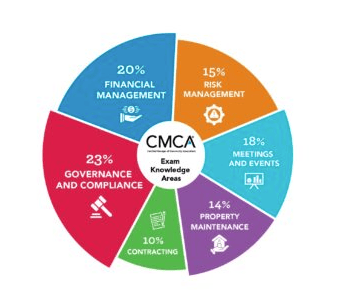
Significant updates to the Certified Manager of Community Associations (CMCA®) exam went into effect on Dec. 9. These changes stem from CAMICB’s 2021-2022 job analysis study that assessed the key tasks and knowledge areas required of community managers to ensure the exam content aligns with current professional standards.
Exam Changes
The updated content outline condenses the eight current exam domains into six broader categories, offering a more streamlined approach to understanding and preparing for the exam.
One notable shift is the increased emphasis on the meetings and events domain, which will now represent 18% of the exam, up from 10%. This change underscores the importance of event planning, board meetings, and elections, which are essential aspects of a community manager’s role.
Three closely related content areas — budgets, reserves, investments, and assessments; financial controls; and risk management and insurance — merged into the broader domains of financial management and risk management. While reorganized for clarity, the weight of these topics remains essentially unchanged and maintains the focus on financial stability and risk mitigation.
The emphasis on property maintenance increased to mirror the growing importance of preserving property values and preventive maintenance. Meanwhile, governance and compliance remain the largest domain at 23%, reflecting the ongoing importance of legal accountability, rule enforcement, and transparency.
Notably, the human resources domain, which previously accounted for 6% of the exam, was eliminated. This reflects the evolving scope of early-career managers’ responsibilities as HR tasks are increasingly managed by specialized staff or external providers.
Preparing for the Updated Exam
Candidates should review the updated content outline at camicb.org as well as the updated CMCA study guide.
These changes allow candidates to align their skills with the latest industry developments. As the profession grows in complexity, the CMCA remains a hallmark of excellence and ensures credential holders are prepared to meet future challenges. With this updated exam, CAMICB reaffirms its commitment to maintaining the highest standards in community association management.
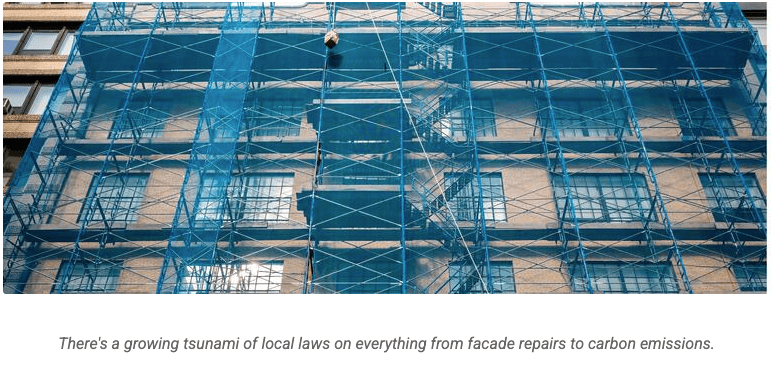
Compliance with local laws is a crucial part of every co-op and condo board’s duty to maintain building safety and avoid costly fines and penalties. But with the tsunami of city regulations, rules and inspections constantly pouring in, it can be challenging to stay on top of it all. The good news: competent management companies are rising to the challenge.
As regulations proliferate at a dizzying rate, many property management companies now have staff dedicated exclusively to compliance, notifying them of deadlines and existing violations for the co-ops and condos in their portfolios. The job is so demanding that management companies often rely on sophisticated software and the help of third-party compliance companies that monitor violations, send alerts and help with corrective actions.
“Compliance has blown up to such a herculean task that no one manager can handle it for their buildings,” says Dennis DePaola, chief legal officer at Orsid New York. “Boards can sleep better knowing that there’s a team supporting them.”
Think of management and compliance companies as being on opposite ends of a pipeline that moves data from one system to another. Compliance companies extract a trove of public data from city and regulatory agencies — from the Department of Buildings to the FDNY to the Department of Sanitation — including local laws, inspections and filing deadlines, open violations, and building histories. They then digitally transfer this data to their management company clients.
Because there is so much information, many management companies have created their own programs that distill the data into a more digestible format. The seven-member compliance team at FirstService Residential, for example, relies on the compliance platform SiteCompli as a first step.
“It collects all the data and puts it into a nice, neat web portal for us,” says Stephanie Cardello, the firm’s head of compliance. “Then we adapt it into Excel spreadsheets and Smartsheets, and from that we manipulate the data to create a digital dashboard.”
Managing agents and property managers log in to their dashboards, which are broken up visually into categories, allowing them to see at a glance where their buildings stand on everything from parking garage inspections to facade repairs. Each manager can access their properties, Cardello adds, “and easily toggle through the dashboard for each of their addresses.”
Orsid New York, which works with the compliance firm Jack Jaffa & Associates, has also developed its own user-friendly interface. Orsid’s four-member in-house compliance team boils down Jack Jaffa’s granular weekly and monthly reports, which bore deep down into such details as the status of each boiler in a building.
“The reports can be as long as 80 pages, but the information isn’t tailored to what management needs to know, so we compress it to one page,” says Nita Durakovic, Orsid’s compliance manager. There’s a box for each local law, whether it’s Facade Inspection & Safety Program repairs, parapet or elevator inspections, or carbon emissions. “Each box is color coded,” she adds. “If it’s in red, the work or inspections are due within the year. Yellow means it’s due within the next two to three years. If it’s green, you’re in good standing.”
It’s a lot of data and a lot of work — and an added expense — but in the end it’s worth it. If a management company uses a third-party compliance-monitoring solution, there is often an additional charge your co-op or condo will have to pay. This charge is typically listed in the management contract as a flat fee. But it beats the alternative of paying off a mushrooming pile of fines.
“Having a compliance team has really helped us cut down on violations,” says Keith Werny, president of FirstService’s City Line Property Management Division. “It’s not 100%, but it’s very close.”
The flurry of Executive Orders—and the way it has dominated the news cycle—has made it more challenging to determine the true impact to your business. But it still has to be done.
Within days of the Presidential Inauguration, the U.S. saw a flurry of leadership and policy shifts. While not entirely unanticipated, the range, volume and reach of Executive Orders has dominated conversation.
Whether personally supporting or opposing the directives, executives must sort through them all, understand their specific and broader implications, and take action.
News outlets, social media, experts and individuals—everyone is eager to comment on, react to and make sense of the changes coming at them rapid-fire. Staff inside and outside government must evaluate what they’re doing and how they are working. Further, several orders directly impact individuals, likely including staff or customers.
Talking with executives across a wide range of industries in both for-profit and not-for-profit environments, I noted an interesting question:
Do the policy shifts signal a disruption to your business or are they a distraction?
Both distraction and disruption make it harder to get work done and can impede progress toward objectives. Nevertheless, they are different, an important distinction that matters for how you take strategy forward. A change in trade policy, such as revised tariffs or new restrictions on foreign partnerships, can either be a distraction or a disruption depending on the industry. A multinational retailer sourcing products from overseas may see a disruption that affects pricing, profitability and competitive positioning, while a professional services firm focused on domestic clients might experience only a minor distraction as it navigates industry discourse but sees little direct impact. For CEOs, distinguishing between these levels of impact helps determine whether to adjust strategy or simply manage the internal noise created by external shifts.
Understand the nature of the onslaught
The best way to determine course of action is to take a beat to assess the scope and impact of the changes more deeply and specifically.
• Distraction: Usually transient, temporary, with limited or specific impact. Nevertheless, without deliberate attention, they tend to compound over time as anxiety spreads. Water cooler or Slack conversations no longer advance the work and relationships; instead, they simply consume time. Progress stalls. Or sometimes, what may feel like a non sequitur may in fact be a new or unexpected opportunity.
What is the real work here?
How will you guide your team to quiet the noise and focus on value delivered?
• Disruption: Fundamentally changes the business context. Like a distraction, this adds to anxiety, particularly when the disruption creates new uncertainty. Abrupt, dramatic disruption can provoke a crisis mentality that may or may not be helpful.
What part of your business is most vulnerable in this situation?
How deep or broad is the impact?
And your customers: How might you help them address their vulnerabilities?
There is value in seeing the situation differently, prompted by answering these questions. Further, visibility is key to making your strategy work. Whether the company is facing rapid change, a crisis or the cacophony that each often produces, it’s difficult for CEOs to have a clear line of sight about what’s going on.
Taking a breath and discerning the difference between distraction and disruption will help with clarity. From there, leaders can identify the actions required and the urgency of their response. And of course, they should monitor both the efficacy of their response and the evolution of the situation.
How you show up as a leader matters
Whether distracting or disruptive, sweeping change—like that potentially precipitated by the recent Executive Orders—affects real people. Customers. Staff. Stakeholders. Partners. Board members. What impacts them also affects your business context. It doesn’t matter whether you support or oppose a particular change, or even whether or not you like it. It is very likely that your organization includes people holding both views. But how you show up as a leader matters.
Executives cannot remain on the sidelines
Consider taking these three actions:
• Be the calm in the storm. As CEO, you and your executive team set the tone for the organization. Your words, actions and decisions reflect values and commitment to their people. Use constructive language and guide others to understand and accept the range of emotions, viewpoints and ideas present within your teams.
• Nurture trust and build new relationships. Involve unexpected or previously unlikely parties. Focus on common outcomes and what each contributes to their achievement. Together, you may find a new path forward.
• Engage the board. The executives I advise routinely rely on the varied experiences and perspectives of their board members. While this is always a valuable way in which boards contribute, it has even greater potential for positive impact during a crisis, (as I wrote for Corporate Board Memberhere.) Like the Farmers’ Insurance tagline, they “know a few things because they’ve seen a few things.” Why not tap that experience?
Distraction or disruption: it matters for strategy. And executives cannot remain on the sidelines. Discern the nature of the changes mandated by the Executive Orders—or whatever shift you face—and take action. Above all, ignore the situation’s human impact at your peril, both personally and for your business.
Many co-op and condo boards are beginning to grasp that the best way to reduce their buildings’ carbon emissions and bring them in compliance with Local Law 97 is to abandon fossil fuels and install electric-powered building systems. But that shift, predicated on the transition toward a green electric grid, has just hit a three-word speed bump.
President Donald Trump.
In the first days of his second term in office, Trump has moved aggressively to reverse the transition toward a green electric grid in favor of increased reliance on oil, coal and natural gas. In his first week in office, Trump signed executive orders that would make it easier and cheaper for companies to produce oil and gas and for the government to stop clean energy projects that have been approved, The New York Timesreports. Trump signed another executive order that suspends new federal offshore wind leasing and scrutinizes existing leases to possibly change or cancel those deals. That second order is particularly concerning to the companies that are developing extensive wind farms off the south shore of Long Island, Crain’sreports.
While Trump’s executive orders may be blocked by the courts, they have upended the calculus of many co-op and condo boards that have made major investments to electrify their building systems. The orders, based on Trump’s claim that the nation is facing an energy emergency, have also alarmed proponents of a transition to clean energy.
“Congress passed landmark infrastructure and climate investments, and now President Trump is attempting to illegally withhold that money from American businesses, communities, and workers,” says Rep. Frank Pallone, Democrat of New Jersey.
Furthermore, by any measure the nation is not facing an energy emergency. The United States is the world’s largest producer of oil and natural gas, and the price of oil, about $76 per barrel, is roughly the same as the average cost over the past 20 years, adjusted for inflation. The cost of gasoline, about $3.13 per gallon, has dropped about 3% over the past 12 months.
“The phrase ‘energy emergency’ is an excuse to put in place initiatives that are hostile to the energy transition that is already taking place, to stop the progress that has been made in producing solar and wind power, electric vehicles, batteries, and renewable power,” says Robert Stavins, director of the Harvard University Environmental Economics Program.
The oil and gas industry donated more than $75 million to Trump’s presidential campaign and Trump, in turn, promised to shred environmental regulations to lower their costs and increase their profit margins. One executive order defined the phrase “energy resources” as “crude oil, natural gas, lease condensates, natural gas liquids, refined petroleum products, uranium, coal, biofuels, geothermal heat, the kinetic movement of flowing water, and critical minerals.”
There was no mention of solar panels, wind turbines or battery storage, which are three of the fastest-growing sources of electric capacity in the United States — and three alternatives to fossil fuels that are increasingly appealing to co-op and condo boards.
Even before Trump moved back into the Oval Office and began firing off executive orders, New York State was struggling to meet the goals of its Climate Leadership and Community Protection Act, which the state Legislature passed in 2019. The law directs New York to draw 70% of its electricity from renewable sources by 2030 and to rely entirely on renewables by 2050.
Chris Wright, a fracking executive who is Mr. Trump’s choice to lead the U.S. Energy Department, summed up the position of many Republicans. “There is no climate crisis,” according to Wright, “and we’re not in the midst of an energy transition, either.”
Oh? Last year, for the first time in U.S. history, solar panels and wind turbines produced more electricity than coal-fired plants.
Jotform CEO Aytekin Tank highlights an AI-powered pathway towards more productive and more creative teams
KEY TAKEAWAYS
The question is no longer whether you adopt AI — it’s how smartly you integrate it into your business processes.
Today’s AI tools can be used to radically transform meetings for the better.
In the brainstorming arena, AI tools can help your team generate a larger, richer idea pool.
Throughout time, technology has empowered humans to boost their productivity. The wheel, likely invented around 3500 BCE, began as a potter’s tool but soon revolutionized transportation. With rudimentary wheelbarrows, people could haul crops more efficiently, freeing time for other activities — like inventing the earliest writing systems. Today’s tech is light years more sophisticated, but the idea is the same: less input, more output.
AI is the latest disruptive technology sending ripples across industries. Just as the wheel transformed transportation and agriculture, AI is reimagining the way teams work — and AI is becoming more accessible every day. The Economist recently estimated that 80% of organizations in the U.S. and China already rely on AI daily. For companies, the question is no longer whether you adopt AI — it’s how smartly you integrate it into your business processes.
Throughout time, technology has empowered humans to boost their productivity. The wheel, likely invented around 3500 BCE, began as a potter’s tool but soon revolutionized transportation. With rudimentary wheelbarrows, people could haul crops more efficiently, freeing time for other activities — like inventing the earliest writing systems. Today’s tech is light years more sophisticated, but the idea is the same: less input, more output.
AI is the latest disruptive technology sending ripples across industries. Just as the wheel transformed transportation and agriculture, AI is reimagining the way teams work — and AI is becoming more accessible every day. The Economist recently estimated that 80% of organizations in the U.S. and China already rely on AI daily. For companies, the question is no longer whether you adopt AI — it’s how smartly you integrate it into your business proc
Research shows that AI tools like ChatGPT facilitate faster, better teamwork — 12.2% more tasks completed; 25.1% faster task completion; and 40% higher quality work. At Jotform, we aim to leverage AI to help our teams reallocate their energy to more meaningful collaboration, not just more busywork — to accomplish more tasks that move the needle, rather than just ticking items off a to-do list for the sake of staying busy.
Here are five ways AI can help teams work smarter, collaborate better, and achieve more together.
#1 High impact meetings
Essential for collaboration but potentially hazardous time vacuums, meetings can be a double-edged sword. It’s tricky to pinpoint exactly how much time we spend in meetings, but research suggests that knowledge workers are inundated with them. That’s why we have an explicit policy of scheduling only essential meetings. If another format can accomplish the same goal — whether it’s a phone call or asynchronous communication — we choose that. When we do have meetings, we use AI to maximize utility and efficiency.
Today’s tools go well beyond AI-powered note-taking apps (although we use those, too). AI tools can also coordinate schedules, recommend prime meeting times (based on participants’ typical energy levels), and generate meeting summaries, action items, and roles and responsibilities to be distributed to participants. Copilot on Teams summarizes key discussion points. For its part, Zoom’s “AI companion” can help late arrivals easily get up to speed. It’s clear that teamwork platforms understand the needs of today’s most successful teams and are offering a growing range of AI capabilities to meet and exceed those expectations.
By letting AI handle administrative tasks, from the routine to the redundant, team members can fully focus on the substance of the meeting itself. That’s when we come up with our best, most innovative ideas.
#2 More balanced participation
As CEO for nearly two decades, I’ve grown accustomed to leading our all-hands meetings, sometimes with hundreds of participants spanning 6 continents. But having always been on the more introverted side of the spectrum, I can still recall past roles when speaking up during meetings was not my biggest strength.
As much as they enhance collaboration, meetings have the unfortunate effect of prioritizing the communications of more outspoken participants. This not only puts introverts at a disadvantage (despite recent research suggesting introverts often make better leaders), but it also worsens the quality of your discussions. Simply put, in order to take advantage of the potential creative and intellectual synergy of multiple minds coming together, all voices must be heard. AI tools can help level the playing field.
AI-powered tools like Read AI analyze various aspects of meeting participants’ behavior, like engagement and sentiment.
AI-powered tools like Read AI analyze various aspects of meeting participants’ behavior, like engagement and sentiment, and then can provide feedback on cultivating more balanced and engaged participation. With metrics like speaking time, the tool can offer insight into who contributes the most and who may need more gentle encouragement to share their perspective. If I, as a leader, realize that I’m dominating the discourse, I might make a point to listen more and speak less during the next meeting. These AI tools help foster a diversity of opinions and ensure meetings are both inclusive and productive.
#3 Seamless project management
I remember the days of keeping track of group projects on bulky whiteboards — a hasty eraser swipe could leave the team in a panic. Nowadays, team projects have largely moved to the cloud, where they’re less vulnerable to whiteboard erasers. AI-powered features have only enhanced team project management, automating routine tasks and protecting team members’ peace of mind — no need to worry about essential items slipping through the cracks.
Platforms like Asana and monday.com can enhance productivity by automating administrative items like assigning due dates and sending reminders, and providing insights on project progress. Asana can offer rolling deadline suggestions based on project timelines. For its part, monday.com can analyze workload patterns to make recommendations on how to automate team workflows.
One of the benefits of AI-powered task management is seamlessly keeping everyone aligned and moving toward the same goal. For example, if an AI task management assistant detects that a project is falling behind, it can automatically reallocate resources or adjust timelines to prevent delays. Utilizing these features is like adding an AI member to your team, to manage all of the essential, less visible parts of project execution with minimal human input.
#4 Sharpened creativity
When we think about AI in the context of teamwork, we tend to focus on the administrative benefits. But it can also facilitate more creative thinking, unlocking the key to innovation.
Wharton professor Christian Terwiesch, who pitted humans against ChatGPT to see which group could come up with better product ideas (spoiler alert: AI generated better ideas and faster), put it best: using AI to generate ideas is a no-brainer. Terwiesch explained, “Worst case is you reject all of the ideas and run with your own. But our research speaks strongly to the fact that your idea pool will get better.”
When brainstorming, AI tools can help your team generate a larger, richer idea pool.
When brainstorming, AI tools like ChatGPT can help your team generate a larger, richer idea pool. Then, they can choose the best idea and have a strong jumping off point. When creating content — be it a blog post, a newsletter, or an engaging social media caption — enlisting ChatGPT’s help can ensure your team doesn’t waste any time getting started. With the right prompt, an LLM can churn out a first draft, leaving your team with more time to fine-tune the details.
In short: there’s no reason not to use AI to supercharge your creativity.
#5 Recruiting top talent
Finally, when building your dream teams, AI can be a powerful asset in the recruiting process, making it more, rather than less, human. Studies have shown that recruiters can save up to 40% of their time by outsourcing routine, repetitive tasks to AI — like searching resumes for keywords or generating compelling job descriptions. Then, hiring teams can spend more time in the actual interviews with candidates, getting to know them and feeling out whether they’re a great fit for the team and the company culture.
Hiring is one of the tasks that I never fully delegate — to humans or AI tools. I like to meet our potential hires and understand their motivations; what they hope to bring to the team, what they hope to achieve, and how that aligns with our business’s needs. I’ve learned certain qualities are impossible to communicate in a resume or a questionnaire, which is why face-to-face conversations (even through a screen) are essential during recruitment. AI tools give me and my team the ability to fully show up for those conversations, and build stronger teams for our company.
We had the privilege of gleaning many insights from Cathleen Dunn, CMCA, AMS, LSM, PCAM, into this particular topic. She is the community association manager for A Pocono Country Place, a 4,500 self-contained, private residential community located in the Pocono Mountains, in Monroe County, Pennsylvania and is a member of the CAMICB Board of Commissioners.
Managing vendors is a critical component of a community association manager’s role and is essential for maintaining the physical condition, financial health, and overall satisfaction of a homeowners association, which in turn reflects the professionalism and competence of the community association manager. Properly managing and overseeing vendors ensures quality of services, cost management, legal and contractual compliance, residence satisfaction and supports efficiency and problem resolution.
“In the ever-evolving landscape of community association management, the role of reliable and vetted vendors in homeowners associations (HOAs) cannot be overstated,” said Cathleen Dunn, CMCA, AMS, LSM, PCAM. “From maintenance and landscaping to public safety and technology services, vendors are pivotal in ensuring the smooth operation and enhancement of our communities. Further, the importance of thoroughly vetting and implementing the best vendors is both a strategic necessity and a fiduciary responsibility that falls to the community association manager.”
Quality of Services Has A Lasting Impact
When essential services such as landscaping, maintenance, security, and repairs are not carried out properly, the effects can have a lasting impact. Ensuring that these vendors perform their tasks effectively and to a high standard is crucial for maintaining the community’s appearance, safety, and functionality. Poor vendor performance can lead to dissatisfaction among homeowners and potentially costly repairs in the future. Said Dunn, “Vendors responsible for maintenance, repairs, or landscaping must deliver work that meets high standards to maintain the appeal and functionality of the association. Subpar performance can lead to dissatisfaction, decreased property values, an increase in complaints, with members feeling they are not getting their money’s worth.”
Legal and Contractual Compliance Matters
Vendors operate under contracts that define the scope of work, payment terms, and performance expectations. Community association managers must oversee these contracts to ensure vendors meet their obligations. This includes handling disputes, ensuring compliance with local laws and regulations, and protecting the association from potential legal issues. “Choosing vendors with a proven track record and proper certifications minimizes the risk of legal issues, accidents, or compliance violations,” said Dunn. “The reputation of your homeowners association is influenced by the vendors you employ. High-quality vendors contribute positively to the community’s image.”
Efficiency, Problem Resolution And Risk Management
Vendors must be well-managed to ensure they are responsive to the community’s needs. Whether it’s addressing an emergency repair or completing routine maintenance, community association managers coordinate with vendors to resolve issues quickly and efficiently, minimizing disruption to residents. Further, poorly managed vendors can pose risks to the association, such as safety hazards, liability issues, or financial losses. By carefully selecting, monitoring, and managing vendors, community association managers help mitigate these risks and ensure the community operates smoothly and safely.
Ensuring Resident Satisfaction
The services provided by vendors directly impact the quality of life for residents. For example, well-maintained common areas, timely snow removal, and responsive repair services all contribute to a positive living environment. Effective vendor management ensures these services meet residents’ expectations, which helps maintain high levels of resident satisfaction as well as property values.
Cathleen Dunn’s Tips For Properly and Thoroughly Vetting Vendors
Always establish comprehensive criteria for evaluating potential vendors. This should include not only cost but also experience, references, reputation, compliance with industry standards, financial stability, and licenses (if appliable). A well-defined set of criteria ensures that all vendors are assessed on a level playing field and helps in making informed decisions.
Solicit detailed proposals and quotes from multiple vendors. This not only provides a clearer picture of the costs involved but also offers insight into the vendors’ understanding of your needs and their approach to fulfilling them. You can then compare them – apples to apples – on a spreadsheet.
Craft clear, comprehensive contracts that outline the scope of work, performance expectations, deadlines, and payment terms. Include clauses for accountability, dispute resolution, impact fees, and termination conditions. A well-drafted contract protects both the association and the vendor, ensuring mutual understanding and agreement.
Engaging with unreliable or underperforming vendors can result in hidden costs, such as the need for frequent repairs, and additional oversight expenses. Conversely, high-quality vendors, while sometimes more expensive, often provide long-term savings through durability, efficiency, and fewer complications. A thorough vetting process helps to identify vendors who offer the best value and fit for your association’s budget.
Once a vendor is engaged, establish a system for monitoring their performance and documenting satisfaction or dissatisfaction. Open communication and addressing issues promptly will ensure a high level of standard is maintained.
While vendor management can be a challenging part of the job for a community association manager, when done correctly and effectively it’s a mutually-beneficial relationship with material results for all parties involved – the vendors, community association manager, and residents who reside in these condominiums, housing cooperatives, resort communities, and commercial tenant associations.
In the community association management industry, the selection and management of vendors are integral to operational success and community member satisfaction. By implementing a rigorous vetting process and engaging with high-quality vendors, the community association manager can ensure that their communities receive the best possible service, manage risks effectively, and uphold the association’s reputation.
Added, Dunn “As industry leaders, it is our responsibility to prioritize vendor excellence and to continuously strive for improvement in all aspects of community association management and oversight.”
Resource Corner
Making use of the wide variety of professional development resources available to managers is critical to staying on top of industry news, trends, best practices and any changes arising in the profession. Below is a sampling of industry resources.
CAI’s Research Library – a CAI members-only library that contains over 3,000 articles on community and homeowner association, and condominium and cooperative issues https://www.caionline.org/LearningCenter/ResLib/Pages/default.aspx#k=vendor%20management. For example a search for “vendor management” retrieves an article that ran in Community Manager entitled Playing Matchmaker by Shirley Haskew, CMCA, AMS with a helpful preview that states the following: Matching up vendors with the various communities in your portfolio can be a little like playing Cupid: “Five-member board seeks caring, reliable landscaping company for long-term relationship.” While some managers recommend using the same vendor to do similar work at multiple communities, sometimes at discounted prices, I’ve received the best results when I was able to match communities with complementary vendors.
and VendorSmart, https://vendorsmart.com/vs/#/public/home. Note: some of these companies provide free blogs with relevant articles that offer tips on a wide variety of topics from preparing your HOA for Spring, to determining the best time to explore snow removal vendors.
CAI Exchange – An online forum that allows members to collaborate and connect with colleagues. These informal discussions are extremely helpful in sharing innovative approaches to common and uncommon situations as well as best practices and advice. Additionally, this forum is often helpful when managers need a quick question answered: For example, this recent question was answered within hours of its posting: Q: “We hired a painter. We didn’t know he was going to use a sub-contractor(s) painter. Should we ask for lien waivers from the sub-contractor(s)?” A: “Yes, always get a lien waiver from both the contractor and subs before you make your (final) payment.”
Proper Vendor Management – A Strategic Necessity is the fifth in a series of articles, produced by CAMICB staff, that delve into the important issues and topics affecting community association managers.
Lydia Pelliccia is a freelance writer.Matthew Green is executive director of Community Associations Managers International Certification Board.
For the last couple years, access to homeowners insurance has been a problem.
Many carriers have left the state for various reasons, such as huge payouts from natural disasters and the regulatory climate. It’s made purchasing a home even more difficult, and now we are seeing existing homeowners having their insurance carriers deny them for renewal. There is much debate happening in Sacramento on the best way to address these issues. Still, the recent wildfire events in Southern California are not going to help the situation. For some insurance carriers, it could be the last straw, forcing them to pull out of the state.
So, what can you do to ensure adequate coverage for your home in the event of a catastrophe?
First off, now is a good time to reach out to your insurance professional and review your policy. I reached out to one of the most knowledgeable insurance professionals that I know for this column, Michelle Lin, insurance broker for Red Wave Insurance Services.
Lin recommends you let your insurance agent know about all the upgrades you have done. Many firms use the Marshall & Swift system to determine rebuild value. However, if you expect them to replace a luxury kitchen or custom bathroom, they need to know about those remodels.
It’s also not a bad idea to consult with a local contractor on typical rebuilding costs in the area. The rebuilding cost of your home is not the same as the market value of your home. Many times, homeowners forget to let their insurance agents know about renovations done on the property, which leads them to be underinsured. Some updates could even lead to better premiums — such as newer roofs.
Another policy detail you want to keep an eye on is the “loss of use” portion of your policy, which can cover some living costs when your residence is uninhabitable. It covers temporary housing, such as a hotel or apartment, moving costs, extra food and restaurant bills, storage units, etc. This coverage doesn’t pay for your mortgage, as you are still obligated to your lender to keep making your payments.
Lin also recommends meeting with your insurance agent annually to review your coverage. Keep the receipts of all your high-value purchases and store them on a cloud server. Lay out all your valuable jewelry and take a photo. Lin offers to take a room-by-room video for her clients, because when disaster hits it is easy to forget what to claim.
If you own a condo or townhouse, you have an additional step. You need to review your covenant, condition and restriction, also known as CC&R, to know what your homeowners association is responsible for. In addition, take proactive steps like trimming overhanging trees and removing debris next to the home. Main insurance carriers are now using satellite imaging to determine the risk factor of insuring properties.
San José Spotlight columnist Neil Collins is CEO of the Santa Clara County Association of Realtors, a trade association representing more than 6,000 real estate professionals in Santa Clara County and surrounding areas. Contact Neil at neil@sccaor.com.