
HABITAT Magazine
Many co-op and condo boards are beginning to grasp that the best way to reduce their buildings’ carbon emissions and bring them in compliance with Local Law 97 is to abandon fossil fuels and install electric-powered building systems. But that shift, predicated on the transition toward a green electric grid, has just hit a three-word speed bump.
President Donald Trump.
In the first days of his second term in office, Trump has moved aggressively to reverse the transition toward a green electric grid in favor of increased reliance on oil, coal and natural gas. In his first week in office, Trump signed executive orders that would make it easier and cheaper for companies to produce oil and gas and for the government to stop clean energy projects that have been approved, The New York Times reports. Trump signed another executive order that suspends new federal offshore wind leasing and scrutinizes existing leases to possibly change or cancel those deals. That second order is particularly concerning to the companies that are developing extensive wind farms off the south shore of Long Island, Crain’s reports.
While Trump’s executive orders may be blocked by the courts, they have upended the calculus of many co-op and condo boards that have made major investments to electrify their building systems. The orders, based on Trump’s claim that the nation is facing an energy emergency, have also alarmed proponents of a transition to clean energy.
“Congress passed landmark infrastructure and climate investments, and now President Trump is attempting to illegally withhold that money from American businesses, communities, and workers,” says Rep. Frank Pallone, Democrat of New Jersey.
Furthermore, by any measure the nation is not facing an energy emergency. The United States is the world’s largest producer of oil and natural gas, and the price of oil, about $76 per barrel, is roughly the same as the average cost over the past 20 years, adjusted for inflation. The cost of gasoline, about $3.13 per gallon, has dropped about 3% over the past 12 months.
“The phrase ‘energy emergency’ is an excuse to put in place initiatives that are hostile to the energy transition that is already taking place, to stop the progress that has been made in producing solar and wind power, electric vehicles, batteries, and renewable power,” says Robert Stavins, director of the Harvard University Environmental Economics Program.
The oil and gas industry donated more than $75 million to Trump’s presidential campaign and Trump, in turn, promised to shred environmental regulations to lower their costs and increase their profit margins. One executive order defined the phrase “energy resources” as “crude oil, natural gas, lease condensates, natural gas liquids, refined petroleum products, uranium, coal, biofuels, geothermal heat, the kinetic movement of flowing water, and critical minerals.”
There was no mention of solar panels, wind turbines or battery storage, which are three of the fastest-growing sources of electric capacity in the United States — and three alternatives to fossil fuels that are increasingly appealing to co-op and condo boards.
Even before Trump moved back into the Oval Office and began firing off executive orders, New York State was struggling to meet the goals of its Climate Leadership and Community Protection Act, which the state Legislature passed in 2019. The law directs New York to draw 70% of its electricity from renewable sources by 2030 and to rely entirely on renewables by 2050.
Chris Wright, a fracking executive who is Mr. Trump’s choice to lead the U.S. Energy Department, summed up the position of many Republicans. “There is no climate crisis,” according to Wright, “and we’re not in the midst of an energy transition, either.”
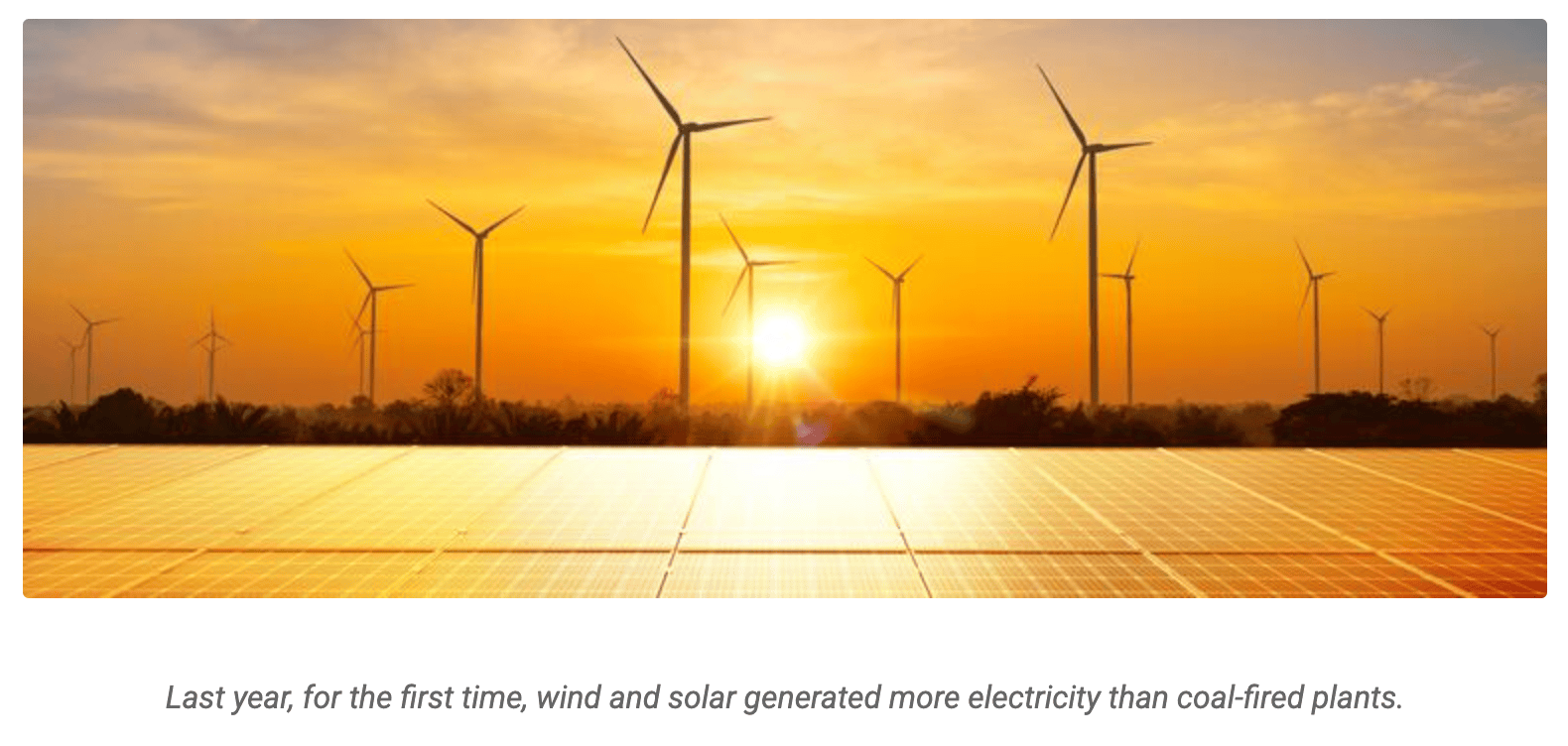
Oh? Last year, for the first time in U.S. history, solar panels and wind turbines produced more electricity than coal-fired plants.