Create fantastic communities

Insights from the CEO of Capital Consultants Management Corporation

Bart Park, the 46-year-old CEO of one of the nation’s most successful management firms, draws on Old Testament insights – the Golden Rule – when managing communities.

“CMCAs perceive this business as a paper business. It’s not,” Park says. “It’s a people business. When you treat people the way they want to be treated, it just works.”

Authoritarian vs. Humanitarian Approach

“I hate the stereotypical homeowners association,” Park confesses. “I find them dogmatic, draconian, and all about the rules.”

In his view, HOAs should stop nitpicking about covenant violations and focus on creating ways for people to bond with their neighborhoods. Examples include sponsoring daddy-daughter dances, 10Ks, volunteer outings and Little League.

“HOA management is about understanding people.” Park continues. “People are nice. And the more you can get them connected to each other and their neighborhood, the better your communities and the more property values go up.”

“The tangential benefit is that you don’t have to enforce the rules because people do it on their own,” he adds. “Fewer homes go on the market, and when they do, they sell for more.”

The Golden Rule

Park’s management philosophy is ‘treat others as you’d like to be treated.’

But what happens when a resident has been harboring too-tall weeds, or a boat in the driveway?

Instead of jumping on the homeowner, assume he or she simply doesn’t know the rules. The first step, then, is education. After you’ve explained the rules (try language like, ‘when you bought your home, you liked the neighborhood because the yards were clean. That’s why we have this rule…’) help the homeowner find a solution. Refer him or her to a boat storage unit with a 5 percent-off coupon. If the problem is overgrown weeds, give him or her a discount at a landscaping business.

Cap off the interaction with the message, “Here’s the place all your neighbors are using.”

Of course, a smart CMCA will have set up those discounts with business partners ahead of time.

And never, ever send out a covenant violation letter on a Wednesday. If you do, so it lands in the homeowner’s mailbox on Friday at 5:03 pm. That gives the recipient all weekend to stew over it, and call you Monday morning in a fury.

From chlorine to a corporate chieftain

Park, who calls himself a “straight shooter,” is anything but conventional. He dropped out of high school to work first as a lifeguard then an auto mechanic. He entered the industry as pool manager, then moved up to covenant enforcer; then community manager. He worked under mentors such as CCMC founder Ed Budreau and David Gibbons, former CAI educator of the year.

Today, his 600-employee company has a client roster that includes Celebration in Orlando, Florida; Las Vegas’ Mountain Edge; and Dallas’ Craig Ranch and Heartland.
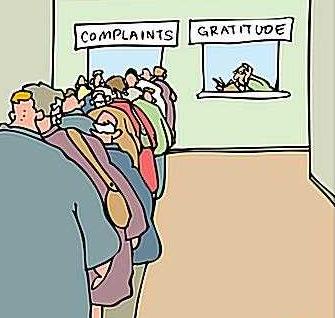

8 Steps to Squash a Customer’s Complaint

Before you rush to defend yourself or fight back remember to put yourself in your customer’s shoes.

Customer complaints are inevitable. If you run a business that sells to the public no matter how great your goods or services are the old adage will eventually be proven true: You cannot please 100% of the people 100% of the time.

Most customer concerns can be dealt with simply by complying with the person’s reasonable requests. From time-to-time, however, you will come across those customers who will demand something that simply is unwarranted or impossible to deliver. No matter the issue at the heart of the complaint it is important to remember these rules when resolving your customer service issues:

1. Listen

Whenever you set out to handle a customer complaint the first thing that you must do is listen. Listen to the customer to figure out why they are upset. Listen to the customer to determine whether any of your policies were not abided by or if this is something outside or not contemplated by your systems. Listen to what they want from you to resolve the issue. A refund? A replacement? Someone else to replace their current service representative at your company?

All too often we are defensive when dealing with customer complaints. Being defensive, at least at the onset, can inhibit your ability to truly understand why the customer is not satisfied with your products. They will tell you the problem, how they think it should be resolved, and give you a critical window into their thinking on the matter. So before you say anything, before you attempt to explain anything, challenge their complaint, or offer a resolution to the situation, listen.

2. Understand

Next, put yourself in the shoes of the customer. Given what you now know try and see their point of view. Why did they come to you? Is there merit to their complaint? Is their proposed resolution reasonable given the issue? Until you view the issue from their perspective you cannot have a complete picture of the reason for the complaint. So always think, if I was in their shoes how would I feel?

3. Elevate

Once you have heard the complaint and understand the basis for the same, elevate the customer to a supervisor or manager where possible. If the issue is with the front-line employee this will instantly remove some if not all of the customer’s acrimony towards their current representative at the company allowing them to have a more open conversation with someone else. Often this move alone is sufficient to alleviate some of the customer’s concerns by instilling in them a sense of importance, that their complaint is significant enough to be elevated to someone higher in the chain of command.

One note of caution, when elevating be careful to fully inform the person the issue is being elevated to of the relevant facts prior to having them speak with the customer. If this is not done the new representative will be in a position which they must ask the customer to repeat what happened. While most customers, as part of the venting process, will gladly share their story again with the supervisor they should not be made to feel that they must do so for the process to continue to run its course.

4. No Fighting

Defend if you must. But do not fight with the customer. What is the difference you may ask? Often times it comes down to tone and respect. Recall, whether correct or not your customer believes that they are correct. As such, they may be 100% wrong but fighting about the issue will only exacerbate their complaint.

Your job in handling the matter is to listen, understand, and then discuss with the customer their concerns in a calm and friendly manner while conducting an open discussion regarding the issues complained of and how they will be responded to. Fighting with the customer will never resolve the issue and will only lead to heightened aggression and anger on their part. As such, calmly defend your policies or personnel if you must but do not permit the conversation to erode into a argument at any point.

5. Resolution

Offer a resolution where possible. Once you have listened and understood the customer’s complaint and have avoided fighting over the same divert the customer’s focus to how you intend to resolve the matter. Here it is difficult to include all manners of resolution which can be offered given the nature and scope of the goods and services which could be offered, but some suggestions include offering a refund or partial refund of monies paid, if warranted. Discounts on future goods or services is another popular remedy. If the issue is personnel specific simply offering to change out their representative with another will often suffice.

The psychology of the offering of a resolution cannot be understated. Recall, the goal is to resolve the customer dispute with the customer being fully satisfied with your goods or services. Even if the customer’s complaint is unwarranted listening, understanding, elevating, and offering some form of resolution allows the customer to feel that they have won, that they were correct, and that your organization wants to make it right. For most, this will resolve the issue and they will be satisfied. Unfortunately, however, there will always be those select few that you cannot please no matter what you offer. For those, you must incorporate resolve.

6. Resolve

In every customer service situation you will ultimately come to a point of what you can and cannot do to address the issue. Most situations will be able to be addressed and the customer issue resolved to their satisfaction. Unfortunately, from time-to-time, there will be issues which simply cannot be resolved. Whether it is because the customer is requesting something that is outside of your stated policies on such matters or are simply being unreasonable in their requests. For these customers you must understand that despite your best reasonable efforts to offer a reasonable resolution they are unwilling to join you in reality and, accordingly, although our aim is always to please the customer if that which the customer demands cannot be satisfied you must maintain your best offered solution and no more.

7. Writing

Ultimately, when all is said and done and a resolution has or has not been reached always take the time to memorialize the same in writing. If, as in most cases, the matter is resolved to the customer’s satisfaction, you will want to send the customer a brief follow-up email confirming that the issue has now been resolved and the specific resolution involved. In those unfortunate times when a solution cannot be reached, you want to send an email clearly memorializing what transpired such that should the issue ever come back you can quickly review the email and be versed in the same as needed.

8. Learn

Above all, use customer complaints as a manner to learn about potential flaws in your systems. Maintain a manner of tracking customer complaints and the resolution thereof such that, over time, trends or specific issues may be identified to the point that if you see one or more specific situations occurring with any frequency systems can be amended or put into place to address the same in the future before they become future complaints.

Unruly board meetings a problem?

The below Q&A can be found in the Las Vegas Review Journal.  Barbara Holland answers a question about unruly meetings.  Barbara is a certified property manager, broker and supervisory certified association manager, is president and owner of H&L Realty and Management Co.

Q: Our homeowners association meetings have turned into a three-ring circus. We have one homeowner, who is apparently mentally unstable, who shows up at board meetings and makes unfounded allegations against the board and the management company and threats against individual board members. Many homeowners have quit attending the meetings because of his disruptive theatrics. Can such an individual be barred from attending future meetings?

A: Many communities have had this problem. Below, I have included what one association added to its community rules to address a similar situation. It states that a homeowner can be suspended from attending board meetings.

Note, before any HOA includes this rule in its regulations, I highly advise you to have your legal counsel review the issue and the language as he or she may wish to make changes or even advise you not to adopt such a rule.

“The board of directors has the right to establish and enforce reasonable limitations and restrictions on the manner in which members of the association may participate in meetings of the association in order to maintain proper decorum during the meetings of the association.

In addition to the restrictions and limitations recognized in Robert’s Rules of Order, the board of directors shall have the right to impose restrictions and/or limitations and fines on members of the association who engage in disruptive behavior during meetings of the association, including but not limited to, speaking out of order, use of profanity, yelling and/or otherwise being loud and boisterous, etc.

“In the event a member of the association engages in such disruptive behavior during a meeting of the association, the member of the association will be issued a warning letter the first time the member engages in such conduct. Should the member engage in such disruptive behavior a second time, the member may be fined and/or suspended from one meeting by the association depending on the nature, severity and flagrancy of the conduct.

Should the member engage in such disruptive behavior a third time, the member may be fined and/or suspended from two or more meetings by the association depending on the nature, severity and flagrancy of the conduct.”

Do you have something to add?  Has your community done something similar?  Let us know if the comments.

Standards of Professional Conduct

On August 21, 2012, the NBC-CAM Board of Commissioners voted to change the gratuity section of the Standards of Professional Conduct.  The new sections reads:

NBC-CAM recommends managers must provide written disclosure to the client of any compensation, gratuity or other form of remuneration from indi­viduals or companies who act or may act on behalf of the client.Written disclosure shall be made to the client by the Manager, confirming receipt of all commissions, rebates, discounts, payments, or other benefits received in excess of $200.00 annually by the Manager from any vendor or vendor related client.

Individuals who hold a PCAM designation should find this tenet mirrors your CAI Standards.

Due to the importance of community association managers’ professional responsibilities, NBC-CAM requires CMCAs to adhere to a high standard of ethical conduct. CMCA certificants must comply with the Standards of Professional Conduct, which govern their professional activities.

CMCA Recertification

Recertification – The October 1, 2012 recertification due date is fast approaching. Are you due for recertification? Check your recertification date online. This spring, NBC-CAM launched the online recertification process. Please recertify online by following these simple steps:

Note: Have your 16 hours of continuing education proof handy because we’ll be asking you to enter it into the continuing education worksheet. If you have an active AMS, PCAM, NAHC-RCM, FL CAM or NV CAM, grab your ID because we will be asking for the number.

1. Copy and paste this link into your internet browser: https://www.nbccam.org/cmca/recertify.cfm

2. Use your email address to log-in. For your convenience, we have synchronized your log-in and password with the caionline.org site.

  • If you forgot your password, click the “Forgot your password” link to create a new one.
  • If you’ve never signed online, your password is your last name with the first letter capitalized.

3. Get started! Watch the progress bar at the top.

Annual Service Fee – The $105.00 CMCA annual service fee invoices will be mailed out within the next week. Now you can pay online by following these simple steps:

1. Copy and paste this link into your internet browser: https://www.nbccam.org/cmca/invoice.cfm

2. Use your email address to log-in. For your convenience, we have synchronized your log-in and password with the caionline.org site.

  • If you forgot your password, click the “Forgot your password” link to create a new one.
  • If you’ve never signed online, your password is your last name with the first letter capitalized.

3. Select the Annual Service Fee item and add it to your cart.

4. Complete the payment process and print your receipt.

Continuing Education – Are you in need of continuing education? To recertify and retain the CMCA, you must obtain 16 hours of continuing education every two years. NBC-CAM has a long list of pre-approved course providers, including CAI. CAI has many on-demand webinars that you can access online. Check out some of the webinar titles below:

  • Happiness: A Key Component of Effective Leadership
  • Making the Perfect Match
  • Energy Performance in Multifamily Communities
  • What’s Going on Around the World
  • Ways to Drive Satisfaction
  • Changing the Industry Paradigm
  • Spotlight on Grassroots: Advocacy in a Hostile Climate
  • Normalcy is Overrated
  • Hack Attack: Protecting Your Data from Threats
  • Risky Business: Legal Safeguards for Managers
  • Going for Broke: Bankruptcy Rights and Remedies
  • Safely Social: Legal Issues of Social Media for Associations
  • Mobile Revolution: Technology Tools
  • Selective Service: Hiring Qualified Contractors
  • Best Practices for Worst Cases: Planning and Recovery
  • Man vs. Beast: Managing Wildlife Challenges
  • Aging Owners: A Demographic Dilemma
  • Culture Club: Diversity in Association Management
  • Out of Order: Preventing Disruptive Behavior
  • Pool Rules: Meeting New ADA Standards
  • Staying Solvent: Fiscal Management in Tough Times
  • Fair Value: Property and Casualty Insurance
  • Insurance Essentials: Protecting Directors and Officers
  • The Educated Business Partner Course, Module 1
  • Beat the Clock: Marathon Meetings No More
  • Watch Out!: Crime Prevention Done Right
  • Finance Your Future: Intelligent Reserve Fund Strategies

What’s a reasonable accommodation?

The Sun-Sentinel had a great article about associations providing and paying for interpreters.  Get a glimpse below and read the full article here by Lisa Magill, Esq.

Discrimination claims against associations seem to be on the rise. Community leaders and managers should know that the Fair Housing Act prohibits any person to refuse to make a reasonable accommodation in rules, policies, practices, or services, when such accommodations may be necessary to afford a handicapped person equal opportunity to use and enjoy a dwelling unit.

What if a condominium owner or resident is deaf and cannot participate at meetings since she or he cannot hear what is being said? Would the association have to provide an interpreter under those circumstances?

The housing provider (community association in this context) must make requested accommodations unless:

1. the accommodation imposes an undue financial or administrative burden, or

2. requires a fundamental alteration in the nature of its program.

Leave your advice or experience in the comments below.

Value of Credentials

In a recent press release, ICE discussed the value of credentials for job seekers as the economy recovers. The following is an excerpt you may find interesting.

“Obtaining credentials can also be a helpful advancement tool for those who are currently employed. Employees should talk to their supervisors about reimbursement for work-related education. In this age of frozen salaries, CareerBuilder has found that 21 percent of employers are willing to invest in training to retain employees. Once attained, many industry credentials offer a bridge to higher income. In a 2010 study, the International Economic Development Council showed that Certified Economic Developers earned an average of $26,100 more than their non-certified colleagues.”

You can read the full release here.

CMCA profile

Stephen Castle, CMCA, AMS, PCAM

The start of something new

“In those days, I was an ‘expert’ only because I owned a condominium home and served as an association leader.” In 1976, Steve Castle worked as a consultant providing new homeowner orientation and board member programs. The challenging and exciting work Steve performed as a consultant in the emerging community association industry led to his pioneering career as a leader in the field of community association management and a founder of NBC-CAM.

In 1995, Steve was asked to join the Blue Ribbon Task Force that founded NBC-CAM. He chaired the NBC-CAM Board of Commissioners from its inception through 2004. He was a key player in the creation of the CMCA program and earned the second certification awarded. Steve’s vision has been critical to the continued success of the CMCA program. “When I got into the business 25 years ago, I had to learn by hard knocks, but I would have loved to have had this sort of certification program available,” he said.

Steve was influential in shaping policy at Community Associations Institute (CAI) as well. He was awarded the Distinguished Service Award in 1997, the Outstanding Volunteer Service Award in 1993, the President’s award in 1996 and 2003, and the Chair’s Award in 2003. Steve’s rewarding professional event was “receiving CAI’s Distinguished Service Award because it is so rarely awarded, and therefore, was more meaningful than other recognitions I was fortunate enough to receive from both CAI and NBC-CAM.”

“I really can’t think of anything significant that I would want to have done differently in my first 64 years of life” pondered Steve, who is currently enjoying his position as CEO Emeritus of Mid-Atlantic Management Corporation in Pennsylvania. “I’m not totally out to pasture,” he jokes.

Having paved the way for the 11,000 and counting CMCAs over 15 years ago, Steve retains his “expert” status through his continued dedication and commitment to serving community association managers and communities. Steve’s sentiment that “this new ‘association’ concept was appealing in the late 1970’s because it represented a future growth potential” remains true today.

Can you Help?

Can you help?  There have been several questions posed to the group on the CMCA listserv.  Do you have a solution?  Let us know in the comment section.  If you’ve got a question of your own, post that as well.

Fencing

When a builder puts up the short 6- or 8-foot long fence on either side of each townhouse, how does an owner know which fence is his/hers?  Or are both sides just considered a shared fence?  If one needs to be replaced, is it then a shared expense and one owner may have to convince the other owner?

Radon

For those who manage condominiums – if a unit (in this case a lower unit, partially below grade) tested high for radon, have you paid for the abatement as a common expense or have you left the individual unit owner responsible?

Asbestos

As a portfolio manager, one of the properties I manage is a small development of 40 units.  Recently we had a roof leak that went unreported and developed into mold problem in the attic of the building.  A small bit of mold seeped through onto the sheetrock ceiling that has a popcorn material.  The development was built in the mid 1970’s and when the mold remediation company checked the unit they also tested for asbestos and found the popcorn material contained asbestos.  None of this was previously known to management or any board or homeowners.  Now the homeowners are concerned about disclosure for future sales and the board does not want to abate the material due to high costs.  The association common areas do not include the insulation or sheetrock.  Any advice on disclosure of the asbestos?

Contractors

The community I manage is looking at a change in policy from requiring owners to use an association hired contractor who installs required window replacements to providing owners with specifications (architect written) and required, pre-approval from outlining protocol.   Has anyone had experience with allowing owners to have their own window replacements done and what were some of the problems encountered?

Meeting Transparency

Board meeting transparency – not just the right thing to do, it may be required by law

Economic burdens of rising foreclosure and unemployment rates not only affect HOA revenue streams, they increase the contentious, divisive and time consuming nature of board meetings. As pressures on boards from homeowners increase, the importance of board accountability and transparency of their meetings also increase.

Peter Kristian, who is a general manager of a large-scale community in South Carolina, offers some tips on how to ensure board meeting transparency:

  • Make sure you publish a meeting schedule in advance and publish it on the community’s website. The agenda could also be emailed to interested residents who have signed up for such a service. Make sure residents who do not use the internet are privy to board meeting through written notice.
  • Establish a resident’s time policy that is adopted by the board and published to the community. Says Kristian, “the policy should cover key points such as the prescribed time for resident comment at meetings, the length of time each resident can speak and whether one resident in attendance can cede their time to another resident.
  • Board member comments on a resident’s testimony should express the appreciation of the board for the resident’s input and verbal jousting between board members during a resident’s comments should always be avoided.

When discussing transparency of board meetings, sunshine laws have to be included. HOA boards can be subject to sunshine laws depending on state statutes.

Kristian said it is imperative managers understand and abide by their state’s statutes governing HOAs.

“The best way to adhere to such provisions in the law is to consult with a local attorney who practices community association law and ask them for guidance. Read the law, educate your board and apply the provisions to you situation.”

Have any of your communities been accused of lacking in board meeting transparency and if so, how did the respective boards respond?