
3 Tools That Make Busywork Suck Less

There are lots of apps and software that make administrative work a little easier. Here are three that rise above the crowd.  Administrative work sucks. Tracking down receipts, entering new contacts into your database, following up with people on deadlines they’ve missed weeks ago–these types of tasks are necessary, but could they be any more boring?

Thankfully, these business tools make administrative work and project management suck a little less.

TaskRabbit

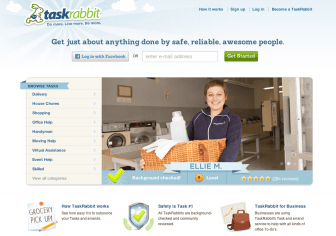
For those basic tasks you just don’t have time to do, you might want to check out TaskRabbit. It was one of the first companies to connect people who don’t have time to run chores and errands with folks in their neighborhood who can do it for them (for a fee). TaskRabbit has since broadened its categories to more business-related tasks, such as research, data entry, even usability testing. All you have to do is post your job and how much you’re willing to pay someone to get it done. Screened “TaskRabbits” bid to fulfill your task, and the lowest offer gets the job. Cost: Varies according to your task


Concur

I love Concur, because it makes managing your (and your employees’) travel expenses so much easier. Instead of carrying around a wad of paper receipts (so 20th century!), you can just take pictures of them with your phone and attach them to your expense reports. Makes organizing a breeze. It even has a version that integrates with Salesforce! Cost: $8 per month for the small-business version



5pm

My marketing software company, VerticalResponse, just started using 5pm to manage our big product launch next year. There are a million moving parts to this project, and we liked 5pm because it gives us a bird’s-eye view of deadlines and progress. We can also easily identify critical tasks and milestones. You can share notes and files, track your team’s time if you need to, and use a bunch of other nifty features. Cost: Starts at $18 per month



Do you have any awesome administrative or project-management tools that you can’t live without? Enlighten us!


Career Advancement for Community Managers

Certified managers know that community association management is a specialized field that requires extensive skills and knowledge.

NBC-CAM can help you in your pursuit to achieve career success. In conjunction with our affiliate organization, Community Associations Institute (CAI), we offer you the opportunity to keep up-to-date on issues that affect the communities you manage, and to improve job efficiency through professional education seminars.

Many managers look to their employers for support in their professional development. In fact, according to CAI Research Foundation’s Community Association Manager Compensation and Salary Survey, 92 percent of managers who responded indicated that their employers paid for some or all of their training and education. NBC-CAM provides you with materials to share with your employers about how your professional development will benefit them.

We also offer resources to improve your marketability and enhance your career. Use the sample press release to spread the word about your certification status, attend chapter events in your area to network with colleagues who can help you get ahead, and use CAI’s Job Market to find a job or post your resume. CMCA® certificants can continue to climb the ladder by earning advanced professional designations from CAI.

NBC-CAM also maintains a Directory of Credentialed Professionals. When you obtain and keep active your CMCA certification, you are automatically placed in the directory where potential employers can find you.

Spread the word about your professional achievement and help advance your career!  Proudly display your certificate at work.  Frame your CMCA certificate and hang it in a visible area of your office. NBC-CAM has partnered with Framing Success to provide you with quality frames for your CMCA certificate.

Follow the links below to take advantage of the numerous resources at your disposal.

CMCA Profile

Kathleen C. Buske

Blind ambition

Kathleen Buske is one of many community association managers that claim the profession found them. “Honestly,” Kathleen began, “I answered a blind help wanted ad for a non-profit organization manager.  When I found out it was a homeowners association, I didn’t even know that that was!”  Kathleen went on to tell the interviewer that she was not qualified.  “He assured me that with my communications and public relations background I would succeed, so I decided to give it a try.”  Kathleen is now the President and CEO of Platinum Management, Inc. in Arizona.

Kathleen considers her success to be the craziest thing that has ever happened to her.  She recalls, “I was working for one of my competitors and I was let go.  There was no reason for the termination and I was so distraught!  I had never been fired in my life.  I decided to form my own company and just manage a few associations to pay my bills.  It’s ten years later; I have a staff of 18 and approximately 75 associations.”

Kathleen fondly remembers the story of an age restricted community that had some problems finding a good match for them in the management arena.  “When I got them their association had been ‘dissolved’ by a judge and the covenants, conditions and restrictions (CC&Rs) had been declared null and void.  The owners had signed an agreement to pay assessments to maintain the common area and to retain the property as 55 and older.  The Board was faced with drafting new CC&Rs and ‘selling’ them to the membership.”  The association contracted with Kathleen’s management firm to help them with this project and the day-to-day management of the association.

“It has been wonderful to help these people who genuinely needed our guidance to assist in the protection of not only their property values, but also their way of life.  They had a wonderful board president who was a retired attorney that I worked very closely with to get CC&Rs drafted and to date over half of the 80 owners have signed them.  The property is in much better condition than it has been in many years and the owners are happy that much of the peace in their neighborhood has been restored,” said Kathleen.

Kathleen earned her CMCA credential in 2005.  CMCAs are trained professionals building relationships and better communities. CMCA-certified managers have the skills to safeguard the assets of homeowners’ associations, giving homeowners peace of mind that their home values are protected.

Like all managers, Kathleen has learned valuable professional lessons from each of her association experiences.  She signs each email with words to work by: “Coming together is a beginning. Keeping together is progress. Working together is success.”

Questions from the Listserv

NBC-CAM hosts a listserv for community association managers.  The listserv is intended to create a powerful, on-line community for community management professionals to share information.  Recently, some questions have been sent to the listserv.  Are you able to help?  Leave and answer in the comment section below and NBC-CAM staff will post your answer to the listserv.

Question 1: Craig from Florida

I have a Board Member asking for the average annual wages for:

  1. Janitorial Staff
  2. Maintenance Staff
  3. Groundskeeper.

Can any of you provide information on where I can find averages for Community Associations specifically?

Question 2: Larry from Louisiana

This question comes up every budget season and is the source of disagreement between owners every year.  “Does maintaining a healthy Reserve fund, which increases fee collections, help or hurt property values?”  Or conversely, “does keeping fees as low as possible, by not adequately funding the reserve, and instead relying on future special assessments for repairs and replacements, help or hurt property values?”  I would be very curious to hear your feedback and experience in this regard.


Question 3: Vanessa from California

Can anyone provide input and/or verbiage about introducing a “No Loitering” rule for a community?  There is a mixed reaction on this issue, as some Board Members are pushing for it while other believe that persons have a right to “hang out” in the common areas.  Some Residents just sit on walls with no purpose, or hang out in the parking lots with no apparent purpose.  Any thoughts?


Question 4: Lillian from North Carolina

When a builder puts up the short 6- or 8-foot long fence on either side of each townhouse, how does an owner know which fence is his/hers?  Or are both sides just considered a shared fence?  If one needs to be replaced, is it then a shared expense and one owner may have to convince the other owner?


Question 5: Sara from Maryland

Does anyone know the legality of the Board limiting the number of members on a committee or denying a request from an owner to participate on a committee?

Doing Good in the Community

Too often we hear negative press about community associations.  We’ve gathered some stories about the great things happening in neighborhoods across the country.  Please hare your story with us.

West Bank residents gather for Night out against Crime

Neighbors across the West Bank gathered Tuesday night for Night Out Against Crime, enjoying some cool evening weather, grilled burgers and hotdogs, live music, chats with police officers and firefighters, a parade or two, and even a doggy costume contest in the Walnut Bend neighborhood of Algiers. The hope is that by getting to know your neighbors and local law enforcement officials, communities can take a strong stand against crime. Read the full story.


Gaithersburg considers dispute resolution services for HOAs

The mayor and city council of Gaithersburg are considering signing on to a county service that provides dispute resolution and informational services directly to homeowners’ associations.  The Commission on Common Ownership Communities, operated by Montgomery County, would help members and boards of homeowners’ associations and condominium associations by providing information and resolving disputes. The current organization in Gaithersburg is the city’s Neighborhood Services Division, which enforces city codes, according to the council’s agenda.  Read the full story.


Hollywood group to scan license plates and improve landscaping

A Hollywood civic group is seeking to boost security and beautify its community.  The Lakes of Emerald Hills Homeowners Association recently got unanimous city approval on several proposals, including a permit to install a video system to scan the license plates of vehicles entering and exiting the community.  We are trying to spend a little extra money to make the entranceway a little nicer,” Strauss said. “We are one of the safest neighborhoods in the city of Hollywood. For those who are concerned about property values and a wonderful environment, this is a great place to live.”  Read the full story.

Connecticut Manager Licensing

Attention all Connecticut Managers:

On October 1, 2012, new legal requirements went into effect that regulate who may manage a community association. Managers registered in Connecticut for less than ten years must complete a nationally-recognized course in common interest community management and pass the National Board of Certification for Community Association Managers (NBC-CAM) Certified Manager of Community Associations (CMCA) examination, or a similar board approved examination. Upon registration with the state Department of Consumer Protections (DCP), applicants must also answer a question about whether they have ever been convicted of a felony, regardless of the jurisdiction. Those managers seeking to register for the first time must also submit to a state and national criminal background check before they can successfully receive their certification.

Community Associations Institute (CAI) M-100:  The Essentials of Community Association Management course is a prerequisite course that is available classroom style, on-line or home-study. Completing the M-100 is the easiest way to be eligible to sit for the CMCA examination and fulfill the state’s requirements. Click here for more information on CMCA examination.

What do I need to do and when do I have to register?

A: If you have been registered as a manager for more than ten years, you must complete the nationally recognized course on community association management; however, you are exempt from the examination requirements.

A: If you have been registered with the DCP as a manager for less than ten years, you will have two years, or until October 1, 2014, to complete the course and examination.

A: If you are registering for the first time after October 1, 2012, you will have one year to complete the course and examination.

If you have any questions, please contact CAI’s Government & Public Affairs Department (703.970.9220), the CAI Connecticut Chapter  (860-657-9035 or caictkmcclain@sbcglobal.net) or NBC-CAM (703.970.9300) at anytime.

Recertification: Deadline extended

We’ve extended the deadline for individuals due to recertify October 1, 2012. You now have until October 30, 2012 to submit your recertification application, 16 hours of continuing education and annual service fee payment.

Not sure when you need to recertify?  Check here.  Need a recertification application?  Download one here.  Want to pay your $105.00 annual service fee online?  Do that here.  Do you still need CE credits?  Check out our pre-approved continuing education providers here.

Please contact our office with any questions.  We have a designated staff person to handle all recertification inquiries – Roland Richardson.  He can be reached at rrichardson@nbccam.org or 703.970.9300.

CMCAs Only – Information and Resources

As a CMCA, you have shown a commitment to your profession by staying informed about current community association issues and holding yourself to a high standard of professional conduct.

Check out the updated “CMCAs Only” section on our website. You’ll find

  • Resources to assist you in your career, including: CAI Professional Management Development Program (PMDP) course schedules,
  • Links to CAI chapters and the Job Market,
  • The Directory of Credentialed Professionals,
  • A sample press release you can use to spread the word about your certification,
  • Information you can share with your employers in order to gain support for your professional development,
  • Application and dates for recertification, so you can keep your CMCA certification current—and keep your homeowners and employers confident in your ability to provide quality service, and
  • How to stay connected to other CMCAs by joining the Listserv or subscribing to Community Association Management Smartbrief, the CMCA weekly e-newsletter.