Networking in the New Year

By Anne Baber and Lynne Waymon

 What Will Networking Help You Do in 2013?

Vow to be a proactive – not reactive – networker. Set networking goals. Make things happen with your network:

  • Develop business – even if you’re not in business development.
  • Position yourself for a promotion.
  • Create a constant flow of referrals and new business.
  • Launch a project.
  • Work cross-functionally to solve a problem no one else wanted to tackle.

Choose Your Groups

List any groups you are a member of. Note the role you play and the benefits you got in 2012. Do you want to STRENGTHEN your involvement or DISCONTINUE it? What action do you need to take to get the most out of the group? Join the Program Committee? Go to the national conference? Enroll in the Mentoring Program?

Find the Right People

As you think about your networking goal(s), make sure you have a team with the expertise you need. Rather than creating a random network, ask yourself, “Who can be the most help with this project or goal? Tip: You only need 12 to 15 to accomplish anything! Include these key players:

  • An Expert with hot-off-the-press information, best practices, know-how, experience, subject-matter expertise.
  • A Marketer with market savvy, customer or end-user perspective.
  • A Backer who can give time, money, resources. Somebody who can marshal support, pave the way.
  • A Wizard who can do magic, bring creativity, snatch ideas out of thin air.
  • A Critic who will “tell it like it is,” ask the hard questions, give candid feedback, play devil’s advocate, challenge your decisions.
  • A Cheerleader whose energy is infectious, who’s always upbeat, raring to go.
  • A Guru whose opinion you respect, who sees long-term and big-picture.
  • A Sarge who holds you accountable, reminds you of deadlines, pushes you to excel.

 Collaborate More

Productive people cross boundaries and build networks that are diverse in gender, geography, age, and function. Network to reduce stovepipes and silos in your organization. Arrange for a brown bag lunch meeting with a team or department you’d like to work more closely with.  Take time for a quick update from each group on priorities for the year. What you can do to help?

Save the Date

Got a 2013 calendar? Schedule networking activities now. If you belong to a networking group or professional association, put at least 2/3 of their meetings on your calendar. If you don’t show up, you can’t reap the benefits. Plan to attend a conference? Put it on the calendar. Set monthly meetings/lunches/dinners with your allies (your most trusted advisors). The time you set aside for networking should match the importance of your goal(s). Perhaps you could designate Friday lunches as networking time or plan a series of networking coffeehouse meetings on those dreary February Saturdays.

Conquer the Time Crunch

No time to network? Then “piggyback” on other activities to fit follow up in. Invite people to join you as you exercise, volunteer, drive to meetings. You can squeeze a lot of “face-time” into your overcrowded life if you double up. And rather than just ask one person to lunch or for coffee, ask three!

Reach Back

Use any excuse to re-connect. “Isn’t it time for our quarterly lunch?” Or “…our annual lunch?” “We haven’t had a chance to catch up in a long time. How about sitting together at the next professional association lunch?” Or “I remember you like to see the new exhibits at the art museum. Want to go on Saturday afternoon?”

Anne Baber and Lynne Waymon are Co-Founders of Contacts Count.  Contacts Count provides networking trainings and workshops, webinars and keynote addresses.
 

Doing Good in the Community

HOA Food Drive – The Homeowners Association of the Historic Westmoreland Neighborhood in Toledo, OH held a holiday home tour and food drive this past weekend.  Homeowners welcomed neighbors and tourists into their homes to admire the architecture and decorations.  Holiday music filled the air as people gave generously to support the Toledo Northwestern Ohio Food Bank.  “I think using this community as an asset will help provide food for others, especially during the holiday season. And I think it’s great,” said Steven Gola, owner of a 1926 Georgian Colonial Revival house on the tour.

The Westmoreland neighborhood was planned and developed from 1916 to about 1930 and was the first major new residential development after the Old West End. The historic district about a mile east of the University of Toledo was the home of prominent residents who contributed to the city’s development, including such notables as the Spiekers, Doehlers, and Pinkertons.  The U.S. Department of Interior named Westmoreland a historic district in the 1980s.

You can read the full article here.

HOA Toy Drive – The Sherman Oaks Homeowners Association (SOHA) sponsored its 14th Annual Toy Drive at Gelson’s Market in Sherman Oaks last weekend in California. It was an overwhelming success thanks to the outpouring of the community and many politicians who all brought unwrapped toys for needy children. The toys received filled two huge vans from the Department of Children & Family Services.  Santa was there to greet folks and Gelson’s provided delicious refreshments throughout the event held in their parking lot.  Many police and firefighters were present and the neighbors enjoyed chatting with them as well as the many elected officials and their representatives.

Read the full story here.

Share your own Doing Good in the Community story in the comments!

Snow Removal in Community Associations

By: Jeffrey Van Grack

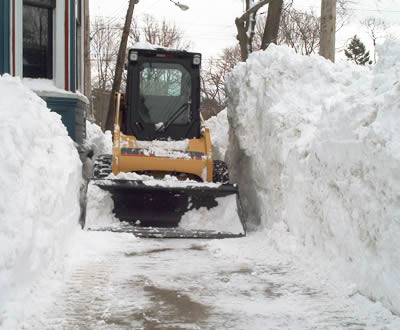
From Thanksgiving until the end of winter (and sometimes even later), snow may fall in area community associations and create issues of safety and parking that can escalate and become dangerous. The biggest concern and perhaps the biggest complaint that boards struggle with is snow removal. This is usually a no-win situation for the manager (think Snowmaggedon).

Despite what individual owners may think, boards of directors have no control of the snow, but they are responsible for snow removal (or lack thereof). In an effort to meet their legal obligation and to diminish the amount of callers, the board and management should hire a competent, properly insured snow removal company that is reliable. Hiring at the last minute the guy who shows up with the plow at the end of his truck is a mistake waiting to happen. Hiring someone who you are assured will show up as required pursuant to a written contract will go a long way towards goodwill of the owners for the entire year. Aside from the inconvenience and chaos it creates in the community, the removal of snow can be filled with liability issues, so having a competent properly insured contractor in place before the first snowfall is vital.

My favorite issue in a blizzard is when an owner (especially in townhouse communities) cleans a parking space and returns 20 minutes later to see a neighbor has taken over the “common area” parking space. Wars sometime start with this process. Your association may wish to send a reminder at the beginning of the season that all spaces are common spaces and that they may not be reserved.

Jeff Van Grack is a community association attorney whose practice has been devoted exclusively to representing community and homeowners associations, condominiums and co-operatives for more than 30 years. For more information visit www.lerchearly.com/team/jeffrey-van-grack.

Holiday Decorations in Community Associations

Tis the Season for Stress: Holiday Decorations and Snow Removal in Community Associations

By: Jeffrey Van Grack

Every year as the holidays approach, community association owners and renters become passionate about two issues: decorations and snow removal. With some forethought, boards of directors and managers can avoid conflict and liability around these issues.

In most communities from Thanksgiving until just after the first of the year, and around other holidays throughout the year (Halloween, Easter, Valentine’s Day, Purim, etc.), owners and renters begin the process of putting decorations (of all colors, sizes and shapes) on their property. These include everything from a miniature Fenway Park for the World Series to a tiny Mount Rushmore on President’s Day to a 24-hour-a-day brightly lit and noisy Christmas tree with Santa wishing everyone in the neighborhood a Merry Christmas and Happy New Year at very high decibel levels. Many communities’ covenants prohibit “any exterior change or alteration of any nature without the written approval of the Architectural Control Committee,” but taking a Scrooge-like attitude to require approval of these decorations is not recommended.

Communities should be proactive and adopt guidelines that allow for and regulate the short-term installation of holiday decorations. This will ensure that the association will be protected while allowing it to be reasonable and to act in the holiday spirit. Some guidelines should include the following:

  • Timetable for Decorations: The guidelines should spell out a reasonable period both shortly before and after the holiday for decorations to be displayed that are consistent with reasonable and customary practices.
  • Holiday Lighting: Lighting (especially bright and blinking lights) should not be allowed to disturb neighbors.
  • Blow Up Decorations: The association should address blow up decorations specifically, including issues such as whether decorations may be inflated all day, how large they may be, etc.
  • Common Area/Element Decorations: Sometimes the association itself places holiday decorations on the common areas of a homeowners association or common elements in a condominium. The association needs to be conscious of a potential claim for a violation of the Fair Housing Act (FHA) and other federal and state fair housing laws.  Associations must not favor one religion over another and they have an obligation to be non-discriminatory and uniform in the application and enforcement of holiday decoration rules. While common area religious displays either should be avoided or carefully monitored, residents of the community should be allowed to display personal religious items in their homes and on their property within the association’s holiday rules and regulations.

My favorite real life war story is the homeowner who installed red and green Christmas lights that he kept in place until mid-January. When the association sent a letter asking him to remove the lights, instead of removing taking them down, the owner replaced them with pink lights for Valentine’s Day, which remained until early March; they became green for St. Patrick’s Day. The cat and mouse game continued throughout the years with red, white and blue replacement lights for July 4th, orange and black lights for Halloween and everything else in between. It ended only when the owner moved.

Jeff Van Grack is a community association attorney whose practice has been devoted exclusively to representing community and homeowners associations, condominiums and co-operatives for more than 30 years. For more information visit www.lerchearly.com/team/jeffrey-van-grack.

Q&A

Thank you to those of you who submitted answers to last week’s inquiries from your peers on the CMCA listserv.  Your responses sparked some additional submissions.  Please feel free to share your responses on the comments and I will post them to the listserv.

1.  Betty from Florida

The Rules & Regulations Committee in the Condo I manage in Florida is considering a proposal to the BoD to require real estate agents to pre-register their “Open House” with the Association as well as require no less than 2 agents/persons to be present so one can always be at the entrance to prevent unauthorized access into our secure building. Does anyone have rules regarding open houses already written (part of) in their Rules & Regulations?

2. Thomas from Virginia

How often do you audit your properties? Full audit or financial statement audit only? Our bylaws are not clear whether to full audit every 3 years, yearly, full audit or only financial statement.  Any advice?

3. Sharon from Michigan

I am currently dealing with a community that has a large lake. While the lake is not open to the public, it borders 4 homes that are not a part of the association, that often use the facility. The board is wanting to adopt some specific use regulations and is looking at imposing a fees to these neighbors. I am not sure if doing so will put them in the category of public use, which would affect insurance, ADA criteria and etc.  I need a little insight from anyone who has experienced a similar situation. How can this be done and/or does anyone have any outlines for use restrictions for members and what might be considered public use? Any insight is greatly appreciated.

Lunch at your desk today?

By Anne Fisher in FORTUNE Magazine

Eight out of ten employees now gulp a quick lunch at their desks, says a new survey. But not taking a breather during the day, even for just a few minutes, is a recipe for burnout.

Lunching al desko again today? You’ve got lots of company. Only 21% of people now regularly leave their workstations for a midday meal, according to a poll of 1,023 U.S. employees by talent development consultants Right Management.

These days, “far fewer employees are feeling comfortable enough with their work loads to take time away” for a quick bite, notes Michael Haid, a senior vice president at the firm.

Haid adds that many companies’ cultures make people feel they need to apologize for stepping away from the grindstone even for 30 minutes. “One has to ask if such pressure, without any let-up, actually benefits the individual or the organization,” Haid says. “I mean, does it really improve performance? We are definitely not talking about a return to the days of the three-martini lunch, but have we gone too far in the other direction?”

He thinks so. Employees fearful of being seen as slackers “begin to sacrifice their own break times in order to keep up with their workloads. So, whether the organization is imposing unrealistic workloads or whether employees are progressively giving up their own break times, leaders need to pay close attention and understand the early warning signs” of burnout, Haid says.

Tony Schwartz, head of New York City-based productivity consulting firm The Energy Project, says more and more companies are starting to recognize the problem. “What’s at risk, when employees are overworked and stressed out, is their capacity to do great work,” he says. The Energy Project’s clients — including Bristol Myers Squibb (BMY), Apple (AAPL), PwC, Google (GOOG), Sony (SNE), Ford (F), and Ernst & Young — “see a clear link between exhausted employees and poor performance. Avoiding burning people out is critical to success, both for companies and for individual bosses.”

A big part of keeping burnout at bay: Encouraging employees to take a break now and then. “When demand in our lives intensifies, we tend to hunker down and push harder,” Schwartz observes. “The trouble is that, without any downtime to refresh and recharge, we’re less efficient, make more mistakes, and get less engaged with what we’re doing.”

The paradox here, he says, is that “by pushing people too hard, you actually make them less productive. But if employees learn to manage their energy better,” partly by taking short respites from work throughout the day, “they get far more done, and add much more value, in far less time.”

Curious about how well (or how badly) you, or your employees, are managing energy? The Energy Project has devised a quick 20-question quiz, administered to thousands of employees over the past decade, to help people pinpoint whether they might be headed for burnout. The results, Schwartz says, are usually “depressing but eye-opening. The average score is 14, meaning that, out of 20 behaviors people regularly engage in, 14 are energy-depleting.”

One of those behaviors is — you guessed it — skipping lunch breaks. “Letting employees recharge at midday is a tremendous competitive advantage,” Schwartz says. “Look at Google. Everyone goes to lunch there. The food is great, and it’s free. And people are having terrific conversations in the dining room.

“Facebook and Twitter now offer the same thing, that chance to connect with colleagues and share ideas over a relaxing meal,” he adds. “Obviously, these are highly successful companies, with forward-thinking management. Look at what’s happening there, and you’re seeing the future.” One can only hope.

6 Books for the Well-Rounded Entrepreneur

By Jeff Haden

Starting a business, personal productivity, marketing skills–these good reads cover the essentials an entrepreneur needs to master.

Most entrepreneurs wear a variety of hats. Some wear every hat.  That’s why most entrepreneurs need to be very well rounded.  Here are six books that at least partially cover the entrepreneurial gamut: starting a business, personal productivity, marketing, improving skills, operations–even health and fitness.  Each will leave you feeling challenged, inspired, motivated, and ready to take your professional life to new heights.

Starting and Sustaining a Business – Part research, part science, and part introspection exercise, Heart, Smarts, Guts and Luck does help you understand your personality and decision-making traits–useful in itself–but more importantly is filled with cool insights and tips any entrepreneur can benefit from.

One is the Three-Minute Rule, based on the premise that what your customers do in the three minutes just before and just after they use your product or service tells you a lot about their needs and how they actually use what you sell.

For example, studies show customers buy less when their arms are full–which is why placing empty shopping baskets or carts in the middle of a retail store can dramatically increase sales per customer.

If you’re hesitating to take the entrepreneurial plunge, this book should jar you off the fence. If you already own a business you’ll learn a number of things you’ll want to start doing–or stop doing.

Personal Productivity – Sometimes it’s easy to dismiss a book simply because it has gained widespread popularity; it’s like playing the popularity backlash card.

If you’ve placed David Allen’s Getting Things Done in that category, rethink that decision. Yes, his process is comprehensive. Yes, you might think, “Wait… I have to do all that?”

And yes, maybe you won’t adopt his entire system. I haven’t.

But you will find ways to waste less time, be more productive, and focus more on what truly drives the results you want in your business and personal life.

Gotta love that.

Improving Skills – I admit it: I’m a sucker for books that give practical advice for developing skills and talent. The problem is that most “self help” books are mostly breathless enthusiasm and motivation; many can be summarized by Rob Schneider’s, “You can do it!”

Great. I can do it! But wait: How can I do it?

The subtitle of Practice Perfect is “42 Rules for Getting Better at Getting Better.” It’s like the “teach a man to fish” principle: Instead of describing how to improve one specific skill, Practice Perfect provides practical tools for practicing, modeling, using feedback, and making those new skills stick.

Best of all it’s a guide to not only improving your own skills but also your employees’ skills.

Helping other people get better–as a leader isn’t that your most important job?

Marketing – We all know that great advertising–or, really, any great “pitch”–contains a blend of emotional and rational appeal.

The Hidden Agenda lays out a blueprint for determining the hidden agendas of decision makers–and in the process transcend persuasion and create connections.

Sound fluffy? It’s not. As a consumer, I have needs. I have wants. And I have beliefs. Connect your products, services, or ideas with my needs, wants, and beliefs and then you don’t have to sell me.

I’m already with you.

Operations – I worked in manufacturing for 20 years and still take some productivity and quality improvement consulting gigs, so I’m also a sucker for operations books.

American Icon, the story of Ford’s turnaround, without a government bailout, is outstanding.

And it reads like a novel–although in this case a “novel” that will help you lead and run your own business better.

Health and Fitness – Guess what: Most people drink too much during and after exercise; for most of us drinking when we get thirsty is fine. Stretching before we exercise doesn’t seem to prevent injury and can actually decrease our performance. Chocolate milk is an awesome post-workout drink. Sitting too much is slowly killing us.

And exercise can make us smarter.

The First 20 Minutes debunks a number of health and fitness myths and lays out a simple blueprint for getting the most out of exercise–without all the conventional wisdom and marketing b.s. that tends to lead us astray.

Where our well-being is concerned, astray is the last place we want to be.

Jeff Haden learned much of what he knows about business and technology as he worked his way up in the manufacturing industry. Everything else he picks up from ghostwriting books for some of the smartest leaders he knows in business. @jeff_haden


Promote your CMCA

Spreading the word about your CMCA® certification will help advance your career.  Extend the visibility and awareness of your professional credential by following these tips.

  • Display your CMCA certificate     Frame your certificate, and hang it in a visible area of your office.  Visit www.framingsuccess.com and enter NBCCAM for a discount on great frames.
  • Wear your CMCA lapel pin   Wear your pin at the office, at meetings and at events.  E-mail
    info@nbccam.orginfo(at)nbccam.orgfor a new pin.
  • Use your CMCA padfolio and notepad Bring your padfolio and notepad to all meetings, especially within your community. To order more CMCA-printed notepads, e-mail
    info@nbccam.orginfo(at)nbccam.org.
  • Include your CMCA credential in all communicationsYour credential creates a positive image and increases awareness of the profession of community association management.  When discussing what you do for a living, be sure to mention that you are a CMCA.  Include your credential on your resume and professional biography, and include a brief description about its value.Use the CMCA acronym after your name wherever possible, including:
    • Business cards
    • E-mail signatures
    • Letters and reports
    • Memos and faxes
    • Facebook, LinkedIn, Twitter and blog postings
    • Directories and listings
  • Speak at events Take advantage of community events, professional meetings and CAI chapter events to speak about your CMCA and why communities benefit from hiring credentialed professionals. Use the CMCA brochure as a guide, and wear your lapel pin to create visibility and spark conversation. The greater the awareness of the CMCA credential, the greater the value to your career.
  • Work with your organization/association  Ask your organization to help promote the CMCA credential by posting the following message on their website with a list of their certified managers.Board Certified: Congratulations to our newest CMCAs!  The CMCA credential is the only worldwide certification program for community association managers and demonstrates that these managers have met requirements for managing condominium, cooperative and homeowner associations.  [list of managers with CMCA credential]
  • Educate homeowners Leave CMCA brochures in your company’s lobby or community common area to inform homeowners about the credential.  Contact NBC-CAM to obtain CMCA brochures.