CAMICB is a more than 25 year old independent professional certification body responsible for developing and delivering the Certified Manager of Community Associations® (CMCA) examination. CAMICB awards and maintains the CMCA credential, recognized worldwide as a benchmark of professionalism in the field of common interest community management. The CMCA examination tests the knowledge, skills, and abilities required to perform effectively as a professional community association manager. CMCA credential holders attest to full compliance with the CMCA Standards of Professional Conduct, committing to ethical and informed execution of the duties of a professional manager.
The CMCA credentialing program carries dual accreditation. The National Commission for Certifying Agencies (NCCA) accredits the CMCA program for meeting its U.S.-based standards for credentialing bodies. The ANSI National Accreditation Board (ANAB) accredits the CMCA program for meeting the stringent requirements of the ISO/IEC 17024 Standard, the international standards for certification bodies. The program's dual accreditation represents compliance with rigorous standards for developing, delivering, and maintaining a professional credentialing program. It underscores the strength and integrity of the CMCA credential.
Privacy Policy: https://www.camicb.org/privacy-policy
It’s hard to deliver constructive feedback in a way where someone can hear it without feeling defeated. Here’s what research says about how to do it effectively.
As a manager, delivering constructive criticism is a necessary and difficult part of the job. It can be emotionally tough to say something to someone else that you know they don’t want to hear. In addition, when talking to younger employees, you may be concerned about deflating their confidence.
Lots of people (including me) have commented on the problems with the “sh*t sandwich” strategy in which you embed a criticism in between a couple of—often half-hearted—compliments. So, what can you do that is more effective?
My colleague David Yeager provides a great basis for understanding how to deliver good constructive criticism in his new book 10 to 25: The Science of Motivating Young People. He points out that when delivering criticism, you have to navigate a difficult line. You want your employee to feel valued and that you believe they can succeed. You also want your employee to have the tools they need to be successful.
THE PROBLEM WITH MOST CONSTRUCTIVE CRITICISM
Many types of criticism fail at one or more of these objectives:
If you just tell someone that they tried hard and their effort was noticed, you highlight that you don’t think they are currently capable of achieving difficult things.
If you tell them that they need to do better, you are giving them a goal without any instruction—the work equivalent of throwing someone in the deep end of the pool and hoping they will swim.
If you do the task for the employee or give it to someone else, you leave them with the sense that you have no confidence in what they can accomplish.
A MORE EFFECTIVE STRATEGY
Instead, Yeager suggests you want to adopt a “mentor mindset,” in which you have empathy with the difficulties someone has with a task, but at the same time you want to have high standards for them and push them to improve. There are several ways you can do this.
Rather than starting your criticism with a compliment, start by saying that you are going to dig into ways that your employee can improve their performance and that you’re giving this direct feedback because you know that with the right guidance they can improve.
Then, before launching into a long discussion of your view of what happened, ask them for their opinion. Do they think things went well? If not, what do they think was the problem? Not only does this make your employee a partner in the critique, but it starts to provide them with an internal dialogue they can have with themselves in the future so that they can begin to improve their own performance.
EMPHASIZING COLLABORATION
When you do identify something that needs corrected, ask what support they need to help them get better. Let them know that everyone needs to learn new skills, and that you value a willingness to learn more than a capacity to do a particular task—because eventually everyone hits a wall where they are asked to do something that goes beyond their current abilities. Then, develop a plan to enable your employee to get the assistance and training they need.
This collaborative mentoring approach to constructive criticism demonstrates to your supervisees (particularly those early in their careers) that you care enough about their development that you are spending the time to work with them. It also communicates clearly that you have high expectations, but that you believe that they can meet those expectations in the future. This also helps you to feel better about your interactions with your direct reports, because the criticism is given in a context of being helpful, rather than in a context of tearing someone down.
Once you master a mentor mindset for criticism, you can toss the sh*t sandwich in the trash.
A smart, skilled and well-rounded community association manager is critical to a community’s success. The profession is known for its daily variety as each day brings new opportunities, challenges and rewards. A key component of a managers’ job is the ability to collaborate and solve problems.
According to Opportunities Knock: Opening the Door to Careers in Community Association Management, published by Community Associations Institute (CAI), the Foundation for Community Association Research (FCAR), and Community Association Managers International Certification Board (CAMICB) having multiple responsibilities, among other factors, is significant in community association managers’ overall sense of satisfaction.
According to an FCAR manager survey, cited in the January 2022 publication noted above, “Solving problems is listed as the main contributor to job satisfaction by 84% of community managers, followed by variety in their tasks each day (73%), and helping people (72%).”
“A community manager’s job is multi-faceted and being a moderator/conflict resolution specialist is an important role,” said Kayte Comes, MBA, MNML, who is the Executive Director of the CAI-Arizona Chapter. “Any time you have to deal with someone’s most valued possession and money, people become uneasy. If a community manager wants to be successful in their job, they must learn to not shy away from conflict but embrace it as a challenge. Comes went on to explain that understanding human nature and body language goes a long way. “Being aware of your own triggers and behaviors when confronted – and how to control your emotions – helps a manager gain strong conflict resolution skills.”
Comes notes, situations that require these skills can arise when a manager is communicating with their Board – or homeowner – on a variety of topics. For example, questions about assessments, potentially fines or collections, architectural designs and the proper way to submit information, as well as neighbor to neighbor issues that have been brought to the manager’s attention.
Finetuning Emotional intelligence (EI) Skills
The CAI-Arizona chapter provides community managers the opportunity to participate in emotional intelligence courses. Joelle Hadley, the founder and president of The Culture Coaches, and the co-founder of The Southwest Institute for Emotional Intelligence, describes emotional intelligence in the following way: Balanced emotions are contagious. Emotional Intelligence is a professional and personal skill-set using the self and social awareness of emotions and understanding their impact on those around us. It’s the ability to manage the negative emotions of ourselves and others while motivating positive and effective emotions needed for performance. EI is rooted in the neuroscience of how our brain interacts with outside influences and with our neo cortex, otherwise known as the thinking brain.
Comes has been participating in these types of classes since she began supervising staff nearly 35 years ago. “This is the best way to understand your communication style and to recognize the many different styles of personalities that a community manager might interact with on a daily basis,” said Comes. “Understanding how you react in certain situations will ensure you are always prepared and professional,” Comes added. She also notes that developing these skills is not something that happens overnight and one can never get enough EI training.
Comes observed that her managers continually express how much they get out of these courses and how it helps them grow both personally and professionally. Afterall, EI skills are needed every day in the community association management industry. A manager who has strong EI skills will succeed.
Resource Corner
Making use of the wide variety of professional development resources available to managers is critical to staying on top of industry news, trends, best practices and any changes arising in the profession. Below is a sampling of industry resources.
Chapter Mediation Services – CAI chapters often offer mediation services. For example, the CAI AZ Chapter offers these services, for a fee https://www.cai-az.org/Mediation.
The Culture Coaches –Master certified and accredited trainers and coaches who deliver effective and impactful speeches, workshops, and individual coaching in the EI arena. Visit www.theculturecoaches.comto view the different options in emotional intelligence.
Management Company Websites – Many management companies have blogs, case studies and other articles available to the public that cover conflict resolution strategies.
CAI Exchange – An online forum that allows members to collaborate and connect with colleagues. Topics range from emergency notification systems to budgeting for insurance in the coming year to managing board member actions, neighbor disputes and everything in between.
Emotional Intelligence Enables Community Managers To Swiftly Address And Resolve Conflicts is the fourth in a series of articles, produced by CAMICB staff, that delve into the important issues and topics affecting community association managers.
Lydia Pelliccia is a freelance writer.Matthew Green is executive director of Community Associations Managers International Certification Board.
As you search for the right management company for your community, don’t forget to check out CAMICB’s resources to aid in your efforts. We’ve prepared an RFP (Request for Proposals) checklist to help you select a company that values certification and professionalism.
CMCA-certified managers ensure:
Decisions are backed by industry-leading knowledge.
Provide guidance on community management best practices.
Offer assistance in adhering to local and state laws.
In addition, the CMCA-certified manager plays a vital role in preserving and enhancing property values within your community. They make sure your community is well-maintained and financially stable. Further they implement strategic plans for community improvements and maintenance while collaborating with the board to make informed decisions that benefit all homeowners.
Available Resources
The Request for Proposals (RFP) checklist is designed to assist you in finding a management company that values the CMCA credential and the professionalism it represents. The checklist will guide you through the essential aspects to consider when evaluating proposals from management companies, including their expertise, experience, and dedication to ethical conduct. When reviewing bids from management companies, consider company background and experience, for example, evaluate the management company’s years of experience, size, and the types of communities they have managed. To download the full RFP Checklist, go to –> https://bit.ly/3WwvdhF.
In addition, it’s important to confirm that the manager assigned to your community is CMCA-certified and has the expertise to handle your community’s unique needs. When interviewing a CMCA-credentialed manager, it’s essential to ask questions that help assess their skills, experience, and capacity to manage unique community challenges effectively. To download a sampling of interview questions, go to –> https://bit.ly/3LAI10m.
Knowledgeable, committed community association managers are the professional mainstay of the communities they serve, providing the skills and expertise that are essential to the effective management of their homeowner associations.
CAMICB is excited to once again partner with CAI and exhibit at this year’s National Conference of State Legislatures (NCSL) Legislative Summit in Louisville, KY for the annual meeting that gives the nation’s state legislators and staff a chance to connect, dive into policy issues and prepare for the legislative sessions in 2024.
The annual Summit is an important opportunity for CAMICB to educate – and update – state and international lawmakers about the community association management profession. Our team enjoys having many face-to-face conversations with lawmakers about HOA and condominium laws. We also exhibit annually to reinforce the CMCA credential be considered a primary certification option should legislatures pursue licensing the association management profession.
It wasn’t long ago that mental health was something that people would never talk about in the workplace. But as more and more people understand the importance of mental health and how stress can impact individuals physically, we’re seeing more and more people request mental health days off work to deal with personal matters.
And while we’re seeing increased awareness from all generations when it comes to mental health, work/life balance, and avoiding burnout, Gen Z employees are more likely to prioritize emotional well-being than older generations.
Talking about the impact of mental health stressors was once taboo in the workplace. However, the younger generations are breaking through those barriers and prioritizing personal well-being so they can perform at higher levels without compromising themselves. And that means that they’re not afraid to ask for mental health days when they need it.
Leaders should be able to handle requests for mental health days in an emphatic way, as well as set strong policies that encourage staff to take the time needed to feel better.
With that in mind, here are six ways to respond when one of your Gen Z employees inevitably calls off for their mental health.
1. UNDERSTAND WHY YOUR RESPONSE MATTERS
According to a 2024 Deloitte survey, around 56% of Gen Z feel comfortable speaking openly with their manager, about stress, anxiety, and other mental health challenges. Some common stressors, the survey found, include not being recognized at work, long working hours, and not enough time to complete work.
Gen Z understands that prioritizing mental well-being directly impacts job performance and life quality. They’re likely to leave a job that stresses them or an employer who doesn’t empathize.
At the same time, Gen Z workers have unique skills and outlooks older generations may not have. Employers should strive to keep Gen Z workers happy or risk losing top talent.
2. RESPOND POSITIVELY
When you get a call from one of your Gen Z workers asking for a mental health day, your first response should be positive. Try to ask only a few questions to assess how long they’ll be away. They likely have personal time they can use and have every right to take those days.
The following are examples of helpful responses:
“Absolutely. I hope you feel better.”
“We’ve got you covered. Let us know how we can best support you.”
“I’ve marked you down for three mental health days. Please let us know if you need more.”
Understand that sometimes a person only needs a short break from work stress or to deal with a personal situation. However, workers may require an extended leave to seek professional help or treatment.
3. LIST SUPPORT
Senior academic administrators have become more aware of students’ mental health. Around 57% of provosts say they are aware of student mental health and that some groups need more resources, according to a 2024 survey. Despite increased awareness, however, many Gen Z employees felt they struggled through college with few resources to help their mental state.
If company leaders can offer resources, it can help them feel less alone. If an employee reports a mental health episode or condition, refer them to any resources the company provides. Some brands employ social workers or counselors or have benefit representatives who can offer insight into what insurance covers for inpatient and outpatient treatment.
4. ENCOURAGE COMMUNICATION
Is your employee taking an extended mental health leave versus a single day or two? FMLA leave covers numerous mental health conditions, so a longer leave could well be a possibility.
Ask the employee to keep you informed about their progress if they feel comfortable doing so. If they can chat with you or a human resources representative every week or two, they can state whether their mental state allows them to return to work or if they need other accommodations.
5. RESPECT PRIVACY
Studies show that work impacts mental well-being. The global economy loses around $1 trillion a year to depression and anxiety, according to data from the World Health Organization. Fulfilling work in a nontoxic culture can protect people’s mental state.
Company leaders must balance the need for information to fix issues with employee privacy. No one other than the point of contact and manager should know why the worker took days off. And if someone wants to know the reason for their absence, it’s best to provide a generic response (i.e. “they will be back soon.”)
People may also not feel comfortable sharing their exact medical diagnosis for fear of company retribution or lack of future opportunities. You only need to know that they require time off to get better. Leaders should treat a mental health episode the same way they treat any physical ailment.
6. PLAN THEIR RETURN
Once the employee states they are ready to return, consider easing them back in, especially if you know that stressful work environment was a factor. Allow them to work from home, offer a hybrid solution, or ask what you can do to prevent the stress that triggered their episode.
PREPARE POLICIES AND RESPONSES IN ADVANCE
Write out policies on mental health leave to avoid any misunderstandings. Managers should be able to refer to the employee handbook for rules, and HR should understand family leave and other regulations.
Have a prepared response for what you’ll say to the worker who asks for mental health days, so you can offer a supportive attitude to someone likely struggling already. Practice the statements and tone of voice. The last thing you want is to cause additional stress to an already struggling employee.
The more support you can offer, the more successful their eventual return to their position will be. And the more you invest in your employee’s mental health, the more you’re likely to get happy, productive employees that will do their best at work.
The board in a Brooklyn condominium hasn’t held elections in more than four years, and unit-owners are worried about the building’s financial management. The board has promised to set a date for the next election, but the management company is seeking candidates to replace one member — who will be chosen by the board, even though the bylaws state that a majority of the unit-owners must be present at the meeting and elect all three board members. What recourse do these aggrieved unit-owners have?
It’s possible that the board can select a member to fill a vacancy on an interim basis — most bylaws allow this, Bruce Cholst, a partner at the law firm Herrick Feinstein, tells the Ask Real Estate column in The New York Times. However, he adds, the board should also call an annual meeting at which an election of board members to full terms can be held.
To make this happen, concerned unit-owners can write a group letter to the board, the managing agent and the building attorney, requesting that an annual meeting and election be scheduled. The letter should state that the board is in violation of the bylaws because there hasn’t been an election in four years. The letter should also cite the relevant bylaws and request a response by a certain date.
If the letter does not yield results, unit-owners can hire a lawyer to write a letter demanding compliance and threatening legal action. “As always, litigation is the weapon of last resort,” says Debra Guzov, who practices real estate law in Manhattan.
It’s possible to begin such litigation through what’s known as an Article 78 proceeding, which occurs when a governing body is not adhering to its own internal documents. But it must be done within four months of the board’s refusal to take action, Guzov notes.
Dissatisfied unit-owners could also consider fielding a slate of candidates to take board control, so that they can ensure proper financial management of their building. But either way, unit-owners have the right to review the condominium’s annual financial statements, which is required under the New York State Condominium Act.
Condominium unit-owners are not powerless, but they must be motivated if they want to make changes to their condo board.
There is an ongoing coaching deficiency in the workplace, according to a recent report.
Overall, 40% of leaders report inadequate coaching from their managers, finds leadership company DDI. And 31% of frontline leaders want more coaching than they are currently receiving from their managers.
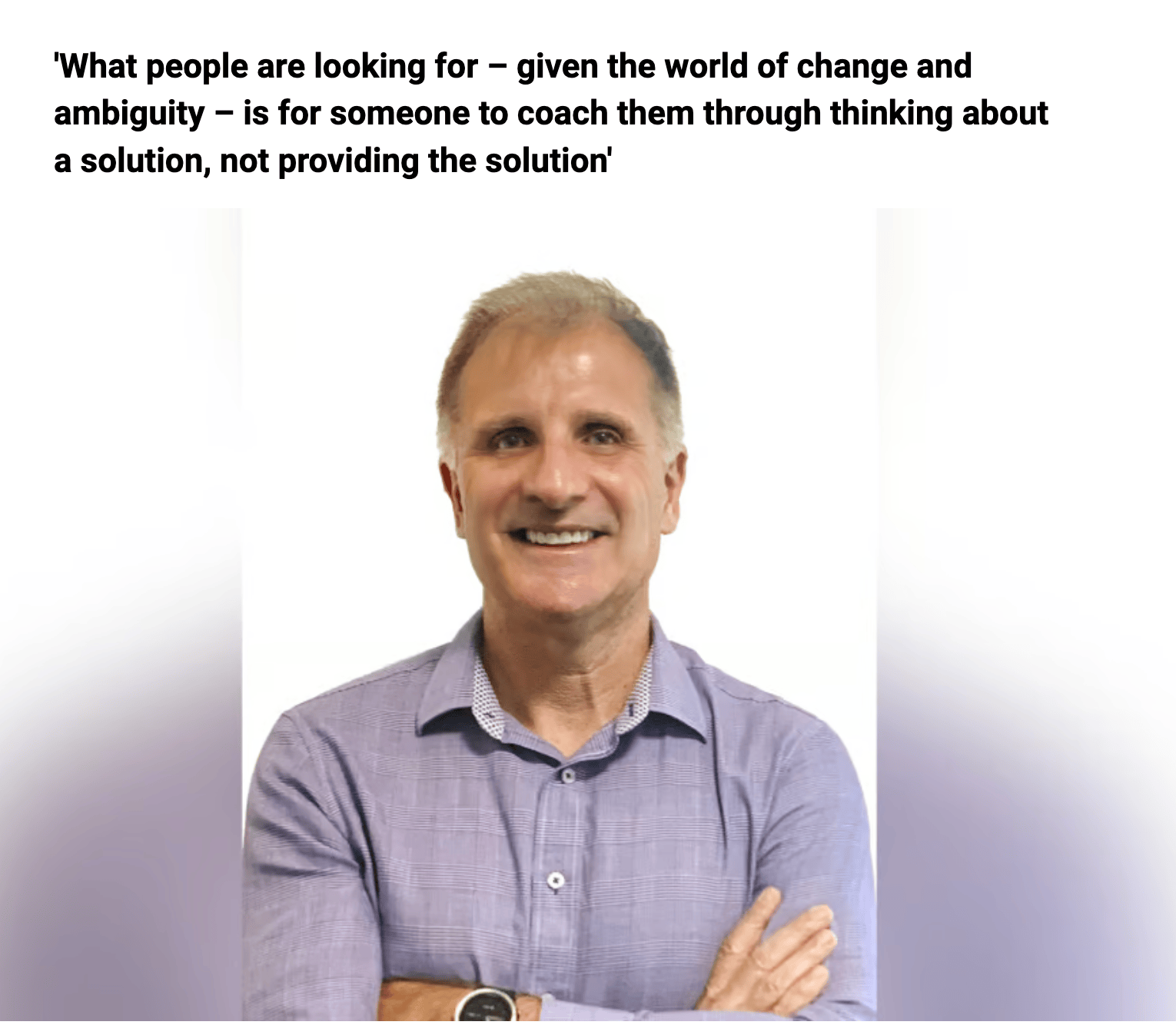
What workers are getting from their managers right now is simply not good enough, says Bruce Watt, senior vice president at DDI who leads operations in EU, Australia, India, in talking with HRD Asia.
“A lot of managers want to be helpful. They want to actually provide help with a solution or try to set somebody in the right direction. And what they do is they provide [the] solution,” says Watt.
“What people in organizations are looking for now – given the world of change and ambiguity – is for someone to help them, to coach them through thinking about a solution, not providing the solution. So [there’s] that disconnect between coaching as a seeking activity and facilitating an understanding of what to do versus telling.”
And the problem is getting worse, as employers do not seem to be investing enough resources to improve coaching within their organizations, he says.
“If you look at the global leadership forecast and the trend over the last 25 years, there has been an increased expectation from employees for good coaching. So that’s where that statistic now comes from. And so the discrepancy between what they’re expecting and needing, and what they’re receiving is growing.
“The reason for that is pretty obvious: [it’s] the world we’re in at the moment – with the tectonic changes with things like AI, ways of work – and, obviously, technologies are evolving very quickly.”
What are the benefits of coaching in the workplace?
The economics of coaching in organizations have a lot to do with increased productivity, improved efficiency and effectiveness, and this makes companies more money, says Watt.
Executing an employer’s coaching strategy “ultimately comes back to how people do their jobs,” he says.
“Think about an employee who is having difficulty with a co-worker that they’re trying to collaborate with. There are some difficult conversations and then those conversations lead to other conversations with other people. And they ask their manager to help them work through that issue.
“If you resolve that issue, or if you help the individual with an option, that improves their ability to deal with that co-worker. The amount of time it saves from a productivity point of view – not just for that person, but for other people – has tangible monetary value.”
Younger employees in the United States are very concerned about getting replaced by someone who has better skills at generative AI, according to a previous report.
What are the coaching needs in a workplace?
To improve coaching within the organization – especially as artificial intelligence takes that spotlight – employers must address both the personal and practical needs of workers, says Watt.
There’s a lot of ambiguity around AI regarding the benefits and risks it brings to the table, he says.
“Managers should be really in tuned to thinking for their teams. How do they feel about AI? What are their concerns? Are they worried about losing [their] jobs, for example.”
It’s important for managers to have engaging discussions with their workers about this, he says.
“AI represents a really significant moment in history, almost of the magnitude of the Industrial Revolution. And people don’t know what’s going to happen next. Is it good? Is it bad? So the coaching becomes more of a personal need” instead of just focusing on understanding how to use AI, he says.
Ultimately, employers must create a culture of coaching in the workplace, says Watt.
“An organization needs to declare that they want a culture of coaching. That is not going to happen by chance. So if you accept that, then actually invest in properly preparing your leaders and everybody in a process of coaching and a process of feedback.”
Coaching “essentially needs to happen in the flow of work,” he says.
Managers need to be receptive to honest feedback about the effort they put into coaching and whether they are teaching workers well. Also, employers should implement a way to measure the success of coaching and feedback systems.
“If we’re serious about it, we will see many organizations that can genuinely develop a culture of coaching,” says Watt.
There’s a lot of good that comes from jumping. Jumping to catch a baseball as it’s going over the outfield wall can get you on ESPN’s SportsCenter. Jumping to get out of the way of an oncoming train can be literally life-saving. And then of course there is my personal favorite, jumping for joy. I mean, really, who doesn’t like joy?
But not all jumping is good. Some is downright bad. Perhaps none more so than jumping to conclusions.
The world was able to witness the pitfalls of jumping to conclusions in real-time recently when an attempt was made to assassinate Donald Trump. Within minutes, “experts” on social media knew exactly what happened, how it had happened, and why it had happened. One of the first accounts I read was on X, formerly known as Twitter. This “expert” declared the whole thing was fake, stating that there were no shots, no bullets, and no injuries.
Now you may find that hard to believe, but this “expert” had irrefutable proof. Their proof was that an AR-15 was likely used, and as “everyone knows” a bullet from an AR-15 that comes even within 1 foot of someone will “blow them apart.” A bullet couldn’t have just grazed someone’s ear; if it even came close to their ear, they would be gone.
How could anyone even begin to argue with “proof” like that?
That person had a preconceived notion of what happened and simply “bent” the “facts” to accommodate that notion. There was no attempt to discover any new information because that new information may challenge their thinking. They simply jumped to the conclusion they wanted.
Now before you go thinking that the person who posted that is an obvious idiot, you need to make sure that you don’t, at least at times, do the same kind of thing. Maybe not that crazy of a conclusion, but we all have the ability to “mind-bend” facts to get them to accommodate the outcome we’re hoping for.
Jumping to conclusions is very expensive for a business and very damaging to our personal lives. It’s likely you, me, and everyone else has made a decision at work that was based on a false, quickly jumped to, conclusion.
You may have also prematurely ended a relationship based on jumping to a conclusion too quickly. With too few facts and way too much emotion.
But we humans are emotional beings, and it almost seems to be human nature to jump to conclusions. So how do we control our nature and make fact-based, well-thought-out decisions that are less emotional and more logic-based?
That’s going to require that we change some habits. Habits of using facts “we just know” need to be replaced with reflective thinking and critical evaluation. Here are some ideas that can help you begin to make the necessary changes.
Gather All Information:
• Ensure you have all the relevant facts before forming an opinion. The key word there is indeed “before”.
• Seek out additional data if necessary, and avoid relying solely on initial impressions. First impressions are often incorrect, but that doesn’t make them easy to get out of your mind.
Consider Multiple Perspectives:
• Try to view the situation from different angles.
• Ask yourself how others might view the same issue and why they might hold different opinions.
Question Assumptions:
• Identify any assumptions you might be making. You know what assuming makes us, right?
• Challenge these assumptions and consider whether they are justified.
Delay Judgment:
• Give yourself time to think before making a decision.
• Avoid making snap judgments or decisions when you’re emotional or stressed. Remember, any decision made in less than 10 minutes is a snap decision.
Seek Evidence:
• Look for evidence that supports or contradicts your initial thoughts.
• Base your conclusions on concrete evidence rather than speculation or hearsay. “They” are the biggest liars in the world. “They” can never be held accountable because nobody really has a clue who “they” are. Don’t trust “they.”
Reflect on Past Experiences:
• Consider past situations where you might have jumped to conclusions and reflect on the outcomes. I’ll bet you’d like a do-over on many of them.
• Learn from these experiences to improve your decision-making process.
Engage in Critical Thinking:
• Use logic and reasoning to analyze the situation.
• Break down complex issues into smaller parts and evaluate each component systematically.
Ask Clarifying Questions:
• If you’re unsure about something, ask questions to gain clarity. Guessing and assuming make great springboards to a mistaken conclusion. Stay grounded by asking questions or doing as complete a job of research as possible.
• Don’t hesitate to seek further information from reliable sources.
Discuss with Others:
• Talk to others who might have more information or a different viewpoint. Be open to those different viewpoints and understand that even the smartest people can be wrong sometimes. That means you can be wrong sometimes too.
• Engaging in discussions can provide new insights and help you see the bigger picture.
Self-awareness:
• Recognize when you might be jumping to conclusions and take a step back to reassess. If you don’t have the facts, actual concrete facts, to support your conclusion, you may have jumped into something you shouldn’t have. Never hesitate to jump back out.
There’s a lot of discussion going on right now about “dialing down the rhetoric” and choosing our words more carefully. That’s hard to do when you’re in mid-air jumping towards a conclusion. So, think before you decide, think before you speak, and think before you risk making a fool of yourself.
Kinda sounds like thinking can solve a lot of problems. I hope that’s one conclusion we can all agree on.
Free Online Resource Helps Candidates Successfully Prepare For The CMCA Exam
By Madeline Hay, CAMICB’s Director of Exam Administration
Underscoring a quarter century of commitment to professionalism and excellence in community association management, CAMICB is excited to continue to celebrate the organization’s 25th Anniversary with the launch of a free, interactive online CMCA Exam Preparation e-Learning course.
The three-hour course, featuring a series of eight modules, is divided into two components. The first component features four learning modules focused on creating an examination review and preparation plan. The second component includes three scenario-based learning modules that are designed to put several of the knowledge areas tested on the CMCA examination in context using real-life scenarios. The three modules address knowledge areas that are challenging for many CMCA candidates: Risk Management & Insurance; Financial Controls; and Governance, Legal & Ethical Conduct. A final module is intended to offer some perspective on the exam preparation process and next steps.
Said Chair of the CAMICB Board of Commissioners Drew Mulhare, CMCA, AMS, LSM, PCAM, “CAMICB is always working to identify new tools to help CMCA candidates succeed on the exam. We’re excited to launch the CMCA Exam Prep e-Learning course – a free resource intended to put candidates on the path to the CMCA credential.”
The Course Modules
The exam preparation modules offer constructive test taking tips, discuss the composition of examination questions, give preparation advice, and provide an interactive self-assessment tool to help a candidate develop a study plan specific to that candidate’s needs and goals. The content-based modules ask the candidate to solve problems and answer questions using downloadable sample documents.
Each module takes approximately 10-25 minutes to complete. The course is designed to accommodate busy schedules and to allow candidates to work at their own pace, so they may stop and resume the modules as their schedule permits. Below is a brief description of the different modules and what candidates can expect.
Module 1: An Introduction
Learn what it takes to pass the CMCA exam. Get advice from working CMCAs about what worked for them as they were preparing for the test – and what didn’t. Find out some common misconceptions about the CMCA exam and uncover the key for understanding how to approach the exam questions.
Module 2: Devising a Study Plan, Part 1 – Prioritizing Topics
Discover how to establish and follow a solid study routine that’s tailored to your experience level. Get an in-depth look at the topic areas covered on the test and participate in a self-assessment exercise to determine which topics should be prioritized in your study plan.
Module 3: Devising a Study Plan, Part 2 – Strategies and Tips
Find out how to put your study plan into action. Learn practical tips and tricks to make the most of your prep time and take a closer look at some of the study resources available to you.
A recent course participant shared, “The study resources provided in the CMCA exam prep course are excellent. It gave me a much better understanding of what material to really focus on.”
Module 4: Test-Taking Strategies
Learn how to maximize your potential on exam day. Find out how taking practice tests can improve your performance on the exam, get some guidance on strategies to overcome test anxiety, and see what to expect when you go to the testing center.
Modules 5 and 6 use real-life scenarios that help you learn from detailed feedback. They also make use of downloadable sample files including Lakeside Terrace’s insurance declaration and financial documents to inform your decisions.
Said one course participant, “For me, the CMCA exam prep course was so much more effective than simply reading different texts.”
Apply your knowledge of risk management and insurance topics by putting yourself in the shoes of the community association manager for Lakeside Terrace Condominiums.
Module 6: Financial Controls – Refresher Content
Revisit your role as Lakeside Terrace’s community association manager as you encounter some scenarios that test key knowledge about financial controls.
Another real-life scenario allows you to visit Willow Grove Estates, where you have been hired as the association’s first community manager.
Module 8: Looking Back and Looking Forward
An opportunity to recall what you’ve learned and consider what you want to keep working on.
At CAMICB, we’re committed to offering a combination of study tools to enhance candidate performance. Therefore, we encourage exam candidates to develop a personal study plan incorporating a wide range of resources and reference materials. CMCA preparatory materials are all available online – most at no cost – to managers employed anywhere in the world. We’re thrilled to add our newest offering, the CMCA Exam Prep E-Learning Course, to our portfolio of resources.
Earning and maintaining this internationally-recognized credential propels a manager’s career forward, allowing for more advanced career opportunities and salaries that, on average, are 20 percent higher than non-credentialed managers. To get started and to learn more about the CMCA Exam Prep E-Learning course, visit www.camicb.org.
Meetings are broken. Something happened when work moved online in 2020, and opening up the office hasn’t fixed it. Every interaction with colleagues became a video call, and our days became a game of transactional Tetris: Where can I slot in this or that meeting? Now, with policies directing which days of the week to be where, the Tetris has gotten more complex.
In my work helping distributed and hybrid organizations flourish, I see employees commuting only to spend time in near-empty offices or on calls. It feels less like flexibility than a new constraint, and it’s not building the relationships we intended. It’s the worst of both worlds.
There is a better way. Instead of focusing on when and where we meet, we ought to start with why we’re coming together and let that dictate logistics. When I’m asked to help rebuild relationships and strengthen complex collaboration, I begin with foundational advice: The new work calendar isn’t about office or home, it’s about three gathering types and the conditions that serve them best.
Three Types of Gatherings
Why do I call them gatherings and not meetings? Names signal purpose. Meeting has a strong connotation, suggesting people around a conference table (or the online equivalent) and a tight agenda. Gatherings offer multiple purposes and release the idea that we must conduct a time-stamped march to check things off lists.
Transactional gatherings move work forward; relational gatherings strengthen connections; and adaptive gatherings help us address complex or sensitive topics. As transactional gatherings are easier to conduct online, relational and adaptive gatherings have become relatively scarce. Now is a great time to reintroduce and redesign these gatherings, as all had flaws even before the pandemic. Let’s look at the best conditions for all three. While I focus on distributed and hybrid environments, the lessons apply for any organization.
1. Transactional Gatherings
Transactional gatherings are about getting things done. Examples include daily standups, weekly sales updates, and planning meetings. They need three things to be successful:
Shared working documents
Cloud-based tools like Google Docs, Miro, and FigJam are game-changers. If your team hasn’t been using them, now is the time. Because multiple people can edit simultaneously, everyone sees updates in real time, and they far outweigh a whiteboard only a few can see.
Screen parity
Hybrid transactional gatherings — where at least two people are in the same room and the rest are distributed — benefit from screen parity, or having each person appear in an individual tile. As anyone who’s attended a hybrid meeting remotely likely knows, it’s hard to interact with a virtual conference room full of blurry people.
A host on the lookout for signals of participation
While tech adjustments go a long way, hosts have an additional responsibility when not everyone is together: spying signals of participation. A raised hand or a mic going off mute are signals to engage participants. I’ve found it advantageous to add a supplementary role: an engagement lead to support the host in ensuring active, equitable participation. In smaller events, the engagement lead and the host are synonymous. In bigger gatherings, consider appointing separate owners.
2. Relational Gatherings
Relational gatherings are intended to strengthen our connections. Examples historically included offsites, group lunches, or team-building outings. They need three things to be successful:
Clear objectives
Relational gatherings suffer most from “let’s just get everyone together” syndrome: the idea that just throwing people together will suffice. While these types of events can be lovely, they are not relationship builders. Instead, whether you’re convening two people or the whole organization, relational gatherings should be intentionally designed, with clear objectives. Instead of “get to know everyone,” try objectives like:
Learn about career evolutions
Understand driving motivations
Reflect on growth moments
These objectives give people a hook so they can get to know each other more naturally.
Structured activities
Instead of an amorphous free-for-all, structure time deliberately. Split the session into times to reflect (alone) and share (in small groups) through activities like the following:
Draw a map of your career, highlighting pivots.
Share one piece of work-related advice you return to often.
Tell a story of resilience.
Strong relationships are built by laddering up levels of openness, so these activities allow people to choose comfortable levels of exposure. A leadership team who has worked together for years and navigated rocky waters would likely share deeper stories than newcomers at an onboarding event.
If you have a subset of your team together, create a distinct, asynchronous way for non-attendees to engage. For example, for the advice activity, you could ask people to share their example over video in advance.
A mix of people from across functions, levels, or locations
Left to our own devices, we go where we’re comfortable: talking to our teammates, our peers, or those in similar circumstances. But organizations need us to have relationships beyond these silos, which relational gatherings can support by deliberately mixing people who wouldn’t naturally gravitate to each other.
3. Adaptive Gatherings
Adaptive gatherings help us address complex or sensitive topics where the right process or the desired outcome are not clear from the outset. These gatherings require agility and sensitivity. Examples include strategy sessions, innovation sprints, career conversations, or navigating the organizational impact of a societal issue. To be successful, they require three conditions:
A malleable, distinct environment
When I was at the design firm IDEO, where almost every client gathering was adaptive, we preferred rooms separate from team meeting spaces. Ideal were spaces where furniture was moveable, people could mill around, and there was no formal hierarchy implied (board rooms: out!). Space influences how people interact, so the location was the first clue to participants that this was not a run-of-the-mill conversation.
If you’re online, break out of video boxes. Design brainstorming sessions with video off and the focus on a digital jamboard. And try to host delicate conversations (where body language matters) with people sitting on couches or chairs rather than at desks, with the camera farther back to reduce intensity and allow for full-body signals.
A sense of safety
Historically, difficult or sensitive conversations happened in person, so we could watch body language and use physical surroundings to create a sense of safety. But we’ve learned over the pandemic that this isn’t always necessary — or desirable. An example is sensitive career conversations. While your instinct may be to hold these meetings in person, several employees have told me they prefer these discussions online. The screen helps them hold their emotions in check, providing a greater sense of control. Allow employees autonomy over where these are held (some may prefer online, others a walk-and-talk).
Release valves to dissolve tensions
Often, complex problems have time pressure, and release valves can help. To navigate to conclusions from a place of calm, create separation between discussing options and making decisions. In the room, that might be a coffee break with a shared laugh about something off topic. Online, encourage everyone to get outside and not think about the issue. This change in focus is not expendable, but rather a critical component of a successful outcome.
In a distributed organization I led, we needed to build a new guiding framework after a charged incident. To dissipate tension, we altered cadence and structure. First, we hosted a small digital round table to reflect on the incident (to allow emotions to flow when assessing the pain point). Next, we held one-on-ones with various individuals to understand diverse needs (the intimacy helped people feel more comfortable being vulnerable). Finally, we hosted a session to craft our new framework (by then, the emotions from the first two stages had sufficient space to dissipate).
What should you do if your gathering is all (or none) of the above?
While these use cases benefit from different conditions, it doesn’t mean you can’t combine them. An example is an offsite slated to build relationships, address complex strategic issues, and get work done. Set separate conditions for each: Mix and match people who wouldn’t naturally gravitate to each other, allow strategic discussions to have breathing room, and use distinct spaces for each type of activity.
Other events may not feel like they are transactional, relational, or adaptive gatherings. That’s okay, too. Because the path to an effective gathering is always to ask: Why are we meeting? What are we trying to accomplish? And to let each need have its own space and place. You may be surprised by the rhythm of when to convene in person. While it will vary by team needs, it’s more likely to be on a monthly, quarterly, or project cadence than weekly.
And if you can’t make organization-wide change, you can still impact your own gatherings. Within a policy that dictates where you should be, not why, reorient how you conduct gatherings by shifting your priorities from the logistics of your calendar to the needs of your people.
Amy Bonsall is the CEO of Collective, a platform that helps distributed organizations and their people flourish. Prior, Amy was an IDEO and Old Navy executive. She’s been on the pages and stages of Entrepreneur, IDEO.com, SXSW, Singularity University, and more, covering flourishing at work, working from anywhere, distributed organizations, and behavioral prototyping. She co-teaches a course on Designing a Business, hosted by IDEOU. Follow Amy on Instagram.