
By Jim Wilson for Human Resource Director
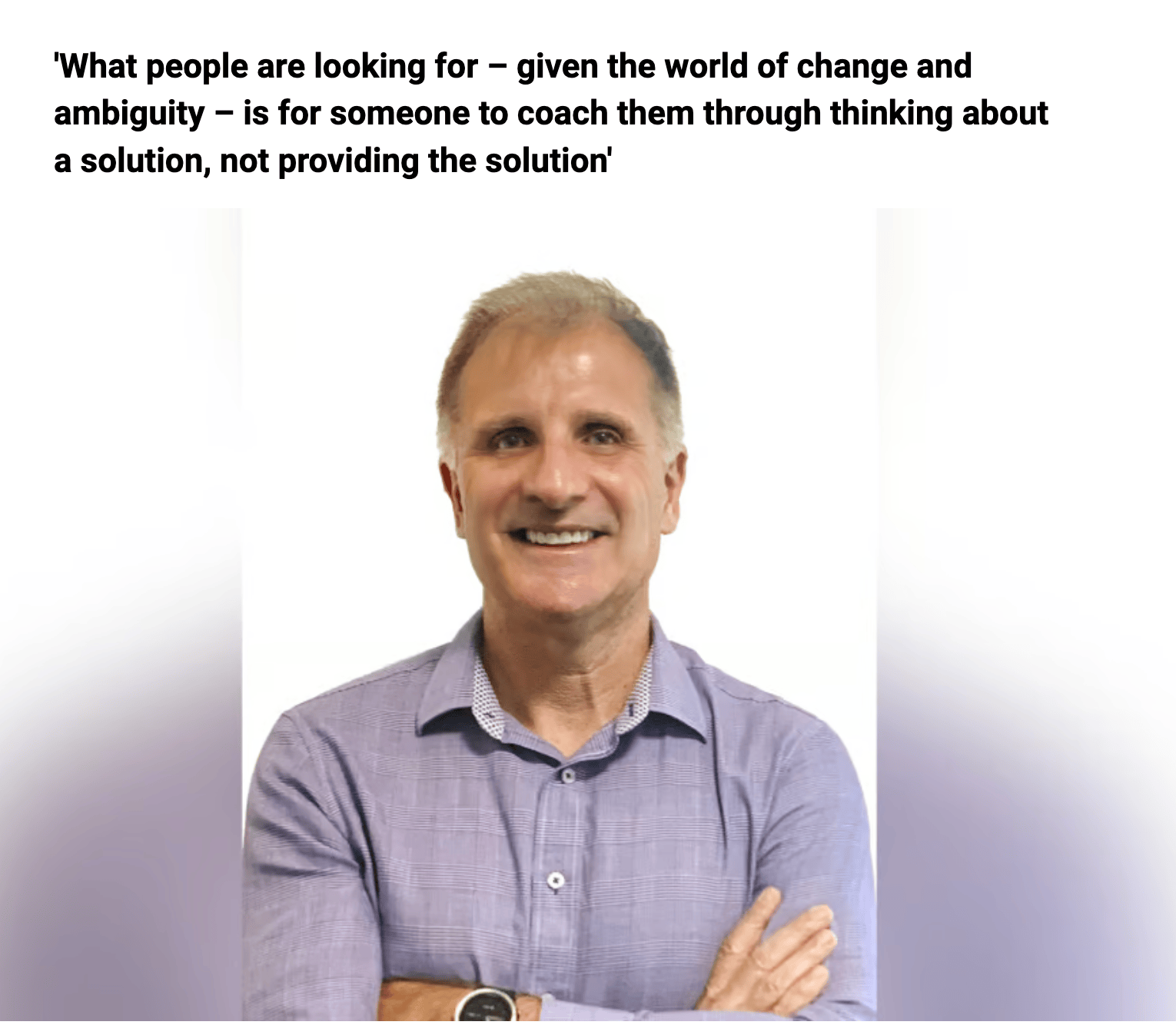
There is an ongoing coaching deficiency in the workplace, according to a recent report.
Overall, 40% of leaders report inadequate coaching from their managers, finds leadership company DDI. And 31% of frontline leaders want more coaching than they are currently receiving from their managers.
What workers are getting from their managers right now is simply not good enough, says Bruce Watt, senior vice president at DDI who leads operations in EU, Australia, India, in talking with HRD Asia.
“A lot of managers want to be helpful. They want to actually provide help with a solution or try to set somebody in the right direction. And what they do is they provide [the] solution,” says Watt.
“What people in organizations are looking for now – given the world of change and ambiguity – is for someone to help them, to coach them through thinking about a solution, not providing the solution. So [there’s] that disconnect between coaching as a seeking activity and facilitating an understanding of what to do versus telling.”
And the problem is getting worse, as employers do not seem to be investing enough resources to improve coaching within their organizations, he says.
“If you look at the global leadership forecast and the trend over the last 25 years, there has been an increased expectation from employees for good coaching. So that’s where that statistic now comes from. And so the discrepancy between what they’re expecting and needing, and what they’re receiving is growing.
“The reason for that is pretty obvious: [it’s] the world we’re in at the moment – with the tectonic changes with things like AI, ways of work – and, obviously, technologies are evolving very quickly.”
What are the benefits of coaching in the workplace?
The economics of coaching in organizations have a lot to do with increased productivity, improved efficiency and effectiveness, and this makes companies more money, says Watt.
Executing an employer’s coaching strategy “ultimately comes back to how people do their jobs,” he says.
“Think about an employee who is having difficulty with a co-worker that they’re trying to collaborate with. There are some difficult conversations and then those conversations lead to other conversations with other people. And they ask their manager to help them work through that issue.
“If you resolve that issue, or if you help the individual with an option, that improves their ability to deal with that co-worker. The amount of time it saves from a productivity point of view – not just for that person, but for other people – has tangible monetary value.”
Younger employees in the United States are very concerned about getting replaced by someone who has better skills at generative AI, according to a previous report.
What are the coaching needs in a workplace?
To improve coaching within the organization – especially as artificial intelligence takes that spotlight – employers must address both the personal and practical needs of workers, says Watt.
There’s a lot of ambiguity around AI regarding the benefits and risks it brings to the table, he says.
“Managers should be really in tuned to thinking for their teams. How do they feel about AI? What are their concerns? Are they worried about losing [their] jobs, for example.”
It’s important for managers to have engaging discussions with their workers about this, he says.
“AI represents a really significant moment in history, almost of the magnitude of the Industrial Revolution. And people don’t know what’s going to happen next. Is it good? Is it bad? So the coaching becomes more of a personal need” instead of just focusing on understanding how to use AI, he says.
Ultimately, employers must create a culture of coaching in the workplace, says Watt.
“An organization needs to declare that they want a culture of coaching. That is not going to happen by chance. So if you accept that, then actually invest in properly preparing your leaders and everybody in a process of coaching and a process of feedback.”
Coaching “essentially needs to happen in the flow of work,” he says.
Managers need to be receptive to honest feedback about the effort they put into coaching and whether they are teaching workers well. Also, employers should implement a way to measure the success of coaching and feedback systems.
“If we’re serious about it, we will see many organizations that can genuinely develop a culture of coaching,” says Watt.
Employees would leave their employer for not providing opportunities to further their careers, according to a previous Randstad report.