Unknown's avatar

About CMCA ~ The Essential Credential

CAMICB is a more than 25 year old independent professional certification body responsible for developing and delivering the Certified Manager of Community Associations® (CMCA) examination. CAMICB awards and maintains the CMCA credential, recognized worldwide as a benchmark of professionalism in the field of common interest community management. The CMCA examination tests the knowledge, skills, and abilities required to perform effectively as a professional community association manager. CMCA credential holders attest to full compliance with the CMCA Standards of Professional Conduct, committing to ethical and informed execution of the duties of a professional manager. The CMCA credentialing program carries dual accreditation. The National Commission for Certifying Agencies (NCCA) accredits the CMCA program for meeting its U.S.-based standards for credentialing bodies. The ANSI National Accreditation Board (ANAB) accredits the CMCA program for meeting the stringent requirements of the ISO/IEC 17024 Standard, the international standards for certification bodies. The program's dual accreditation represents compliance with rigorous standards for developing, delivering, and maintaining a professional credentialing program. It underscores the strength and integrity of the CMCA credential. Privacy Policy: https://www.camicb.org/privacy-policy

Become a CAMICB-Approved Education Provider: Elevate Your Impact on Community Association Management

By Janae Langreck, CAMICB Project & Volunteer Manager

Do you design impactful continuing education for community association managers? Whether you’re an educator, consultant, or organization with a strong track record, there’s an opportunity to broaden your influence. Join us as a CAMICB-Approved Continuing Education Provider and help raise the bar for industry excellence.

CAMICB is inviting qualified individuals and organizations to apply for provider status and offer approved continuing education programs for Certified Manager of Community Associations (CMCA) credential holders. As a provider, you play a vital role in shaping the professional growth of community managers—ensuring they stay current, compliant, and confident in their leadership roles.

Why Become a CAMICB-Approved CE Provider?

Becoming an approved provider isn’t just about gaining recognition—it’s about joining a respected network of educators dedicated to elevating standards in community association management. You’ll gain access to a motivated audience of professionals seeking to maintain their CMCA credential while contributing meaningful content that directly supports their success.

Your courses can cover a wide range of relevant, high-demand topics, including:

  • Accounting and Business Practices
  • Budgets, Reserves, Investments, and Assessments
  • Community Governance and Leadership
  • Ethics and Legal Issues
  • Property Maintenance and Contracting
  • Risk Management and Insurance
  • Effective Meeting Management

Flexibility and Innovation in Course Delivery

In today’s digital world, continuing education is more accessible than ever. CAMICB recognizes the importance of flexible learning formats—virtual courses, webinars, and other electronic platforms are welcome. However, providers must demonstrate that their delivery system reliably tracks student participation to ensure engagement and compliance.

Organizations offering in-house training programs can also seek approval, with up to 8 CE credits available through pre-approved internal content. These programs must meet the same high standards and will also be reviewed by the CAMICB Continuing Education Review Committee.

Simple Application Process — No Fees Required

The path to becoming a CAMICB-approved CE provider is straightforward and cost-free:

  1. Create an account on the CAMICB continuing education website.
  2. Submit your application through the portal.
  3. Track and manage all your submitted and approved programs from your account dashboard.

There are no fees to apply or to maintain your provider status, making this an accessible opportunity for experts who want to give back to the profession and grow their visibility within the industry.

Ready to Get Started?

If you care deeply about advancing professional education and take pride in high standards for community association management, we want to hear from you. Bring your knowledge to the table—and help shape the next generation of managers. Visit the CAMICB Continuing Education Website to learn more  — > https://bit.ly/4jjWn4i 

Here you will find:

  • Application requirements 
  • Application portal
  • A new CE Course Provider Checklist that offers tips for beginning the process, preparing your application, course submission requirements, approvals and other important notes.

As always – we’re here to help! If you have additional questions, you can also email continuingeducation@camicb.org.

What to Do When You Think You’re Being Micromanaged

by Justin Hale for Crucial Skills — A Blog by Crucial Learning

Dear Crucial Skills,

When my coworker follows up on my projects, I usually answer fine. But sometimes I get the sense that he’s checking up on me and checking my work, and I lose patience and lash out at him. How can I deal with this situation?

Signed,
Snappy

Dear Snappy,

I suppose I could butter you up and say this isn’t your fault and blame your jerk of a coworker.? But I’m going to go a different route. I’m going to guess there are two possible reasons for your coworker’s behaviors.

  1. He doesn’t fully trust you because you aren’t consistently reliable.
  2. He’s so stressed because of pressure being put on him, and he’s transferring that stress to you.

REFLECT ON YOUR BEHAVIOR

Organizations are littered with people who think they are high performers and yet perplexed why they don’t get promoted as quickly as they believe they should. Such employees commonly feel they are being slighted and wronged. And yet most of them have a career-limiting habit that they don’t see or aren’t willing to see.

In all the research we’ve done, common career-limiting habits relate to being productive, organized, and personably accountable. It comes down to this: are you consistent at doing what you say you’ll do, when you say you’ll do it? If trust is what makes or breaks a team, then getting stuff done is the currency of trust. I’d challenge you to dig deep and ask yourself:

  • What’s my role in this?
  • Do I see a pattern of people in my life checking up on me?
  • Am I constantly making excuses for why I can’t finish commitments?

Let me be clear, I’m not saying this IS your issue. But I’m not sure that it isn’t either. I don’t say this to try to demean you, but to wake you up to a new view of yourself. We all need this in our lives. I once received feedback that my tendency toward persuasion was abrasive for many of my colleagues. Tough news to hear, but it was vital tough love.

In your case, being reliable is something that’s in your control. When someone delegates a task, capture it somewhere other than your head. Writing it down or putting it immediately on a to-do list sends the message to the other person that you care, that the task is just as important to you as it is to them. Also, don’t agree to deadlines you know you won’t hit. You’ll simply be setting yourself up to fail.

MASTER YOUR STORIES AND BRING IT UP

I think you should bring up your concern with this colleague. Better to address the pattern than continue to suffer through it. But you need to start by checking your emotions. From your question, it sounds like you’re frustrated. The source of your frustration is likely coming from a story you’re telling yourself that this coworker is micromanaging you.  Since the problem of coming up with ugly stories takes place inside your own mind, that’s also where the solution lies. Those who are best at holding Crucial Conversations tell themselves a more balanced story. Instead of asking, “What’s the matter with that person?” they ask, “Why would a reasonable, rational, and decent person do that?”

By asking this humanizing question, you should gain a few other possible explanations for the checkups and you’ll be more effective talking about the issue.

Once you’ve checked your story and calmed your emotions, just be candid. Say something like, “Hey Juan, I’ve noticed with the last few assignments I’ve taken on for you that you check in on me almost every day, even though we agreed on a due date. I had every intention to finish by the date we agreed. But honestly, when you check in on me it makes me wonder if you think I will finish on time. Can you help me see your side of things?”

USE CHECKUPS AND CHECKBACKS

Sometimes the other person is so stressed that their worry drives them to become a nag. They may trust you, but the stakes are so high for them that they want to guarantee nothing goes wrong. While it’s understandable that someone might get to this point (we’ve all acted ineffectively because of stress), it’s also detrimental to others. So, to those who are giving the assignments, you gotta know the difference between a checkup and a checkback and use them correctly.

Do a checkup when you’re giving the assignment and are nervous or have questions. You’ve looked at the risk, the track record, and the person’s experience, and you’re feeling anxious or uneasy. This is the time to use a checkup. Say something like, “Since this is such an important project, I’m wondering if we could meet next Wednesday at 10am to review how it’s going.” In this case, you are in charge of the follow-up.

Use a checkback when the task is routine and has been assigned to someone who is experienced and reliable. Now that person is in charge. He or she offers suggestions, “How about we follow up at our next scheduled meeting?” or “The deadline is two weeks from today. Could we meet next Thursday fifteen minutes before our team meeting to touch base?”

To get results AND maintain healthy relationships, both checkups and checkbacks can be helpful.

Justin

Don’t Just Tell Your Team What to Do—Tell Them Why

Giving a reason boosts performance and reduces resistance—here’s how.

By Andy Lopata for Psychology Today

For such a small word, why has a tremendous impact. The presence of a reason, for example, makes it easier for people to reach out to others. The power of why extends to other scenarios.

Giving people a reason for a request can also be incredibly impactful in leadership. Many leaders focus on issuing clear instructions, but they often overlook the value of explaining the purpose behind a request. Without that explanation, even straightforward tasks may be met with resistance or resentment, while giving a reason helps to build engagement, ownership and motivation.

As Daniel Pink observed in his book Drive, “People at work are thirsting for context. They want to know that what they do contributes to a larger whole.”

A Simple Reason Leads to Strong Results

In a study conducted by Adam Grant of the University of Pennsylvania, employees in a university call center were split into groups. One group was told why their work mattered (for example, they were raising funds to help students), while the others received no explanation. The group given a reason for their activity raised more than twice the amount of money as the control group.

In Thinking, Fast and Slow, psychologist Daniel Kahneman explains that people are more likely to accept ideas when they experience cognitive ease—when the information feels easy to process and familiar. When a reason accompanies a request, it requires less mental effort to understand and accept, leading to less resistance and greater trust.

A clear correlation has been established between giving reasons for requests and the response received. There are other reasons why leaders should communicate purpose more clearly to their reports.

Creating Safe and Engaged Teams

In recent years, there has been a growing acceptance of the benefits of creating a psychologically safe environment for people to work in. Amy Edmondson, of Harvard Business School, has demonstrated how something as simple as giving a reason when making a request can increase feelings of psychological safety.

In her book The Fearless Organization, Dr. Edmondson states, “When people understand the rationale behind a decision or direction, they feel more included in the process—even if they didn’t make the decision themselves.”

When leaders provide the why behind a request, they move from command-communication to a more collaborative style of engagement. They are telling their team that they trust them to understand the whole picture and not to have to act blindly. As Edmondson highlights, this fosters interpersonal trust and reduces the perception of a power imbalance, helping to create a more psychologically secure environment.

Open communication also drives engagement, removing confusion about priorities and the bigger picture and increasing motivation. Linking a request to an overarching objective gives a purpose to the work, and, as Penn’s Grant has shown, people are more motivated when they feel that their work has meaning.

Simple Steps to Providing Purpose

It shouldn’t be a challenge to move from telling teams what to do to enrolling team members through purpose. It just takes a little thought and time and enough caring to explain rather than dictate. Here are some simple steps to shift your communication:

  1. Ensure you include a reason in every request or directive you give your team. Make it a core of your ask, whether verbal or written, so that communicating that purpose clearly becomes second nature.
  2. Bring your requests to life by sharing real-world examples, telling stories and explaining exactly what success will look like if everyone plays their role.
  3. Don’t just tell, ask. Take purpose to another level by sharing your ideal outcome and inviting your team to share their ideas for a path forward before allotting tasks. After all, if you reach your objective with everyone on board, does it matter where the ideas came from?

Giving reasons for requests and direction is a simple way to turn instruction into inspiration. By doing so, you’ll see better results, greater team engagement, and more-trusted relationships with the people you lead.

There’s a very simple reason why!

Bill Could Limit HOA Control Over RVs and Food Trucks

By Chris Davis

STATEHOUSE — Your homeowner’s association might not be able to keep people from having RVs or food trucks in the neighborhood, if a bill discussed Tuesday (HB1389) on the Indiana Senate floor becomes law. Some lawmakers feel that is a threat to property values.

“Sometimes HOAs become a little too aggressive,” said Sen. Mike Bohacek, of LaPorte County, who supports the bill.

He cited a bill from 2022 that would keep HOAs from prohibiting the installation of solar panels as precedent.

“Sometimes when there’s new technology they want to force that technology. And, sometimes we have to step in and make sure that they don’t,” he said.

Sen. Michael Young, of Indianapolis, spoke passionately on the bill, which he believes takes protections away from Hoosiers who have worked hard to pay for homes and who don’t want to see bulky vehicles clogging driveways.

“What happens if I bought this house and I bought it because we weren’t gonna have a 48 ft. RV sitting in the neighborhood during the winter or a food truck?” he asked. “Now I’ve got a ..food truck that looks horrible setting [sic] in the driveway right next to my property and now the provision that I can use to keep that food truck out is now gone!”

It wasn’t clear if the Senate took any action on the bill Tuesday.

Questions regarding Reserves Part 2

By Kelly G. Richardson, Esq. CCAL, HOA Homefront Column

Question: Can major landscape renovation use reserve funds when too little funds are available as a line item? M.K., San Diego

Question: Should HOA boards expense directly out of reserves without establishing a maintenance budget annually? D.L., San Marcos

Dear M.K. and D.L.: The reserve fund is established so that the HOA can build up money to offset the ongoing deterioration of common area components included in the HOA’s reserve study. If the reserve study included landscaping elements, then reserve funds could be withdrawn for that purpose, but normally HOAs do not include those items in their reserve studies. Civil Code Section 5510(b) does not allow HOAs to use reserve savings funds for items not included in the reserve study. However, HOAs are allowed to borrow from the fund to meet short-term expenses if they follow the requirements of Civil Code Section 5515. The board must announce the proposed borrowing in an open meeting agenda and in that announcement must also explain why the borrowing is needed, give options for repayment, and indicate if a special assessment is being considered. That borrowing must be repaid within one year unless the board in a written finding determines a temporary delay in repayment is necessary.

The purpose of the reserve fund is to protect the HOA’s long-term financial interests, so diverting that money to another purpose outside the reserve study is a bad idea. Doing so is essentially stealing from the HOA’s future, like living on credit cards.

Best, Kelly

Dear Kelly: Our board believes the reserve fund is just a bank account and the required reserve study is just advisory. Therefore no increases for inflation have been made for many years and we are classified “underfunded.” Is there any state agency that we can appeal to? Thank you for your column, P.J., Palm Desert.

Dear P.J.: No state agency forces HOAs to obtain reserve studies and accumulate funds in reserves. Technically, reserve studies ARE advisory – but they statutorily created reports, which are supposed to guide HOAs toward protecting themselves from the fact of deterioration of assets. The problem of HOAs not sufficiently attending to their reserve funds is so great that in 2012 the California Department of Real Estate issued a “Consumer Warning” about the risks of living in underfunded HOAs. There is no official definition of “underfunded,” although many reserve study providers and experts believe that a balance which is less than 70% of the currently required accumulation is “underfunded.”

Underfunded HOAs may find property values affected – the disclosures required by Civil Code 5570 are intended to highlight to prospective buyers the HOA’s level of financial health regarding reserves. Furthermore, Fannie Mae and Freddie Mac (the two government-sponsored entities backing most residential mortgages in the U.S.) require that at least 10% of the HOA’s budget be devoted to funding its reserve account. It’s important to remember that placing money in reserves is not really an expense but is saving for future expense – expenses that are certain to occur. An increasing number of underfunded HOAs are learning that their members cannot qualify for FNMA or Freddie Mac loans… more about that in part 3 of this series.

Studying and calculating reserves is legally required. Following the reserve study recommendations is sound HOA financial management.

Sincerely, Kelly

Co-ops and Condos Would Benefit From Revised Solar Tax Credit

HABITAT Magazine

A likely revision to the state’s solar tax credit could be a windfall for New York City co-op and condo boards struggling to pay for retrofits that will cut their buildings’ carbon emissions and bring them in compliance with Local Law 97.

Under the current law, City Limits reports, homeowners can reduce their income tax payments by 25% of the cost of their solar panel system, up to a maximum of $5,000. The proposed legislation would double that cap to $10,000 — and give low-to-moderate-income residents the option to collect the credit as a tax refund. It would also make it easier for co-ops and condos to access the benefit by essentially removing a limit on the amount of solar power these properties can use the tax credit towards.

The bill was included in both the Senate and the Assembly’s “one-house” budget proposals. If it makes it into the final budget, which is due on April 1, it automatically passes both houses and just needs Gov. Kathy Hochul’s signature to become law.

“It’s a no brainer,” says Sen. Peter Harckham, who is sponsoring the bill in the Senate. “I don’t see who would be opposed to something like this. We’re cleaning our air, we’re adding clean energy to the grid, and we’re allowing the homeowners to save money on their electric bills.”

Under the current law, homeowners who don’t have taxable income — or retirees whose tax liability is less than the credit would be worth — can’t use much of the benefit. By giving people the option to collect the tax credit as a refund, the new bill addresses the equity issue and allows more homeowners to use the incentive, advocates argue.

Making it easier for more properties to switch to clean energy is urgent, supporters say, especially since only 29% of New York’s power comes from renewable sources right now. The state’s goal of drawing 70% of its energy from renewable sources by 2030 is beginning to look unattainable.

“New York State is behind on its renewable energy goals,” says Kate Selden, a senior policy manager at Solar One, a nonprofit that helps New Yorkers install solar panels. “And so anything we can do to accelerate solar will play a major role in helping expand renewable energy.”

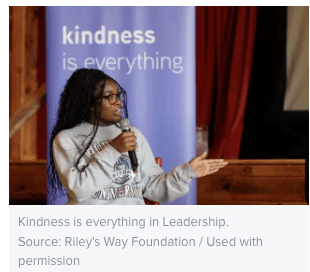
Leading With Hope and Kindness: 5 Ways to Be a Better Leader

Five Qualities of a Great Leader: Hope, Trust, Gratitude, Strength, and Purpose

By Christine O’Connell, Ph.D. for Psychology Today

Leadership isn’t just about making decisions or hitting targets, it is about inspiring, empowering, and creating a culture where people feel valued. The best leaders don’t just manage; they uplift. By fostering hope, trust, and a strong sense of purpose, leaders can help their teams thrive.

1. Lead With Hope and Vision

Hope is a job that starts at the top. A 2025 Gallup Poll found that 56% of people believe hope is the most important trait in a leader. When employees see a leader who believes in a better future, they are more engaged, motivated, and resilient. Hope fuels optimism, encourages problem-solving, and helps people navigate challenges with confidence. Leaders should share their vision clearly, celebrate progress, and remind their teams that they are part of something meaningful.

2. Foster a Culture of Trust

Trust is the foundation of strong leadership. When teams trust their leaders, they collaborate more effectively, take creative risks, and perform better. Research shows that employees in high-trust environments are not only more productive but also happier and healthier. Trust isn’t built overnight—it comes from consistency, transparency, and genuine connection. Leaders should communicate openly, follow through on commitments, and actively listen. By doing so, they create a culture where people feel safe and supported.

3. Practice Gratitude and Invest in Well-Being

Gratitude isn’t just a nice gesture, it’s a leadership superpower. Studies show that when leaders express appreciation, employees feel more engaged, satisfied, and loyal. A simple “thank you” can go a long way in building a positive work culture. But beyond words, investing in whole-person health, including mental, emotional, and physical well-being, ensures that employees feel valued and supported, and helps avoid burnout. Burnout affects your bottom line. A Workhuman and Gallup poll found that workplace turnover due to burnout alone is 15-20% of payroll. Investing in whole-person health creates a deeper connection to the organization and builds workplace community. Supporting work-life balance, encouraging wellness, and recognizing individual contributions create an environment where people stay, and can do their best work.

4. Empower Others by Recognizing Their Strengths

Great leaders don’t just correct mistakes, they amplify strengths. A strengths-based leadership approach leads to higher engagement, better performance, and stronger teams. Instead of focusing on weaknesses, leaders should recognize what their team members excel at and give them opportunities to shine. Great leaders also recognize their own strengths and lean into those. When people feel seen for their talents, they gain confidence, take ownership, and contribute more meaningfully.

5. Lead With Kindness and Purpose

Leadership isn’t about being the loudest voice in the room, it’s about lifting others up. Kindness isn’t a weakness; it’s a powerful leadership tool. Leading with empathy, active listening, and genuine care creates an environment where people feel valued and motivated. And having a clear purpose beyond just profits or productivity helps inspire others to work toward something bigger than themselves.

The Leadership We Need Today

In a world filled with uncertainty, strong leadership matters more than ever. The best leaders don’t just focus on results, they focus on people. By fostering hope, trust, and purpose, they create workplaces where individuals feel empowered, supported, and driven to make a difference. As Maya Angelou wisely said, “A leader sees greatness in other people. He or she can’t be much of a leader if all she sees is herself.” The greatest leaders inspire, uplift, and leave a lasting impact.

Upholding High Ethical Standards

CAMICB Updates Its CMCA Standards of Professional Conduct and Enforcement Procedures

By CAMICB Executive Director, Matthew Green, CAE

A key component of CAMICB’s Credentialing Program requires a Certified Manager of Community Associations (CMCA) to adhere to a high standard of ethical conduct. This means CMCA credential holders must comply with the 10 CMCA Standards of Professional Conduct, which are designed to ensure that managers uphold their fiduciary responsibilities and comply with laws, governing documents, and professional integrity.?

CAMICB recently conducted a thorough review of the CMCA Standards of Professional Conduct as part of its regular cycle to ensure these critical elements of the CMCA certification program continue to align with industry standards and best practices. In addition, the review was designed to ensure that the standards remain relevant and applicable to the evolving demands of the community association management industry, both domestically and globally. While some changes were made to the standards themselves, the most significant updates are found within the accompanying clarification document. This document provides detailed guidance on the practical application of the standards, ensuring they are interpreted and enforced consistently. By modernizing the standards and clarifications, CAMICB ensures that CMCAs are held to up-to-date ethical standards while addressing global applicability and evolving industry standards. 

Said Greg Smith, CMCA, AMS, PCAM, Chair of the CAMICB Board of Commissioners, “These revisions reflect a commitment to maintaining high ethical standards and professionalism for CMCA credential holders while incorporating more explicit guidance on fiduciary responsibilities, conflict-of-interest disclosures, and data security practices.”

A summary of the key changes and updates follows:

Standard 1: Global Applicability and Compliance

The changes to Standard 1 make the policies globally applicable by removing jurisdiction-specific references.

Standard 6: Gratuities, Compensation and Disclosure

The changes to Standard 6 strengthen the requirements for disclosure of gratuities and compensation to enhance transparency while reducing the likelihood of conflicts of interest.

Standard 7: Continuing Professional Education

The updates to Standard 7 further emphasize the need for continuous education aligned with CMCA recertification. 

Standard 8: Fiduciary Duty

The changes to Standard 8 clarify the expectations around fiduciary duty by detailing what constitutes a breach.

Standard 9: Professional Conduct and Violations

The revisions to Standard 9 shift the focus from defining what constitutes a breach of due diligence to emphasizing the expectation of maintaining professional conduct at all times.

Standards 10: Records, Confidentiality, and Data Security

The updates to Standard 10 focus on the handling of client records, particularly the secure management of electronic data, in line with current data security practices. 

“These updates ensure that CMCA credential holders are equipped to meet the evolving demands of the community association management industry, reinforcing the value and trust associated with the CMCA credential,” added Smith.

CMCAs are encouraged to review the updated standards and the clarification document thoroughly to ensure their practices continue to align with CAMICB’s expectations for ethical conduct and professionalism. By staying informed on these updates, CMCAs can confidently uphold the high standards required for maintaining their credential and serving their communities effectively.

About The Standards Of Professional Conduct

The Standards of Professional Conduct, detailed at https://www.camicb.org/standards/, range from understanding laws applicable to community association management, to being knowledgeable on association policies and procedures, to carrying out fiduciary responsibilities, and participating in continuing education coursework. A violation of any of these Standards of Professional Conduct may be grounds for administrative action and possible revocation of the CMCA certification by CAMICB.  Abiding by these Standards of Professional Conduct help protect consumers and associations that hire or contract with community association managers. 

Enforcing the Standards of Professional Conduct

In order to maintain and enhance the credibility of the CMCA Certification Program, the CAMICB Board of Commissioners follow strict procedures that allow consumers and others to bring complaints concerning CMCAs to the Board. Similar to a regular review of the Standards of Professional Conduct, CAMICB also reexamined the procedures for suspending and revoking certification every two years. 

Through this process, CAMICB enhanced its procedures for reviewing, suspending, and revoking certifications to ensure they reflect the latest industry standards. These improvements underscore our commitment to maintaining the highest level of professional conduct and ensuring our processes remain transparent, fair, and aligned with global best practices.

More information, including a set of Frequently Asked Questions, a list of the 10 clearly outlined Standards of Professional Conduct, the procedures for enforcing the standards, and other pertinent documents, can be found at https://www.camicb.org/standards/.

HOA Homefront: Why is HOA living and governance so HARD

By KELLY G. RICHARDSON | kelly@roattorneys.com | Contributing Columnist for the LA Daily News

Living in HOAs and governing HOAs can seem frustrating at times, but there are reasons for that frustration, and sometimes recognizing the issues helps.

Property independence

Our society highly prizes the independent ownership of land. The “my home; my castle” philosophy is uniquely strong in the American culture, and it’s hard for us to embrace shared ownership of property.

However, for over 50 years, economic forces have pushed the American public increasingly to common interest communities to make property ownership affordable with amenities in desirable living locations. Many cultures around the world have few problems with the concept of shared control of property, but we haven’t fully embraced it yet.

Failure to embrace the trade-offs

What makes common interest communities work is the tradeoff of shared benefits for shared control. It’s great to be able to use a tennis court or a nice clubhouse, but it’s not mine, it’s OURS. That means the individual doesn’t have control over management of the court or clubhouse. Homeowners who enjoy HOAs the most are those who recognize and appreciate that trade-off.

Failure to read governing documents

The Covenants, or “CC&Rs” operate as an agreement that automatically binds all owners in the HOA. This is very powerful document, with provisions enforced by California courts unless there is a specific legal reason not to do so. However, many HOA homebuyers never bother to read through the CC&Rs before agreeing to close escrow.

Only later, after getting a violation letter from the HOA do they learn that, for example; recreational vehicles cannot be parked in driveways, that pets or rentals are subject to limitations, or that certain aspects of the home cannot be altered without HOA permission.

HOA CC&Rs, bylaws, and rules should be reviewed by homebuyers before their cancellation rights cease, to avoid major surprises that can change the way the homebuyer might have expected to own in that HOA.

Believing myths

One very common HOA problem is the homeowner who “shoots first, and asks questions later” regarding alterations of their property or common area around their property.

There is a reported appeal case in Southern California upholding a judge’s order that a homeowner dismantle the second story they had added to their house (in violation of the CC&Rs) and that they pay the HOA’s attorney fees.

Some people think that once they’ve moved a fence or changed their driveway that it will be harder for the HOA to challenge it, which often proves to be a very expensive mistake.

“Me” instead of “we”

Brilliant and otherwise highly accomplished people can become highly negative factors in their HOA because either as a homeowner or a director they focus only on their own desires and interests and base their comments, actions, and decisions on that focus.

If one only wants to focus on their own desires and has no time for anyone else’s values, opinions, or desires, that person will not do well in the common interest community housing model – as a homeowner or volunteer leader.

Here’s hoping these help toward better understanding and neighborliness in your community!

Kelly G. Richardson CCAL is a Fellow of the College of Community Association Lawyers and Partner of Richardson Ober LLP, a California law firm known for community association advice. Send column questions to Kelly@roattorneys.com .

City Partners With AI to Rework Condo Property Tax Assessments

New York City HABITAT Magazine

The robots are coming! The robots are coming!

New York City’s arcane, unfair and unloved property tax system is about the get help from a new source: artificial intelligence.

The Department of Finance has partnered with technology firm C3 AI for a six-month pilot program that will explore using AI to calculate the assessed value of the city’s residential condo properties, Crain’s reports. The program will use machine learning along with market and sales data, and it will investigate how practical it is to base property tax bills on sales comparisons for condo buildings with more than 10 units. Under the current system, co-op and condo assessed values are based not on sale prices but on the the value of comparable rental properties. (Assessed values, a fraction of market values, are part of the equation used to calculate property tax bills.)

C3 AI’s “approach is considered a more fair and transparent way to assess properties,” and the program could boost property tax revenues if successful, according to a notice published in the city record.

C3 AI’s appraisal platform would allow the city to identify and resolve data discrepancies, appraise several properties simultaneously and identify sites that require additional judgment, according to a promotional video on the company’s website. Every appraisal comes with “an evidence package and sales comparables that explain how the AI property value was generated.”

Valuations play a huge role in New York’s notoriously byzantine and controversial property tax system. Although officials tend to undervalue buildings, which leads to a lower tax bill, owners still frequently go to court to challenge their valuations.

The city released its tentative property tax assessment roll for fiscal year 2026 in January, which put the overall market value of the city’s buildings at about $1.6 trillion, up 5.7% year over year. It anticipated a 7.3% increase in the market value for condos, co-ops and rental apartment buildings.

If successful, the C3 AI pilot program could lead to a longer-term contract. Meanwhile, the organization Tax Equity Now New York (TENNY) is in the middle of a lengthy legal battle seeking to upend New York’s overall property tax system. The group argues that it breaks federal fair-housing laws by overtaxing neighborhoods where people of color make up the majority of residents and breaks the state real property tax law by overtaxing rental properties compared to owned homes.

The current law puts a cap on annual property tax increases, which has had the effect of lowering tax bills in neighborhoods where property is appreciating rapidly, while punishing neighborhoods that are experiencing slow or no appreciation in values.

The TENNY suit dates back to 2017, and the Court of Appeals revived it last year.