CAMICB is a more than 25 year old independent professional certification body responsible for developing and delivering the Certified Manager of Community Associations® (CMCA) examination. CAMICB awards and maintains the CMCA credential, recognized worldwide as a benchmark of professionalism in the field of common interest community management. The CMCA examination tests the knowledge, skills, and abilities required to perform effectively as a professional community association manager. CMCA credential holders attest to full compliance with the CMCA Standards of Professional Conduct, committing to ethical and informed execution of the duties of a professional manager.
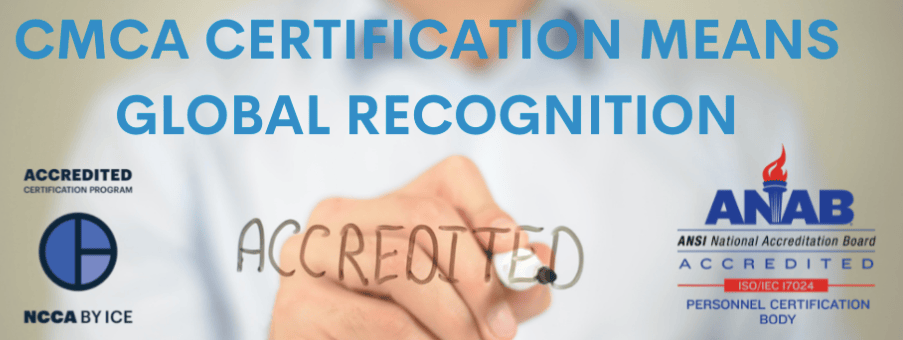
The CMCA credentialing program carries dual accreditation. The National Commission for Certifying Agencies (NCCA) accredits the CMCA program for meeting its U.S.-based standards for credentialing bodies. The ANSI National Accreditation Board (ANAB) accredits the CMCA program for meeting the stringent requirements of the ISO/IEC 17024 Standard, the international standards for certification bodies. The program's dual accreditation represents compliance with rigorous standards for developing, delivering, and maintaining a professional credentialing program. It underscores the strength and integrity of the CMCA credential.
Privacy Policy: https://www.camicb.org/privacy-policy
A highlight of the Annual CAI Conference is the unveiling of the CAI Volunteer Award recipients. The Awards program highlights the efforts of those who go above and beyond to demonstrate leadership, excellence, and dedication to support and advance community association governance, management, and living, as well as CAI programs and initiatives.
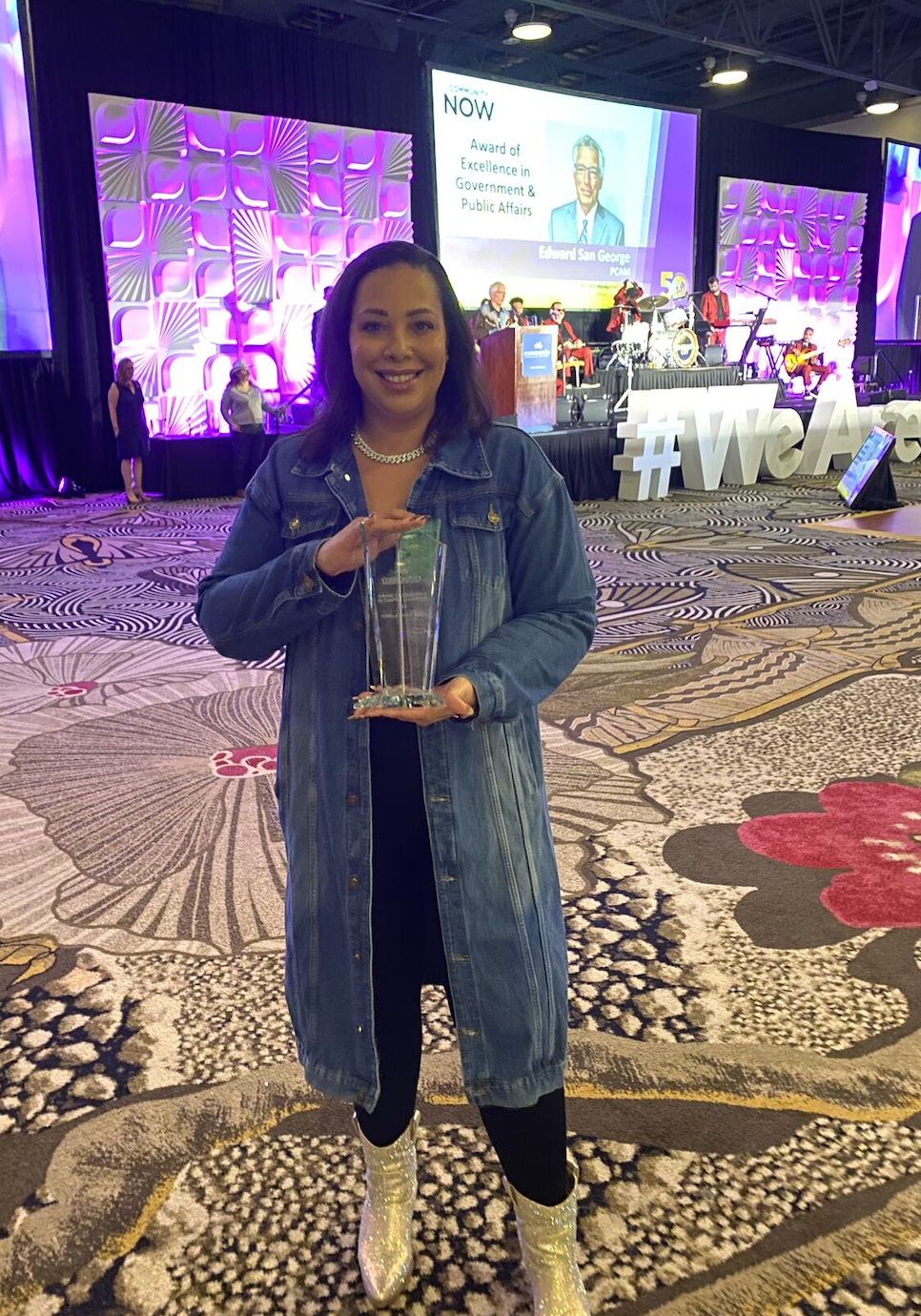
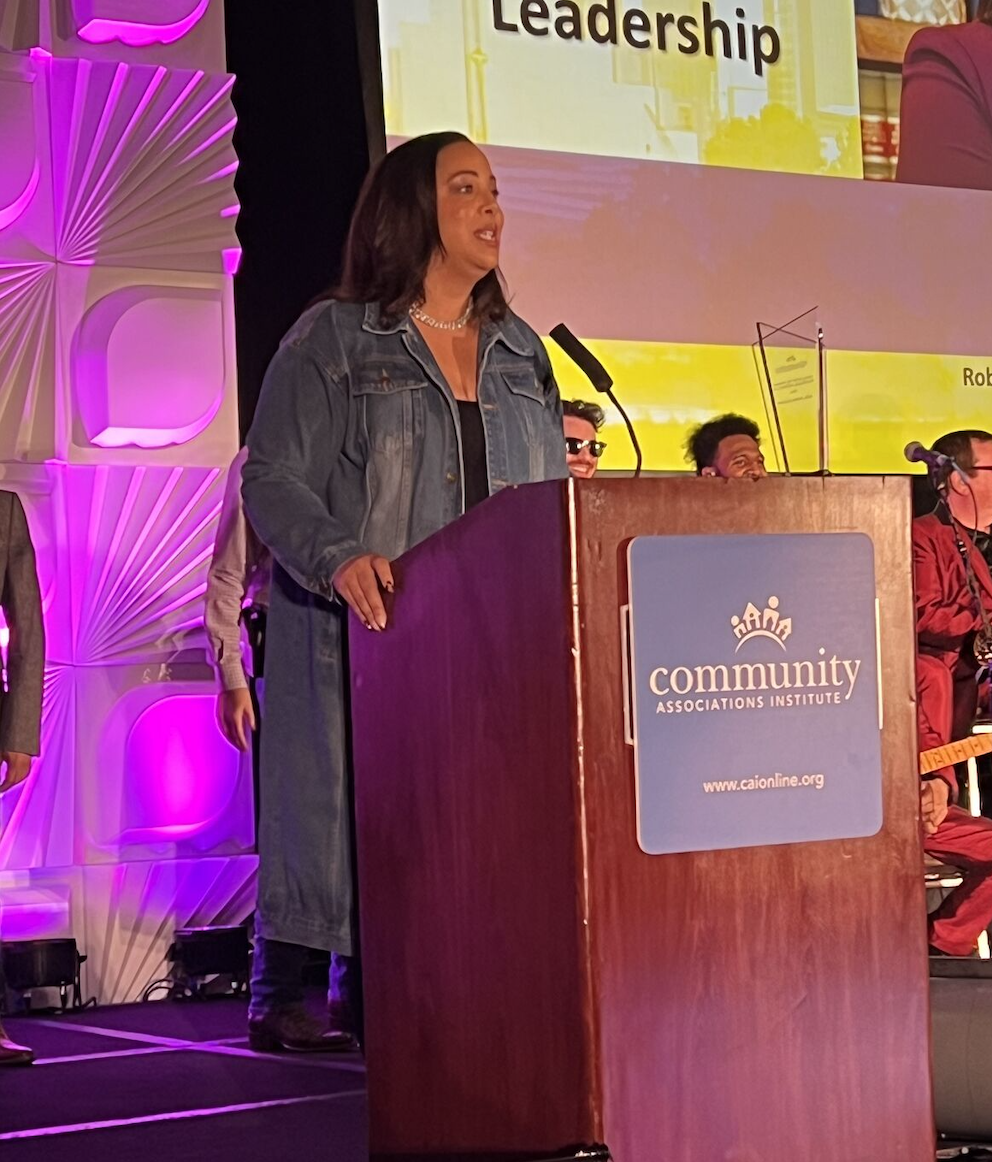
Congratulations to CAMICB Board Commissioner Noelle Hicks, Esq. who was awarded the CAI Award in Chapter Leadership! This Award of Excellence in Chapter Leadership honors an individual who has made significant contributions to advance national-chapter relations, and provided support and guidance to chapter leaders.
Noelle Hicks, Esq. is an Associate at Roberts Markel Weinberg Butler Hailey (RMWBH) PC and practices in the firm’s Real Estate Section as a member of the Community Association team, based in the firm’s Houston office. Noelle assists single-family residential, townhome, condominium, and some commercial associations with various aspects of property owners’ association law including the collection of delinquent assessments, complex deed restriction enforcement issues, developing and interpreting governing documents, and drafting and reviewing contracts. In addition, she works with her association clients on various issues such as ensuring compliance with state and federal laws, attending administrative hearings and board meetings on behalf of her clients.
There seems to be something of a trend among high-profile executives championing ambitious plans for change — stepping down from their lofty perches and into the trenches of the business.
Recent reports described how Laxman Narasimhan, the new CEO of Starbucks, spent several months before he assumed his role doing all sorts of things inside the company, including brewing and serving coffee at various locations. He devoted 40 hours to becoming certified as a barista, and then spent time at Starbucks shops in the U.S., Europe, and Japan. Narasimhan said it was “startling” to learn how hard it could be to pair the proper lid with the proper cup, one small sign of how complicated the company’s operations had become, and he experienced firsthand the different ways customers pay for their orders, from cash to loyalty cards to phone scans, and what that means for service times. The experience was so instructive, the CEO said in a letter to associates, that he plans to spend half a day each month working at different Starbucks locations, and he wants senior executives to do so as well.
Meanwhile, at Uber, change-minded CEO Dara Khosrowshahi recently decided that one way he could help the company become more attractive to drivers, who were not signing up in the numbers required for Uber to meet its targets, was for him to spend time as a driver himself. He delivered passengers, as well as food orders, in and around San Francisco, and experienced first-hand what so many drivers had been complaining about for years — from how hard it could be sign up with the company to how Uber punished drivers who rejected trips. His experience encouraged him to “reexamine every single assumption we’ve made” and helped shape Project Boomerang, his big change initiative.
These are fun and entertaining stories, and they reflect well on the CEOs. They are also an important reminder that one of the great risks for change leaders is that they get so immersed in crafting disruptive business models, deploying slick technologies, and approving flashy marketing campaigns, that they become isolated from those who truly make the business go — the customers who buy a company’s products or services and the people who deliver them. Ultimately, change programs work when they shape the behaviors and unleash the enthusiasm of the people closest to the work — the technologists who write code, the front-line employees who interact with customers, and customers themselves, who have the deciding vote on whether a company is doing something worthwhile.
Put simply, it’s hard to reach people’s hearts and minds if the CEO’s head is in the clouds.
Legendary management guru Tom Peters, who, at age 80, recently announced his retirement, has preached the gospel of MBWA—“Managing by Wandering Around”—for nearly all of his career. He and his In Search of Excellence coauthor Bob Waterman discovered the concept (and the acronym) when they spent time with Hewlett-Packard CEO John Young, himself a leadership legend. “I’m in love with the term,” Peters explains. “But I’m really in love with it as a metaphor. A metaphor for being in touch. A metaphor for not losing touch with your employees, your vendors, your customers. There is a discipline to getting out of your office, getting close to where the work is really done, and making sure that the normal course of affairs does not keep you from doing that.”
A few years ago, Harvard Business School professors Michael E. Porter and Nitin Nohria published a massive study based on the ultimate artifact of management discipline — the calendars and daily schedules of big-company CEOs. One of their key findings was that when CEOs spent time with colleagues (as opposed to customers, investors, or other external constituencies), they spent nearly half that time with direct reports, and another 32% with the top 100 managers. They spent only 6% of their time with rank-and-file employees. “CEOs face a real risk of operating in a bubble and never seeing the actual world their workers face,” Porter and Nohria warned, which hurts their “legitimacy and trustworthiness.”
It also hurts their feel for the intricacies of the business — opportunities for small-but-meaningful innovations and easy-to-implement workarounds that their high-level change programs might be missing as well as the hidden obstacles to adoption of their plans, or unlikely sources of support, they can’t identify from the corner office.
A few years back, I studied the remarkable turnaround of a health care company called DaVita, the second-largest dialysis provider in the United States. Then-CEO Kent Thiry championed all sorts of big strategic ideas and dramatic culture-change initiatives to transform a troubled organization in the life-or-death business of treating patients with end-stage renal disease. The campaign was so successful it attracted a big investment from Warren Buffet and became the subject of a business-school case study.
Early on in the turnaround process, Thiry designed a program called “Adopt a Center” in which senior executives (including the CEO himself) were required to develop a personal connection to a specific dialysis treatment facility — to spend time there, get to know the staff and patients, do work that did not require medical certification. When Thiry first told me about the plan, I assumed the idea was for executives to teach rank-and-file employees the basics of the business. This was a company, after all, that was fighting for its financial life. But that wasn’t the idea at all. The goal was for front-line caregivers to teach the executives why the business mattered. This was a company, after all, whose “customers” were literally fighting for their lives until they could receive a kidney transplant.
Later, as DaVita’s financial condition stabilized, Thiry raised his expectations for senior executives in a formal program called Reality 101. Every official with the title of vice president or above spends a week on the front lines of a dialysis center, helping to set up and tear down equipment, assisting in basic procedures such as blood-pressure monitoring, and experiencing in human terms the highs and lows, the laughter and tears, that everyone experiences in a typical week at one of these facilities. Reality 101 had an impact on front-line caregivers who worked alongside senior executives; they spent time with leaders who might have seemed like names on an org chart rather than colleagues, they came to understand a big-picture vision about change that might have felt abstract. But the impact that really disrupted individual mindsets, that shook people’s assumptions, was on senior executives who experienced the business in all its humanity.
One of the great threats to the long-term success of big organizations, Thiry argues, is when executives allow themselves to lose touch with what happens in the trenches, and when people in the trenches come to believe that the people in headquarters don’t understand their day-to-day struggles and problems. Reality 101 is one of many DaVita initiatives to maintain and strengthen a sense of empathy, not just between the company’s people and its patients, but between the company’s high-ranking executives and its front-line staff.
“This whole thing could not have happened if we relied simply on working through the executives,” Thiry told me. “The key to the transformation was that the front-line people, who got energized about the notion of a different kind of place to work and be a part of, swept along the executives. Two-thirds of the executives who got ‘converted’ in this process weren’t converted by me, they were converted by the energy and enthusiasm they saw in the centers. They experienced personally and emotionally how hard it is to take care of patients, how responsible you feel when you’re operating that equipment and delivering treatment. A lot of executives allow their empathy muscles to atrophy. Reality 101 reawakens the empathy muscle.”
That is a powerful insight, and it applies senior leaders in all sorts of fields, whether the business is serving coffee, driving passengers, or saving lives through dialysis. Leading change is both a top-down process and a bottom-up process, a matter of galvanizing ideas and unleashing passions. The goal is to educate and energize colleagues at every level, especially those on the front lines, about the power of your plans, and to be educated and energized by the pragmatic wisdom of their experiences. Even the most brilliant blueprint for change can benefit from a healthy dose of reality.
The Great Reshuffle continues as the shortage of frontline and hourly workers is still strongly felt across the labor market by industries in the private sector. Organizations are struggling with finding, hiring, and keeping good people yet ageism bias is rampant in the workplace, with many solid job seekers being overlooked. It is time to ask: Are older workers the answer to your hiring and retention issues?
Younger to middle-aged workers up to age 54 tend to look for employment that pays fairly while helping them fulfill their career vision. The mature worker in the 55-80 and beyond category seeks work for somewhat different reasons. Some have moved on from their earlier occupations and many of them will enjoy more years and even decades of good health. This, coupled with the ever-increasing cost of living and the uncertainty about Social Security has many of them rethinking what their futures look like.
Soft Skills and The Older Worker
Compassionate and empathetic. Warm and engaging. Able to size up customer situations charitably, and smoothly resolve service issues. Strong in the areas of relationship building and rapport with their workplace teammates. All qualities that workers aged 50 and up tend to bring to an organization. While every company’s customer service training should include these areas, with more experienced workers many of these soft skills are already in place–skills that are harder to teach than those of a more technical nature. Their customer service motivation tends to be strong. Seasoned in the best possible sense, mature employees can provide knowledge and a greater sense of stability to a team, not to mention loyalty to an organization. And many appreciate the opportunity to mentor younger members of their teams.
A Strong Work Ethic: Getting the Job Done Right
Older Gen Xers, Baby Boomers, and the post-WWll group aged 78-plus are famous for their strong work ethic. While not opposed to learning how to “work smarter” the idea of not working as hard is not in their collective wheelhouse. Generally speaking, they are already in the habit of showing up on time, meeting their deadlines, and are willing to spend additional time and effort to do something right. It is more of a “best it can be” approach than an “it’s good enough” mindset. Especially with the increasing use of AI for customer experience, our world offers increasingly quick results.
Diversity, Equity, and Inclusion (DEI): A Fresh Perspective on the Over 50 Crowd
Author and executive coach Dethra Giles believes many in HR overly focus on technical proficiencies when considering job applicants, despite that many older people are eager to learn and continue participating in today’s workplace. Worse, they assume older candidates might not have the ability to learn new technologies. Yet of the Baby Boomer generation in particular, two-thirds hold a college degree. They have strong entrepreneurial leanings and are twice as likely as Millennials to form new businesses. And since they aren’t necessarily looking for their next big career move, they are more likely to stick around, improving an organization’s employee retention rate.
Research is showing the main predictors of job performance–knowledge and expertise–keep increasing even into the eighth decade of life. For reasons including and beyond DEI, bringing more experienced employees on board is something to consider.
8 Ways to Attract Experienced Workers to Your Organization
In a recent Forbes article, Sara Zeff Geber, Ph.D. shared eight ways to attract and keep more highly experienced workers, based on an Activated Insights survey of 35,000 older workers in the US:
Offer meaningful roles connected to the organization’s mission
Think beyond rigid schedules; provide flexible scheduling
Make sure value and level of work matter more than tenure at the company
Shift leader mindset from transactional to one of empathetic engagement
Create the best environment with physical accommodations when needed
Encourage open and respectful communication among age groups
Have a zero-tolerance policy for ageism; highlight older workers as well as younger
Add fun to the mix, encouraging camaraderie within the work community
John R. DiJulius III, author of The Customer Service Revolution, is president of The DiJulius Group, a customer service consulting firm that works with companies including Starbucks, Chick-fil-A, Ritz-Carlton, Nestle, PwC, Lexus, and many more. Contact him at 216-839-1430 or info@thedijuliusgroup.com.
By Greg Smith, CMCA, AMS, PCAM , Chair of the CAMICB Board of Commissioners
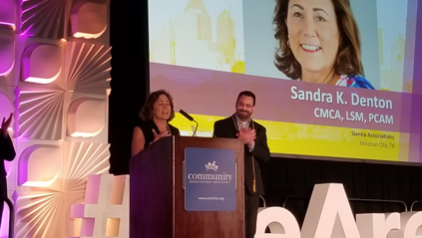
At the CAI Annual Conference and Expo in Dallas this month, I was thrilled to have the opportunity to offer a special recognition to a dedicated, passionate and devoted industry leader who has spent countless volunteer hours supporting and advancing the community association management profession and the CMCA credential.
Sandy Denton was Chair of the CAMICB Board of Commissioners for the past two years, but her service to CAMICB, and our profession, began long before that.
From her continued work as a Subject Matter Expert on the CAMICB Exam Development Committee for the past eight years, and her service on the Board of Commissioners from 2017 – 2022, to her former roles as CAI President as well as Chair of the Foundation for Community Association Research, Sandy remains a steadfast advocate for the profession and a devoted champion of the CMCA credentialing program. In fact, I believe Sandy is the first and only person ever to chair all three organizations—CAI, FCAR, and CAMICB!
I’ve had the privilege of knowing Sandy for many years; she’s one of those volunteers who consistently contributes in both visible and invisible ways. She’s the type of person you always know – or hear about – because she’s so impactful.
During her tenure as Chair of the CAMICB Board of Commissioners, it was very important to Sandy that CAMICB focus on diversity, equity, and inclusion. Under her leadership, we developed and adopted a DEI statement and approach which is now a significant element of our strategic plan. Sandy also felt strongly that we revisit and reestablish our strategic plan – not a small undertaking – which we accomplished at Conference last year thanks to her clear and thoughtful guidance.
To say it’s inspiring that Sandy contributed so much over the years while simultaneously building her own extraordinary career in her home state of Texas – is an understatement.
We’re grateful Sandy continues to generously share her time, knowledge and passion as an SME on the CAMICB Exam Development Committee, and she remains a renowned CAI faculty member and legislative advocate through her work on the CAI Government & Public Affairs Committee and the Texas Legislative Action Committee.
On behalf of the officers, commissioners and staff of CAMICB and on behalf of our profession, thank you, Sandy, for your extraordinary service and unwavering support.
Is this glass half full or half empty? The median asking price for homes in New York City jumped back over $1 million last month for the first time since June 2018, StreetEasy reports, signaling healthy values. But the 2,092 listings that went into contract represented a 29% drop from April a year ago, signaling a shortage of inventory.
With today’s elevated mortgage rates, it’s no surprise that sales this year have been more modest compared to 2021 and 2022, when unusually low mortgage rates led to surging buyer demand. The important trend to note right now is that buyers have not retreated from the market, even though mortgage rates have more than doubled since early last year.
The city’s housing market was on a correction course in 2019 due to a glut of unsold condo inventory. Now, market conditions are nearly the opposite of 2019: there’s a shortage of inventory relative to demand, particularly for pricier homes as buyers who can afford higher mortgage payments remain in the market.
The luxury segment — the top 5% of the market, priced above $3.5M — also saw steady buyer activity. In April 2023, 125 listings at this price point entered contract, compared to 146 in April of last year. The luxury market is normalizing after its record-breaking performance in 2021.
Buyers in the market for more affordable homes also saw strong competition, although it wasn’t as fierce as the market for more expensive homes. An average listing priced below $700,000 — roughly the bottom third of the current market by price point — received 13.7% more buyer inquiries in April of this year compared to April 2019. These homes are popular among first-time buyers or those hoping to downsize, due to lower carrying costs including monthly mortgage payments and maintenance fees.
The neighborhood with the most listings below $700,000 was Forest Hills, Queens, where in April there were 299 listings below this price point. Next up was Lenox Hill, Manhattan with 215 listings, and the next three were Jackson Heights in Queens (187), Riverdale in the Bronx (165), and Rego Park in Queens (145).
HOAs usually charge fees that add to monthly housing costs.
There are benefits of HOA living despite the fees and restrictions.
When you are buying a house, you’ll likely come across many neighborhoods where there is a homeowners association. HOAs often impose rules about what you can do with your home, and they also charge fees you’ll have to pay each month on top of your mortgage payment.
While the added cost of an HOA may seem undesirable, there are actually a few big benefits of living in a neighborhood with an association. In fact, here are some of the biggest upsides of living someplace with an HOA.
1. The HOA protects your property values
Your property values are affected by the quality of your neighborhood and by how your neighbors maintain their houses. After all, no matter how nice your own property is, no one will want to buy it if it’s next to a slum.
Homeowners associations set and enforce rules related to the upkeep of property in the neighborhood. They may also set other restrictions such as requiring approval before painting a house or adding lawn ornaments. These rules help keep the neighborhood looking nice, which in turn keeps property values higher.
2. The HOA maintains the neighborhood and amenities
HOAs usually maintain common areas, and some neighborhoods with strong associations have lots of amenities such as pools or golf courses.
These features can add value to your home since they are desirable to buyers, and they can also make it nicer for you to live in your neighborhood since you can take advantage of them.
3. Fees may include common utilities and maintenance tasks
In some cases, HOA fees include things like internet service, pool maintenance, or lawn care. When that is the case, it’s convenient to pay one common fee to get many different services rather than having to arrange for them individually and contract with companies to pay for them separately.
In some situations, you may actually end up saving money because it can be cheaper for internet companies or landscaping companies to provide their services to an entire neighborhood rather than to just individual households. The fees you’re paying could actually be a better value than paying for these services privately.
4. The HOA can deal with neighborhood disputes
When people live in close proximity to one another, it’s often inevitable that disputes arise. There could be issues for a huge number of reasons, from barking dogs to lawns that aren’t maintained to loud music playing and more.
When you live in an HOA neighborhood, you don’t have to directly deal with a neighbor who is causing you problems in your enjoyment of your own home. The HOA most likely has regulations related to common nuisances or issues that come up regularly. They’ll take care of addressing the issues that arise among neighbors so you don’t have to sour your relationship with those living near you or cope with the stress of a confrontation.
For all of these reasons, it’s worth considering an HOA neighborhood when you buy a property. Just remember you need to be comfortable with the rules the association sets as you’ll have to live by them too.
Companies making significant changes in how work gets done, WTW survey finds
Only one-third of U.S. employers effectively managed people, business and operational risks during pandemic
ARLINGTON, VA, May 9, 2023 — The drive to reshape work at organizations keeps on trucking, according to a new survey by leading global advisory, broking and solutions company WTW (NASDAQ: WTW). Furthermore, a relatively small number of organizations reported they are effectively managing the various business and people risks associated with the ever-changing work landscape.
According to WTW’s Dynamics of Work Survey, the number of companies in the U.S. that automate some of their work is expected to climb to 74% in three years, up from 65% this year and 51% three years ago. Additionally, those organizations expect that more than one-quarter (27%) of their work will be automated in three years, nearly double (14%) from three years ago. Respondents also said they expect over half of their employees (55%) will work either fully remotely or hybrid in three years, compared with 15% before the pandemic.
“As employers emerge from the pandemic, their need to reimagine how and where work gets done is at an all-time high,” said Tracey Malcolm, global leader, Future of Work and Risk, WTW. “This transformation, including the shift to remote work, has led to an increase in people, business and operational risks. Unfortunately, many employers believe they are falling short in the critical responsibility of managing these risks.”
Indeed, only one-third of respondents (33%) report they have effectively managed the risks associated with the dynamics of work — changing work conditions, digitalization and alternative sources of talent — over the past three years. Employers are currently taking or planning to take action to address these risks. These include:
Digitalization: One in five U.S. respondents (22%) is expecting and is prepared for greater use of digitalization and automation. This compares with one-third of respondents (33%) globally. Among those, 39% are redesigning jobs or roles to reallocate work between employees, nonemployees and new technologies; another 19% are planning to do so this year.
Working conditions: Two in five U.S. respondents (40%) are expecting and are prepared for greater use of changing working conditions. Globally, over four in 10 respondents (44%) are expecting and prepared. Among those, 37% have conducted employee listening activities to identify changes in employee preferences or measure the impact of changing work conditions. Another 36% are redesigning the employee experience to promote the shift to the new work culture.
Alternative talent sources: Over one-fourth of U.S. respondents (28%) are expecting and are prepared for greater use of alternative talent sources. Two in 10 respondents globally (21%) are expecting and prepared. Among those, 39% are redesigning the employee experience to align with new work and career models; another 15% are planning to strength external communication about changes to potential employees this year.
“The dynamics of work will continue to evolve for many years. Creating a sustainable competitive advantage will require robust strategies to unlock the potential of these shifts and careful management of people and operational risks. Effective plans will start by placing talent at the heart of work changes by understanding employee preferences and perceptions, aligning work and total rewards programs, and strengthening risk management frameworks,” said Amol Mhatre, head of Intellectual Capital, Research and Innovation, WTW.
About the survey
A total of 720 respondents globally, including 264 from North America, participated in the Dynamics of Work Survey. It was conducted during February and March 2023. Respondents employ 8.5 million workers.
About WTW
At WTW (NASDAQ: WTW), we provide data-driven, insight-led solutions in the areas of people, risk and capital. Leveraging the global view and local expertise of our colleagues serving 140 countries and markets, we help organizations sharpen their strategy, enhance organizational resilience, motivate their workforce and maximize performance.
Working shoulder to shoulder with our clients, we uncover opportunities for sustainable success—and provide perspective that moves you.
The Community Association Managers International Certification Board’s (CAMICB) CMCA credentialing program has been awarded international accreditation by the ANSI National Accreditation Board (ANAB) as complying with standard ISO/IEC 17024, a conformity assessment for personnel certification bodies. ANAB establishes the specialized system for worldwide standardization, setting the requirements and the framework, at a global level, for the operation of certification bodies. ANAB accreditation to the ISO/IEC 17024 Standard supports the increasing technological and global specialization of skills and personnel.
Said Chair of the CAMICB Board of Commissioners, Drew Mulhare, CMCA, LSM, PCAM, “Earning this ISO/IEC accreditation is critical because it shows the CMCA credential meets the global benchmark for certification programs and assures the CMCA credential is serving the field of community association management in a consistent, comparable, and reliable manner worldwide.”
Added Thomas M. Skiba, CAE, Community Associations Institute’s (CAI) Chief Executive Officer, “As the demand for education in community association management has grown considerably outside of the United States, so too has the need for an internationally accredited credentialing program. Earning this prestigious accreditation means the CMCA credential has achieved the highest standard in professional certification and stands alone in the community association housing profession.”
The CMCA credentialing program ISO/IEC accreditation came as a result of a rigorous evaluation conducted by ANAB, that included a thorough analysis of test data, and detailed audits of CAMICB’s management systems, test development and psychometric procedures.
Setting The Stage
Over the past 25 years, the CMCA credential has been a catalyst in establishing community association management as a discrete profession. The common interest community housing model exists around the world and there has been consistent interest in the CMCA credential, the educational pathways to achieve the credential and the continuing education requirement to maintain the credential. As the credential grew within the United States it became an important tool to building professionalism in the field outside of the Untied States.
CAMICB has strong support from a number of community association managers outside of the United States including Pepe Gutierrez and Michael Hurley. Pepe serves CAMICB as an active International Subject Matter Expert. He’s an internationally recognized proponent of the CMCA credential and advocate for professionalism in the field of community association management. Pepe, a professor at Burgos University in Spainand the founder of Megafincas Alicante management company, is a frequent speaker at international gatherings of community association managers and has written extensively on the issues common to community association management around the world.
“Earning ISO accreditation puts the CMCA credentialing program in a league of its own,” said Pepe Gutierrez, CMCA. “It’s the only accredited certification for community association management professionals around the world and it represents a baseline of professionalism, no matter where a manager is working.”
Michael Hurley has been a consistent force in helping CAMICB ensure all international partners are working for the betterment of our profession and industry. He continues to serve CAMICB as an International Subject Matter Expert. His perspective on the profession of community association management as it is practiced in Australia and elsewhere in the world has been invaluable in guiding our efforts to expand international delivery of the CMCA exam in a way that is responsive to all candidates, no matter where they are practicing.
Added Michael Hurley, Director of the Australian-based Strata Title Management Pty Ltd., “Gaining ISO/IEC accreditation is particularly important as recognition of the value of the CMCA credential has grown around the world. CAMICB already delivers the CMCA exam in Dubai, UAE, Australia, Canada, Panama and elsewhere outside of the United States; it’s particularly exciting to see the next phase of this expansion.”
A Major Milestone: Dual Accreditation
The CMCA credentialing program was first accredited in 2010 through the US-based National Commission for Certifying Agencies (NCCA), representing third-party validation of compliance with the highest domestic standards in professional credentialing. It has since been reaccredited twice by NCCA, most recently in 2020.
Achieving both NCCA and ISO/IEC 17024 accreditation places the CMCA credential in an elite cohort of professional certification programs and speaks to the importance the CAMICB Board of Commissioners places on conducting the CMCA program in full accordance with best practices in professional credentialing. “We take this responsibility to the profession seriously and are extremely proud of this achievement as we continue to establish the credential as a baseline for building the profession worldwide,” added Mulhare.
Always Maintaining High Standards
Community managers from around the world report that the responsibilities of a professional manager for condominiums, homeowners associations, housing cooperatives and master-planned communities are comprised of the core competencies identified by the CAMICB Job Task Analysis, including governance, legal, budgeting and reserves, contracting, financial controls, risk management, facilities maintenance, meetings and human resources. Dawn M. Bauman, CAE, former Executive Director of CAMICB and CAI’s Senior Vice President for Government and Public Affairs said, “The ISO/IEC accreditation of the CMCA program provides assurances to homeowners, developers, regulators, and legislators that professional managers who have earned and maintained the CMCA credential have the comprehensive competency and ethical standards to serve their communities.”
Both NCCA and ISO accreditation require continued compliance with their respective standards. To maintain NCCA accreditation, the CMCA credentialing program must undergo a rigorous reaccreditation process every five years. Following the initial ISO/IEC accreditation, the CMCA credentialing program will be reexamined on an annual basis through an in-depth document review and on-site assessment of the program.
Melonie Parker, Chief Diversity Officer at Google, discusses the importance of creating a culture of inclusivity where everyone feels they can bring their best selves to work.
The Chief Diversity Officer (CDO) role is becoming critical for organizations, with about 53% of Fortune 500 companies now having a CDO or equivalent role.
But the role comes with its own challenges at a time of significant setbacks in social and economic inclusion. How can DEI efforts be strengthened as a strategic imperative?
“Our workplaces should be safe havens, where we can bring the best of who we are into them.
“[When we do], innovation is better. We work better together. And we accomplish the business strategy faster,” Melonie Parker, Google’s Chief Diversity Officer, tells the Forum.
The Chief Diversity Officer (CDO) role is becoming critical for organizations. Among Fortune 500 companies, 53 percent now have a CDO or equivalent role and more than 60 have, since May 2020, appointed their first-ever diversity leader, estimates from McKinsey suggest.
The World Economic Forum’s Future of Jobs Report 2023 found that more than two-thirds of the organizations surveyed have a Diversity, Equity and Inclusion (DEI) programme, with women as the most common priority group for surveyed organizations’ DEI programmes across all regions and industries.
The timing is also critical, with the events of recent years showing that any progress made is easily reversible. The pandemic has caused a generational loss in gender parity, for example, increasing the projected time to reach global parity from 100 to 132 years.
LGBTQIA+ individuals continue to face stigma and discrimination, and only a small percentage of businesses are focused on the inclusion of people with disabilities.
The role itself comes with its own challenges, with about 60% of those holding CDO positions and their equivalents in 2018 having left the role. The reasons range from ambiguity about what the role should entail to the limited availability of organizational resources and support.
How can organizations address these struggles and strengthen efforts made towards diversity, equity, and inclusion (DEI)? We sat down for an interview with Melonie Parker to discuss the importance of her role, her journey, and what it takes to overcome challenges at an organization that operates in 200+ countries.
The transcript has been edited for clarity.
How would you describe this role?
The role of a Chief Diversity Officer is about influencing every part of the company. It feels like many jobs wrapped up into one.
What we’re influencing from a cultural standpoint is that everyone feels like they belong in that environment. And by belonging, I mean they feel they can come in and bring out the best parts of who they are. It also means that every group represented can progress, come in, and get promoted at the same rate.
What we’re looking for is: Are there any gaps in how people are experiencing the culture, how people are progressing in the environment, and how we are retaining that talent across as well? And then, that is important to innovation for the company’s products or services. And it’s also crucial to how the company can meet business goals and achieve its business strategy.
What does success mean in this role?
Success at the highest level means that everybody, across every identity, can see themselves working at Google and that they don’t see any barriers to their success.
When we released our first diversity annual report, we were focused on women and minorities. But looking at lived experiences through our employee survey, we now have 18 different identities we include because we’ve matured to look at our communities intersectionally.
We’re not flattening people by making them like a single dimension.
Who comes into the frame of being underrepresented or marginalized continues to expand. And so we have to be on watch and attuned continually. This is why the data is essential – to understand what needs to happen to continue to close the gaps to parity. It’s a marathon, not a sprint.
Why is it important not to ‘flatten people by making them like a single dimension’ at work?
I identify as a black woman, and for a very long time in my career, I did what was called code-switching, where I checked a part of myself at the proverbial door.
I took the part of myself that I thought would be acceptable in corporate America, and that was how I navigated work. And then, on my way out the door, I picked it up. My vernacular changed, and I could embrace all of myself outside of that.
“We’re not flattening people by making them like a single dimension.”— Melonie Parker, Chief Diversity Officer, Google
But when I made the switch and no longer did that, my experiences were richer and deeper because I didn’t have to leave part of myself behind to be accepted.
What are some of these challenges you’re currently looking at?
We are currently looking to ensure that we’re retaining our talent. I have a ‘Stay and Thrive’ team that works with underrepresented communities.
When we find out that people are considering leaving, we assign a case manager to help them navigate what’s going on, whether that’s internal mobility or a challenge in their work environment. And then, we help make Google small enough for people to navigate. We follow them one year after being in our program to ensure they’re still having success.
We also ensure all our Googlers can progress in their career. So we have programs for women and underrepresented minorities in the United States that are part of our ‘Pathways to Sponsorship’ programs. We co-curate an environment where they have access to mentors and a network they wouldn’t have otherwise had. And we see success with promotions coming across those groups.
We first saw this for women getting into executive leadership through promotions rather than hiring externally, which is a healthy organic metric to track. And we extended that program to underrepresented minorities as well.
We’re now looking closely across all demographics to understand where the gaps to parity might be. And we’re designing initiatives that are tailored to those groups so that we can make progress.
You’ve called diversity a superpower. How did your professional journey prepare you for this role?
I grew up in a small town in North Carolina, where my father was a factory worker. My mother worked at the bank and later at the post office.
My brother and I are the first generation to go to college, and I’m also first generation corporate America. When I came into this space, I was able to leverage those experiences of growing up in a predominantly black community to working-class parents: towards empathy that’s required to make sure that everybody around me feels included, towards personally creating a safe environment for others, and then using that to ask intuitive questions.
I have used diversity as a superpower to ask strategic questions around ‘what’s missing at the table?’ and open up the space for dialogue to do a calling in, not a calling out. And that has helped.
Often, I have found that there are blind spots that happen and people don’t recognize some others are being left out or that people don’t enjoy the same access or advantage that they have. And it’s appreciated to help bring that insight to them in a way that is a ‘calling in’.
I have used diversity as a superpower to ask strategic questions around ‘what’s missing at the table?’ and open up the space for dialogue to do a calling in, not a calling out.”— Melonie Parker, Chief Diversity Officer, Google
What advice would you give to Talent from diverse backgrounds on bringing themselves to work?
One of the things that helped me was having a wide range of mentors who could tell me: what are the unofficial norms? How do you navigate this path?
When I went to corporate America, my parents couldn’t help me navigate because they hadn’t been there. And finding these mentors helped.
I advise others to find a mentor or even a mentee that’s different from you. I went to a high-potential talent program at my previous job, and they gave me a black woman as a mentor. And I said, ‘I have access to black women all day. Could you find me a white male mentor? Because I haven’t had a lot of access to white men.’
Be curious about other people, the other point of view, and then have empathy and put yourself in the other person’s position.
And how can organizations help?
In diversity, it’s important to curate spaces where we can bring people together. One of the things we do at Google is to celebrate Heritage Month, and we open this up to everybody so you can learn about experiences that are different from how you grew up.
These experiences are for people to learn and grow in a safe way so they can be better allies.
How can we go beyond seeing DEI efforts as ‘nice to have’ and make it a strategic imperative?
We must look beyond diversity as more than a moral imperative and as a critical part of our business strategy.
Google’s diversity goals are part of our overall business strategy, and I am proud to report we met our Racial Equity Commitment of increasing leadership representation of Black+, Latinx+, and Native American+ Googlers by 30%, three years ahead of our intended schedule.
For our employees beyond the US, we adopt a local approach. For example, in India, we have a program called DigiPivot that focuses on digital upskilling for women as part of our efforts to close the digital gender gap.
Data empowers us, and we believe that data powers progress. We leverage our employee resource groups to ensure our products are universally accessible, and it has led to incredible innovation, like our true tone technology in the Pixel phones.
Companies should look at this as a key part of the business strategy and then understand what their data says regarding the baseline of how people are experiencing their company and progressing. And then design initiatives that address gaps based on the data.
So what comes next?
The efforts of early investment we made have paid off. Over the last ten years, we normalized discussing diversity and inclusion in the workplace and externally. So that’s helped us contribute to the broader diversity landscape across the world.
But it’s important to note that no company or organization can do this alone. We have to do this work as a collective.
So over the next five years, creating a set of common global standards and competencies and linking virtual arms will be incredibly important to build a society we all want to see.
After a long tenure at AT&T, this CEO thought carefully about her transition to board service. Here’s what she learned.
Since very early on in my career, thanks to an enlightening conversation with a wise headhunter, I’ve viewed corporate careers in the form of trimesters. And for those entering or amid their metaphorical third trimester, there’s a lot to consider.
I say this because I was in this position not too long ago and have watched and coached countless colleagues through the same transition. Like me, these leaders knew they wanted to keep contributing, but weren’t sure that what they were currently doing was what they wanted to continue doing.
The third trimester sounds like the beginning of the end to many. But in reality, it could mean another 20 or even 30 years of a productive and impactful life. I’ve always had an aversion to the word retirement. Not only is it so very tired, but it’s filled with biases, many of which presume the person is old, done and over. I don’t view this new phase as retiring, but rather rewiring. Rewiring is all about revitalizing what you do, as well as how and when you do it, while building off the success of what you’ve already accomplished. And a desired role for many in “rewirement” is service as a corporate board member.
This point in time also requires being introspective enough to answer two pivotal questions: Why? And for whom?
’ll share my personal example: My long tenure at AT&T as our business transformed over numerous decades taught me many things, including the kind of work that brings me joy through growth: I find complexity and challenges at scale a unique leadership opportunity to contribute across key constituents of people, from communities to partners to shareholders to employees and more. I’ve often said that I’m a context kind of leader, and connecting the dots—whether strategically, operationally or tactically, whether internally and/or externally—is something I enjoy doing. And because I love contributing, especially at the intersection of innovation and inclusion, I knew that not having the ability to do this in my rewirement would leave a void.
When it came time to leave AT&T, I vetted numerous opportunities to augment my board portfolio and found that my experiences were applicable to numerous diverse industries. The vetting process involved serious thought and a continuous reframing of what,who and why was most important in this potential work.
For those in the final trimester of their corporate careers, this introspection can be intimidating. Most of us have seemingly spent our professional lifetime developing an identity formed by our name, a comma and the title at the organization that follows.
One of the hardest parts about this transition is that many of us have spent decades absorbed in our professional pursuits, so much so the comma has all but disappeared. At times, in various settings, our title even precedes our name. Our personal and professional identities have fused to become one. The thought of giving that up can be scary. And the thought of having to reinvent yourself in a way that focuses on an unknown future versus the past and present can be even scarier.
You don’t have to choose between the past and the future. Embracing this third trimester means calibrating your level of desired engagement in what means the most to you and getting ready to focus on where you feel you’ll have the greatest impact. It’s partly why so many executives and managers end up consulting— they no longer want to be the doer, but instead want to help with the strategic thinking and path forward at a higher level. This can be a major reason for the allure of the corporate board.
So many people in this position lean into the first thing offered to them or take on an immediate role similar to their previous corporate career. Perhaps a strategic advisor to a company in a related industry, or as an operating partner in a private equity firm that has portfolio companies in related industries. There’s nothing wrong with those choices. But like any transition, the move out of your third trimester should be one that is a result of some soul searching and time for reflection. An opportunity to be vulnerable and deeply consider what really matters to you in life.
If that means considering board assignments at companies that are in only high-interest industries, or headquartered in only certain geographies, that’s your choice. If you’re passionate about certain nonprofits and community imperatives, board service could be an option there—or some other type of greater involvement. If your why and for whom comes down to spending more time with family and loved ones, then embrace that choice and move forward.
The transition from a corporate career is a golden opportunity. It’s a chance to explore motivations, enduring interests, continued growth and joyful purpose – considerations that, for nearly everyone, will no doubt have changed since their careers, or first trimesters, began.
Prioritize embracing your why, choosing your for whom and living your life on purpose—your purpose.
Anne Chow is lead director on FranklinCovey’s Board of Directors, a director of 3M and co-author of the best-selling book, “The Leader’s Guide to Unconscious Bias.” Chow is the former CEO of AT&T Business and was twice featured as one of Fortune’s Most Powerful Women in Business.