CAMICB is a more than 25 year old independent professional certification body responsible for developing and delivering the Certified Manager of Community Associations® (CMCA) examination. CAMICB awards and maintains the CMCA credential, recognized worldwide as a benchmark of professionalism in the field of common interest community management. The CMCA examination tests the knowledge, skills, and abilities required to perform effectively as a professional community association manager. CMCA credential holders attest to full compliance with the CMCA Standards of Professional Conduct, committing to ethical and informed execution of the duties of a professional manager.
The CMCA credentialing program carries dual accreditation. The National Commission for Certifying Agencies (NCCA) accredits the CMCA program for meeting its U.S.-based standards for credentialing bodies. The ANSI National Accreditation Board (ANAB) accredits the CMCA program for meeting the stringent requirements of the ISO/IEC 17024 Standard, the international standards for certification bodies. The program's dual accreditation represents compliance with rigorous standards for developing, delivering, and maintaining a professional credentialing program. It underscores the strength and integrity of the CMCA credential.
Privacy Policy: https://www.camicb.org/privacy-policy
Editor’s note:Attorneys at Goede, DeBoest & Cross respond to questions about Florida community association law. With offices in Naples, Fort Myers, Coral Gables and Boca Raton, the firm represents community associations throughout Florida and focuses on condominium and homeowner association law, real estate law, litigation, estate planning and business law.
Q: My homeowners’ association just posted a notice that the Board meeting to approve the 2024 budget will be held at our clubhouse in five days. I thought that the homeowners’ association was required to post and mail the notice of a budget Board meeting and the proposed budget to all owners at least 14 days prior to the Board meeting. Is what they did correct? –J.R., Hollywood
A: What the homeowners’ association did could be correct depending on whether there are other provisions in your community’s governing documents on additional requirements of the association when it comes to the budget Board meeting. Chapter 720, F.S., the HOA Act, does not require mailing and posting of the budget Board meeting notice and the proposed budget at least 14 days prior to the Board meeting. In fact, the only requirement is that the notice of the Board meeting be posted in a conspicuous place within the association at least 48 hours prior to the Board meeting and the meeting notice must state that assessments will be considered at the meeting. Additionally, after the budget is approved, the Association is required to provide each owner with a copy of the annual budget or a written notice that a copy of the budget is available upon request at no charge to the owner.
The time period and process of mailing and posting that you’ve stated in your question is required of Florida condominium associations. Many homeowners’ associations have also voluntarily begun to comply with this process. However, unless an association’s governing documents explicitly requires it to comply with the longer notice requirement and the requirement to mail the notice and proposed budget, a homeowner’s association is only required to post a notice at a conspicuous place within the association at least 48 hours prior to the budget Board meeting.
Q: My homeowner’s association just had a board member resign, in writing, effective immediately. The annual meeting for the Association is not until March 2024. To further complicate matters, this board member had a two-year term so his term would not be up until March 2025. Is the board allowed to appoint a replacement? Can the new director be appointed for the length of the resigning director’s term? –K.T., Boca Raton
A: The provisions regarding director appointments and length of terms for replacements directors will be found in the association bylaws. Section 720.306(9)(c), Florida Statutes, provides that unless otherwise provided in the bylaws, the board of directors is authorized to appoint someone to an open seat on the board and that person would fill the term of the open seat. However, it all depends on whether there are differing provisions in the bylaws. I have seen some bylaws require a new homeowner vote for the open board seat. I have also seen bylaws that have stated that the director filling the open board seat may only serve until the next annual election, regardless of whether there is another year on that board member’s term. That being said, the more common provisions are consistent with the statute in that the replacement director shall be appointed by the board of directors and shall serve for the length of the term of the director he/she replaced. As such, I encourage you to review your bylaws to see if there are differing provisions. If you have any questions, please contact your association’s legal counsel
Q: There was a sale that just occurred in our condominium association. There were delinquent amounts owed to the association. Unfortunately, these amounts were not listed on the estoppel document issued by the Association in conjunction with the sale. Can we pursue these amounts against the new owner? –C.M., Coral Gables
A: No, unfortunately, you will not be able to pursue these amounts against the new owner. The estoppel certificate is a legal document that provides the buyer with information regarding the association and the unit he/she is purchasing. If the association omits unpaid assessment information, it will be unable to collect those amounts from the new owner. This is specifically stated in Section 718.116(8)(c), Florida Statutes.
Meetings are broken. Something happened when work moved online in 2020, and opening up the office hasn’t fixed it. Every interaction with colleagues became a video call, and our days became a game of transactional Tetris: Where can I slot in this or that meeting? Now, with policies directing which days of the week to be where, the Tetris has gotten more complex.
In my work helping distributed and hybrid organizations flourish, I see employees commuting only to spend time in near-empty offices or on calls. It feels less like flexibility than a new constraint, and it’s not building the relationships we intended. It’s the worst of both worlds.
There is a better way. Instead of focusing on when and where we meet, we ought to start with why we’re coming together and let that dictate logistics. When I’m asked to help rebuild relationships and strengthen complex collaboration, I begin with foundational advice: The new work calendar isn’t about office or home, it’s about three gathering types and the conditions that serve them best.
Three Types of Gatherings
Why do I call them gatherings and not meetings? Names signal purpose. Meeting has a strong connotation, suggesting people around a conference table (or the online equivalent) and a tight agenda. Gatherings offer multiple purposes and release the idea that we must conduct a time-stamped march to check things off lists.
Transactional gatherings move work forward; relational gatherings strengthen connections; and adaptive gatherings help us address complex or sensitive topics. As transactional gatherings are easier to conduct online, relational and adaptive gatherings have become relatively scarce. Now is a great time to reintroduce and redesign these gatherings, as all had flaws even before the pandemic. Let’s look at the best conditions for all three. While I focus on distributed and hybrid environments, the lessons apply for any organization.
1. Transactional Gatherings
Transactional gatherings are about getting things done. Examples include daily standups, weekly sales updates, and planning meetings. They need three things to be successful:
Shared working documents
Cloud-based tools like Google Docs, Miro, and FigJam are game-changers. If your team hasn’t been using them, now is the time. Because multiple people can edit simultaneously, everyone sees updates in real time, and they far outweigh a whiteboard only a few can see.
Screen parity
Hybrid transactional gatherings — where at least two people are in the same room and the rest are distributed — benefit from screen parity, or having each person appear in an individual tile. As anyone who’s attended a hybrid meeting remotely likely knows, it’s hard to interact with a virtual conference room full of blurry people.
A host on the lookout for signals of participation
While tech adjustments go a long way, hosts have an additional responsibility when not everyone is together: spying signals of participation. A raised hand or a mic going off mute are signals to engage participants. I’ve found it advantageous to add a supplementary role: an engagement lead to support the host in ensuring active, equitable participation. In smaller events, the engagement lead and the host are synonymous. In bigger gatherings, consider appointing separate owners.
2. Relational Gatherings
Relational gatherings are intended to strengthen our connections. Examples historically included offsites, group lunches, or team-building outings. They need three things to be successful:
Clear objectives
Relational gatherings suffer most from “let’s just get everyone together” syndrome: the idea that just throwing people together will suffice. While these types of events can be lovely, they are not relationship builders. Instead, whether you’re convening two people or the whole organization, relational gatherings should be intentionally designed, with clear objectives. Instead of “get to know everyone,” try objectives like:
Learn about career evolutions
Understand driving motivations
Reflect on growth moments
These objectives give people a hook so they can get to know each other more naturally.
Structured activities
Instead of an amorphous free-for-all, structure time deliberately. Split the session into times to reflect (alone) and share (in small groups) through activities like the following:
Draw a map of your career, highlighting pivots.
Share one piece of work-related advice you return to often.
Tell a story of resilience.
Strong relationships are built by laddering up levels of openness, so these activities allow people to choose comfortable levels of exposure. A leadership team who has worked together for years and navigated rocky waters would likely share deeper stories than newcomers at an onboarding event.
If you have a subset of your team together, create a distinct, asynchronous way for non-attendees to engage. For example, for the advice activity, you could ask people to share their example over video in advance.
A mix of people from across functions, levels, or locations
Left to our own devices, we go where we’re comfortable: talking to our teammates, our peers, or those in similar circumstances. But organizations need us to have relationships beyond these silos, which relational gatherings can support by deliberately mixing people who wouldn’t naturally gravitate to each other.
3. Adaptive Gatherings
Adaptive gatherings help us address complex or sensitive topics where the right process or the desired outcome are not clear from the outset. These gatherings require agility and sensitivity. Examples include strategy sessions, innovation sprints, career conversations, or navigating the organizational impact of a societal issue. To be successful, they require three conditions:
A malleable, distinct environment
When I was at the design firm IDEO, where almost every client gathering was adaptive, we preferred rooms separate from team meeting spaces. Ideal were spaces where furniture was moveable, people could mill around, and there was no formal hierarchy implied (board rooms: out!). Space influences how people interact, so the location was the first clue to participants that this was not a run-of-the-mill conversation.
If you’re online, break out of video boxes. Design brainstorming sessions with video off and the focus on a digital jamboard. And try to host delicate conversations (where body language matters) with people sitting on couches or chairs rather than at desks, with the camera farther back to reduce intensity and allow for full-body signals.
A sense of safety
Historically, difficult or sensitive conversations happened in person, so we could watch body language and use physical surroundings to create a sense of safety. But we’ve learned over the pandemic that this isn’t always necessary — or desirable. An example is sensitive career conversations. While your instinct may be to hold these meetings in person, several employees have told me they prefer these discussions online. The screen helps them hold their emotions in check, providing a greater sense of control. Allow employees autonomy over where these are held (some may prefer online, others a walk-and-talk).
Release valves to dissolve tensions
Often, complex problems have time pressure, and release valves can help. To navigate to conclusions from a place of calm, create separation between discussing options and making decisions. In the room, that might be a coffee break with a shared laugh about something off topic. Online, encourage everyone to get outside and not think about the issue. This change in focus is not expendable, but rather a critical component of a successful outcome.
In a distributed organization I led, we needed to build a new guiding framework after a charged incident. To dissipate tension, we altered cadence and structure. First, we hosted a small digital round table to reflect on the incident (to allow emotions to flow when assessing the pain point). Next, we held one-on-ones with various individuals to understand diverse needs (the intimacy helped people feel more comfortable being vulnerable). Finally, we hosted a session to craft our new framework (by then, the emotions from the first two stages had sufficient space to dissipate).
What should you do if your gathering is all (or none) of the above?
While these use cases benefit from different conditions, it doesn’t mean you can’t combine them. An example is an offsite slated to build relationships, address complex strategic issues, and get work done. Set separate conditions for each: Mix and match people who wouldn’t naturally gravitate to each other, allow strategic discussions to have breathing room, and use distinct spaces for each type of activity.
Other events may not feel like they are transactional, relational, or adaptive gatherings. That’s okay, too. Because the path to an effective gathering is always to ask: Why are we meeting? What are we trying to accomplish? And to let each need have its own space and place. You may be surprised by the rhythm of when to convene in person. While it will vary by team needs, it’s more likely to be on a monthly, quarterly, or project cadence than weekly.
And if you can’t make organization-wide change, you can still impact your own gatherings. Within a policy that dictates where you should be, not why, reorient how you conduct gatherings by shifting your priorities from the logistics of your calendar to the needs of your people.
Amy Bonsall is the CEO of Collective, a platform that helps distributed organizations and their people flourish. Prior, Amy was an IDEO and Old Navy executive. She’s been on the pages and stages of Entrepreneur, IDEO.com, SXSW, Singularity University, and more, covering flourishing at work, working from anywhere, distributed organizations, and behavioral prototyping. She co-teaches a course on Designing a Business, hosted by IDEOU. Follow Amy on Instagram.
As a leader, your biggest responsibility is to the people in your organization. As you serve your team, you may wonder about the possibility of sharing your expertise more widely with larger audiences to create greater reach for your ideas and a lasting contribution. You could write a book to capture your knowledge. Or, if you’d like to start on a simpler, but also influential path, you could become a thought leader by sharing your ideas online.
When you purposefully choose to share content in online spaces to advance ideas around important topics, you become a thought leader. A thought leader, according to Peter Winick, is someone who has both thoughts and leadership, a point of view to share. Your act of sharing content is an act of leadership.
If the thought of creating content to grow thought leadership online is overwhelming, consider that you likely have a wealth of content to reshape and repurpose.
Leaders of organizations of any size regularly communicate vision and values to their teams and may also share their subject matter expertise or business acumen with internal and external audiences in a variety of ways: in email messages, internal documents, one-on-one interactions, internal team meetings, meetings with customers, in training materials or through presentations at industry events. It’s also possible your company already creates content on your team’s core areas of expertise through a blog, podcast or video series.
Here are five steps to follow to make the most of the content you already have (but may not recognize.)
1. Identify the content you want to share
On which topics are you best positioned to share? Do you want to share about your company’s vision, values and approaches to establish thought leadership around organizational culture, leadership, team building or collaboration? Or do you want to share content on the topics related to your organization’s subject matter expertise?
Identify and clarify your key topics, themes and areas of expertise, whether related to the way you work or the work you do.
2. Figure out what content you already have and create a content catalog
A content catalog is a listing of all your existing content assets, organized to identify the theme of each one, its location or link and its format. I recommend using a spreadsheet to capture these assets. (I like Google Drive for its ease in sharing and updating in real time.)
Do you have slide decks from speeches or presentations?
Have you written articles or blog posts?
Have you published any articles?
Have you written any FAQs about your areas of expertise?
Have you sent any email answers to commonly asked questions?
Have you delivered any webinars?
Have you written any newsletters?
Have you created any videos?
3. Create a content calendar
Once you complete your content catalog, organize it according to the key themes and topics you outlined previously. This will help to identify any gaps with your existing content and give you creative ideas about places you can create new content, when time allows.
Create a yearly content calendar to guide your thought leadership content creation. Include your key themes in the calendar so it can drive your content focus. Your audiences will not likely pick up on the themes, but the themes will provide structure, giving you or your marketing team a roadmap for supporting your content sharing.
Where new content is needed, think about the everyday activities during your work when you are speaking or writing to others about your core areas of expertise. Be present in your day and think about the stories you tell again and again. What are the questions you always get asked? What are the frameworks you share? Are there any unique differentiators that cause people to come to you instead of someone else? Those are the clues to the content you should be creating.
If you find yourself answering the same questions over and over, record your answers and get a transcription. (Otter.ai automatically transcribes Zoom calls, and you can easily cut, paste and edit content from transcripts to use in other ways.)
4. Flex to repurpose your content
Remember that content is flexible. Consider the various ways your audience may consume your content. If you have content in a written format, like a blog post, consider taking three minutes to talk about that content on a video to be shared to YouTube or on Instagram as a reel. If your audience prefers audio content, investigate turning your written content into a podcast series or audiogram.
Any longer content can be made into shorter forms for sharing on social media, and any shorter form content can be bundled to create a longer form content asset.
5. Bundle it up!
As you continue to develop content, move toward creating content bundles on your core topics and themes. For example, take a question you get asked all the time, and then create a variety of different content types that can reach people in different ways over time. You don’t need to create these various content assets at once, and you would not share them all at once. But, they will give you a content pipeline for the future.
As you create content to share with external audiences, people in your organization will benefit in two ways. First, your team will benefit by learning from the content you’re creating. Additionally, as you grow your thought leadership, you’ll expand awareness of your organization and its expertise, increasing your company’s success.
Becky Robinson is the founder and CEO ofWeaving Influence, a full-service marketing agency that specializes in digital and integrated marketing services and public relations for authors, business leaders, coaches, trainers, speakers, and thought leaders. Becky’s first book,Reach: Create the Biggest Possible Audience for Your Message, Book, or Cause (Berrett-Koehler Publishers), shares how to create the biggest possible audience for an idea, book, business, or cause.
With AI advancing, EQ has become more important than ever. Here’s how to ensure it remains a core component of your organization.
If your business is like most businesses, you are likely currently experimenting with ways in which artificial intelligence can make you better. Maybe you are exploring how AI can analyze operational data to improve your decision-making, or perhaps you are testing out how AI-driven chatbots can streamline your customer service.
There is a good deal of excitement about AI’s potential for boosting employee efficiency and effectiveness. But at the same time, there are concerns about the negative impact it could have.
While I believe that AI can be leveraged to enhance our human efforts, I don’t believe it can replace the human connection that is so important to a healthy workplace. As we move into the age of AI, emotional intelligence (EQ)—and the human connection that it empowers—has become more important than ever. Leaders who want to use AI effectively must ensure that EQ remains a core component of their business.
Why we need EQ more than ever
The physical challenges brought on by the Covid-19 pandemic may be behind us, but the mental challenges triggered by the pandemic have not gone away. People are still struggling to make sense of the new normal and they need leaders with high EQ to help them.
Some employees still reeling from the pandemic are showing up to work, but failing to engage. They have a million things on their minds and doing their best work is not one of them. That is a problem for business leaders because it dramatically affects their organization’s productivity.
Addressing the problem requires EQ. A leader needs to discern what is going on with his or her team. Is someone sad, depressed or frustrated? If a leader is not able to figure out where their employees are, then he or she won’t be able to move them forward to a better place.
The insight that EQ brings also allows leaders to craft a narrative that empowers people because it acknowledges where people are, what they are feeling and the steps that the organization is taking to make things better. Great leadership creates and communicates narratives that give people hope.
How AI threatens an EQ-centered workplace
If you believe the hype, the applications for AI are endless. The media tells us it can help any size business and it can help in any department — from managing recruiting and hiring to training and performance evaluations. Engagement with both employees and customers can benefit from the use of AI-driven tools.
AI is able to manage all of these things because it delivers speed and automation, both of which make a human connection all the more challenging to sustain, but for all that it can do, AI will never care how an employee feels. An AI-driven chatbot will never say, “This person is having a bad day. How can I make it better?”
As companies turn to AI to empower greater efficiency, they must also take steps to ensure that leadership continues to value the human connection. Here are a few they should consider:
• Foster an AI-augmented culture. Using AI to replace people and the roles that they play in workplace interactions will absolutely have a negative impact on human connections. A better approach is to leverage AI to augment the current culture and enhance human performance.
Decision-making provides an excellent example of an area where organizations should pursue AI augmentation, as better decision-making is one of the benefits that AI developers are promising to the business world. AI-driven tools can analyze vast amounts of data in short periods of time to provide invaluable insights.
However, traditionally decision-making has relied heavily on emotional intelligence. Leaders leverage EQ to understand the emotions and motivations of others, ultimately making decisions that anticipate the impact they will have on employees, customers, and other stakeholders.
An AI-augmented approach can utilize AI to uncover insights that further inform decision-makers, but it would not leave AI to make its own data-driven decision.
• Hire high-EQ leaders. For EQ to remain at the core of a company, it must flow from the top down. After all, a leader’s behavior reveals what is valuable to a company, so if leadership is not taking the time to notice and acknowledge feelings, they shouldn’t expect to see their employees engaging with EQ.
One way to identify high-EQ leaders during the recruiting process is to go a little deeper during interviews. Explore situations applicants have been in and ask how they felt about it. Remember that people who feel they need to justify their feelings don’t typically have a high EQ. The same is true of those who aren’t aware of how they are feeling or why they are feeling that way.
• Include EQ in performance evaluations. Holding people accountable for the way they practice EQ is an effective way to keep it a core component of your culture. Take the time to notice who is disengaged and initiate a conversation to find out why.
What you will likely find is that the people who are the most challenged to be sympathetic toward other people are the ones who need sympathy the most. Peel back the onion, and you’ll find those people need some help. If they aren’t concerned with how others are feeling, it is usually because they are not feeling good themselves.
Organizations that want to excel in the age of AI will need more than AI-driven tools. They will also need motivated and engaged employees who can wield those tools.
To build that type of workplace, leaders must continue to place a high priority on keeping EQ at the core of what they do.
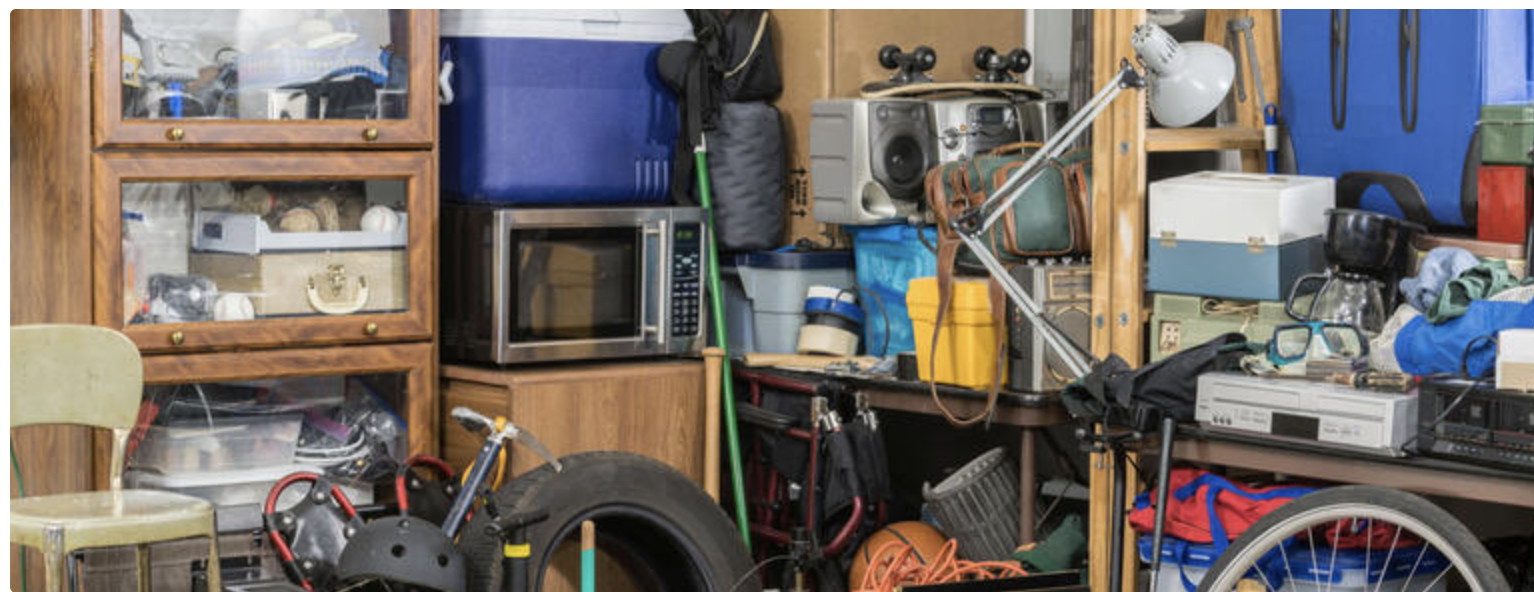
With aging populations, many co-op and condo boards are struggling with residents whose abilities to care for themselves are greatly diminished. In some cases, an elderly shareholder or unit-owner may only need greater attention from her neighbors and building staff. On the opposite end of the spectrum, some residents have not thrown anything away for years and they’ve been hoarding rotting food and containers for months and years. Some of these individuals actively bring trash into the building, live with vermin, mice and roaches. These hoarders present health and safety risks to both themselves and their neighbors.
And it is not an uncommon problem. The American Psychiatric Association defines Hoarding Disorder as “Persistent difficulty discarding or parting with possessions, regardless of their actual value.” The association states that the disorder affects 2.6% of the overall population, with higher rates for people over 60 years old and for people with other psychiatric diagnoses, especially anxiety and depression.
What is a co-op or condo board to do?
First, we recommend attempting to contact relatives who may take an interest in the individual. Often they are out-of-state, and sometimes they may not be aware of the scope of the problems. As family situations are different in each case, relatives’ willingness to assist with a troublesome resident varies widely.
If there are no known relatives and no one is willing to intervene, the building may have to take action directly. Various New York City agencies and private organizations may be able to assist, including Adult Protection Services (APS) and Selfhelp/Naturally Occurring Retirement Community Services, but both have limited resources and require the individual’s cooperation or a court order to access an apartment. If APS is allowed in the apartment, it can perform a deep cleaning of the unit and arrange for on-going extermination services.
In instances where the shareholder refuses access, a co-operative may have commence a proceeding in the applicable Landlord and Tenant part of the Civil Court and seek appointment of what’s known as a Guardian ad Litem (GAL), who will have the power to address pressing physical conditions. While the case is filed as a holdover eviction proceeding, usually the aim is not to evict a shareholder from her home. Rather, the goal is to obtain the help she needs but may not be able or willing to request.
Finally, the option of last resort is to seek a guardian pursuant to Article 81 of the Mental Hygiene Law in State Supreme Court. This action is far more involved than a request for a GAL in a Landlord-Tenant proceeding. In an Article 81 case, the court usually requires an evidentiary hearing with witnesses before a guardian is appointed with varying powers that may last for several years.
We have seen all of the above circumstances in recent years, and expect that co-op and condo boards will continue to face similar issues in the future as the population grows older. Now is the time to review your building’s occupants and plan for possible action.
Mark N. Axinn is chair of the cooperative and condominium practice group at the law firm Phillips Nizer.
The Community Associations Institute released the new Reserve Study Standards last May to provide communities with an improved outline for effective reserve planning. The updated study includes an emphasis on structural inspections and maintenance. A task force was created after the tragic collapse of the Champlain Towers in 2021 to address specific issues that came to light, and the three main issues addressed and incorporated into the newly released Reserve Study Standards are maintenance, building inspections (structural inspections), and inclusion of long-life components.
The purpose of the Reserve Study Standards is to inform and guide the reserve study provider, such as a Reserve Specialist® (RS), with the minimum requirements necessary for the preparation of a reserve study. A reserve study can be prepared for several reasons throughout the life cycle of a community, beginning prior to construction and initial sales through community maturity. At each stage, the reserve study recommends the funding necessary to sustain the community. Originally published in 1998, these Reserve Study Standards provide a consistent set of terminology, calculations, and expectations so reserve study providers and those they serve together can build a safe and successful future for millions of community association homeowners. It is recognized that, in addition to the reserve study, a proactive preventive maintenance plan and ongoing periodic structural inspections should be incorporated into the community’s long-term planning to properly evaluate and budget for the ongoing care of the common area components as well as the structural safety of the community. To keep the reserve study current and reflect the ongoing changes to the components and the financial needs of the community, the reserve study should be updated on a regular basis.
“A number of our cooperative and condominium clients have asked whether they may ban the smoking of marijuana in their buildings, either because they find it bothersome or because they are concerned about the adverse health effects associated with second-hand smoke.” — Legal Alert from the law firm Smith Gambrell Russell.
The first thing co-op and condo boards need to remember is that the Smoke-Free Air Act of 1995 banned smoking in most public places in New York City, including the common areas of multifamily dwellings, such as lobbies, laundry rooms, stairwells, hallways and elevators. So smoking weed in common areas is out.
Local Law 147, adopted in 2017, required owners of multifamily buildings to create a smoking policy and share it with current and future residents — though it stopped short of requiring owners to ban smoking. In the past six years, many co-op and condo boards have amended their governing documents to ban smoking anywhere on the premises, including inside apartments.
But does the recently legalized smoking of marijuana fall under such bans? What if a resident is under doctor’s orders to use medical marijuana? What if the marijuana smoker is a Rastafarian who claims that smoking is a religious ritual? Would banning such people from smoking marijuana in their homes be cause for discrimination complaints?
“Most of the smoking bans our office has drafted are pretty broad,” says Lisa Smith, a partner at Smith Gambrell Russell. “They include the smoking of any substance, including cigarettes, e-cigarettes, cigars, pipes and marijuana. The ban is not saying you can’t practice your religion. It’s just saying smoke cannot emanate from your apartment.”
As for medical marijuana, Smith says: “People have said they need to smoke marijuana to treat a medical condition, such as glaucoma. The point is that they can ingest it in other ways without smoking it — in pill form, drops, edibles. It’s possible to get all sorts of products, from cupcakes to lemonade to candy, with different levels of THC.”
When advising her co-op and condo board clients who are considering instituting a smoking ban, Smith tries to avoid halfway measures, such as grandfather clauses or allowing smoking on terraces. “A smoking ban has to be all or nothing,” she says. “Otherwise it’s hard to enforce. And you have to be vigilant. In my building, which is nonsmoking, management puts out regular reminders. Lately kids have been smoking marijuana in the stairwells.”
Any smoking ban must be established through an amendment to the governing documents, not merely a house rule. As Smith Gambrell Russell’s Legal Alert states: “Like the use of tobacco, the smoking of marijuana inside apartments…, regardless of whether it can be demonstrated that it leaks into public areas, may be banned by amendment to a cooperative’s proprietary lease or a condominium’s bylaws.”
Some boards don’t stop there. Smith was recently made aware of a fire-fearing condo board that banned the burning of candles and incense inside apartments — and hit violators with a $100 fine. One unit-owner complained that some residents continued to burn candles for Shabbat while she was not allowed to burn incense, a ritual of her Eastern religion. “Just because it’s your religion doesn’t mean that you get to annoy other people,” Smith told The New York Times earlier this year. “You don’t get to do it to the detriment of others.”
But, she adds, that condo board left itself open to a serious legal challenge. “If the board is not going after the people burning candles for Shabbat but bans the burning of incense, they’re treating unit-owners differently. They could get sued for discrimination. That rule banning candles and incense was a crazy rule.”
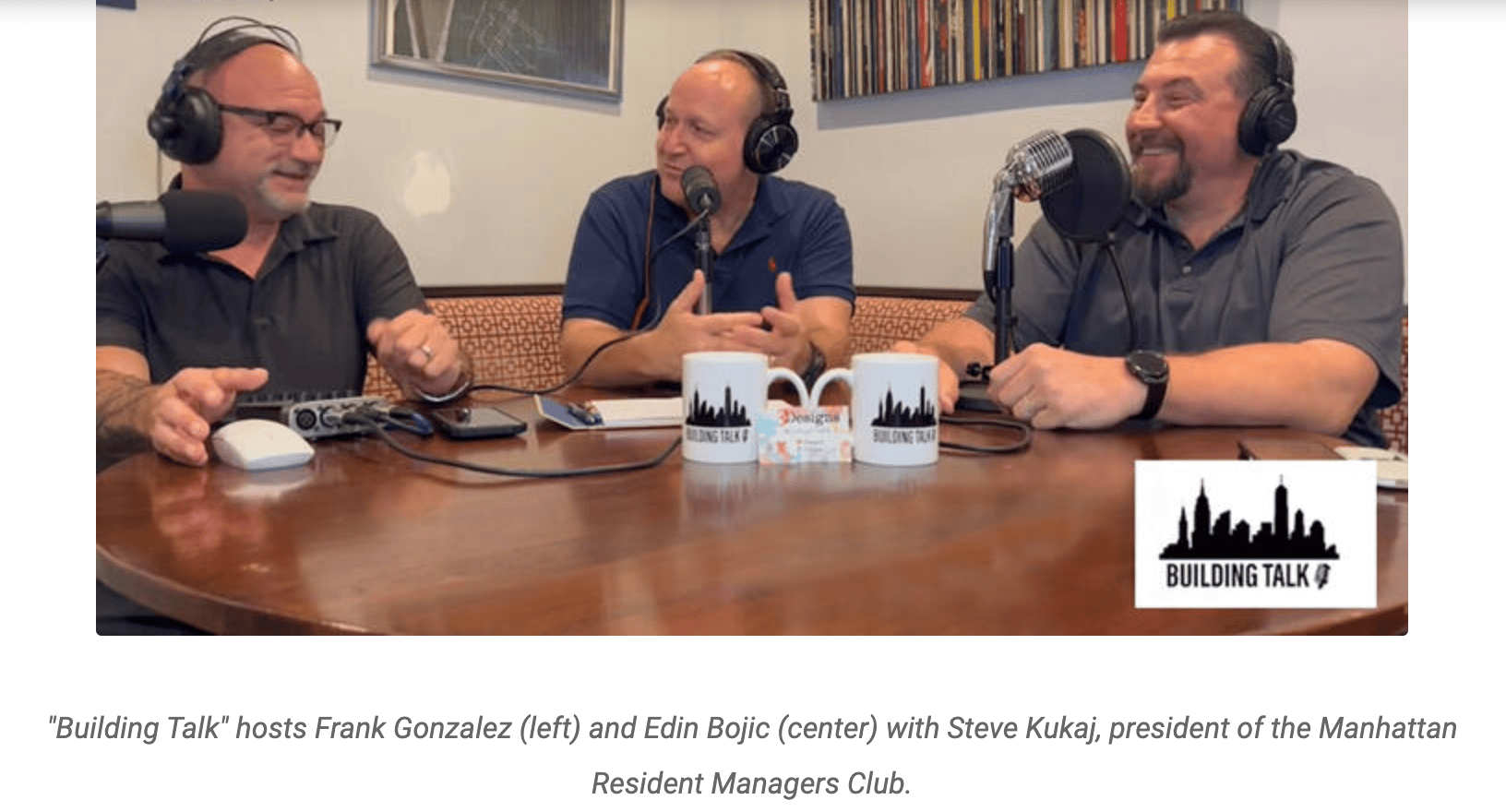
Frank Gonzalez and Edin Bojic first met at Aviation High School in Queens, and they’ve been resident managers in big New York City buildings for well over half a century combined. For the past year, they’ve been making their wealth of knowledge available to everyone — fellow resident managers, co-op and condo boards, property managers and other real estate professionals — through a popular weekly podcast called “Building Talk.” It’s posted on YouTube at 7 p.m. on Tuesdays and on Spotify at 5:30 a.m. on Wednesdays. Back episodes are available here.
“We’re trying to raise the image of the resident manager,” says Bojic, 58, a native of Montenegro (part of the former Yugoslavia) who goes by Bo. “We want to get rid of the old image of the super as a guy with a ring of 100 keys who lives in the basement.”
“Keeping up with the changes in the technology that come out every year requires that we’re always learning,” Gonzalez adds by way of explaining the podcast’s educational slant.
Gonzalez is now resident manager at a 625-unit condo and rental building in Greenpoint, Brooklyn, while Bojic runs a 600-unit Mitchell-Lama co-op on the Upper East Side of Manhattan. On the podcast they’ve offered advice to colleagues on everything from interviewing job candidates to resolving conflicts with residents and board members ; they’ve interviewed fellow resident managers and numerous vendors; and their conversations have ranged over landscaping, fire prevention, pest extermination, security systems, leak detection and improving a building’s energy efficiency.
Frank and Bo are an echo of Click and Clack from the popular NPR radio show, “Car Talk.” Like their predecessors, Frank and Bo mix avuncular banter with their hard-won insights, an appealing mix that caught the eye of Bobby Hodge, the resident manager at the Bay Club Condominium in Bayside, Queens. He tuned in to “Building Talk” one day when the guest was Jerry Kestenbaum, founder of BuildingLink. Kestenbaum was touting his spinoff company, Aware Buildings, which produces sensors that can detect leaks and alert staff before major damage occurs. Hodge was intrigued because Bay Club, with its large indoor swimming pool, 44 laundry rooms, water storage tanks and domestic hot water tank, has abundant potential for leaks. Hodge got in touch with Aware Buildings, which helped him install some test sensors. The very next day, one of them alerted him to a leak in an overhead pipe that ran to the domestic hot water tank. After the faulty pipe was quickly repaired, the condo board ordered 84 sensors, which Hodge has installed in potential trouble spots.
Much as co-op and condo board members bemoan their mushrooming work loads, Frank and Bo say resident managers are besieged by the city’s endless onslaught of new laws and regulations. “New York City is reactive, not proactive,” Bo says. “If there’s an accident where someone gets hurt, I know there’s going to be a new local law. There are new laws every year, and the resident manager has to interpret what’s going to work best for his building.”
The biggest change in the profession in recent years? “You have to be a psychotherapist, a psychologist and the customer service department,” Frank says with a laugh. “But mainly it’s the changing technology. Now everyone’s more energy conscious and they want to be more energy efficient. Technology changes every single day.”
Bo agrees: “Technology, definitely. There’s so much information that you’re constantly asking, is everything sealed properly? Is everything working properly?”
Is “Building Talk” working properly?
“This is the first podcast of its kind in New York City,” Bo says. “And yes, we’re getting a lot of positive feedback.”
Comms can be a conduit for building culture and keeping morale high during slower seasons.
By Sean Devlin for Ragan Communications
Summer in the United States can mean several different things— tickets to a ballgame, trips to the beach (or down the shore, if you’re from the Philadelphia area like this writer is,) or just time away from the daily grind of work to spend with family and friends. But with all these planned activities and vacations, sometimes engagement around the virtual or in-person office might be flagging.
This begs the question — how can you keep employees motivated when the pace of business slows?
That’s where a strong communications department comes in handy. By sharing messages that address both the needs and desires of employees, you can keep motivation up during the dog days of summer, and work to improve retention and overall culture too.
A key time for professional development
Even if summer sees a lull in business, with clients and coworkers taking well-earned vacation time, it doesn’t mean that it can’t be an opportunity for employees to learn something new to upskill their careers.
Dr. Kerry O’Grady, associate professor of public relations and corporate communications and PR consultant, said that these slower periods could be an excellent opportunity for leadership to build in time to invest in their employees.
“Giving employees the freedom to build their skill sets is so empowering,” she said. “It also helps employees know that they’re valued and that their skill set is valuable to the organization.”
Summer can also provide a timely opportunity for communications to reevaluate their channels to reach out about upskilling offerings. and also provide employees with a moment to voice the areas where they’d like to build their skill sets.
“Summer is a great time to utilize internal comms platforms to facilitate knowledge sharing, team updates, and social interactions,” said Mira Adam, associate director of communications at the Georgetown University McDonough School of Business.” Likewise, creating channels for employees to communicate their ideas and actively listen to their concerns can help contribute positively to engagement,”
Tips for the slow times
If things slow down a bit during the summer at your organization, use it as an opportunity to reassess the challenges you’re up against as a communications department. It can also be a good time for ideation around solutions to those issues.
“Using these kinds of times to organize and work through challenges that have presented themselves in other parts of the year can be really helpful to your overall strategy,” O’Grady said. “By really drilling down and understanding what the root problems might be in our communications, we can work to make things better for the whole organization.”
O’Grady added that times like the summer are also an ideal opportunity to increase collaboration with other departments within the organization to get a feel for how they operate and how communications can help. This can in turn foster understanding between employees for an increased sense of camaraderie and better morale.
“Talk with other parts of the organization,” she said. “Taking the time to sit with people who might work in marketing or finance to get a better sense of how the entire system functions is a great way to spend slower times that might arise.”
Positive reinforcement
Let’s face it, comms people are generally a busy bunch. But slower times of the year also provide an opportunity to present accolades and praise to employees which go a long way toward fostering a positive culture.
Rachael Matthews, vice president of corporate communications at Group 1001, said that even seemingly small recognition can be a huge step towards positive culture building.
“Sometimes we can be so heads down in our work and we might wonder if what we’re doing is even making a difference,” Matthews said. “But even if it’s a small shout-out from the CEO or other recognition from leadership, these gestures can reinforce just how important employees are to the entire operation.”
Simple actions like asking how an employee is doing over lunch or creating space for them to share their desires for their future careers can fit in really well during a summer schedule and help foster good morale.
“Leaders should take this time to say thank you and make their employees feel valued and appreciated, “O’Grady said.. “It’s so important for leaders to spend any potential downtime on the people who do the daily work to foster future growth — now is the time to make people feel indispensable and part of something larger.”
Sean Devlin is an editor at Ragan Communications. In his spare time he enjoys Philly sports, a good pint and ’90s trivia night.
BUILDING OPERATIONS: HOW NYC CO-OP AND CONDOS OPERATE HABITAT Magazine
Good news for co-op and condo boards struggling to retrofit a landmarked building to comply with Local Law 97: the Landmarks Preservation Commission has voted to approve a series of changes aimed at speeding up the review and approval process for alterations to landmarked buildings and properties in historic districts.
The commission voted to approve amendments that tackle the review process for upgrades related to climate resilience and sustainability as well as heating, ventilation and air conditioning, Crain’s reports.
Co-op and condo boards, landlords and homeowners will be able to secure approvals for solar panel installations and changes to an HVAC system, among other upgrades, without a full vote from the commission.
The new rules also amend the review process for what’s known as an expedited certificate of no effect, which is needed when proposed alterations require permitting from the city Department of Buildings. Applicants will no longer be required to submit a sworn statement to secure the certificate and will be allowed to file a written statement instead.
The changes to the commission’s review and approval process are tied to Mayor Eric Adams‘ Get Stuff Built initiative. Robert Holbrook, executive director of Get Stuff Built, lauded the changes to the commission’s review and permitting process. He said that faster approval timelines and policies reduce the costs for building owners to invest in their properties, adding that that a streamlined process also advances the city’s goals to address climate change.
It also reduces the headaches for co-op and condo boards trying to renovate landmarked buildings.