A website is a handy tool for any homeowners association. It defines how a community interacts with its residents and eases communication. What’s more? An HOA website makes it easy to access community rules and improves transparency between the residents and the management. Are you seeking ideas for the best HOA and condo website? Well, every association has unique needs, but there are must-have features to look out for.
What features define the best HOA websites?
The features matter a lot when it comes to the choice of website. Although all associations are different, the site should make it easier to manage your community. To build a website with the best features, seek help from an HOA Website company, and consider the following characteristics.
1. Dedicated domain
The website should feature a dedicated domain. This makes it easy for others to locate it, thus the need to choose something straightforward.
2. Resident portals
The HOA website should also have portals to serve both existing and potential homeowners. The current members should access account balances, file service requests, and retrieve vital documents with ease.
3. Online payment options
Online payment options are also vital. Collecting dues using conventional means is inconvenient and time-consuming. The best websites integrate an online payment option, allowing homeowners to settle dues using their user accounts.
4. Calendar& Communication channels
The site should also feature a community calendar for events, communication channels, and polling abilities. Lastly, it should be mobile-friendly and easy to use.
What are the best HOA& Condo websites?
1. The Towers Of Channelside
This is a perfect choice for people seeking to build a condo association website. The site features an easy-to-use interface with clear and professional images of both the building and neighborhood. Still, it provides basic information about the community, and the clickable links appeal to all visitors. A vital feature of the website is the resident portal. You can include private access with logins assigned to all members.
2. Kensington Glen
Kensington Glen website is one of the best HOA & Condo websites. It’s renowned for its crisp, clear images on the landing page and all over the site. Moreover, it features a call to action, which prompts user interaction among members. The site is easy to use and very inviting, and you can use it to list the homes for sale in the neighborhood. This is an impressive bonus that allows residents to learn more about the house on sale.
3. Islands of Cocoplum
This HOA website is excellently designed and features professional photos and an aerial view of the property. It includes features like property information, contact information, excellent imagery, and private resident portals.
4. Waterfall South Jacksonville Beach Condos
Waterfall South Jacksonville Beach Condos makes a great association website due to its intuitive features. It presents simple clickable links on the homepage directing users to useful information and services. It also features information and contact details, making it easier for visitors to get an idea of the property.
Final Thoughts
An HOA website is a great way to organize and automate responsibilities. It acts as a central spot where all members can access information and build better relationships. It also helps board members to keep residents posted on any initiatives and events. However, the best HOA website incorporates various features to enhance communication and ease payments.
Q: At our annual meeting, our condominium community passed a “No Smoking” resolution into our bylaws. It encompassed the entire club area, including the outdoor facilities. We now have a small group of new owners who vocally oppose this ban and continue to smoke at our community pool despite numerous requests to stop. How can we enforce the ban? — Jerry
A: Smoking has been banned indoors in condominium common areas for a while. The recent trend is to ban smoking in outdoor common areas, like the pool, and in limited common elements, such as balconies.
To see if your association has the right to do this, you must review the condominium’s declaration. If allowed, it will need to be voted on by a prescribed majority of the unit owners. As long as all of these hoops are jumped through, the ban goes into effect.
Generally, if a community rule is reasonable, it will be upheld if challenged in court. A smoking ban, even outside on a balcony or in the pool area, would likely be found to be reasonable because of the well-known health issues associated with secondhand smoke.
The logic would apply to similar activities, such as pipe smoking or vaping.
Your community can enforce the new rule the same way it would any other rule. First, a warning letter should be sent to the offending homeowner. If this does not work, they can be fined for breaking the rules.
This situation is becoming further complicated by the rising use of medical marijuana. If it were legal, it seems that recreational marijuana would be treated similarly to tobacco.
However, an argument can be made that prescribed marijuana might be accepted in some cases as a reasonable accommodation under housing and disability laws.
A variety of study aids are available to CMCA exam candidates online at CAMICB.org. Because CAMICB recognizes that people have different learning styles, multiple resources are available in various formats. A quick glance at those resources can be overwhelming. Here, we offer a roadmap designed to help you select and properly use those resources towards a successful outcome.
STEP 1. CMCA Study Guide. Download this FREE guide for an overview of how the CMCA exam was developed and how it’s structured. This is important to developing a study strategy. Here, you will also find the key to your studying success: The CMCA Knowledge
8 Knowledge Areas
Areas. You will be evaluated on these 8 knowledge areas, and understanding your strengths and weaknesses in each area, as well as how each knowledge area is weighted, will help you properly prepare a solid study plan.
STEP 2. CMCA Handbook. Download the FREE handbook for an overview of the program, paying particular attention to:
Section 2: Taking the CMCA Exam highlights the policies and procedures of the exam.
Section 3: CMCA Examination Content and Study Materials offers just that, as well as strategies for standardized test-taking.
STEP 3. If you took CAI’s M-100: The Essentials of Community Association Management, you are not fully prepared to sit for the CMCA exam. The M-100 will provide you with concrete knowledge (i.e., terms and definitions) but will not give you the knowledge to apply those terms and definitions to concepts. For example, What is a Quorum? is not a question you will see on the CMCA exam. You may, however, see a question like this, Quorum requirements conflicts are resolved by which of the following? That doesn’t mean you can skip this step. It’s still important to know the definitions in order to be able to apply them.
STEP 4. Quizlet is a FREE online tool that uses fun games and exercises to test your concrete knowledge. If after reviewing the M-100 course material, you find that your knowledge of terms and definitions is lacking, Quizlet is an excellent way to help you master those key terms and phrases, and prepare you for the next step in your study plan.
STEP 5. Best Practices Reports are FREE resource guides courtesy of the Foundation for Community Association Research. These Reports will help you gain applied knowledge in key areas found on the exam. Each report also contains case studies to help you understand how best practices are applied in real life situations, which is key to grasping an applied knowledge of these topics. If you’re a seasoned manager, spend a little extra time here. What you’ve learned on the job, may not be deemed best practices in the industry.
STEP 6. The CMCA Study Kit is available for purchase from the CAI Bookstore. A great tool for developing applied knowledge, you may purchase individual titles or the entire package depending on your needs.
STEP 7. CMCA Practice Exam is available online at a cost of $25 for one attempt and $40 for two. The Practice Exam includes questions that have been rotated off the exam and offers real time feedback on whether you were right or wrong on a question and why, offering real-world insight into the CMCA exam experience.
All of these materials to prepare you for the CMCA Exam can be found at CAMICB.org on the Exam Preparation web page. We encourage you to spend at least 6-8 weeks preparing for the Exam, and if you have any questions you can contact us at 866-779-CMCA or info@camicb.org.
We’d like to hear from managers who are studying for the exam. What’s working for you? What’s not? Please use the Comments section to let us know how you’re doing!
In what seems like the blink of an eye, traditional workplace events – chats by the water-cooler; chill-out meets or Friday drinks – have, for many employees, become things of the past. ‘Workplace culture’ as we once knew it is undergoing a seismic shift. As employment increasingly becomes remote or hybrid, HR professionals must get to grips with what this means for their own organizations.
Emerging from the fall-out of the pandemic however, is technology that some may not yet have heard of – technology which has the potential to supercharge organizations and employee cultures once more. It’s called XR (or ‘Extended Reality’) technology. If you haven’t yet looked at it, it’s probably time you should. It could be just the answer HR professionals have been looking for.
What is XR?
XR is often referred to as the coming together of virtual reality (VR) technology and augmented reality (AR) technology – where any human-to-PC screen interface is modified by either 1) immersing the user in a virtual environment; 2) adding to, or augmenting, the user’s surroundings (AR); or 3) both of those. As with most VR-type tech, it began in gaming. But today it’s increasing having B2C use (such as ‘try before you buy experiences’, where you can see how furniture, for example, might look in your own room), and inevitably, it’s developing business-to-employee uses too.
Why XR?
Cloud-based XR platforms can now provide employees with easy and on-demand access to a variety of immersive content. This includes 360-degree bespoke video, virtual spaces for collaboration and interaction with colleagues, live streaming of events and webinars, and even AI-powered virtual humans that facilitate employee soft-skills training. The key attraction of the technology is that it is cost-efficient, but also the process of creating bespoke content is pretty easy. It’s also scalable, and the impact can be much better measured and quantified.
But exactly how is XR tech being used to redefine culture in the new workplace? Let’s find out…
1) XR facilitates truly flexible hybrid working
For most employees, the ability to work from home, on their own schedule, is now a ‘must’. But without the right technologies and systems in place, remote work can turn into a remote nightmare of miscommunication, isolation and low productivity. XR tech is an excellent solution to the most common problems faced by remote workers. For example, by running immersive virtual meetings (where employees interact as avatars), XR technology can support collaboration in hybrid teams. Setting up virtual offices is also becoming popular, as these XR-mediated spaces can replicate the creative energy of the in-person office without any of the distractions or inconveniences of traveling to a physical location. They can be equipped with breakout rooms, classrooms, deep-work spaces and even XR gyms!
2) XR supports skill building
Managing employee training is an oft-cited headache for HR professionals. That’s because traditional (in-person or online) skills training and onboarding is expensive, can be boring, and is invariably time-consuming. But in 2022, the status quo is changing. Organizations can now create their own XR training and onboarding content that is interactive, engaging and scalable. Complex technical skills – including equipment operation – can be practiced repeatedly in a zero-risk virtual environment. Soft skills – such as communication – can be honed with the help of a never-tiring virtual human. Built-in AI-powered feedback also provides in-depth analysis of performance, helping HR accurately identify areas where colleagues need extra support to improve. XR up-skilling is more impactful too. Studies have shown that learners who use a virtual platform can improve their performance by up to 230% and reduce skill fade by 52%. This means that team members can spend less time training and more time on the work that matters.
3) XR creates strong communities
While we all know flexible work and training are part of workplace culture, it’s the interactions between colleagues that arguably have the biggest impact on culture overall. Connection matters to teams. Recent data revealed 48% of employees complained they felt isolated from their coworkers during the pandemic; while 56% wished they had a community where they could get advice and 64% wished they had a way to ask questions of industry peers. If HR teams are to orchestrate a supportive community, colleagues need opportunities for non-work related interaction in informal contexts. And it’s virtual and hybrid events that are soaring in popularity, thanks to them offering of a more inclusive and flexible approach to workplace socializing. From coffee mornings to live music streaming and games nights, there are limitless possibilities when it comes to delivering impactful virtual events. Chats and breakout spaces support organic relationship building, and interactive quizzes or competitions can help boost engagement and break the ice. And as an added bonus, no one is at risk of missing that last train home.
Be the future you want to be
Yes, future workplaces will look and feel very different to the workplaces of old. But this means HRs’ approach to building and maintaining workplace culture needs to evolve and adapt. With the correct thought however, XR technology could be the next big opportunity to explore. The power of new immersive technologies really does have the capacity to drive business (and employee) success.
CMCAs’ Commitment to Following Strict Standards of Professional Conduct
An important – yet often overlooked – component of CAMICB’s Credentialing Program
requires a Certified Manager of Community Associations (CMCA) to adhere to a high standard of ethical conduct. This means Certificants must comply with the 10 CMCA Standards of Professional Conduct, which govern their professional activities.
These Standards of Professional Conduct, detailed at www.camicb.org/standards, range from understanding laws applicable to community association management, to being knowledgeable on association policies and procedures, to carrying out fiduciary responsibilities, and participating in continuing education coursework. A violation of any of these Standards of Professional Conduct may be grounds for administrative action and possible revocation of the CMCA certification by CAMICB. Abiding by these Standards of Professional Conduct help protect consumers and associations that hire or contract with community association managers.
“When a community association manager earns the CMCA, they’re pledging to uphold a strict code of professional conduct which is critical to the profession,” said Ron Perl, Esq., a Partner at Hill Wallack LLP, who leads the firm’s community association practice group. “This is more than understanding the many facets of community association management and troubleshooting challenging situations, it brings about accountability, responsibility and trust to the individuals the profession serves.”
Enforcing the Standards of Professional Conduct
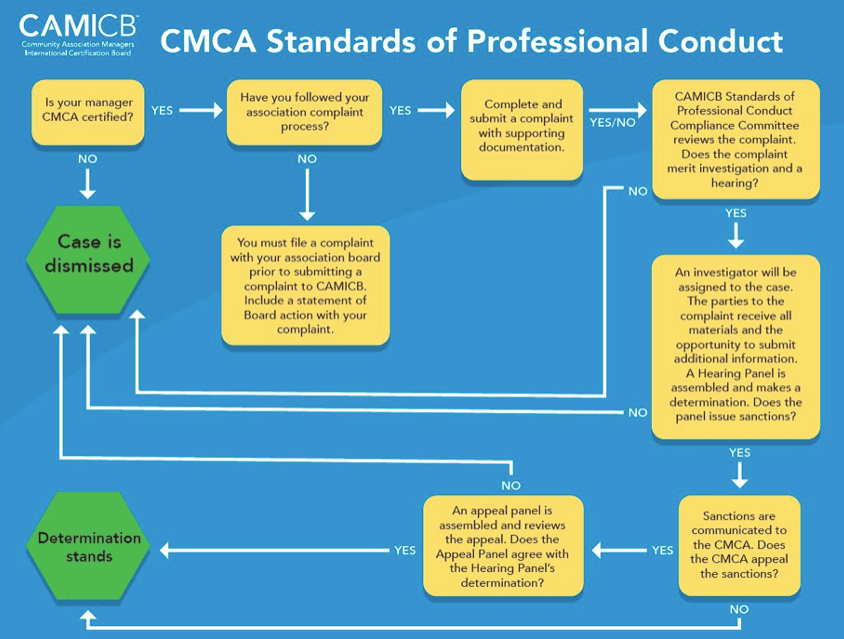
In order to maintain and enhance the credibility of the CMCA Certification Program, the CAMICB Board of Commissioners adopted strict procedures that allow consumers and others to bring complaints concerning CMCAs to the Board.
The CAMICB Chair of the Board appoints members of the Standards of Professional Conduct Compliance Committee which oversees the process and procedures for enforcing the Standards of Professional Conduct. Once a complaint – received in writing – is deemed valid and actionable by the Committee, it will be brought before a Review Panel for investigation and a determination of whether there has been a violation of the Standards. If the Review Panel determines a violation has occurred, an appropriate sanction will be imposed. This process, including the internal investigation, hearing, and timeline of activities, is clearly detailed in the Procedures for Enforcement of the Standards of Professional Conduct document available on the CAMICB website.
The grounds for sanctions under these Procedures range from conviction of a felony, to gross negligence or willful misconduct in the performance of professional services, to fraud or misrepresentation and, where applicable, loss of state license required to practice community association management.
“These Standards of Professional Conduct are the foundation of the CMCA credentialing program,” added Marilyn Brainard, a public interest member of the CAMICB Board of Commissioners. “We take them very seriously and are proud of the work our colleagues and managers do to uphold them.”
By Matthew Green, CAMICB Associate Executive Director
If you love the idea of a job that offers opportunity, stability, and growth, community association management provides an excellent career path. Community association managers work with homeowners and service providers to take care of the many aspects and operations of condominiums, HOAs, and cooperatives. It’s a great job choice for people who previously worked in the leisure and hospitality industries. Those sectors continue to lead U.S. job losses amid COVID-19, with experts predicting slow growth until at least 2023. The good news is that though the coronavirus has dashed a lot of hopes for hospitality grads and veterans, the world of community association management is a bright spot. The field continues to grow and offers excellent opportunities for anyone who wants to continue in a people-oriented career.
Community Association Management Stats
The Foundation for Community Association Research reports that as of 2020, there were approximately 355,000 community associations in the United States. They house over 74 million residents, over 12 million more than just a decade ago. Twenty-six percent of people in the U.S. live in a community association. More than 60 percent of new housing completed and over 75 percent of new housing sold is in a community association.
There are over 8,000 community association management companies in the U.S. and up to 60,000 community association managers. Further, there is an additional 100,000 individuals employed by management companies and onsite for associations with staff. As the number of people living in community associations continues to rise, so does the number of jobs for community association managers. If you’re a people person who’s skilled in handling multiple tasks, a career in community management can be an incredibly rewarding career choice.
Community Association Management Career Outlook
Job prospects in the community association management sector are excellent and growth is stable. Though a college degree and professional designation are not necessary to land a position in the field, those who do command a higher salary when starting out. As of May 2020, the median wage for community association managers was $59,660 per year. In 2019, there were 367,900 jobs in the field. Job prospects and projected wages vary from state to state and community to community, so it’s a good idea to check out your area’s particulars.
CMCA – The Essential Credential
The key to building a successful community association management career is the Certified Manager of Community Associations (CMCA) credential. Holding the certification lets employers know you’re educated and competent in certain management practices. It also indicates your dedication to professional excellence, ethical business standards, and continuing education. Community management employers are continually looking for committed professionals. The CMCA certification can often make the difference between whether or not you land a first interview.
The CMCA credential is relatively easy to obtain and:
Is relatively low-cost for such a valuable investment in your career and future.
Earning the CMCA credential opens the door to earning additional credentials and up to 20% higher earnings than community association managers who are non-credentialed.
Studying for the Exam and Earning the Credential
Several resources are available on the Exam Preparation Resources page of the CAMICB website. You’ll find these items and more:
CMCA Handbook
CMCA Study Guide
CMCA Exam Preparation E-Learning Course
Community Association Management Best Practices Reports?
Community Association Institute’s M-100: Essentials of Community Association Management Course Material Information
Community Association Institute’s Guides for Association Practitioners (GAPs)
CMCA Practice Exam
CMCA Examination Quizlet
Becoming a Certified Manager of Community Associations is not merely a designation; it can lead to the career journey of a lifetime. It elevates your credibility as a community association manager and makes employers more confident in hiring you. Finally, it offers you a wealth of opportunity, stability, and growth potential in an exciting career that currently shows no sign of slowing down.
Privacy and Data Security is the body of law that addresses how an organization can collect, handle, and use personally identifiable information and how that information needs to be protected.
Community Associations quite often have and maintain the names, addresses, and financial information of their residents and homeowners. Many criminal groups find this kind of information valuable for identity theft. Such groups often encrypt the data so the Community Association cannot access it to gain leverage and force an organization to pay a “ransom” for its return. Because of this and in reaction to how much sensitive information is held on everyday people in the broader economy, all fifty states have laws on the books that require most organizations to disclose when an unauthorized party has accessed the information. Community Associations—just like any other North Carolina organization—always must act reasonably when the organization makes decisions to do something with personal information or risk negligence lawsuits and class actions.
Unfortunately, North Carolina does not provide statutory guidance on how Community Associations can act reasonably with respect to residents’ personal data, but the federal government has provided frameworks that it recommends. The National Institute of Standards and Technology has published a Privacy Framework and a Cybersecurity Framework that, when followed, allow organizations to identify the data they have, protect that information, control and manage the data, govern the data with set rules within the organization, communicate the roles of each member of the organization, detect malicious or unauthorized activity, respond when an incident occurs, and recover from the incident.
There are a number of practical steps that organizations can take that can avoid or reduce the severity of common compliance pitfalls. The first is to review vendor contracts regularly—at least once a year—to make sure that they reflect an organization’s risk tolerance. Often, a trusted service provider or another vendor can have a breach that impacts the privacy and security of the data entrusted to a Community Association. Without contractual protections, the organization might incur significant costs remediating the problem with little legal recourse to have those costs covered by the party at fault.
Additionally, encrypting data, which is a mathematical process to transform data from readable text to nonsense and back again when a code (called a key) is used, can be an important tool in the compliance toolbox for Community Associations. Under North Carolina law—and the law of many other states—a breach only triggers reporting obligations when the information that was stolen was also unencrypted or when the encryption key was stolen with the data. This is not a silver bullet but, encryption is a practical technology that will be an important part of any compliance strategy.
Cyber insurance can also be an effective means of covering risk. However, insurance is not as simple as buying a policy and calling it a day. Insurers are increasingly raising premiums and lowering caps on organizations that do not take a proactive approach to mitigate privacy and security risks. So while insurance can act as a hedge against devastating effects, it should not be seen as a substitute for a compliance strategy.
We also recommend getting community input on the Community Association’s Privacy and Data Security efforts. Community Associations are necessarily accountable to their residents and homeowners, so understanding stakeholders’ risk tolerance can inform the leadership on how to move forward with a compliance strategy. The laws at issue obviously do not change based on the community’s sentiments, but discussing the matter at an annual meeting can be a good way to communicate what expectations the stakeholders in your community have of leadership.
Challenges and risks of liability and unmet stakeholder expectations are everywhere for Community Associations that do not take a proactive approach to the Privacy and Data Security of their residents’ and homeowners’ information.
As CAMICB continues to celebrate its 25th anniversary, we reached out to CMCAs who’ve held the credential for 25, or more, years. Many CMCAs graciously offered to share their experiences, highlights, career paths and advice with us.
John Schick, CMCA, AMS, PCAM, is a Management Executive with Hawaiiana Management Company, Ltd. in Honolulu. He was a member of the Beta Test Group for the original CMCA examination. Prior to entering the field of professional community association management, John spent 20 years in the United States Air Force and then two decades in motion picture exhibition and theatre building – clearly many talents and interests!
Now with 29 years of community association work in his vast professional repertoire, John finds what he likes most about this profession is assisting home owners and helping them understand the system and how it works, including training board members and helping them make the best decisions to benefit their properties.
He also enjoys the networking offered at industry-related events. Accepting his PCAM designation at a CAI convention in Ft. Lauderdale in a room full of CAI members was a highlight of his community association management career.
John offers important advice for new managers entering the field, “This is a unique industry. Call on all the life experiences you’ve had to help you come up with solutions. Do not assume you know or understand it all. And, be sure to ask your co-workers questions; someone has certainly been there before you.”
Retirement insecurity and rising housing costs prompt more older adults to move in together
By Soo Youn For The Washington Post
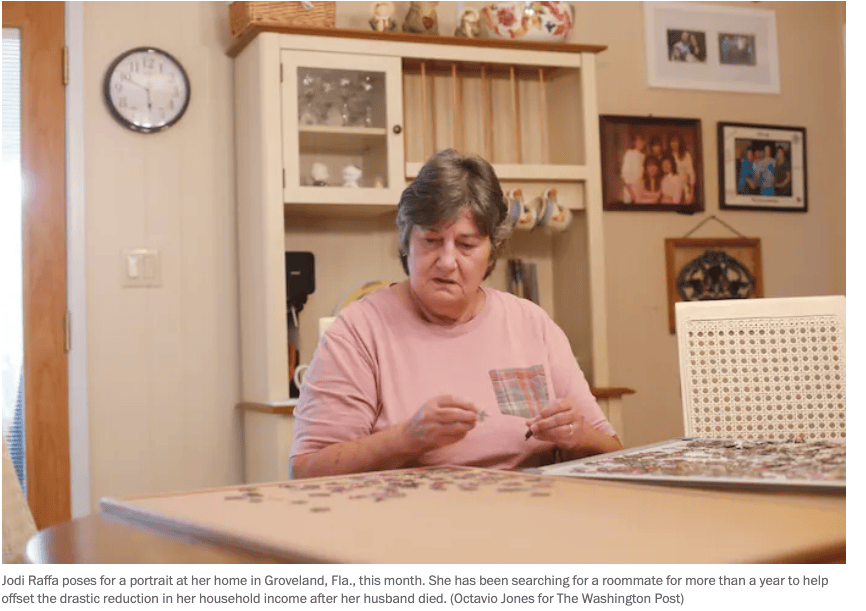
Jodi Raffa has been searching for a roommate for over a year. Her husband passed away five years ago, and compounding her loss was a 75 percent reduction in her household income.
The 76-year-old lives in a sunny three-bedroom, two-bathroom home overlooking a lake in a 55-and-over community in Groveland, Fla. The sunsets from her back porch are “stunning.” However, the homeowners association fees just went up again and inflation has left her “flabbergasted.”
“I live on a very strict budget and am not able to indulge in any extras at all,” said Raffa, who worked in administrative jobs before she and her late husband retired in 2010. Raffa now views that move as a “hasty decision” in light of her financial circumstances. “I am a worrier and a planner, so logic suggested getting a roommate.”
When she takes out ads specifying women over 55, she gets responses mostly from men in their 60s or adults in their 20s, 30s or 40s. Raffa hopes for an easier way to find and vet potential sharers of her home. “I’m very frustrated,” she said.
Like so many boomers, Raffa wants to continue to live in her house and find a job working remotely, either in data entry or editing. Faced with escalating home prices and rents in tight housing markets, as well as careers or earnings curtailed by age or the pandemic, some boomers are looking to share their homes. Enter the boommates.
“With the boomers aging, you see higher and higher numbers in shared housing,” said Rodney Harrell, vice president of family, home and community at AARP, pointing out that boomers are more open than previous generations to trying alternative solutions to the traditional aging trajectory.
In an 1987 interview with NPR, the late Betty White noted that the four women who lived together in “The Golden Girls” did so for social reasons rather than financial necessity. “All that I think we have accomplished is to show that there is an alternative lifestyle,” White told “Fresh Air” about the success of the show. “If you notice, ‘The Golden Girls’ are not together for economic reasons. They’re together for sociological reasons. It combats the loneliness.”
Four decades later, the idea of housemates late into adulthood is experiencing a revival, but with financial factors front and center. As boomers live longer and retire without the financial safety net of employer-sponsored pensions, covering the rising costs of food, housing and insurance become major considerations. Linda Hoffman, president and CEO of the New York Foundation for Senior Citizens, which runs a home-sharing program, noted an increasing number of applications as finances become more of a stressor.
“When we started the home-sharing program in 1981, relieving feelings of isolation and loneliness was the primary need,” Hoffman said. “Now, an affordable place to live is the number one need. Hosts need help in meeting their housing expenses.” Even for housemates who entered into the arrangement for social reasons, the extra money has become more important as their financial picture changed with the pandemic.
Debbi Campbell, 70, a retired copywriter, met Loretta Halter, a retired manager from the Kroger grocery chain, in 2018 at a Czech cultural event in New York City. Campbell was mourning the loss of her live-in boyfriend of almost 20 years to cancer. Halter had moved to New York City from Appling, Ga., several years earlier. She had used the NYFSC home-sharing program earlier to find an affordable apartment but was unhappy in her situation, which is when she decided to become housemates with Campbell.
The two went through the NYFSC program to handle the background checks, vetting and administrative details before Halter moved into Campbell’s rent-stabilized one-bedroom apartment in Greenwich Village. Before the pandemic, the two lived somewhat separate lives. Campbell lived mostly in the bedroom and Halter lived mostly in the living room. But when the city shut down, they developed a strong friendship.
“First, we started with the crossword and the jigsaw puzzles, and the TV, and it turned out well,” Campbell said. The ease of the later-in-life roommate-as-friend experience surprised her. “I mean, I’m one of those people who’s spent a good time of my life in therapy, mostly complaining about people I knew.”
After initially being furloughed from her job as a long-term temp at the Department of Education in March 2020, Campbell retired in October 2020, at 68, more than a year earlier than she expected. She also opted to take Social Security benefits at that time, instead of waiting until 70 as she had planned.
“I had not been desperate over money, but having a pandemic come, suddenly you have company where you wouldn’t have. And suddenly there is extra money for you from home sharing, which I wouldn’t have had. It was just a bonanza. I feel like the luckiest person of the pandemic,” she said.
While the dozen home sharers interviewed for this article insisted their parents would have found the idea outlandish, having housemates later in life seems to be finding more acceptance. In 2021, 70 percent of adults over 50 reported being open to sharing their home with a family member who was not a spouse, 51 percent said they would be willing to share with a friend and 6 percent would share a home with a stranger, according to a survey from AARP. Of those who reported they would not share their home at all, 23 percent said they would change their mind if they needed extra income.
“The majority of people considering home sharing with a friend or family member tells me that there’s an opportunity there for more people to take advantage of that excess housing stock that we already have within our own homes, and that perhaps meet your needs, and those of a friend or neighbor,” Harrell said. “Or maybe companionship that may help with costs, such as caregiving. There’s just so much advantage there. And we’re just not necessarily taking advantage of it. It’s nowhere near its potential.”
The growing interest in home sharing, especially for those boomers who are house-rich and cash-poor in expensive housing markets, is being cultivated by nonprofit and commercial programs as well as municipalities. Since 2015, New York, Seattle, Denver, Tucson, Northern California and the metro Washington area all have established or are launching programs.
“From what we’ve seen, attitudes are loosening toward home sharing,” Riley Gibson, president of Denver-based home sharing service Silvernest, which pairs older adults with housemates. The service is particularly active in tighter housing markets such as San Francisco, Phoenix, Tampa, Miami and Los Angeles. Silvernest recently partnered with Montgomery County in Maryland to start a pilot program and plans to launch in a few more cities later this year.
Renters and homeowners can fill out profiles on the site, which supports services including lease templates, insurance and background checks. A similar service, Boston-based Nesterly, matches older adults with younger ones to promote intergenerational home shares. Senior Homeshares, another service, has enrolled nearly 70,000 members across the country since its inception in 2015.
Even before the pandemic, demographics were shifting toward nonfamily households. In 1960, 85 percent of households were composed of families, according to the Population Reference Bureau. By 2017, that figure had fallen to 65 percent of households.
As Americans continue to age, Harrell and others expect growing demand for more housing options. “As a society, we’ve been building and thinking about younger families and building housing and communities for younger people,” he said.
“But that need has been shifting as community leaders, builders and designers” are “starting to think more and more about what happens to us as we age. And covid has given momentum to those conversations,” Harrell said.
For Kim Bolding, 61, home sharing enabled her to stay in the five-bedroom Colorado Springs home where she had raised her biological, adopted and foster children after being diagnosed with a form of muscular dystrophy in 2012.
Bolding, a former social worker, was able to keep working from home until 2017. But after she was forced to go on Social Security disability, the payments weren’t enough to keep up with her housing costs. “I did not want to have to go into just affiliate-type living. I wanted to keep my home,” she said.
First, a longtime neighbor moved in downstairs, where he could have his own bathroom. With the help of Denver-based nonprofit Sunshine Home Share Colorado, Bolding found two more housemates. Since then, she has mostly lived with three other housemates at a time: two men on one floor sharing a bathroom and a woman on her floor. “It’s allowing me to be able to maintain my own individuality. I can say what I want when I set my own needs and rules,” she said.
All of the housemates are on disability, but collectively able to live independently. Bolding is able to host her adult children when they visit, but they don’t feel obligated to move in with her to manage her illness. Instead, she is building a new community with her housemates, holding regular dinners together.
“We run it like a family and we have space for others,” Bolding said. Having housemates is “a great alternative to being stuck in some place where you don’t have a lot of choices: who your neighbors are, who you interact with, or you lose a lot of autonomy and that’s part of the problem with aging,” she added.
Bolding has already had several housemates who have moved out because of a change in their fortunes. Two have received government-subsidized housing, one has gotten married and another inherited a house and cars from an uncle who recently passed away. She thinks of her house as a harbinger of good luck and said she has received many calls asking for information or guidance on doing something similar.
“It’s becoming more and more popular, especially for my age group for people in similar situations. We need each other. We get blessed and they get blessed,” Bolding said.
Construction defects are nothing new to the buyers of New York City condominiums. What is new is that New York State recently revised its century-old rules on what’s known as fraudulent conveyance. The new Uniform Voidable Transactions Act, which went into effect on April 4, 2020, has just produced its first court ruling — and it’s good news for condo boards and unit-owners battling to recoup the cost of fixing construction defects.
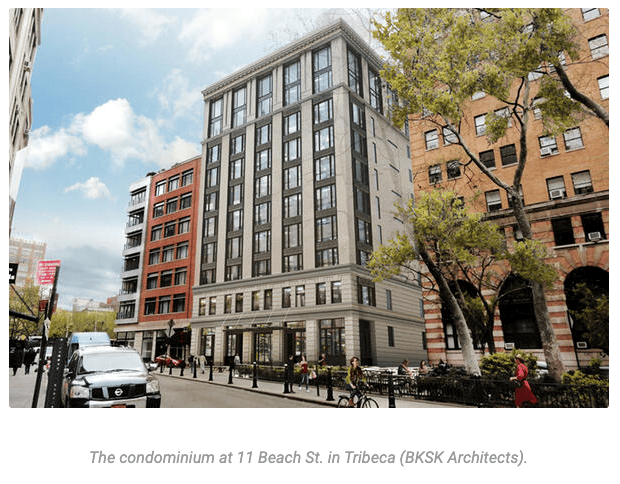
In the recent decision, Justice Andrea Masley of the Commercial Division of New York State Supreme Court ruled that the sponsor of the condo conversion at 11 Beach St. in Tribeca must set aside $1.1 million — what’s known as a “pre-judgment attachment” — to satisfy any future awards to the condo board in an ongoing lawsuit over defects in the renovation work. The 11-story building was built in 1900 as offices, and the sponsor, HFZ Capital Group, began the condo conversion in 2014, with prices starting at $5.3 million.
“This decision was very good for us,” says Jeffrey Schwartz, a partner at the law firm Schwartz Sladkus Reich Greenberg Atlas, which is representing the condo board in the ongoing litigation. “Our clients still have to show that they’re entitled to the money, but the purpose of the pre-judgment attachment is to preserve a share of the proceeds from the sale of apartment 3-B. If the sponsor had been allowed to get rid of that apartment, that would have resulted in us not having any money to pursue. That asset would have been gone.”




 STEP 4.