The power of a multilingual workforce

By Dan Berges For SmartBrief

While technology has enabled unprecedented connectivity and collaboration, a multilingual workforce remains vital to succeed in our increasingly globalized world. But unfortunately, language remains a critical hurdle businesses still need to overcome. Research has shown that full literacy in another language brings substantial economic benefits. Nine out of 10 U.S. employers report reliance on US-based employees with language skills other than English.

Despite this, many employers report that their employees are unable to meet foreign language needs, resulting in lost opportunities and business. But companies that can overcome these challenges can gain a competitive advantage in a competitive market. Here’s why. 

Benefits of multilingualism in the workforce

A multilingual workforce means that a company employs individuals proficient in more than one language. Working at a Spanish language teaching school in the US, I’ve seen firsthand how being multilingual can be a game-changer.

Cognitive development/problem-solving skills

Polyglots have greater cognitive flexibility, enhancing their creative thinking and problem-solving abilities. Research shows that people fluent in multiple languages tend to make more rational and impartial decisions, highlighting their objective decision-making approach, which can be a tremendous asset in a professional setting. For instance, having a multilingual human resources team can enhance recruitment decisions. 

Moreover, multilingual employees have better communication skills overall and can understand the intentions and perspectives of others. Suppose accountants can fluently discuss financial reporting in various languages. In that case, they can effectively communicate with potential investors and stakeholders from different countries, paving the way for new opportunities and increased growth.

The ability to navigate programming languages with English keywords like “if” and “function” as a non-English speaker demonstrates how being multilingual can influence cognitive development. Furthermore, as a Spanish speaker, I can access programming content in Spanish, communicate and exchange ideas with Spanish-speaking programmers, and read code in Spanish with variable and function names such as “crearUsuario($usuario1).”

Greater diversity in the workspace

The perks of speaking multiple languages don’t just lie in the ability to communicate but also represent a unique culture, way of thinking and set of values. With employees fluent in more than one language, companies can tap into this wealth of knowledge and experience to create innovative products and services that cater to different cultural preferences and needs. 

Imagine having numerous Spanish speakers on your team. In that case, you could tap into the Latin American market more easily than other companies. Your employees would be a great help in creating innovative products that could satisfy the region’s needs. 

Improved employee retention

Fostering a multilingual workforce can improve employee retention; enabling employees to speak their mother tongue makes them feel valued, understood and included, encouraging a sense of comfort and engagement among employees and increasing job satisfaction and loyalty.  Several companies are now integrating multilingual support into their recruitment and training processes by training employees in their native language, offering interpreters for business meetings and ensuring that all materials distributed to employees are translated into the appropriate languages.

How businesses can encourage multilingualism

By implementing the following tips, you can showcase your dedication to nurturing a more inclusive and diverse workplace and promoting language and personal development among your staff.

  1. Online language training tools: Popular examples that employees can access to learn or improve their language skills are Duolingo, Coursera and FluentU. These tools can be especially beneficial for remote employees. 
  2. Language classes as an employee benefit: This is an effective way to incentivize and support employees in their language-learning journeys. These classes can be conducted in person or online. They can be particularly beneficial for remote workers who live in a country where a different language is spoken from the company’s primary language. 
  3. Encourage the use of multiple languages in the workplace: Employers can offer language support for those who need to become more fluent in the language of the workplace, such as language training or translation services.
  4. Language exchange programs: Language exchange programs can pair employees who speak different languages to practice and converse in their respective languages. Another approach is establishing language exchange groups, which offer opportunities for employees to regularly practice their language skills and engage in conversations in a supportive environment.
  5. Rewards: Rewarding employees who hit learning milestones can motivate them to use and improve their language skills. 

Dan Berges, is the managing director of Berges Institute LLC.

Bronx Co-op Getting a Boost From the Inflation Reduction Act

Bill Morris in Bricks & Bucks  For Habitat Magazine

When President Biden signed the Inflation Reduction Act (IRA) last summer, he opened the spigot on a $27 billion pot of money known as the Greenhouse Gas Reduction Fund. Its mission is to help building owners, including co-op and condo boards, make the switch from fossil fuels to renewable energy. 

One of the features of the sweeping legislation was an expansion and extension of the investment tax credit, which can reduce the taxes of homeowners or investors who install solar panels. The credit, instituted in 2006, was at 26% and set to expire in 2024. Under the IRA, the credit was extended for 10 years and raised to 30% — with available increases if certain criteria are met. These changes are already benefiting a moderate-income co-op in the Bronx, and they offer a glimpse of what’s in store for other co-op and condo boards as they struggle to meet carbon-emission caps under New York City’s looming Local Law 97.

Before the IRA became law, this 132-unit co-op near the New York Botanical Garden had embarked on an ambitious $600,000 string of capital projects, including a roof replacement and work on parapets and facades. That’s when the co-op’s property manager, Anker Management, connected the board with Urban Energy, a solar consultancy founded by Russell Wilcox. The company offered to pay the co-op $129,000 for a 25-year lease of its roof, which would help defray the cost of the roof replacement. Urban Energy would install and own an array of 220 bifacial solar panels on the new roof, and the co-op would get a $120,000 abatement on its city property taxes spread over four years. The co-op also got a $59,400 grant from the state’s New York Sun program. The co-op board did not have to put up any money, and in addition to the cash windfall its electricity bills would be cut by 10%.

Then the IRA became law, and the calculations changed. The increase to 30% in the investment tax credit would bump the roof lease to $134,000. A 10% boost for buying domestic materials would bump the number even higher, to $147,000. And another 10% boost for installing the panels in a low- to moderate-income area would raise the lease to $160,000.

“These boosts, known as ‘adders,’ are a new concept,” Wilcox says. “The Internal Revenue Service has put out information on who’s eligible for them, but they haven’t yet put out who’s going to get that money. The original deal that we had with the Bronx co-op board was to provide a roof replacement budget of $129,000, and with the IRA improvements we negotiated a roof replacement budget of $150,000, since the process for receiving the adders is still undefined. Hopefully it will be clarified this year.”

Peter Morello, the president of the co-op board, sees multiple benefits in the project. “We’re getting a 10% discount on our electric bill,” he says, “we’re getting money to defray the cost of the roof work, a property tax abatement, and we’re hoping that the solar panels will wipe out any fines in 2030 and beyond under Local Law 97. Another benefit is that we didn’t have to buy the solar panels — and we don’t have to maintain them. It’s a nice package.”

Under Urban Energy’s business model, it will sell the project to investors — who will be attracted by the improved investment tax credit. The bottom line is that the IRA is a pot of gold for co-op and condo boards struggling to turn their buildings green. 

“More solar projects will happen in the future because there’s more federal government support,” Wilcox says. “That support used to be in flux. Not anymore.” 

HOA Homefront  — Getting board meetings in order

By Kelly Richardson for The San Diego Union Tribune

Unruly board meetings may be the most discouraging part of HOA living. Mature homeowners avoid such meetings, managers fear such meetings, and directors cannot even discuss the agenda without interruptions. When normal manners and courtesies are abandoned, meetings end in frustration. Directors are discouraged that they cannot deliberate (consequently tempted to do so instead in closed session), and observers are discouraged not only from attending meetings, let alone volunteering.

Here are eight tips to improve board meetings.

Meeting room setup. Avoid setting up the board table so that all directors sit facing the audience and not each other. That sends two bad messages at once — that the board is talking to the audience but not each other. Adjust tables so directors can better face each other, in a “C” shape with the open end facing the audience.

Disorderly open forum. Directors should not talk during open forum. If a director interrupts someone’s open forum remarks, it can seem fair to that person that they can interrupt board deliberations. Directors and managers should listen attentively to open forum remarks and save any responses to questions or comments until open forum ends. If the board desires further member input on an issue during the meeting, the board can re-open open forum on that issue.

Stay on target. Non-urgent matters can only be discussed after posting them on the agenda four days before the meeting. Directors need to be disciplined and focus on the agenda instead of topics that come to mind. When the discussion strays off topic, the chair or any director should politely object and request a return to the motion at hand. Avoid discussing a new motion until the pending motion is resolved.

Avoid lengthy meetings. Overly long meetings lead to tired and cranky attendees. Energy and focus both decrease as the length increases, raising the chances of unfocused discussions and poor decisions. Avoid overly ambitious agendas and insist that directors read all meeting materials in advance. Limit repetitive and excessive argumentation by moving to close debate and vote when everyone’s position has become clear.

Don’t ignore disruption. Some owners or directors cannot control themselves and continually talk over others, interrupt, or otherwise interject themselves in a disruptive way into meetings. Support your chair’s reasonable judgment in reining in misbehavior. There are many possible measures including warning the violator, asking for a vote to censure, or even ejecting the disruptive participant.

Allow disagreement. Build an environment in which disagreement is not viewed as disloyalty. There is nothing wrong with a “nay” vote if one believes that vote is in the association’s best interests. There is also nothing wrong with a 3 to 2 vote, which is just as binding as a unanimous 5 to 0 vote. Pressure to achieve unanimity increases the likelihood of tension as dissenters feel that pressure and the majority feels frustrated because they cannot get consensus. So, debates run too long, or tempers get short … or both.

Meeting rules and Code of Conduct. All but the smallest associations should have meeting and board conduct rules, describing meeting procedures but also establishing standards of conduct which are expected from directors and audience.

CAI. The Community Associations Institute has helpful education and publications regarding positive association governance. Find your local chapter at www.CAIonline.org.

Kelly G. Richardson, Esq. is a Fellow of the College of Community Association Lawyers and Partner of Richardson Ober LLP, a California law firm known for community association expertise. Submit column questions to Kelly@roattorneys.com. Past columns at www.HOAHomefront.com.

7 Ways for Leaders to Improve Employee Morale and Engagement

By Jennifer Miller for People Equation

There are hundreds of articles written each week about creating workplace morale through improved employee engagement, yet how many of those articles describe the specifics of what leaders must do to achieve this important, yet elusive objective?

Meet Bob Richards, CEO of North American operations for a global logistics company. Bob has extensive experience in building engaged, productive teams (that are fun to work with!) which earned him a reputation for creating positive workplace morale, as well as several industry and employer awards.

Recently I sat down to talk with Bob about his philosophy on creating employee engagement, despite the barriers of distance created by leading team members from across the world. Below are excerpts from our conversation. Bob’s bio is at the end of this article.

What advice do you have for creating healthy workplace morale?

No micromanaging.

If people need to take time off because of a doctor’s appointment, or they just don’t feel well, I don’t micromanage them. I tell them, take care of the most important thing [which is you] and the job will take care of itself. For example, I remember a company policy at [a former place of employment]. There was a policy where if a relative died, you got three days of bereavement pay. The policy was that you had to bring the funeral program in to prove that your relative died. And I stopped that immediately; people didn’t have to “prove” to me that their relative died.

I trust that people will do the right thing. And there are hardly ever any abuses.

Address the exception to the rule; don’t make up a bunch of rules.

Speaking of abusing company policy, the reason that company policy [described above] was put into place is that there was one employee who had five “grandmothers,” so they created the policy. Instead of addressing the abuse directly with the policy abuser, the company put an entire policy into place, which is ridiculous.

Know which behaviors to encourage, discourage, and ignore.

When it comes to workplace morale, you will sometimes have peer to peer competition, like sibling rivalry; and you can contribute to that as a leader. If you allow people to bring the “he said/she said” stuff to you, then you are part of the problem. I think some leaders feel like they need to be involved in the interpersonal squabbles. And I just don’t provide an audience for that. My response is, “You know, we are all here to do a job and if there is an issue, talk to the person one-on-one. I don’t need to be involved in that.”

You can kind of tell the difference between the tattletale stuff and the serious things. For example, I had an issue with an employee who had a tendency to look at the “top half” of the women he worked with, so I called the guy in. I said, “This is what I’m hearing and this is from more than one person. You’ve got to stop doing that.”

So, you react to the things that are important and the things that aren’t important, you ignore. You fan good behavior, you shine light on bad behavior and you ignore annoying tattletale behavior.

How do you foster a sense of employee engagement?

Establish boundaries and then get out of the way.

This is something I learned from a former boss at General Motors: if you have the right people, give them what they need and get out of their way. Give them the overall strategy, give them the “what” and the “why,” but let them figure out the “how.” And so you put boundaries around it; but they are pretty loose boundaries. Then you just kind of point the team in the right direction of where you are going, and people perform.

Get to know your team and match their strengths to projects.

You need to get to know your employees: What do they like to do? What energizes them at work? What types of projects do they enjoy? I have made use of resources like the [Clifton] StrengthsFinder assessment. Everybody has their own strengths and weaknesses, and that is why I really like this assessment. As a leader it’s important that you know where people’s strong points are and you give them assignments that play to their strengths. And they are just energized by it.

Remove the distractions of pay inequities.

At the end of the day, people come to work to earn a living. If they don’t feel like they are being treated fairly for their primary reason for working, it’s a big distraction. If you [as a leader] are assigned to a new team, you should pay attention to who has what job, what the pay is (and if it’s fair and uniform), and if the job description is correct. Then you make sure that it is right with the employee and HR.

I spend a lot of time on that upfront, because I don’t want people worrying about, “is Susie getting paid more than Joe, and am I getting paid a fair wage and fair benefits?” So you take care of that and for the most part, the people can concentrate on work.

Have fun.

When it comes to engaging employees, it’s important to have as much fun as possible. There is a belief that you can’t work hard and have fun at the same time. [Some believe] those two things are mutually exclusive, but they aren’t. In fact, I have gotten more out of people because there is an environment of “have fun as you are working.”  It just makes the day go faster and it helps people cooperate better.

For example, at a previous employer, one of the roles my administrative assistant played was to come up with a seasonal contest or put jigsaw puzzles in the break area. Also, we put foosball tables in the break area. At first, nobody knew how to play foosball. And then everybody got into it and eventually we had a tournament.

Bob Richards is the Chief Executive Officer of Rhenus Automotive North America. Prior to his role at Rhenus, Bob led teams for global manufacturers Kennametal, Herman Miller and General Motors in several functions including operations, manufacturing, quality, and environmental health and safety. Several of Bob’s teams have garnered industry recognition, including Kennametal being named “America’s Safest Company,” and “Most Engaged Team” in an all-company Voice of the Employee survey.

I Want to Buy a Co-op Now and a Piano Later. Do I Have to Tell the Board?

By Ronda Kaysen for The New York Times

You should never lie to a co-op board, but you don’t necessarily have to disclose future plans, either. But, ethically, is this a plan that will keep you up at night with guilt?

Q: I want to buy a co-op in New York City, partly to have space for a piano, which I don’t currently own. I intend to play the piano for an hour or two a day. I don’t plan to mention this detail at the co-op board interview — and since I don’t own the piano yet, I wouldn’t be lying if the board asked about such a thing. I’d rather be more forthcoming, but prefer not to jeopardize my chances of getting the apartment. Once I am in the building, I don’t think the board could stop me from buying a piano and playing it during reasonable hours, since I wouldn’t make an offer in a building that prohibits instruments. Is this is a bad plan?

A: You should not lie to a co-op board at an interview, however you are not obligated to disclose future plans that may or may not come to pass.

Whatever building you choose will have rules about noise, and probably about what times you can practice instruments and for how long. Be sure to carefully read them before buying an apartment. Keep in mind that there are noise limits even within the permitted hours. “No matter what time it is, you can’t create disturbances in the building,” said Steven D. Sladkus, a Manhattan real estate lawyer.

What you’re asking, however, is an ethical question. Are you being dishonest by not disclosing your intentions? It is possible to deliberately mislead a person without making false statements. But omitting goals is not necessarily misleading. It’s possible that you might not get the piano. It’s also possible that you could take up tap dancing, or ask a roommate who plays the clarinet to move in with you, or have a child. Who knows what potentially noisy events life holds in store?

If you buy the piano two weeks after you move into the building, be prepared for some sideways glances from the board. Although, if you buy it a year from now, people will notice, too. “People’s antennae will be up,” Mr. Sladkus said.

Ask yourself: are you O.K. with that? “At the end of the day, they have to live with themselves,” said Taya R. Cohen, an associate professor of Organizational Behavior and Business Ethics at the Tepper School of Business at Carnegie Mellon University. “Is the person going to feel comfortable or are they going to feel guilty? How do they want to manage that? Will they later feel bothered?”

If this omission will cost you a good night’s sleep, consider buying an apartment in a condo, which would not involve a cumbersome board interview. Or, buy a digital piano and practice with headphones, a solution that would make your neighbors happy.

CAMICB Announces Change In Leadership

John Ganoe To Retire As CAMICB Executive Director; Matthew Green Named Executive Director

Falls Church, Virginia – March 6, 2023 – The Community Association Managers International Certification Board (CAMICB) today announced its Executive Director, John Ganoe, CAE, will retire in April after 11 years in that role. Matthew Green, CAE was named Executive Director. 

“John has been a professional partner and personal friend for almost 30 years,” said Tom Skiba, CAE, CEO of the Community Associations Institute (CAI). “His decade leading CAMICB has seen not only dramatic growth in the number of professional community managers holding the CMCA, but the evolution of the program into THE global credential in the community association management profession. It’s the only credential recognized by ANSI/ISO, as well as industry professionals and governments around the world.”

Prior to joining CAMICB in 2012, John had an extensive career in professional credentialing, non-profit management, and consulting for non-profit organizations. 

“John has built, equipped and developed a talented staff,” added Greg Smith, CMCA, AMS, PCAM, Chair of the CAMICB Board of Commissioners. “He has created a legacy of care and consistency and is now ready to pass the reins onto Matthew and his capable staff.”

“The opportunity to lead CAMICB over the past 11 years as the organization worked to raise awareness of the value of the CMCA credential, expand delivery of the CMCA examination outside the United States, and earn international recognition of the credentialing program has been extraordinary,” said John Ganoe. “I have had the privilege of working with a corps of committed, intentional volunteer leaders and an enormously talented staff.  Matthew’s broad knowledge of the field of community association management and the processes needed to maintain the CMCA credentialing program at the highest level assure continued growth and success for CAMICB. I have the greatest confidence in the future of the organization.”

Prior to joining CAMICB in 2018, Matthew was the Director of State Affairs for CAI for eight years where he was the point person for legislation that addressed the regulation of community association managers. As CAMICB Associate Executive Director, Matthew has been instrumental in advancing the CMCA program in the NCCA reaccreditation process and he was the lead in the effort to secure accreditation for the credentialing program against ISO Standard 17024. 
 
“I knew the first day I worked with Matthew, nearly a decade ago, that he is a natural leader,” said Dawn Bauman, CAE, CAI’s Senior Vice President, Government and Public Affairs. “His operational and administrative skills are exactly what’s needed for an organization like CAMICB. Matthew is a wonderfully collaborative colleague who is decisive, self-aware and authentic. Matthew will take what he has learned under John’s leadership and shine brightly. I look forward to working with him in the years to come.”

“I’m fortunate to work with this incredible Board of Commissioners, many of whom I collaborated with in my previous role at CAI, prior to joining CAMICB,” said Matthew Green. “Working alongside – and learning from – John as he thoughtfully drove the organization forward while cultivating an extraordinary and dedicated staff was invaluable. Together with this remarkable team, I’m excited for the opportunity to keep up this momentum.”

“John’s tenure with CAMICB has been the primary reason for the growth and direction of this amazing program,” said Rob Felix, CMCA, PCAM, RS who serves as Secretary/Treasurer of the CAMICB Board of Commissioners. “His sincere and unwavering support of the CMCA program, the Board of Trustees, and his staff have catapulted the success of the program to international proportions and recognition. He will be missed.”

“With the help of his talented staff and the depth of their commitment to the program’s success, Matthew’s vision of this grand program will continue down the path set by his predecessor,” added Felix.

About CAMICB

Established in 1996, the Community Association Managers International Certification Board (CAMICB) is an independent board that sets the standards for community association managers worldwide. CAMICB (formerly NBC-CAM) administers the Certified Manager of Community Associations® (CMCA) examination, a rigorous  test that measures managers’ knowledge of community management best practices. Passing the CMCA examination and maintaining the standards of the CMCA certification is proof that a manager is knowledgeable, ethical and professional. CMCA-certified managers have the skills to safeguard the assets of homeowners’ associations, giving homeowners peace of mind and protecting home values.

The CMCA credential is the only international certification for managers that is accredited by the US-based National Commission for Certifying Agencies (NCCA) and the globally recognized ANSI National Accreditation Board (ANAB). This dual accreditation underscores the strength and integrity of the CMCA credential and is a mark of quality. For more information, go to www.camicb.org.


Co-op and Condo Boards Are Wondering: Is Our Money Safe?

Bill Morris in Legal/Financial for HABITAT Magazine

In the wake of the second- and third-largest bank collapses in U.S. history — and the ensuing tumble of stock markets around the world — jittery co-op and condo boards in New York City are asking a chilling question: Is our money safe?

The answer, most likely, is yes — given the Federal Deposit Insurance Corporation’s backing of all deposits up to $250,000, the federal government’s promise to make all depositors whole at the two failed banks (without using taxpayers’ money), plus the fact that the big national banks and most large regional banks are on solid financial footing. But that doesn’t mean boards don’t need to be careful when they park their money, either for operating budgets or reserve funds.

Experts from the banking, legal and property management professions offer the following tips.

“Your property manager should check out the financial health of a bank before you deposit your money there,” says Adrian Martin, a managing director at Webster Bank.

While most property managers are not trained financial analysts, Martin and other bankers note that much information is public record, including earnings reports, credit ratings, portfolio diversity and whether a bank is open to risk, such as the cryptocurrency depositors who helped bring down Silicon Valley Bank in California and Signature Bank in New York. Also, the percentage of a bank’s deposits that are not F.D.I.C-insured can be a barometer of potential trouble. At 93.9%, Silicon Valley ranked second highest in the nation, and at 89.7%, Signature ranked fourth highest, according to Standard & Poor’s. Bank of America is at a comparatively modest 47.1%.

“I advise boards not to just look at the interest rates a bank is offering,” says Thomas Thibodeaux, chief financial officer at New Bedford Management, who has a banking background. “I resist when boards tell me about an online bank that’s paying high interest rates. I’ve advised boards it’s not a good idea to put their money in a bank nobody’s heard of. I don’t need to see a branch on every corner, but I do want to see profitability and stability. We want a conservative bank. Our bank gives us quarterly financial reports, and we look at them. Property managers should pay attention to that.”

Personal relationships also matter. “Boards should be working with a bank that has a real-estate team that’s familiar with the needs of co-ops and condos,” Thibodeaux adds. “You want to be able to speak to a banker.”

Many co-op boards that refinanced their underlying mortgages when interest rates were at historical lows are now holding sizable funds. One way to keep that money safe is to use a service that deposits the board’s money in a nationwide network of F.D.I.C.-insured banks, with a maximum $250,000 per bank. This option offers the trifecta of protection, interest accrual and liquidity. Experts agree that protecting funds should be a higher priority than seeking a high return on investment. Another option for a board with $1 million is to open $250,000 accounts at four banks. But that can lead to headaches.

“Boards and management companies change, and those arrangements can become very problematic,” Thibodeaux says. “You can lose track of who the signatories are. You would rather deal with one representative inside one bank.”

Steven Sladkus, a partner at the law firm Schwartz Sladkus Reich Greenberg Atlas, spent a recent day dealing with a representative inside Signature Bank’s midtown offices — trying to withdraw sizable accounts held by his individual clients (not co-op or condo boards).

“I had to fight for my clients’ money because the bank was inundated with thousands of requests to withdraw money,” Sladkus says. “As fiduciaries, co-op and condo boards want to take utmost care where their money is placed. The bank might offer a high interest rate, but you can’t get a banker on the phone. It’s also helpful if you have financial people on the board who can chime in. At the very least, consult a financial professional if you’re unsure where to put your money. There’s nothing shameful in seeking professional advice.”

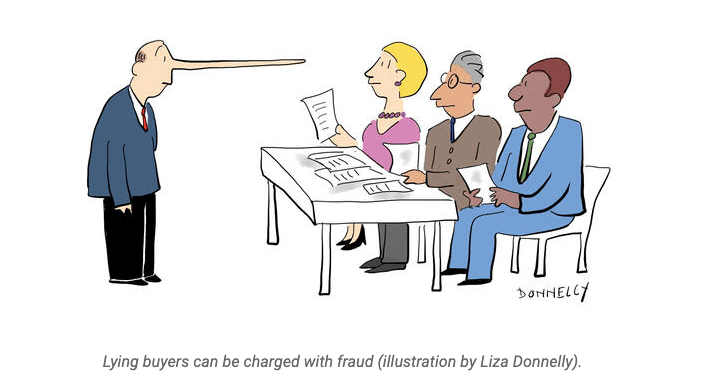
Co-op Boards Can Claim Fraud When a Buyer Lies

Andrew P. Brucker in Legal/Financial on November 10, 2022 For Habitat Magazine

In 2014, Gene Vilensky submitted an application to purchase an apartment at Trump Village Section 4, a large cooperative in Brooklyn. Although Vilensky signed an agreement that he “would not permit persons other than those permitted by the proprietary lease to live in the apartment,” he began to list the apartment on Airbnb.

The board sued Vilensky. It asserted fraud, alleging that he never intended to reside in the apartment and had bought it with the intention of using it for “commercial purposes.” The board sought cancellation of the stock certificate and occupancy agreement, as well as legal fees and a permanent injunction stopping Vilensky from leasing the apartment. 

Vilensky disagreed, of course, and moved to dismiss the complaint, contending that it was vague, devoid of facts, and failed to specify what was false or fraudulent. He then counterclaimed that he was physically prevented from entering the apartment, suffered emotional distress, and that the warranty of habitability was breached.

Motion denied, appeal filed. The court held that Vilensky’s motion to dismiss the fraud claim must be denied, since Trump Village 4’s complaint sufficiently alleged that his application fraudulently represented that he would be living in the apartment. The court further upheld a fraud claim because the false representation on the application led the board to waive its option to purchase the apartment. The court also dismissed all of Vilensky’s counterclaims, and he appealed the court’s decision that he had committed fraud.

The appeals court held that allegations that a party entered into an agreement while lacking the intent to perform it are insufficient to support a claim of fraudulent inducement. However, the board alleged a misrepresentation of facts that served as an inducement for the board to approve the sale and waive its option to purchase the apartment. In that situation, the defrauded party may have a cause of action for fraud. The court therefore held that the trial court had properly permitted Trump Village 4’s first cause of action — fraud — to proceed.

The legal lesson. It’s instructive that the trial court and an appellate court allowed a cooperative to bring a fraud action in this case. It is not uncommon for an applicant to claim he will move in and instead install an adult child in the apartment, or to sublet the unit. In the past, boards have had little recourse. This case is virgin territory. It tells us that if a board can prove fraud, it may be able to collect major damages or even terminate the lease. Therefore, it’s imperative for co-op boards to follow such disputes to their legal conclusion.  

Andrew P. Brucker is a partner at the law firm Armstrong Teasdale. The statements and views in this article are his own and not necessarily those of the firm.

Best HOA & Condo Websites for your Association

By Charlie Wilson for Loop21

A website is a handy tool for any homeowners association. It defines how a community interacts with its residents and eases communication. What’s more? An HOA website makes it easy to access community rules and improves transparency between the residents and the management. Are you seeking ideas for the best HOA and condo website? Well, every association has unique needs, but there are must-have features to look out for.

What features define the best HOA websites?

The features matter a lot when it comes to the choice of website. Although all associations are different, the site should make it easier to manage your community. To build a website with the best features, seek help from an HOA Website company, and consider the following characteristics.

1. Dedicated domain

The website should feature a dedicated domain. This makes it easy for others to locate it, thus the need to choose something straightforward.

2. Resident portals

The HOA website should also have portals to serve both existing and potential homeowners. The current members should access account balances, file service requests, and retrieve vital documents with ease.

3. Online payment options

Online payment options are also vital. Collecting dues using conventional means is inconvenient and time-consuming. The best websites integrate an online payment option, allowing homeowners to settle dues using their user accounts.

4. Calendar& Communication channels

 The site should also feature a community calendar for events, communication channels, and polling abilities. Lastly, it should be mobile-friendly and easy to use.

What are the best HOA& Condo websites?

1. The Towers Of Channelside

This is a perfect choice for people seeking to build a condo association website. The site features an easy-to-use interface with clear and professional images of both the building and neighborhood. Still, it provides basic information about the community, and the clickable links appeal to all visitors. A vital feature of the website is the resident portal. You can include private access with logins assigned to all members.

2. Kensington Glen 

Kensington Glen website is one of the best HOA & Condo websites. It’s renowned for its crisp, clear images on the landing page and all over the site. Moreover, it features a call to action, which prompts user interaction among members. The site is easy to use and very inviting, and you can use it to list the homes for sale in the neighborhood. This is an impressive bonus that allows residents to learn more about the house on sale.

3. Islands of Cocoplum

This HOA website is excellently designed and features professional photos and an aerial view of the property. It includes features like property information, contact information, excellent imagery, and private resident portals.

4. Waterfall South Jacksonville Beach Condos

Waterfall South Jacksonville Beach Condos makes a great association website due to its intuitive features. It presents simple clickable links on the homepage directing users to useful information and services. It also features information and contact details, making it easier for visitors to get an idea of the property.

Final Thoughts

An HOA website is a great way to organize and automate responsibilities. It acts as a central spot where all members can access information and build better relationships. It also helps board members to keep residents posted on any initiatives and events. However, the best HOA website incorporates various features to enhance communication and ease payments.

93% of employers want to see soft skills on your resume—here are 8 of the most in-demand ones

By Gili Malinsky for CMBC

When applying for a job, there are many ways to optimize your resume. You can check the listing to see where the employer’s priorities lie in terms of experience, and make sure to highlight what’s most important to them, for example. You can include any major achievements like exceeding sales goals. And you can include a link to your LinkedIn profile.

One group of skills career experts say is crucial to include is your soft skills. An overwhelming majority ? 93% of employers ? say “soft skills play a critical role in their decision about whom they want to hire,” Ian Siegel, co-founder and CEO of ZipRecruiter, said in the company’s recent report The Job Market Outlook for Grads.

Soft skills include a wide array of abilities. “I would say, in general, communication is very high on that list right now considering how people are working in very different situations, hybrid situations,” says Kristin Kelley, chief marketing officer at CareerBuilder, as an example.

ZipRecruiter compiled some of the most in-demand soft skills on its platform. Here are the top skills on that list, including the number of jobs on the site listing the skill as a requirement.

Communication skills

Number of jobs listing the skill: 6.1 million

Customer service

Number of jobs listing the skill: 5.5 million

Scheduling

Number of jobs listing the skill: 5 million

Time management skills

Number of jobs listing the skill: 3.6 million

Project management

Number of jobs listing the skill: 2.8 million

Analytical thinking

Number of jobs listing the skill: 2.7 million

Ability to work independently

Number of jobs listing the skill: 2 million

Flexibility

Number of jobs listing the skill: 1.3 million

When it comes to the importance of communication, in part, as Kelley says, that’s a result of the new remote and hybrid work arrangements that rely heavily on tech. “How you respond to someone who sent you an email” matters, she says as an example. “Formally respond to them in 24 hours.”

The importance of communication is also a result of various companies’ recent diversity, equity and inclusion initiatives.

“To be a diverse and inclusive employer,” says Georgene Huang, co-founder and CEO of Fairygodboss, “you have to work with all different kinds of people, which means you have to be able to communicate effectively with all different kinds of people.”

When it comes to scheduling and time management, “no matter what kind of role you have, if you can’t organize your time,” you can’t be effective, she says.

Finally, when it comes to flexibility, “people really have to be able to turn left, turn right on a dime, join the Zoom, be able to manage their own instant messages coming in,” says Kelley. There’s an element of ease with multitasking and being able to switch what you’re doing at a moment’s notice that has heightened since the pandemic and as so many people continue to work from home.

Include your soft skills by giving concrete examples of how you’ve used them either in your resume intro or the bullets under your job descriptions.