In The News

Colorado bills limit HOA’s power to foreclose
Colorado legislators are considering two bills that would require HOAs to offer a payment plan for delinquent homeowners before pursuing foreclosure and expect community managers to be professionally credentialed. “It’s important to remember that HOAs are nonprofit organizations,” says Westwind Property Association Business Manager Jessica Hanson. “We’re not out there to make money off the hard times of others. Any way we can work with people to get them caught up on their dues is good for the whole community.” Community Media of Colorado/Centennial Citizen (Colorado)

Fighting rental properties

The Southeast University Neighborhood Association has been fighting back against an invasion for decades. “We’re not squeamish about living with students,” says Michael Stanton, head of the homeowners association, known as SEUNA. “The thing is that, if the current trend continues, there won’t be any families. In a matter of years, they’ll all be replaced by rentals.” But SEUNA’s fight is not so much against students, but the landlords that buy homes, divide them up, and rent them to students. Stanton argues that’s lowering property values and the quality of life in the neighborhood.  Innovation Trail (New York)

Arbitrator: HOA boards bear specific legal responsibilities
When a homeowners association isn’t meeting its duties to repair issues and maintain common property areas, it’s best for homeowners to attend board meetings en masse instead of contacting the association’s management company, arbitrator Donie Vanitzian writes. “Owners should put the board on notice that failure to make repairs is a potential liability to the association,” Vanitzian writes. “If no visible progress occurs, individual owners or any group of owners may choose to enforce the board’s obligations to repair by filing a lawsuit against the association and its directors.” Los Angeles Times (tiered subscription model)

Homeowner’s association seeks private well

A local homeowner’s association wants to drill a private well, transgress the public right of way and bore under public streets to provide irrigation and water for a private swimming pool. The Cascade Addition Homeowner’s Association wants to install five underground street crossings in the public right of way. HOA President Vince DiCastro said in addition to saving the HOA about $13,000 annually, the private well would allow the HOA to take its swimming pool and irrigation system off of city water, freeing up millions of gallons for other uses. The Norman Transcript (Oklahoma)
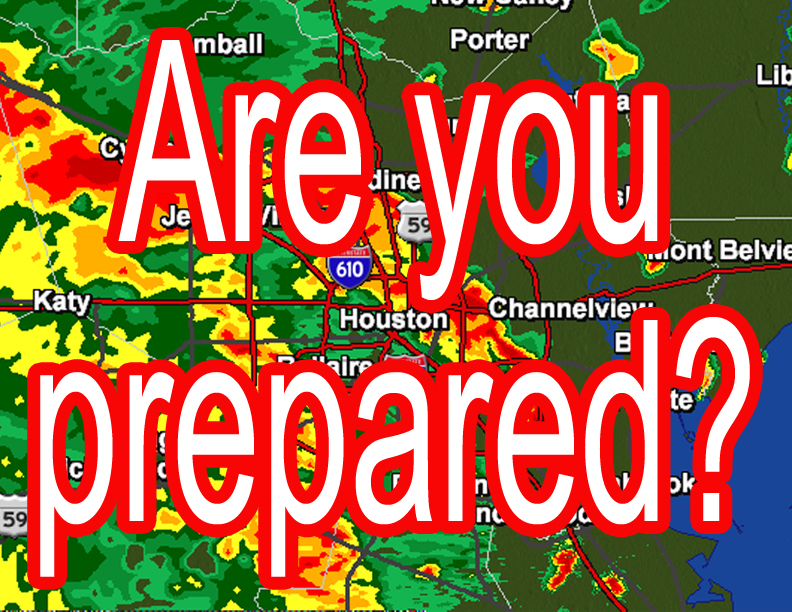

Are you prepared?

We can’t predict the weather, except we know it is getting wilder and weirder. Most of us are ill prepared in case a tornado, hurricane, flood, fire or simple electrical outage hits our homes. Likewise, most businesses – and most homeowners associations – don’t even have an emergency preparedness plan.

Can you make time for disaster preparedness? disaster

Red Cross research shows that every $1 invested in preparedness yields $6 in times of disaster. To help organizations get started, it has developed a readiness self-assessment tool called www.readyrating.org

This 120-question self-assessment isn’t a pass/fail tool. Instead, ReadyRating is a FREE program helps organizations understand where they are on the readiness continuum, and it gives them tools to improve. The program involves six steps:

  1. Commit to preparedness for your community or your property. This means getting your CEO and other top leadership committed to disaster planning.
  2. Conduct a hazard vulnerability assessment. George Sullivan, an expert in disaster preparedness for the American Red Cross says, “A lot of people write an emergency response plan based on something happened to someone else.” If you don’t know what hazards you face, call the American Red Cross which can help you assess risk.
  3. Develop an emergency response plan. “If already you have one, now is the time to revisit it and ask all the big ‘what ifs,’ such as ‘what if we’re no longer able to operate in this location?”
  4. Test your plan. An untested plan is not a real plan – so go ahead and plan those drills.
  5. Communicate about preparedness. Ask yourself, how can I make preparedness top of mind in my community, through newsletters and bill inserts.
  6. Help others. By definition, a commitment to disaster preparedness is a commitment to helping others – so once you go down this path, consider adopting a local school or church, hosting a blood drive.

Are you prepared for disasters? How?

Recharge Your Batteries: 3 Steps

By Matthew Swyers

Most truly successful entrepreneurs share a common belief that no amount of success is ever enough. But even with an insatiable drive to be the best, successful entrepreneurs know that they too must take breaks and recharge their batteries to continue to grow their businesses.

Voluminous studies show that people are more productive at work when they don’t eat at their desks but take a lunch break and then return refreshed for the afternoon haul. The same logic applies to larger times away from the office as well. Every so often even the most driven of us need to step away to relax. In turn, when we come back we are more focused and ready to tend to the tasks at hand.

Moreover, some of our greatest moments of clarity about our businesses often come at moments when we are temporarily detached. On a personal level, this was never more true than on a trip to the Atlantis Resort in 2009 when I decompressed by reading a simple business book by the pool while sipping on piña coladas. The book changed the way I conducted business and led to the reinvigoration of my quest for knowledge about how to build a great and lasting company. The book? Robert Kiyosaki’s now iconic Rich Dad Poor Dad.

So how do you take a break and get away from it all? How do you recharge your batteries? Here are a few thoughts:

1. There Is No Single Correct Formula

Some authors will tell you that you must take time completely away from the office with no communication while you are gone. I disagree. For some personality types, mine included, the stress of being completely out of touch with the office would diminish any benefit from stepping away. As such, the ability to be in contact with the office, even if not actually relied upon, can actually be beneficial for those types of personalities.

2. Do It

The next step is often the most difficult: you just have to do it. Sit down, schedule the time off, and go. The best options, I always feel, are those that involve booking a trip where you must purchase airfare, a cruise, or some other means of transportation that requires an affirmative act to get on a plane, train, or boat on someone else’s schedule. That way you know you must leave. If you merely plan to take a “staycation,” and just hang out at home, you’ll probably end up popping into the office. Eliminate this possibility.

3. Plan on Doing It Again

I’m a planner. I like having things scheduled so I can look forward to them in advance. So even when you are in the midst of a vacation recharging your batteries there is nothing wrong with thinking about your next vacation. For instance, on my most recent trip to the Caribbean I took a few hours to plan another trip for the same time next year. Now, although I am back at work and working hard, my batteries recharged, I know that I have a vacation planned in the future so I have something to look forward to. Time again to recharge my batteries.

Matthew Swyers is the founder of The Trademark Company, a Web-based law firm specializing in protecting the trademark rights of small to medium-size businesses. The company is ranked No. 138 on the 2011 Inc. 500. @TrademarkCo

13,000 and counting!

NBC-CAM has certified over 13,000 CMCAs from around the world! 

You’ve worked hard to earn your CMCA.  We’ve made it easy to share your achievement.  Spreading the word about your CMCA certification will help advance your career.  Extend the visibility and awareness of your professional credential by following these tips:

  • Display your CMCA certificate     Frame your certificate, and hang it in a visible area of your office.  Visit www.framingsuccess.com and enter NBCCAM for a discount on great frames.
  • Wear your CMCA lapel pin   Wear your pin at the office, at meetings and at events.  E-mail
    info@nbccam.orginfo(at)nbccam.orgfor a new pin.
  • Use your CMCA padfolio and notepad Bring your padfolio and notepad to all meetings, especially within your community. To order more CMCA-printed notepads, e-mail
    info@nbccam.orginfo(at)nbccam.org.
  • Include your CMCA credential in all communications Your credential creates a positive image and increases awareness of the profession of community association management.  When discussing what you do for a living, be sure to mention that you are a CMCA.  Include your credential on your resume and professional biography, and include a brief description about its value.

    Use the CMCA acronym after your name wherever possible, including:

    • Business cards
    • E-mail signatures
    • Letters and reports
    • Memos and faxes
    • Facebook, LinkedIn, Twitter and blog postings
    • Directories and listings
  • Speak at events Take advantage of community events, professional meetings and CAI chapter events to speak about your CMCA and why communities benefit from hiring credentialed professionals. Use the CMCA brochure as a guide, and wear your lapel pin to create visibility and spark conversation. The greater the awareness of the CMCA credential, the greater the value to your career.
  • Work with your organization/association   Ask your organization to help promote the CMCA credential by posting the following message on their website with a list of their certified managers.

    Board Certified: Congratulations to our newest CMCAs!  The CMCA credential is the only worldwide certification program for community association managers and demonstrates that these managers have met requirements for managing condominium, cooperative and homeowner associations.  [list of managers with CMCA credential]

  • Educate homeowners Leave CMCA brochures in your company’s lobby or community common area to inform homeowners about the credential.  Contact NBC-CAM to obtain CMCA brochures.

 You can also cut, paste and customize the sample messaging we provide on our website. Extend the visibility and awareness of your professional credential!

Smartbrief

Have you signed up for Community Association Management SmartBrief yet? A few weeks ago, NBC-CAM launched a free, weekly e-mail newsbrief specifically designed for community association managers. Sign up here.

This complimentary resource is aimed at bringing you a quick, two-minute read that will help you keep up-to-date with the latest news and trends in our profession. SmartBrief will provide short summaries of the news articles that will be of interest to you as a community association manager. We know it will save you time, keep you informed and add to your success. I hope you will subscribe.

This week’s issue has an article on the Trayvon Martin case.  The Martin family has settled their lawsuit with the homeowners assoiation insurance policy.   Sign up for Smartbrief to read the full article.

Battling Bully Board Members and Homeowners


You’ve seen them (and felt your anxiety level rising).

The homeowner who takes four “guest only” parking spots for his cars. The board president who goes on a vendetta by holding secret meetings, making unapproved purchases and breaking confidentiality rules.

Or, as one Colorado CMCA shared at a recent meeting, the individual who felt insulted at a board meeting, threw a chair and then put up posters throughout the association attacking the manager’s character.

There’s no strict definition of a bully, but we know them when we see them, says anti-bullying expert Ben Leichtling. Unlike decent people who are angry about a particular issue but want to work out a solution, bullies:

are never satisfied
treat you like a servant or slave
can be “professional victims” who take offense too easily
can also be aggressors
want to wear you down and beat you up
Bullies might be only 1 percent of the population, Leichting says, but they take 999 percent of your time, energy and emotional reserves.

So you want to fight?

Your attorney can point you to legal tactics to fight the specific actions of a board bully.

Check your governing documents. If the bully is an officer, your board may be able to vote the bully out of office, and back to a director position. (Officers are generally elected by the board; taking someone off the board may require a homeowner vote.)

If the problem is lack of confidentiality, the board may want to create a confidentiality agreement that spells out the director’s fiduciary duties in writing.

For other “irregularities,” your attorney may also want to take the board member aside. A simple “talking to” can sometimes derail particular behaviors, if not change personalities.

Overcoming Fear

But what if the problem isn’t a board member, but a homeowner? And what if the only tactics available are expensive (i.e. lawsuit) or scary (verbal confrontation)?

Now the human side of battling bullies becomes paramount. Leichtling, who runs www.bulliesbegone.com and has written numerous books bullying, advocates a six-step system:

1) Take care of yourself physically and mentally. Surprised? “Bullies want to wear you down, so that you’ll give up and give them what they want,” Leichtling says. “Your job is to keep yourself at your best.” So do whatever it takes to keep your humor, courage and strength.

2) Don’t take it personally. “Bullies want to make you think it’s your fault,” Leichtling says. “You can take it seriously, but not personally.”

3) Watch for early warning signs. Bullying is more likely when there’s someone new on the board, or when someone is going through a rough personal patch: a divorce or job loss. Keep your intuition up for these signs.

4) Begin with relationship: Don’t assume you’re dealing with a rational person. Assume you’re dealing with someone who is on the emotional razor’s edge. So get together with the bully, speak emotionally and calm them down enough so they can be rational.

5) Get on their side: Figure out what you can given the constraints of the situation, without backing down. You may even want to get on their side of the desk or table.

6) Meet in person: When people are upset, email is not a good strategy. Even if this costs you time and money now, a personal meeting is much less costly in the long run.

No, this won’t work with every bully, and every situation. Rather, it’s an escalating scale of actions to take before legal or board action. It gives you the assurance of having done everything possible to work it out, short of giving in.

NBC-CAM Board of Commissioners

NBC-CAM is currently having our annual in-person April Board of Commissioners meeting in San Diego, CA at the CAI National Conference.  Twice a year our nine person board gathers to discuss issues facing NBC-CAM and the industry of community association management.  Do you have questions, comments or concerns?  Leave your inquiries in the comments and we will pass them along to our Board.

Recertification: Deadline Extended

We’ve extended the deadline for individuals due to recertify April 1, 2013. You now have until April 30, 2013 to submit your recertification application, 16 hours of continuing education and annual service fee payment.

Not sure when you need to recertify?  Check here.  Need a recertification application?  Download one here.  Want to pay your $105.00 annual service fee online?  Do that here.  Do you still need CE credits?  Check out our pre-approved continuing education providers here.

Please contact our office with any questions.  We have a designated staff person to handle all recertification inquiries – Roland Richardson.  He can be reached at rrichardson@nbccam.org or 703.970.9300.

In the News

Homeowners in Nevada band together for ‘Save My Community’ initiative

In an effort to get their voices heard about important bills that will affect their communities and futures, hundreds of homeowners have banded together to take part in a “Save My Community” coalition.

The Grassroots Initiative Committee, which has members in both northern and southern Nevada, is attempting to raise awareness on the important aspects of HOAs and living in communities that maintain their integrity and viability. 

The homeowners targeted by our message are the ones who support their HOAs and want to keep their communities and property values safe,” said Paul Terry, Grassroots Executive Council member and partner of Anguis & Terry, LLP. “They are in the midst of conveying pertinent messages to legislators that will let them hear about the other side — that HOAs have an important role in our lives and any legislation that harms them should be reviewed with caution.”

Among some of the homeowners’ concerns are bills that will create more bureaucracy, red tape and expense for themselves and their neighbors and bills that will limit their community’s ability to collect the funds that sustain it and to use those funds in a responsible and efficient manner. The homeowners want their opinion to be heard that the elected officials shouldn’t continue creating legislation that serves special interest groups that don’t live across the privately maintained street, swim in the community pool, or jog the trails of the community park.

The Save My Community effort was spawned by homeowners after a grassroots initiative was formed through the non-profit Community Associations Institute. The goal of the grassroots initiative was to recruit, educate and organize homeowners to deliver a unified message to legislators and address legislation that could negatively impact their common interest communities. With the overwhelming majority of HOAs being run fairly, the group decided to take a stand and not let negative influencers take control of their communities’ destinies.

“The homeowners realized that a ‘voice’ directly from them — the voters — would get the message across more clearly than hearing it from lobbyists or organizations directly,” said Terry. “These are the people directly helped or hurt by laws that get passed.  It’s in everyone’s best interest to think about the long-term effects of what emerges from the decisions during this legislative session.”

Currently, the Save My Community volunteers are addressing and closely watching bills including Assembly Bill 34, which would create additional expenses for Associations during the election process and hinder their ability to remedy unsightly minor maintenance issues quickly, and Senate Bill 222, which would eliminate a homeowner’s privacy and make every late fee waiver or payment plan request public.   

“The big question is what happens to these Nevada communities if they are not saved?” said Terry. “These homeowners are proud to live in HOA communities.  They need the legislators’ support now and in the future.”   

Customer Complaints

By Margaret Heffernan

Bristle at Customer Complaints? That’s the Last Thing You Want to Do.  You may be tempted to view negative feedback as a nuisance. But, if you respond the right way, it’s a gift.

0001

The other day, at JFK airport, I watched as a fast-food outlet got everything wrong.

What caught my attention chiefly wasn’t the host of mechanical breakdowns, but the failure of the workforce to respond with any hint of ingenuity or resourcefulness. Customers that might have been mollified were ignored, infuriated, and resentful. A bad situation was made far worse by the nonchalance with which service personnel responded.

I thought of writing to the company to explain just how badly everything had been handled. But I didn’t. Not because I minded the effort but because, on consideration, I don’t really like the company, its food, or its strategy. If I were going to spend time on a complaint, I wanted that to go to a business I’d like to see thrive.

It struck me then that a complaint is a gift.

If a customer is willing to invest the time and effort required for a coherent complaint, you’re lucky. You’re learning from the frontline what is really going on and how it plays to your market. While it may be human nature to trivialize negative feedback, don’t. Recognize it as a value insight into what’s really happening.

I remember once writing to an airline to complain about a particularly horrible trip. I got a fantastic response which I remember to this day. It started with the words, “Thank you for your complaint,” and went on to say how useful it was for an executive, stuck in an office, to know what was being done in the company name. That, and a host of other things, made me a loyal customers for years.

So the next time you get a complaint, don’t throw it away or dismiss it as an annoyance. Treasure it.

Margaret Heffernan is an entrepreneur and author. She has been chief executive of InfoMation Corporation, ZineZone Corporation, and iCAST Corporation. In 2011, she published her third book, Willful Blindness. @M_Heffernan