Unknown's avatar

About CMCA ~ The Essential Credential

CAMICB is a more than 25 year old independent professional certification body responsible for developing and delivering the Certified Manager of Community Associations® (CMCA) examination. CAMICB awards and maintains the CMCA credential, recognized worldwide as a benchmark of professionalism in the field of common interest community management. The CMCA examination tests the knowledge, skills, and abilities required to perform effectively as a professional community association manager. CMCA credential holders attest to full compliance with the CMCA Standards of Professional Conduct, committing to ethical and informed execution of the duties of a professional manager. The CMCA credentialing program carries dual accreditation. The National Commission for Certifying Agencies (NCCA) accredits the CMCA program for meeting its U.S.-based standards for credentialing bodies. The ANSI National Accreditation Board (ANAB) accredits the CMCA program for meeting the stringent requirements of the ISO/IEC 17024 Standard, the international standards for certification bodies. The program's dual accreditation represents compliance with rigorous standards for developing, delivering, and maintaining a professional credentialing program. It underscores the strength and integrity of the CMCA credential. Privacy Policy: https://www.camicb.org/privacy-policy

Work-life boundaries continue to blur: How the pandemic has changed co-living

By Suzanne Bearne for Digiday
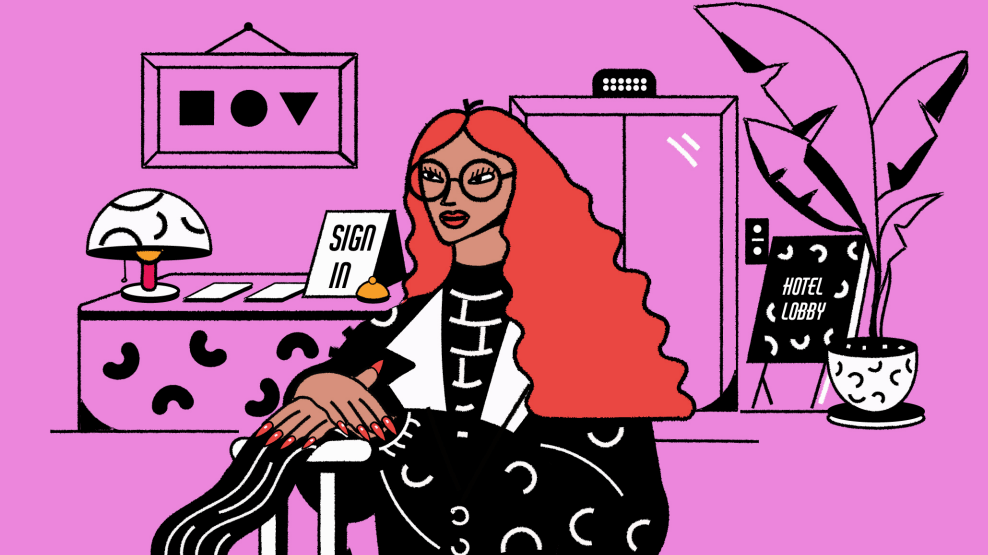
With remote working now an option, last year Ellie Halls decided to swap Clapham in southwest London for the south of France for a month.

Rather than stay in an Airbnb apartment, the events manager, 41, decided she wanted more of an opportunity to meet new people. Inspired by a friend who had previously stayed in a similar set-up in Lisbon and New York, she booked a space at a co-living property in Montpellier.

There, Halls found herself with an instant crowd of potential friends. “As soon as I arrived everyone was really friendly. I headed to the beach with someone and joined a WhatsApp group for the building. There was always something to do.”

Halls, who booked her own private bedroom, said the extra cost of working from various meeting rooms meant she rotated between working in the restaurant, her room and/or in the shared living room or kitchen.

Halls enjoyed the experience so much that she stayed for six months. However, there were drawbacks. “Everyone was quite young. I think it’s better if you’re more like 25 years old than 40 years old. For me, it was a stepping stone, not something long-term,” she said.

It’s difficult to know how many digital nomads there are worldwide, but in the U.S., this cohort surged almost 50% between 2019 and 2020, to reach 10.9 million people, according to a report from business-professional talent marketplace MBO Partners.

With remote working becoming a way of life, and the acceptance of communicating over online communication tools such as Slack and Zoom, working from overseas is set to become even more popular, and no longer confined to digital nomads traveling for months on end.

Emmanuel Guisset, founder of co-living spaces provider Outsite, which has 27 locations worldwide, including in Spain, Costa Rica and Mexico, said it’s been a rollercoaster year for his company.

Local restrictions closed some of the company’s properties in places such as Portugal and Bali, but the U.S. locations remained open. Occupancy in this time, however, ranged. Places such as Hawaii and San Diego were full during spring and summer 2020. By September, Outsite saw “a huge surge in demand in lifestyle cities and remote and outdoor locations,” Guisset said. But locations like New York and San Francisco “only recently returned to normal occupancy.”

The company had to adapt the spaces and rules for the pandemic. “Some properties had shared rooms and we suppressed that. We also implemented COVID protocols in case we had COVID cases in the house.” He said they didn’t impose COVID-19 test or masks mandates in the properties but most of its members used masks in common areas. “We basically let our members decide what was best for them in every property,” he added.

Guisset said Outsite properties are now seeing demand from an influx of people who previously didn’t have the opportunity to work from a different backdrop.

“We are seeing new kinds of jobs but also more couples and small families,” he added. As a result, the company plans to change its positioning from co-living to “accommodations for remote workers and community.”

“A lot of those new members want private spaces and also community but that doesn’t necessarily mean they want to share living spaces,” said Guisset. Outsite is now experimenting with private apartments or bungalows in locations like Costa Rica where members get access to community activities and the co-working space. The company is also considering what it can offer families.

Demand for personal space is far more evident in the wake of the pandemic, said Ant Steele, co-founder of Yon Living, which connects spaces across the likes of France, Sicily and Gran Canaria with between 10 to 20 rooms for a mature crowd – typically anyone aged between 25 and 45 years-old – to co-live.

“It’s just about providing the option that, in any particular moment, someone can choose to be alone or to be with the group without a sacrifice to their experience,” said Steele, who added that each location offers a small co-working space, and each room has a private workspace. “Fortunately, we’ve always had this in mind as we’re going for a slightly more mature demographic and private space seems to hold much more value the older you get.”

Robert Litchfield, co-author of the book Digital Nomads and associate professor at Washington & Jefferson College, Pennsylvania, agrees. “We have all gotten used to more personal space and maybe that will mean people will be inclined away from anything that has a more packed-in, hostel-type feeling,” said Litchfield. “Co-living spaces will have to ask who is the customer they are trying to attract?” For these companies to reach their target audience, they should consider variables that range from cost to personal space to the amount of social interaction they might want to have, he said.

A remote, salaried employee might simply just seek a new experience, Litchfield said.

Steele agrees that this remote-working crowd of “traditional city workers” has a different mindset. “It’s more of a second life for them, for a week or two at a time but with some degree of regularity,” Steele said. To cater to those interests, Yon Living has adapted to offer more of a co-living “lite” experience, which is more akin to an experiential holiday with elements of normal living thrown in – like private desks and home workout equipment – where you wouldn’t traditionally have seen them.

“The boundaries between what is living, working or holidaying have totally blurred,” said Steele.


Employees are concerned about these situations when returning to the new office

by R. Dallon Adams in CXO  for TechRepublic

Turns out, ditching leisurewear is one of the hardest parts about going back to the office after a year of dressing for Zoom success. But what will the new office look like?

In the last year, companies have used a number of strategies and reshaped the traditional office to mitigate the spread of COVID-19 in-house. On Wednesday, Qualtrics released its Future of the Workplace Study highlighting the new office amenities employees want, the drawbacks of remote work and dress code expectations as workers return to the new office after more than a year of telecommuting.

Return to the office concerns

Overall, the Qualtrics study involved more than 1,000 U.S. adults employed either full or part-time. In order, the top two concerns respondents have about meeting coworkers in-person are “being socially awkward” followed by “following proper social etiquette,” and more than one-third of respondents said they would choose a “touchless greeting” when “they see their co-workers,” according to the report.

While the majority of respondents (60%) were comfortable “working in the same enclosed space” as other coworkers, these comfort levels vary markedly across age groups. For example, one-quarter of respondents 55 and older were uncomfortable coworking in an enclosed space compared to 13% of the 18 to 34 age group and 17% for people between the ages of 35 and 54, according to the report.

Office redesign and consolidation

The majority of respondents (62%) said they’d be “satisfied” if company office locations were consolidated to create improved facilities and amenities, according to the report, and employers opening “more satellite offices for smaller teams, like a WeWork” would satisfy about half of employees.

“Traditionally, physical office locations were necessary for employees to get work done. This past year has proven, that’s not the case anymore—employees can drive results and be productive from a variety of locations,”  said Julia Anas, Qualtrics chief people officer.

That means, as companies adapt to the changing workforce landscape, they will need to find compelling ways to make the office a destination space where employees come together to be inspired to connect in person with one another to collaborate and innovate,” Anas continued.

Citing Qualtrics research, Anas mentioned a few of the desired amenities employees want including “more natural light in their workspace, access to fitness equipment, and outdoor spaces where they can collaborate with colleagues.”

In a June report, Next Energy Technologies outlined a number of office redesign elements respondent employees wanted to see at the new office ranging from increased access to natural light inside and increased sustainability efforts like a “reduced reliance on single-use materials.”

Hassan Osman, director at Cisco Systems and Udemy instructor who teaches a course on hybrid work management, discussed a few of the ways companies could reimagine the new office in the months ahead.

“One way is to repurpose the existing office from dedicated workspaces to more hybrid-friendly meeting rooms and quiet spaces,” Osman said.

“Teams are going to be dispersed between in-office and remote so expect meeting rooms to be used for on-site collaboration and coordination of in-office team initiatives. And quiet spaces to be used for focused work and distraction-free conversations with remote team members,” he continued.

Additionally, Osman said companies could incorporate “hot-desking” strategies to allocate workspaces to employees only when they need them,” noting that this implementation would help organizations “save on real estate costs while maximizing their resource and asset usage.”

Dress code at the new office

Unlike the office environment, remote workers are able to forgo the traditional business attire during the workday and instead don more comfortable clothing. In March 2020, amid the switch to remote work en masse, Walmart sold more tops than bottoms; a conspicuous discrepancy that could be attributed to increased video meetings and the visual focus on attire from the waist up.

“When the global pandemic sent everyone home, work fashion moved to the bottom of everyone’s priority list. Video filters became a substitute for make-up, crocs became the new sneaker, and sweatpants became the norm,” Anas said. “As employees begin to return to the physical workplace they will be looking for ways to combine professional dress with the comfort they experience at home.”

When returning to the traditional office, one-quarter of Qualtrics respondents said that “dropping leisurewear” would be the “hardest change” and other difficult routine changes including “wearing makeup again and getting routine haircuts,” per the report.

As employees go back to the new office, 37% of respondents are planning to dress “casual.” A similar number of respondents (35%) were planning to dress business casual when they return to the office. In general, about half of respondents (55%) said they would “would dress more casually if their office didn’t have a dress code.”

Remote work drawbacks

While working from home may have its fair share of perks a la reduced commute and a lack of dress code, there are a number of professional drawbacks to consider. About half of respondents believe on-site office workers have “career advantage for promotions and raises compared to remote employees,” according to the report, citing “visibility to leadership as the primary advantage.”

“Hybrid work will be an adjustment for many companies,” Anas said. “Leaders who take time to listen to what employees are thinking and feeling and then acting on that feedback will have the ability to create an equitable environment for all employees—regardless of in-person or remote status.”

Additionally, Anas said employer-provided professional development opportunities like “mentorships, training sessions, and networking events” could help organizations “avoid unnecessary gaps between employees.” 

“Doing this in addition to making some adjustments—like increasing intentional communication from leadership, scheduling more frequent 1:1 meetings with managers, or hosting virtual happy hours—can ensure all employees have what they need to be productive and successful,” Anas continued.

What is your personal leadership brand?

To help build authenticity, be clear on the specific values that have guided your career and that you expect others to embrace.

By Adam Bryant For LEADERSHIP magazine

Early on in our careers, we are schooled in the importance of the elevator pitch, so that we can deliver a concise answer if somebody important we meet in passing asks, “What are you working on?” or “What do you do here?” The succinct sales pitch is also an essential skill for entrepreneurs taking turns in front of an audience of investors: they have to be able to capture their killer idea in a dozen or so words.

But in our consulting work with senior leaders, we find there is a specific type of elevator pitch that executives often overlook. It’s the answer to the questions “So what kind of leader are you?” and “What should we know about your leadership style?” Having a thoughtful reply at the ready could be a factor in landing a promotion. But more crucially, providing clarity about your leadership style will help you to build trust with your team. Think of it as your personal leadership brand—what you stand for, including the values that guide your behaviors as a leader, and what you expect from others.

It’s not that people don’t have anything to say in response to these questions. Some will volunteer that they believe in “servant leadership,” or that they are results-driven or believe in excellence and integrity.

And they’re not wrong. It’s just that they use phrases that are so general and at such a high altitude that they don’t provide anything concrete in terms of the behaviors that people can expect from them. The sentiments get muddled with corporate mission statements and purpose statements that often default to a version of “making the world a better place,” a cliché that can easily be skewered. (Think of the HBO series Silicon Valley, a satirical look at life in the tech startup world.)

The value of a personal brand

Just as with corporate values, the real test for your personal leadership brand comes during moments of pressure and stress. Do you abandon your values, telling yourself that you’ll come back to them when things settle down? Or do they matter even more in those moments?

What are the three values that are most important to you as a leader and a colleague—that is, the consistent behaviors that everyone can rely on from you?

When I interviewed Susan Desmond-Hellmann, the former CEO of the Bill & Melinda Gates Foundation, she talked about the importance of being predictable and reliable as a leader. If you can clearly articulate how you would act in a given situation, “people don’t have that burden of always thinking, ‘I wonder what he or she would do.’ It’s pretty clear.”

For example, I was struck by one of the principles that Ron Williams shared with his team when he was CEO of Aetna. He made clear that he expected everyone to always strive to be 15% better. “People can start thinking, ‘If I just keep doing what I’m doing, that’s okay.’ But the world has become dramatically more challenging. Your business is bigger. It’s more complex technologically. You’ve got to master [new things]. You are never done.”

When I asked Williams how that approach came about, he said that professors at the community college he attended, and others in his life, provided encouragement regarding his potential. “The people who were really supportive helped me develop this philosophy of always striving to be better. Eventually, that was distilled into the idea of always pushing to be 15% better in all aspects of life.”

The leadership challenge

Here are some of the prompt questions we use when we help executives work through the exercise of developing their personal, authentic leadership brand:

• What are the three values that are most important to you as a leader and a colleague—that is, the consistent behaviors that everyone can rely on from you?

• How have you lived those values in your career?

• Why are they important to you for driving success?

• If you were recruiting someone to join your team, what would you say to them about your leadership approach and philosophy?

If you try to answer these questions, be certain to give yourself plenty of time for introspection. Make sure you steer well clear of platitudes or any generic statements. Imagine yourself taking over a new team of direct reports who ask you a series of questions in your first meeting with them: “What are your personal leadership values? Why are they important to you? What do they look like in practice? Where did they come from?”

Walmart’s solution to teaching workers kindness: virtual reality

The retail giant is using technology to help employees practice empathy, have difficult conversations during COVID-19.

By: Kathryn Mayer

It’s no secret that the past year has been a balancing act of emotions. COVID-19, a contentious election and civil unrest have made empathy and hard discussions imperative, often while emotions and polarization are running high. It also has been a difficult year for employees who work at brick-and-mortar locations like Walmart and interact with customers—whether those conversations are good or bad.

“With the pandemic, you think, how do workers engage with and interact with customers? You think about empathy; do all of our associates take time to think about how [the pandemic has] impacted our customers? How do they deal with difficult conversations that could occur?” Heather Durtschi, senior director of learning, content design and development at Walmart, said last week during an HRE webinar.

To help its workers have hard conversations, Walmart has relied on virtual reality training that enables employees to prepare for these incidents and practice kindness during stressful and challenging times.

The retail giant started using virtual reality to train its employees through a partnership with Strivr, a Palo Alto, California-based software company, in 2016. But its latest training called “Be Kind”—which trains workers on keeping calm, intently listening, navigating the situation and determining solutions—has proved extremely important for the company over the past year-plus when it comes to helping employees be prepared for difficult situations, Durtschi said.

Durtschi said she saw a piece on the news featuring an angry Walmart customer who was arguing with one of the retailer’s health ambassadors about having to wear a mask inside the store—but the Walmart employee handled the situation extremely well.

“It got pretty ugly, but that associate remained so calm,” she said. “Afterward, when she was interviewed and asked how she handled it so well, it came back to the training she received.”

The software is an engaging way to help train employees. It allows them to react to certain hypothetical situations, then go back and analyze their reactions. “It’s about having the experience of putting myself in [someone else’s] shoes before it even happens,” Durtschi said.

Walmart first partnered with Strivr and introduced its VR software for employee training and development at Walmart Academies nationwide (the training centers attached to larger Walmart stores). After that proved successful, the retail giant rolled out the technology to all of its U.S. locations, providing Strivr’s Oculus VR headsets to all U.S. stores to allow more than 1 million Walmart associates to take advantage of a series of VR training and development sessions. There are now about 17,000 VR headsets in Walmart stores for employees.

“Learning by doing is the best way to learn,” Derek Belch, founder and CEO of Strivr, said during the webinar. “Virtual reality allows for not only learning by doing at that specific task but certainly at scale in the workforce.”

Belch said company and HR leaders who use virtual reality training will not only better engage employees but will save employers significant time.

“[You can] do an eight-hour training and boil it down to 15 minutes in a headset with the learning result being almost identical,” he said. “It’s a no-brainer ROI.”

How Pronoun Training Can Build a More Inclusive Culture

Engaging employee resource groups (ERGs) dedicated to the LGBTQ+ community can help HR leaders drive education, awareness, and acceptance.

By Lacey Ross-Prouty for Training Magazine

Every year in June, people across the globe come together to celebrate Pride Month—a time to honor history, recognize the accomplishments, and share the voices of the lesbian, gay, bisexual, transgender, queer, and questioning (LGBTQ+) community. As members of the LGBTQ+ community and allies celebrate progress toward liberation and equality, many companies stand strong behind their associates in support.

While displays of support are critical in creating a welcoming environment for all employees, corporate Pride Month initiatives should be rooted in action and aimed toward furthering progress. Engaging employee resource groups (ERGs) dedicated to the LGBTQ+ community can help HR leaders drive education, awareness, and acceptance. ERGs can not only communicate the work being done both in and outside company walls but offer resources to help create a culture of inclusion—one where all employees feel empowered and supported to bring their whole, authentic selves to work.

Take Action Through Training

Essential to those resources is gender inclusivity and pronoun training, which is educational programming that seeks to develop employees’ understanding of the components of gender and how to use language as a tool for creating a gender-inclusive world. Employees’ gender identities and expressions may differ from traditionally defined gender norms. Non-binary employees who do not identify as male or female may use pronouns such as “they, them, and theirs” in place of “he, him, and his,” or “she, her, and hers.”

A lack of understanding from colleagues can create an environment in which non-binary employees do not feel comfortable self-expressing. That barrier can be hurtful and contribute to feelings of misunderstanding and miscommunication, which can negatively impact team collaboration and innovation, and even affect relationship-building with customers or business partners.

Just as a name builds self-identity, so do the pronouns a person uses. Ensuring employees understand and respect that importance, and helping them address biased tendencies, can help create a workplace where everyone can thrive.

Train in a Way that Resonates

Whether developing a training program in-house or joining forces with an outside organization, the first critical consideration should be the authenticity of the content. Ensure that you’re bringing in the appropriate subject matter experts to inform the content and delivery. In order to effectively train, the guidance you’re offering must come from a place of awareness and understanding. One organization ADP has collaborated with includes the Ackerman Institute for the Family. Through its Gender & Family Project, it offers gender-inclusivity training, consultation, and educational resources that can help companies deepen employee understanding of gender inclusion.

To determine the mode of training, consider other training programs within your organization and the success they’ve seen in changing behavior. Diving into the data will help you choose a form of communication that will resonate with your unique workforce, whether it’s animated videos, a guest speaker, an interactive workshop, or a combination.

Provide Opportunities for Progress

A core component of any training program is providing opportunities for employees to apply what they’ve learned. Employers should provide opportunities beyond the training for employees to share and recognize one another’s personal pronouns, including customizable e-mail signatures and editable profiles on intranets and employee communication platforms. Team leaders should encourage employees to include their gender pronouns if they feel comfortable doing so, helping to start open dialogues and foster understanding and acceptance. Engaging in leadership is important, as well, and can go a long way in creating a culture that embraces self-expression.

After a year of tremendous challenge and renewed calls for employers to support the well-being of their employees, it’s an important time to reflect on the role training can play in building an inclusive culture.

Privacy and Data Security for HOAs: What Your Community Association Needs to Know

Privacy and Data Security is the body of law that addresses how an organization can collect, handle, and use personally identifiable information and how that information needs to be protected.

Community Associations quite often have and maintain the names, addresses, and financial information of their residents and homeowners. Many criminal groups find this kind of information valuable for identity theft. Such groups often encrypt the data so the Community Association cannot access it to gain leverage and force an organization to pay a “ransom” for its return. Because of this and in reaction to how much sensitive information is held on everyday people in the broader economy, all fifty states have laws on the books that require most organizations to disclose when an unauthorized party has accessed the information. Community Associations—just like any other North Carolina organization—always must act reasonably when the organization makes decisions to do something with personal information or risk negligence lawsuits and class actions.

Unfortunately, North Carolina does not provide statutory guidance on how Community Associations can act reasonably with respect to residents’ personal data, but the federal government has provided frameworks that it recommends. The National Institute of Standards and Technology has published a Privacy Framework and a Cybersecurity Framework that, when followed, allow organizations to identify the data they have, protect that information, control and manage the data, govern the data with set rules within the organization, communicate the roles of each member of the organization, detect malicious or unauthorized activity, respond when an incident occurs, and recover from the incident.

There are a number of practical steps that organizations can take that can avoid or reduce the severity of common compliance pitfalls. The first is to review vendor contracts regularly—at least once a year—to make sure that they reflect an organization’s risk tolerance. Often, a trusted service provider or another vendor can have a breach that impacts the privacy and security of the data entrusted to a Community Association. Without contractual protections, the organization might incur significant costs remediating the problem with little legal recourse to have those costs covered by the party at fault.

Additionally, encrypting data, which is a mathematical process to transform data from readable text to nonsense and back again when a code (called a key) is used, can be an important tool in the compliance toolbox for Community Associations. Under North Carolina law—and the law of many other states—a breach only triggers reporting obligations when the information that was stolen was also unencrypted or when the encryption key was stolen with the data. This is not a silver bullet but, encryption is a practical technology that will be an important part of any compliance strategy.

Cyber insurance can also be an effective means of covering risk. However, insurance is not as simple as buying a policy and calling it a day. Insurers are increasingly raising premiums and lowering caps on organizations that do not take a proactive approach to mitigate privacy and security risks. So while insurance can act as a hedge against devastating effects, it should not be seen as a substitute for a compliance strategy.

We also recommend getting community input on the Community Association’s Privacy and Data Security efforts. Community Associations are necessarily accountable to their residents and homeowners, so understanding stakeholders’ risk tolerance can inform the leadership on how to move forward with a compliance strategy. The laws at issue obviously do not change based on the community’s sentiments, but discussing the matter at an annual meeting can be a good way to communicate what expectations the stakeholders in your community have of leadership.

Challenges and risks of liability and unmet stakeholder expectations are everywhere for Community Associations that do not take a proactive approach to the Privacy and Data Security of their residents’ and homeowners’ information. 

A Job Analysis Survey Of Global Community Association Managers Is Critical To Validating The CMCA Examination

By Madeline Hay, CAMICB Manager of Exam Administration

Over the past 25 years, the Certified Manager of Community Associations (CMCA) credential has been a catalyst in establishing community association management as a discrete profession. The common interest community housing model exists around the world and there has been consistent interest in the CMCA credential, the educational pathways to achieve the credential and the continuing education requirement to maintain the credential. Passing the CMCA examination and maintaining the standards of the CMCA certification is proof that a manager is knowledgeable, ethical and professional. CMCA-certified managers have the skills to safeguard the assets of homeowners’ associations, giving homeowners peace of mind and protecting home values across the globe.

We, at the Community Association Managers International Certification Board (CAMICB), are incredibly proud that the CMCA credential is the only international certification for managers that is accredited by the US-based National Commission for Certifying Agencies (NCCA) and the globally recognized ANSI National Accreditation Board (ANAB). This dual accreditation underscores the strength and integrity of the CMCA credential. As we continue to celebrate our 25th anniversary year, we are reminded of our number one priority: maintaining, updating and validating the CMCA examination. 

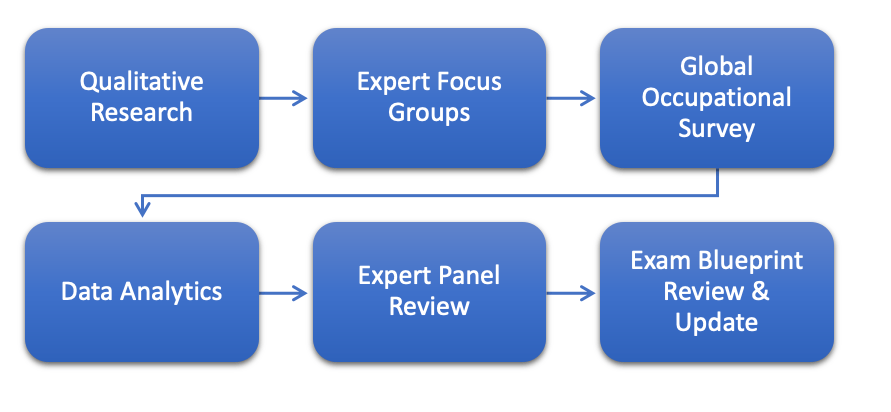
The process we use is rigorous, systematic and in strict compliance with best practices in the credentialing industry. A crucial step in this process is completing a job analysis to examine the current state of community association management – the responsibilities of a professional manager and the knowledge and skills required to fulfill those responsibilities. We carry out this process approximately every five years to provide a benchmark for updating the CMCA exam. Our next job analysis cycle begins this year, concluding in 2022. 

The job analysis approach we use involves collecting and aggregating information and insights from job incumbents and occupational experts to determine the content specifications for the CMCA exam. This process is illustrated in the graphic below. A significant component of the process is an electronic survey sent to thousands of association management professionals worldwide to gather information about their job duties and requirements. The survey results will be reviewed with the pool of subject matter experts comprising the CAMICB Exam Development Committee to obtain their input and judgments regarding current trends in the profession and the importance of the knowledge for competent performance in the field. 

As the CMCA credential has grown internationally, this upcoming study will build on that growth. Joseph Caramagno, MA, who leads the survey process and analysis and is a Senior Research Scientist for Human Resources Research Organization (HumRRO), CAMICB’s test development partner said, “While the job analysis survey has taken a global approach in the past, we’re making changes to the process to reach even more managers working around the world.”  Caramagno explained, “The focus for this survey cycle is to fully understand, at a global level, the essential tasks and duties that comprise a manager’s day-to-day work and what they must know to carry out those duties effectively. Additionally, this input will help shape our understanding of the profession.”

The survey will be available to managers all over the world in the second quarter of 2022, and managers at all levels of experience must participate to ensure we have broad representation and an accurate view of the profession.

Said Chair of the CAMICB Board of Commissioners, Drew Mulhare, CMCA, LSM, PCAM, “This process is a critical component to maintaining and validating the exam as the results guide the development of a new CMCA exam blueprint, which assures we are testing what we need to be testing. In addition, this comprehensive survey will help us emerge with a clear vision of what the field of association management around the world is today, how it has changed over the last five years, and what the minimum requirements for certification are when we take that global perspective.”

HR Tech Number of the Day: work communication tools

There are big differences in the tech used by younger employees and business leaders.

By Jen Colletta for Human Resource Executive

60: Percentage points separating “born digital” employees and business leaders who rely on instant messaging apps in a work setting

The role of technology in workplace communication has never been more clear than in the last year, as employees turned to tech tools to keep them informed, engaged and productive in newly remote settings. However, according to a new study, the type of tools that employees rely on could vary vastly based on employee age—setting up a unique challenge for HR leaders.

The Born Digital Effect from software company Citrix, parent company of Wrike, explored the future of work through the lens of “born digital” employees—Millennials and Gen Z workers primed to take on leadership roles in the coming decades. The report found some distinct differences between how born-digital employees and current business leaders work, including in the technology they utilize.

For instance, 81% of born-digital respondents rely on instant messaging apps for work purposes compared to just 21% of business leaders. Other large gaps existed in their use of technology they individually own for work (78% for born-digital and 21% for business leaders) and real-time document collaboration tools (used by 86% of leaders and 50% of born-digital employees).

What it means to HR leaders

The variations in work tech usage highlight a number of realities that HR leaders need to confront, says Andrew Filev, senior vice president and Wrike general manager at Citrix.

First, the pandemic, in many workplaces, has increased the reliance on synchronous communication tools favored by so many born-digital employees—but that constant connectivity can inhibit productivity and engagement and put workers at risk of burnout, Filev says. At the same time, business leaders need to be open to new tools, especially those which future leaders are inclined toward.

“Just as born-digital workers shouldn’t spend all day in Slack, business leaders shouldn’t avoid the instant messaging platform altogether,” he says.

Achieving that balance comes down to leadership from HR. HR leaders need to educate all employees, as well as executives, Filev says, about the benefits, drawbacks and appropriate use of both synchronous and asynchronous communication tools.

“Synchronous tools are meant for quick, real-time collaboration, but a majority of the work must be done via asynchronous platforms with fewer distractions, allowing for deep work,” he says. “HR needs to step in and provide the appropriate training and education to ensure that all employees—top to bottom—are using solutions for their intended purpose.

Jen Colletta is managing editor at HRE. She earned bachelor’s and master’s degrees in writing from La Salle University in Philadelphia and spent 10 years as a newspaper reporter and editor before joining HRE. She can be reached at hreletters@lrp.com.

THE GIFT OF NEGATIVITY: WHAT WE GAIN BY FAULTFINDING, NITPICKING, AND NAYSAYING

From LeadershipFreak Blog

Painful experiences teach you to protect yourself. The tools of self-protection are faultfinding, nitpicking, naysaying, and quibbling.

Experience gives birth to protective negativity.

The birth of negativity:

“If a cat sits on a hot stove, that cat won’t sit on a hot stove again. That cat won’t sit on a cold stove either. That cat just don’t like stoves.” Mark Twain

A painful experience with a hot stove makes you critical, skeptical, cantankerous and disagreeable.

Negativity bias:

The gift of negativity is about NOT DOING. But ‘not doing’ doesn’t get much done.

There are a few people who think of how something might work, but in my experience, they are the dodo birds in the crowd. Faultfinding is an Olympic Sport on average teams.

Avoiding is stronger than pursuing.

People have a stronger negative reaction to losing $20 than the positive feelings they have from gaining $20. (Kahneman – Thinking, Fast and Slow)

5 ‘advantages’ of faultfinding, nitpicking, and naysaying:

  1. Admiration: You seem wise when you explain why something won’t work.
  2. Time: You don’t waste energy on things that probably won’t work.
  3. Stability: You don’t need to change when you kill ideas before they grow legs.
  4. Power: You empower yourself by blocking other people’s ideas.
  5. Security: You protect the status quo, even if you complain about it.

Beyond negativity:

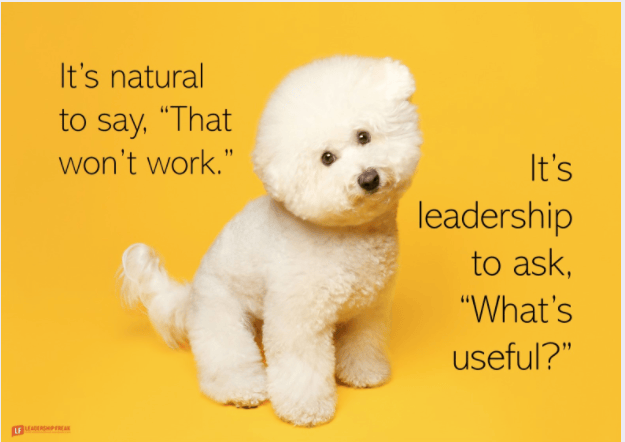
It’s natural to say, “That won’t work.” It’s leadership to ask, “What’s useful?”

  1. Define your goal.
  2. Engage in open conversation.
  3. Don’t silence reason givers – people who give reasons why something won’t work.
  4. Evaluate suggestions, reasons, and ideas by asking, “With our goal in mind, what’s useful about that?”

The “Usefulness” lens:

“How is this useful?” empowers people to explore, adapt, or eliminate suggestions or ideas.

“What’s useful?” treats all ideas equally.

Apart from “What’s useful?”, negative bias wins.

Bonus: The ‘useful’ lens enables learning. Nitpicking blocks learning.

What ‘advantages’ do you see in faultfinding, naysaying, and nitpicking?

How might leaders create future-building conversations?

U.S. workers are among the most stressed in the world, new Gallup report finds

By Jennife Liu for CNBC

U.S. workers are some of the most stressed employees in the world, according to Gallup’s latest State of the Global Workplace report, which captures how people are feeling about work and life in the past year.

U.S. and Canadian workers, whose survey data are combined in Gallup’s research, ranked highest for daily stress levels of all groups surveyed. Some 57% of U.S. and Canadian workers reported feeling stress on a daily basis, up by eight percentage points from the year prior and compared with 43% of people who feel that way globally, according to Gallup’s 2021 report.

This spike isn’t surprising to Jim Harter, Gallup’s chief workplace scientist, who tells CNBC Make It that rates of daily stress, worry, sadness and anger have been trending upward for American workers since 2009. Concerns over the virus, sickness, financial insecurity and racial trauma all contributed to added stress during the pandemic.

But stress spikes were especially acute for women in the last year: 62% of working women in the U.S. and Canada reported daily feelings of stress compared with 52% of men, showing the lasting impact of gendered expectations for caregiving in the household, ongoing child-care challenges and women’s overrepresentation in low-wage service jobs most disrupted by the pandemic. By contrast, the daily stress levels for women in Western Europe went down in the last year, which researchers attribute to social safety nets for parents and workers to prevent unemployment.

And while employee engagement dipped in the rest of the world, it rose to 34% in the U.S. The correlation of higher engagement but also higher stress can result in burnout and mental health challenges and indicates “the intersection of work and life needs some work,” Harter says.

Young people expect their workplace to improve their overall well-being

These sentiments come at a time when younger generations expect their workplaces to provide more value than just a paycheck, Harter says, drawing on previous Gallup research. And in turn, he says organizations have a responsibility to help improve employee well-being if they want to support a resilient workforce; improve learning and performance; and attract top talent.

He points to five elements workplaces can focus on to improve employee engagement and help individuals thrive: career well-being, social well-being, financial well-being, physical well-being and community.

Stress in any one of these areas, such as financial stress due to inequitable pay, or community stress due to an unsafe work environment, can negatively impact a worker’s mental health.

Leaders can do an audit, like through surveys and focus groups, to see if any of their company policies, structures, communications or programs negatively impact their employees’ overall well-being. And when leaders introduce new programs or benefits, Harter says, leaders should connect the value of them to “those five elements, so people understand why you’re providing various benefits, and why you’re trying to provide an overall culture of thriving.”

Who plays the biggest role in employee well-being

It’s crucial CEOs communicate this priority from the top, Harter says, but managers play the biggest role in actually helping improve worker well-being throughout all levels of an organization.

“The most important thing employers can do is to equip managers to have the right kinds of conversations with people,” Harter says. He says companies should be doing more to upskill their managers to facilitate meaningful and ongoing conversations. At least once a week, he says, managers should take the time to get to know their employees’ personal lives, in addition to what they have going on at work and how the two intersect.

“What dictates employee engagement and high well-being is very situational,” Harter says. “We have to equip them to have the right kinds of conversations so they can really impact people and help them find the resources they need.”

Manager training should also be inclusive to recognize workers who need the most flexibility and support, for example, a mom who needs flexibility to do her best work while also taking on child care. Managers can not only point their employees to the best resources, but also be an advocate to senior leaders about introducing new policies or benefits that their workers don’t have but need.

As Harter puts it, “managers are in the best position to understand their employees’ life situation well enough to adjust the work to accommodate them.”

Additionally, some organizations are investing in well-being coaches, seeing that employees who are fulfilled and secure in their personal lives can contribute to the business’s success.

“Having leaders in an organization who authentically believe in improving worker well-being, that’s important to culture,” Harter says.