CAMICB is a more than 25 year old independent professional certification body responsible for developing and delivering the Certified Manager of Community Associations® (CMCA) examination. CAMICB awards and maintains the CMCA credential, recognized worldwide as a benchmark of professionalism in the field of common interest community management. The CMCA examination tests the knowledge, skills, and abilities required to perform effectively as a professional community association manager. CMCA credential holders attest to full compliance with the CMCA Standards of Professional Conduct, committing to ethical and informed execution of the duties of a professional manager.
The CMCA credentialing program carries dual accreditation. The National Commission for Certifying Agencies (NCCA) accredits the CMCA program for meeting its U.S.-based standards for credentialing bodies. The ANSI National Accreditation Board (ANAB) accredits the CMCA program for meeting the stringent requirements of the ISO/IEC 17024 Standard, the international standards for certification bodies. The program's dual accreditation represents compliance with rigorous standards for developing, delivering, and maintaining a professional credentialing program. It underscores the strength and integrity of the CMCA credential.
Privacy Policy: https://www.camicb.org/privacy-policy
Business leaders in the United States have revealed that they are more satisfied with their jobs thanks to artificial intelligence, according to a new report.
Tech.co’s survey among 1,047 business leade3rs found tat 59% who are using AI in their roles said it has improved their job satisfaction.
Another 30% of the respondents said AI has had a “strong” or “significant” impact on their work processes.
The findings come amid recent research that only 22% of employees across the world are satisfied with their jobs in 2023.
According to Tech.co, their new findings suggest that “artificial intelligence could be the key to increasing the amount of gratification employees receive from their job in 2024.”
Easily accessible AI tools
Aaron Drapkin, Tech.co’s lead writer and AI expert, attributed AI’s impact to its easily accessible nature.
“ChatGPT and co. wouldn’t be impacting job satisfaction in quite the same way if they were more complicated to configure, cost lots of money, or became so intelligent that they rendered workers redundant,” Drapkin said in a statement.
He noted that while it may cause major economic change in the future, its current capacity to support employees now makes it a “significant net benefit” for most workplaces.
“Right now, we’re living in a proverbial sweet spot. The tools are free, easy to use and not powerful enough to work independently and replace the humans using them,” he said.
“This is great – but none of these things are absolutes. AI clearly has the capacity to completely transform how we work – but ensuring this transformation continues to be gradual, manageable and beneficial will be no easy task.”
Uses of AI at work
According to the report, the top uses of AI in their workplace are data analysis (32%) and writing tasks (26%). Other uses include:
Scheduling and calendar management (21%)
Automated data entry (20%)
Quality control (20%)
Cybersecurity (20%)
Running customer support chatbots (19%)
Design tasks (19%)
Document classification and management (17%)
Inventory management (16%)
Drapkin said this shows how freely available AI tools are helping with a huge range of tasks, especially ones that employees find repetitive, boring, and time-consuming.
“We’ve never had tools this capable at our fingertips before, and the data suggests it’s making a tangible difference to the lives of people using them,” Drapkin said.
By Madeline Hay, CAMICB’s Director of Exam Administration
The Community Association Managers International Certification Board (CAMICB) is poised to usher in a new era for the Certified Manager of Community Associations (CMCA) exam, offering a revamped blueprint that mirrors the dynamic landscape of association management across the globe. These changes, stemming from a thorough job analysis study conducted between 2021 and 2022, reflect an evolution in the core competencies required by community association managers worldwide.
Job Analysis
Job analysis is the cornerstone of ensuring that the CMCA exam remains an authoritative assessment tool, reflecting the contemporary roles and responsibilities of association managers. This comprehensive study involved a multifaceted approach, dissecting the complexities of association management to chart a revised course for the credential.
The task of redefining the blueprint through job analysis was a colossal undertaking spanning 18 months. The comprehensive study involved 13 project phases, including reviews of over 100 primary source documents, survey responses from 3,000 managers around the world, and more than 90 hours of collaborative meetings with 55 subject matter expert volunteers. Notably, 20 of these experts were sourced internationally, reflecting the global significance and diverse perspectives encompassed in this endeavor. This validation process ensured that the CMCA exam blueprint aligns with the real-world experiences and challenges faced by professionals in the field.
Updated Blueprint
The job analysis study resulted in an updated blueprint that encapsulates the requirements of modern community association management. Notable changes include a reorganization of job tasks and knowledge into six principal categories compared to the previous eight, allowing for a more cohesive representation of the industry’s nuances.
For instance, content previously segregated into distinct categories, such as “Budgets, Reserves, Investments, and Assessments” and “Financial Controls,” will now be consolidated under broader headings like “Financial Management” and “Risk Management.” This streamlined approach better reflects the multifaceted nature of association management, presenting a more cohesive and holistic assessment framework for aspiring CMCA candidates.
One of the findings of the job analysis study was a significant emphasis on meetings and events in the daily responsibilities of early-career managers. Consequently, the exams will see an expansion of the “Meetings and Events” domain from 10% to 18%. Furthermore, “Property Maintenance” and “Risk Management” will increase by 3% and 4% respectively, while “Contracting” reduces from 13% to 10%.
Notably, the human resources domain, constituting 6% of the current exam content, will no longer feature in the revised blueprint.
Current Blueprint (Remains Until December 2024)
Topic Area
% of Exam
1. Meetings
10
2. Governance, Legal and Ethical Conduct
23
3. Budgets, Reserves, Investments, and Assessments
15
4. Financial Controls
11
5. Risk Management and Insurance
11
6. Property Maintenance
11
7. Contracting
13
8. Human Resources
6
Total
100
Updated Blueprint (Starting in December 2024)
Topic Area
% of Exam
1. Meetings and Events
18
2. Governance and Compliance
23
3. Financial Management
20
4. Risk Management
15
5. Contracting
10
6. Property Maintenance
14
Total
100
The CMCA Candidate Handbook and the CMCA Study Guide have been updated to reflect the revised blueprint. The current Handbook and Study Guide – valid through December 2024 – will remain on www.camicb.org through the end of December. The updated Study Guide and Handbook are also now available on the website. After December 2024, only the updated Study Guide and Handbook will be available.
Managers planning to test before December 2024 should refer only to the current Handbook and Study Guide. Managers planning to test after December 2024 should utilize only the updated Handbook and Study Guide.
Looking Ahead
The redefined CMCA exam blueprint, meticulously curated through a comprehensive job analysis study, embodies CAMICB’s commitment to elevating industry standards.
These changes are not merely cosmetic but serve a foundational purpose—to ensure that the CMCA exam genuinely reflects the essentials of community management worldwide. The blueprint revisions align the exam content with the ever-evolving needs of the profession, encapsulating the industry’s best practices, irrespective of geographic nuances.
Stay tuned as CAMICB offers more in-depth exploration of the blueprint throughout the next year leading up to the December 2024 change, symbolizing a leap forward in certifying the finest professionals in community association management.
Questions regarding the launch of updated forms of the CMCA examination may be forwarded to info@camicb.org or call 703-970-9300.
Some 50,000 large New York City buildings, including thousands of co-ops and condos, will be required to comply with the city’s sweeping climate law, Local Law 97, which went into effect on Jan. 1 of this year. And how many inspectors does the Department of Buildings (DOB) have on staff to make sure those buildings are meeting their carbon-emission caps?
Eleven.
Watchdogs and experts say that’s not nearly enough to implement the rules, Gothamist reports. The 11 staffers have a daunting workload that will only grow as Local Law 97’s requirements are phased in over the coming years. The bulk of the work done by the DOB team dedicated to Local Law 97 involves reviewing and auditing reports filed by co-op and condo boards and landlords, then pursuing enforcement when necessary.
The good news: under the carbon emission caps that went into effect on Jan. 1, only 10% of large buildings are out of compliance, according to the DOB. But analysis by the city found that the majority of buildings are not in compliance with benchmarks that go into effect in 2030, when the rules become more stringent.
“When you look at the number of buildings and all the paperwork and substantive work that needs to be done, it could take a small army to make sure that we get this done,” says Raya Salter, an environmental lawyer on the state’s Climate Action Council. “We’ve got a climate bomb that’s ticking, and we’ve got billions of dollars coming out of the federal government and that clock is ticking too. We need for our local officials to be focused on this.”
Don’t hold your breath. The DOB has been understaffed for years, and there are currently seven unfilled positions on the squad dedicated to carrying out Local Law 97, according to a DOB spokesperson. But the agency says competition from the private sector has made it difficult to fill certain positions requiring architects and engineers with backgrounds in sustainability.
Pete Sikora, climate and inequality campaigns director at New York Communities for Change, is not feeling optimistic. “I don’t know how they seriously plan to evaluate, judge and then watchdog the implementation of all of those [decarbonization] plans that would also take a lot of talented staffing and follow up,” Sikora says. “I think they’ll just rubber stamp the plans they get and not be able to seriously evaluate them.”
The business judgment rule often serves as a perceived safety net for boards, shielding them from legal scrutiny. However, this rule is not an impenetrable shield and boards should be aware of the nuances. Simply put, the business judgment rule states that, with four exceptions, a court cannot overrule a co-op, condo or HOA board-issued rule or policy no matter how strongly the judge may disagree with it. However, there’s a fifth consideration when it comes to the business judgment rule, and that is the political impact of a particular policy. Boards should not only focus on meeting the four legal requirements for business judgment rule protection but also be aware of potential community backlash.
The four exceptions. The first exception to the broad protection of the business judgment rule arises if a rule or policy is inconsistent with the building’s governing documents. Boards must adhere to the authority granted by these documents, and any deviation could lead to legal challenges and the voiding of the regulation. Second, the proposed policy or rule must comply with all statutory requirements and all aspects of existing case law. If it’s illegal, then a court is going to invalidate it. Third, the regulation cannot in its application constitute a breach of the board’s fiduciary duty to shareholders or unit-owners. And finally, the courts impose a requirement that any board regulation must be in furtherance of a legitimate corporate purpose. That’s a very easy test to pass. Anything that even smacks of valid corporate purpose is going to pass that test.
A fifth consideration. Even if a board’s rule satisfies the legal requirements of the business judgment rule, it may face opposition from residents if it is unpopular with the community it serves. Boards need to tread carefully even when a rule or policy satisfies each of those four legal requirements for protection under the business judgment rule. It may be so unpopular with the community that the board runs the risk that the residents at the next board election are going to challenge the board, overthrow it in a proxy fight, and then reverse the policy.
A case study. Recently, we represented a Suffolk County HOA where the board banned the use of pickup trucks anywhere within the community’s property grounds. The board thought pickup trucks were contrary to the upscale image it was trying to promote for the community. Discrimination, while subjective, is not illegal unless it falls within the 19 protected categories, and social class is not one of them. The ban faced strong opposition from residents and a group of them challenged the rule legally. Because it passed all four of the business judgment rule tests, the court upheld the regulation. However, the judge told the plaintiffs and the owners challenging the regulation that they had political remedies rather than legal ones. Residents picked up on the hint. They staged a proxy fight at the next annual meeting. They won, threw out the entire board and replaced it, and immediately repealed the ban. So the board’s purpose, because it was out of line with the community’s thinking, was undermined and defeated. The case perfectly illustrates that fifth principle, which is to make sure regulations are not too far out of line with the pulse of the community.
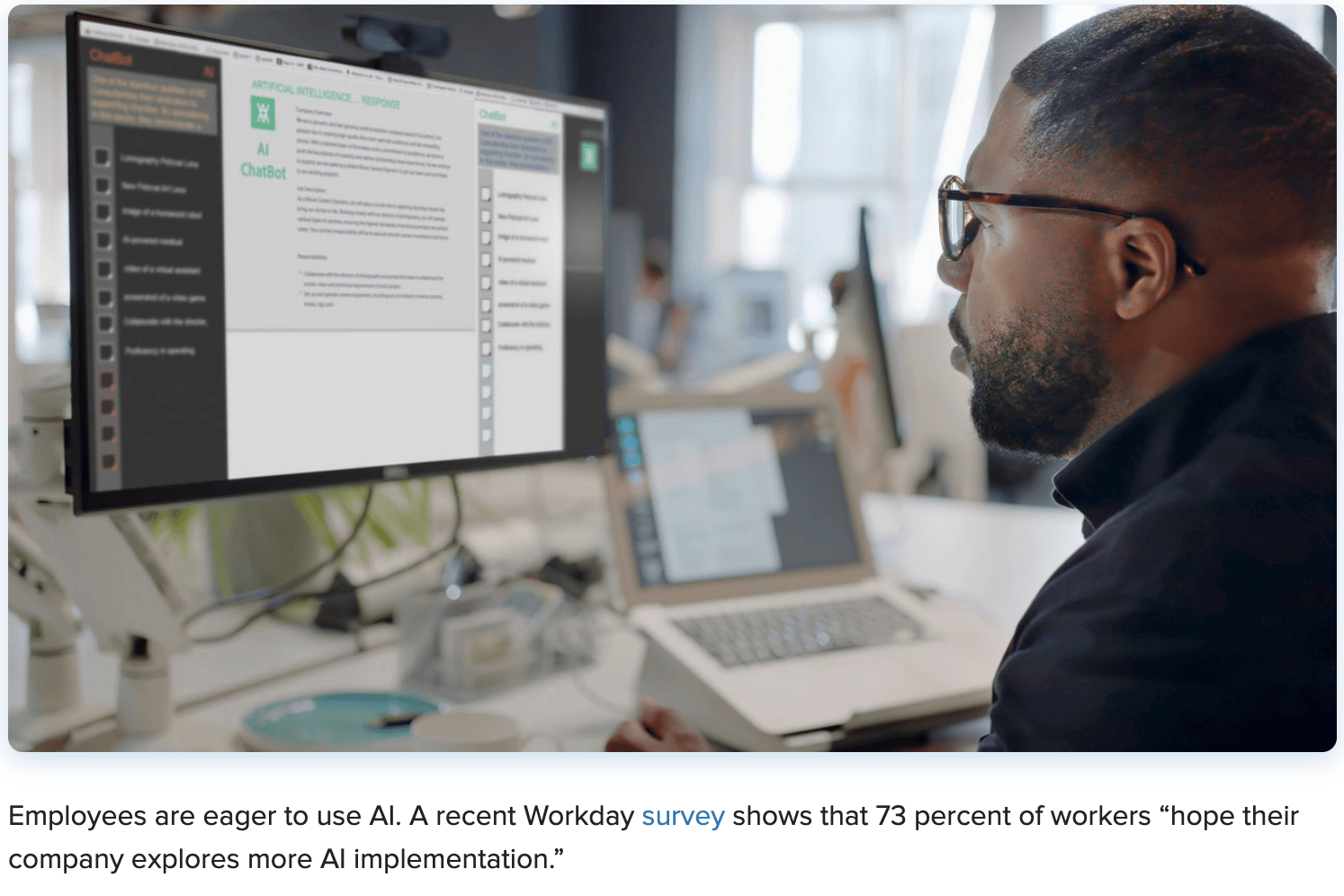
Employees are eager to use AI. A recent Workday survey shows that 73 percent of workers “hope their company explores more AI implementation.”
“At Insight, the groundswell of interest around generative AI has been high,” said Carm Taglienti, chief data officer and distinguished engineer at Insight Enterprises. “People have been genuinely curious about it, which we have wanted to encourage and incentivize.”
In response to employee enthusiasm, the Arizona-based information technology company developed a private, secure generative pre-trained transformer (GPT) solution and made the tech available to its workforce. Fostering companywide participation and friendly internal competition has been the key to success, according to Taglienti.
“Our teammates have felt empowered to test, learn and explore the tool, uncovering use cases that we have been able to replicate internally and bring to market for clients,” he said.
But not all organizations have the resources to launch a private or “in-house” tool. With the right strategy and vetting, third-party tools can be just as effective in satisfying employees’ curiosity about AI.
ChatGPT and Beyond
Using ChatGPT has cut the time needed to write a job description from an hour to, in some cases, roughly 10 minutes, according to Priti Patel, chief people officer at G2, a business software and services company headquartered in Chicago.
Her team is actively using ChatGPT to conduct performance reviews, write job descriptions, and glean themes and insights from quarterly employee survey comments. But while ChatGPT is the most widely recognized AI tool, it’s far from the only one available.
“There are other helpful AI time-saving tools and features, including Zoom’s AI assistant for transcribing interviews and intake calls our team has with hiring managers,” Patel said.
Jessica Blodgett, SHRM-CP, director of people, culture and community at the New York-based CMMB, an international nongovernmental organization, relies on Google’s Bard because it provides different drafts to review and tweak. She also uses LinkedIn’s AI tool to help build a pipeline of passive candidates for open roles. Blodgett sees her HR peers using more AI tools in recruitment, general HR administration, and learning and development.
“This includes tools such as AI coaches to help develop employees,” she said. “In recruitment, you will see HR leaning into automated resume screening, scheduling, predictive interview outcomes, skill matching, or even LinkedIn that uses AI to identify and reach out to passive candidates.”
Tips for Assessing and Integrating AI Tools
Listening to and considering employees’ requests about adopting AI tools is crucial. Employees who feel their input is valued are more engaged and may have outside experience with specific tools that can benefit the organization. However, adopting the use of an AI tool should be strategic.
“At the end of the day, regardless of how they’re doing it, leaders should not invest in AI just for the sake of it,” Taglienti said. “There has to be a clear ‘why’ and business imperative that’s driving any of these decisions.”
Here are four things to consider when an employee expresses interest in implementing an AI tool.
1. Understand the risks. Blodgett said it’s essential to know the risks associated with any AI tool up for consideration. That includes knowing how transparent the vendor is about updating and training its models. In graduate school, Blodgett and her capstone partner researched the risk mitigation capabilities of over 140 AI tools. They found that the average AI tool scored 1.5 on a scale of 7.
Blodgett and her research partner generated a list of questions to help understand the risks, and they encouraged HR leaders to consider at least these two:
Does the AI tool have the ability to expose current biases?
Can a human understand the tool without additional training?
2. Establish guidelines. It’s crucial to have an organizational AI policy before moving forward with vetting or implementing an AI tool. Governance is central to making any effort successful, Taglienti said.
3. Evaluate and adapt. Eser Rizaoglu, a senior analyst in Gartner’s HR technology strategy and management team based in London, said the organization recommends:
Evaluating generative AI use cases and broader AI use cases, with business value and feasibility as drivers for prioritization.
Working with HR technology leaders on guidance for when to buy or build generative AI capabilities, based on each individual use case.
Monitoring the market as new use cases and lessons emerge.
4. Understand where it saves time. “It’s important to be aware of where your team is spending their time to determine where AI can be most effective,” Patel said. “However, don’t stop at your department. Marketing, sales or product [development] might be using AI in ways that HR can adopt, too—such as automated slide content creation for internal meetings or summarizing employee survey data.”
Many New York City co-op and condo boards are understandably anxious about the potential costs of complying with the city’s ambitious Climate Mobilization Act, especially Local Law 97, which sets strict limits on building carbon emissions. Buildings now account for about two-thirds of the city’s carbon ouput. One group of co-ops and condos in Queens grew so anxious, in fact, that it filed a lawsuit to block the law from going into effect on Jan. 1 of this year. The suit was dismissed.
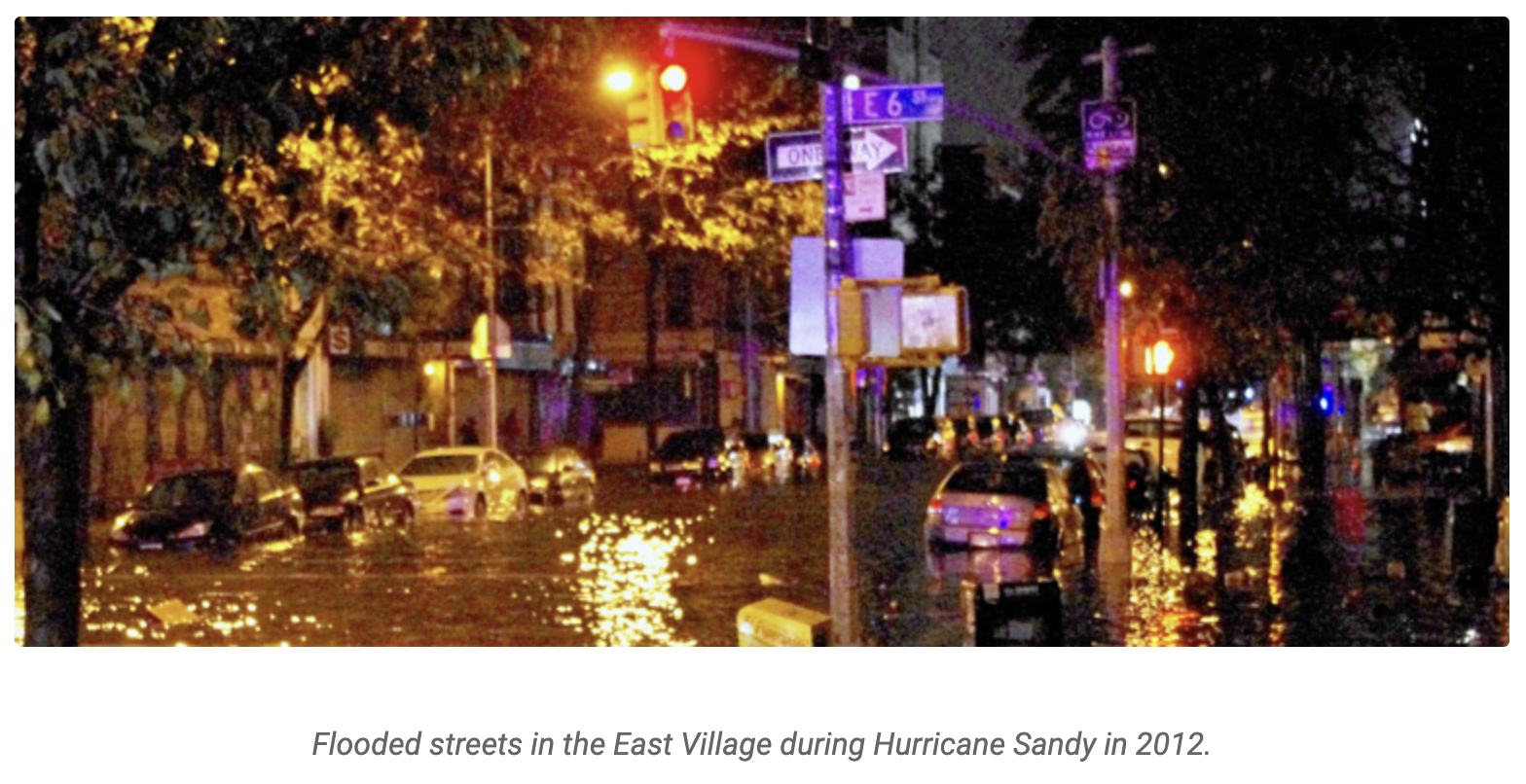
New projections from the New York City Panel on Climate Change (NPCC) confirm that the city will be hotter, rainier and wetter in the coming years — with major shifts hitting the city within a decade. The NPCC’s latest estimates, as reported by The City, project sea levels around the city to continue to rise between half a foot and just over a foot in the 2030s. Annual precipitation is expected to increase by up to 10% in those years, while the city could experience temperatures between 2 and 4.7 degrees warmer.
The estimates, which have not been previously reported, are part of a forthcoming paper from the NPCC Climate Science Working Group and were reviewed during a presentation to a northeast climate consortium earlier this month.
First convened in 2008, the NPCC is a group of 20 climate experts who advise policymakers on the latest science and strategies to address hazards facing the boroughs. The panel has come out with four comprehensive reports since 2010, and is expected to release its fifth in April.
“The direction of the change and the general magnitude of those changes are very constant,” says Luis Ortiz, a climate scientist and professor at George Mason University, who worked on the report. “Things are going to get hotter and relatively wetter… We need to prepare, and we need to adapt now to get ready for those changes.”
Given the changes that are on the way, the work can’t happen fast enough, says Klaus Jacob, a Columbia University geophysicist who previously served on the NPCC. “The city is moving in the right direction,” he says, apparently referring to Local Law 97 and other initiatives. “But compared to how the weather and climate is changing, it’s a snail’s pace, and the climate is a rabbit.”
In other words, reducing carbon emissions, from buildings and all other sources, is no longer a luxury but is now a necessity for New York.
Community association managers who hold and retain the CMCA credential demonstrate they are accomplished professionals committed to developing their skills and knowledge by participating in ongoing continuing education coursework and professional development opportunities year-round. There are numerous and varied opportunities for CMCAs, ranging from college degrees and coursework to conferences, professional coaching, community workshops, seminars, symposiums, and webinars.
These offerings cover a wide range of topics, including community association management operations, administration, legal requirements, accounting, human resources, and public administration, which ensure community managers are up to date on all aspects of this growing profession that undergoes frequent shifts in laws, regulations, and best practices.
“The commitment to continuous learning is a testament to a manager’s dedication to professional growth and excellence,” said CAMICB Board of Commissioners member Jennifer Andal, CMCA, AMS, PCAM, who is the Director of Better Communities in Dubai. “This commitment enhances their credibility within the community, as residents and board members recognize the value of a manager who remains current in their knowledge and skills. Professional credibility facilitates more effective communication and a greater capacity to positively influence community dynamics.”
Andal explained that managers are essential in creating and sustaining harmony within residential communities. “In a profession characterized by evolving legal frameworks, dynamic interpersonal relations, and a demand for effective leadership, the continuous pursuit of knowledge is paramount.”
The more managers pursue professional development opportunities, the easier it is to adapt to change. “Continuous learning ensures that managers stay updated, allowing them to align their strategies with the latest standards,” added Andal. “This adaptability is vital for effective communication, enabling managers to speak with authority and relevance, thereby enhancing their credibility.”
Steven Shuey, PCAM, CCAM, who is a retired Management Consultant, explains that ethics is an important issue for managers. “The best way to understand the ethics of the profession is to stay educated in all aspects of our work,” said Shuey. “New laws are emerging state by state. Staying current helps keep managers ethical by knowing – and following – what laws and procedures are changing.”
Don’t Overlook Opportunities That Hone Soft Skills
Effective communication skills, leadership, crisis management, and conflict resolution are all skills that require flexibility and nuanced approaches. Seeking out and embracing ongoing learning opportunities in these areas position CAMs as experts and leaders capable of fostering a positive and thriving community environment.
“Polished communication skills empower managers to interact with residents, board members, and external vendors, conveying information clearly, resolving conflicts diplomatically, and fostering community unity,” said Andal.
Andal explained that continuous learning equips managers with tools for crisis management and conflict resolution. Mastering these skills enables managers to navigate challenging situations gracefully, preventing the escalation of issues and maintaining a healthy community atmosphere.
“Continuous learning, including leadership training, empowers managers to positively influence others within the community,” said Andal. “Acquiring knowledge about leadership styles, motivation strategies, and team-building techniques allows managers to cultivate an environment that encourages collaboration and growth.”
In addition, it’s important that managers take advantage of more informal learning opportunities, such as networking and social events. These are excellent opportunities where colleagues share ideas and innovative approaches to solving common and uncommon problems. These gatherings often allow managers to connect with others who are particularly steeped in specific topics, such as the latest use of technology or legal happenings on the ground.
Finally, Andal noted, “In the dynamic landscape of community association management, the pursuit of knowledge emerges as the pathway to success and a lasting impact for these dedicated professionals.”
Resource Corner
Making use of the wide variety of professional development resources available to managers is critical to staying on top of industry news, events, and any changes arising in the profession. Below is a sampling of industry resources.
CAI – The CAI website (www.caionline.org) and local CAI Chapters also offer an array of resources, networking and professional development opportunities. To find a local chapter go to: https://www.caionline.org/Chapters/Pages/Find-A-Chapter.aspx. Your local/state chapter will also offer specific opportunities that will impact your community and specifically your state. For example, in California opportunities may be state-specific to drought, wildfires, the Davis Stirling Act, etc.
CAMICB – CAMICB recognizes a variety of Continuing Education (CE) opportunities for CMCA credential renewal, including webinars, courses, and conferences. CAMICB also value the contributions made through volunteer work in the community association sector. Volunteer hours, such as serving on association boards or engaging in advocacy efforts, are accepted as part of a manager’s continuing education. CAMICB’s website offers guidelines on the types of CE activities that qualify for renewal. For inquiries about the eligibility of a particular course or activity for CE credits, please visit www.camicb.org or contact CAMICB at info@camicb.org.
CAI Exchange – An online forum that allows members to collaborate and connect with colleagues. These informal discussions are extremely helpful in sharing innovative approaches to common and uncommon situations as well as best practices and advice.
Other Formal Training Programs – Companies like Adamen, Inc. (https://community-association-management-101.thinkific.com/), a national consulting and employment firm specializing in the community management industry, offer online training programs for managers that range from topics specific to managers, boards, and accounting staff.
SmartBrief – SmartBrief is a free resource exclusive to CMCA credential holders. This weekly snapshot of both industry and CAMICB news will more informally keep you up to date on trends and changing laws in the field of community association management: https://www.camicb.org/Pages/Smartbrief.aspx
Continued Professional Development and Growth Ensures Homeowners, Employers and Colleagues of Managers’ Ability to Provide Exceptional Service is the second in a series of articles, produced by CAMICB staff, that delve into the important issues and topics affecting community association managers.
Lydia Pelliccia is a freelance writer.Matthew Green is executive director of Community Associations Managers International Certification Board.
By Madeline Hay, CAMICB’s Director of Exam Administration
The Community Association Managers International Certification Board (CAMICB) is poised to usher in a new era for the Certified Manager of Community Associations (CMCA) exam, offering a revamped blueprint that mirrors the dynamic landscape of association management across the globe. These changes, stemming from a thorough job analysis study conducted between 2021 and 2022, reflect an evolution in the core competencies required by community association managers worldwide.
Job Analysis
Job analysis is the cornerstone of ensuring that the CMCA exam remains an authoritative assessment tool, reflecting the contemporary roles and responsibilities of association managers. This comprehensive study involved a multifaceted approach, dissecting the complexities of association management to chart a revised course for the credential.
The task of redefining the blueprint through job analysis was a colossal undertaking spanning 18 months. The comprehensive study involved 13 project phases, including reviews of over 100 primary source documents, survey responses from 3,000 managers around the world, and more than 90 hours of collaborative meetings with 55 subject matter expert volunteers. Notably, 20 of these experts were sourced internationally, reflecting the global significance and diverse perspectives encompassed in this endeavor. This validation process ensured that the CMCA exam blueprint aligns with the real-world experiences and challenges faced by professionals in the field.
Updated Blueprint
The job analysis study resulted in an updated blueprint that encapsulates the requirements of modern community association management. Notable changes include a reorganization of job tasks and knowledge into six principal categories compared to the previous eight, allowing for a more cohesive representation of the industry’s nuances.
For instance, content previously segregated into distinct categories, such as “Budgets, Reserves, Investments, and Assessments” and “Financial Controls,” will now be consolidated under broader headings like “Financial Management” and “Risk Management.” This streamlined approach better reflects the multifaceted nature of association management, presenting a more cohesive and holistic assessment framework for aspiring CMCA candidates.
One of the findings of the job analysis study was a significant emphasis on meetings and events in the daily responsibilities of early-career managers. Consequently, the exams will see an expansion of the “Meetings and Events” domain from 10% to 18%. Furthermore, “Property Maintenance” and “Risk Management” will increase by 3% and 4% respectively, while “Contracting” reduces from 13% to 10%.
Notably, the human resources domain, constituting 6% of the current exam content, will no longer feature in the revised blueprint.
Current Blueprint (Remains Until December 2024)
Topic Area
% of Exam
1. Meetings
10
2. Governance, Legal and Ethical Conduct
23
3. Budgets, Reserves, Investments, and Assessments
15
4. Financial Controls
11
5. Risk Management and Insurance
11
6. Property Maintenance
11
7. Contracting
13
8. Human Resources
6
Total
100
Updated Blueprint (Starting in December 2024)
Topic Area
% of Exam
1. Meetings and Events
18
2. Governance and Compliance
23
3. Financial Management
20
4. Risk Management
15
5. Contracting
10
6. Property Maintenance
14
Total
100
The CMCA Candidate Handbook and the CMCA Study Guide have been updated to reflect the revised blueprint. The current Handbook and Study Guide – valid through December 2024 – will remain on www.camicb.org through the end of December. The updated Study Guide and Handbook are also now available on the website. After December 2024, only the updated Study Guide and Handbook will be available.
Managers planning to test before December 2024 should refer only to the current Handbook and Study Guide. Managers planning to test after December 2024 should utilize only the updated Handbook and Study Guide.
Looking Ahead
The redefined CMCA exam blueprint, meticulously curated through a comprehensive job analysis study, embodies CAMICB’s commitment to elevating industry standards.
These changes are not merely cosmetic but serve a foundational purpose—to ensure that the CMCA exam genuinely reflects the essentials of community management worldwide. The blueprint revisions align the exam content with the ever-evolving needs of the profession, encapsulating the industry’s best practices, irrespective of geographic nuances.
Stay tuned as CAMICB offers more in-depth exploration of the blueprint throughout the next year leading up to the December 2024 change, symbolizing a leap forward in certifying the finest professionals in community association management.
Questions regarding the launch of updated forms of the CMCA examination may be forwarded to info@camicb.org or call 703-970-9300.
When shareholders want to renovate their apartment, it can often be a headache for boards, particularly in older properties where problems are more likely to crop up related to the building’s age. This might include the need for more energy-efficient appliances and systems, or upgrades to plumbing, wiring and windows for the benefit of the building. The escalating costs of running a co-op, including rising taxes and insurance expenses, as well as the desire to keep maintenance down, is prompting boards to explore new strategies for managing renovations.
Shifting responsibilities. One trend is for boards to shift more responsibility onto shareholders for covering renovation costs that might be considered the building’s responsibility. In most cases, what’s inside the building’s walls is the co-op’s responsibility. So if a unit owner is renovating and starts touching risers or branch lines, under the proprietary lease that’s usually the responsibility of the co-op. However, in some cases, this dynamic is shifting. For example, in some buildings where soundproofing in the floors is inadequate, the board might impose an obligation on the unit-owner or shareholder to address that during a renovation. Another example is a building on the Upper East Side that mandated toilet upgrades to improve water efficiency during an apartment renovation.
The impact of energy regulations. As buildings face increased demands to decarbonize and shift from gas to electric, boards are exploring ways to pass the burden of upgrading electrical systems onto shareholders and unit-owners. For example, certain buildings have upgraded the electrical load capacity for the building to accommodate the shift away from gas, but if unit-owners want to take advantage of the increased load, they are being asked to pay for upgrades to the branch lines themselves. Window replacements are another area where boards often request shareholders make upgrades during renovations. The building is trying to shift to the unit owner what may be read in the proprietary lease as being the obligation of the co-op. Boards should be aware they face limitations in pushing shareholders and unit-owners too hard. If the renovation demands are too great, they may resist and legal conflicts could arise.
Navigating upgrades. Open communication and collaboration remain essential in successfully managing these evolving governance issues. Shareholders often prioritize their desire for renovations and alterations over resisting increased responsibilities. One route for the board is to amend the proprietary lease, which is the document that dictates responsibilities. However, as most board members know, making changes to the proprietary lease is often difficult to achieve because it requires a two-thirds majority of shareholders. Some boards might choose to defer certain work until a unit is sold, transferring the responsibility for upgrades to the new owner. As buildings age, the need for renovations and upgrades will only increase. The most sensible approach for boards is to communicate clearly with unit owners, emphasizing the collaborative nature of these changes to garner support. It’s important to seek solutions that benefit both the building and its residents without pushing too hard and risking shareholder backlash.
Bill Adams argues that multigenerational executive room are good for business. Fast Company
Retirement just isn’t what it used to be. Many executives 65 and older are choosing to work for longer—and they are being asked to stay. One reason executives are being asked to delay retirement is because companies are afraid of change and they are ill-prepared for change. Retirement-aged executives are among the most valuable assets to a company, but with little succession planning, older leaders can also create the most volatile departures.
Right now, leaders have an opportunity to develop cross-generational C-suites, and I believe companies that don’t invest in younger leaders will make the same mistakes over and over again, and hurt their chances at longevity. Here’s why leaders should embrace, rather than fear, their younger coworkers.
WORK-LIFE BALANCE
I believe that many older leaders don’t actually want to work forever. They want to do something different: travel, spend time with family, and pursue new creative projects. Working past retirement can take a physical, mental, and spiritual toll. Plus, many older executives are used to working 80 hours per week. Not only is that unsustainable, it’s an expectation rejected by younger leaders who have a greater interest in mental health and wellness in the workplace. By bringing more millennials in the C-suite, older leaders would be reminded to take care of themselves and avoid burnout.
As more Gen Xers, millennials, and yes, even Gen Zers enter the corner office, companies are becoming increasingly aware of the impact of their policies on employees’ physical and psychological safety. Learning this lesson, instead of being afraid of younger leaders, can become an essential retention tool. Organizations becoming more invested in producing a supportive environment is not only more humane, but is also in the best interest of companies because a supportive environment ensures that top talent is at their healthiest and happiest. This simple principle has taken older generations far too long to realize, and building intergenerational connections can help end burnout.
RELEVANCE
To be sure, a natural generational transition is happening in many workplaces, which will give those companies a new opportunity to become more relevant. I’ve sat in too many rooms where every executive was like me—over 60, male, and white. I believe that for a company to continue this archaic tradition is to invite its own demise. Diversity of race, gender, and generation is the easiest way to ensure a company is tapped into the zeitgeist, can offer different perspectives from different experiences, and can hold relevant conversations with its audiences.
I have found that younger workers see the world in a radically different way than more experienced leaders. If conversations between different generations don’t take place in the C-suite, companies will never be able to retain their top talent across generations, let alone speak to the rapidly changing social and economic landscape. In many instances, knowledge of the world trumps experience in the office, and the more perspectives included in a company’s leadership, the more likely it is to offer a valuable conversation in its industry.
LONGEVITY
Improving your team’s relevance isn’t the only added value of a C-suite that covers the age continuum. Having young people in the room can also support a company’s longevity. A lack of succession planning has left significant gaps in many teams’ organizational structure, and the inevitable departure of workers over the age of 65 too often leads to a great scramble to pick up where retired leaders left off. Placing younger generations in leadership roles can support continuity and ease the transition when torches are passed. When older leaders embrace other generations, young leaders will be better prepared and ready to steer the ship without causing too much of a storm.
It seems that there is a suspicion that a multigenerational executive room could create tension and volatility. Good. Without diverse perspectives, without a push and pull, the best ideas will never rise to the top—because the best ideas won’t be proposed. Retirement-age leaders serve an important purpose and add value to their organizations, but if they want to ensure a company’s legacy and longevity, they should invite the next generations to the table before they retire. Companies need a mix of age and experience to build a holistic, peer-reviewed, and vetted perspective on strategy. If the old guard wants to preserve its legacy, it’s time to bring in the leaders who will carry their mission forward.