By Sandy Denton, CMCA, LSM, PCAM, Chair of the CAMICB Board of Commissioners
The Community Association Managers International Certification Board (CAMICB) offers the only international certification for managers that is accredited by the US-based National Commission for Certifying Agencies (NCCA) and the globally recognized ANSI National Accreditation Board (ANAB). We achieved this by following a stringent process of continually updating, maintaining and validating the CMCA examination. Chief among our responsibilities is to conduct a Job Analysis Survey every five years. The survey aims to answer one key question about the role of a community association manager: Which tasks are essential to doing the job of a community association manager well?
Your Participation Matters – Watch Your Inboxes – Coming June 21!
This electronic survey will be sent to thousands of association management professionals worldwide; it’s critical for as many community association managers as possible – at all levels of experience – to participate and to share your insights. Further, survey participants who hold the CMCA will earn four continuing education credits toward their recertification.
“I can’t underscore how important it is to have as broad a representation as possible in this survey so that we have an accurate view of the profession today,” said Tom Skiba, CEO of the Communities Associations Institute (CAI). “The field of association management is rapidly growing and it’s terrific that more people are joining the profession at the entry level. The findings from this survey are critical data points to ensure we assess and certify managers based on the appropriate criteria. In doing so, associations and management companies who hire CMCAs will continue to thrive.”
Your participation in this survey will:
Tell us what the essential tasks and duties are that comprise a manager’s day-to-day work,
Help guide the development of a new CMCA exam blueprint that mirrors current practice,
Identify any changes in practice and ensure we are testing what we need to be testing, and;
Help us emerge with a clear vision of what the field of association management around the world is today and how it has changed over the last five years.
Please take a few moments to offer your valuable input that will help shape our understanding of the profession today and will ensure that the CMCA remains the most reliable indicator of knowledge, ethics and professionalism for community association managers.
By Sandy Denton, CMCA, LSM, PCAM, Chair of the CAMICB Board of Commissioners
When I began my term as Chair of the CAMICB Board of Commissioners six months ago, I had no idea how gratifying it would be to serve in this role and to work alongside a committed, creative and insightful Board of Commissioners all of whom serve in volunteer roles yet work tirelessly to further and better our industry.
A highlight of the Annual CAI Conference is the unveiling of the CAI Volunteer Award recipients. The Awards program highlights the efforts of those who go above and beyond to demonstrate leadership, excellence, and dedication to support and advance community association governance, management, and living, as well as CAI programs and initiatives.
I’m thrilled that three members of the CAMICB Board of Commissioners were honored by CAI for their significant contributions to CAI and the community association way of life.
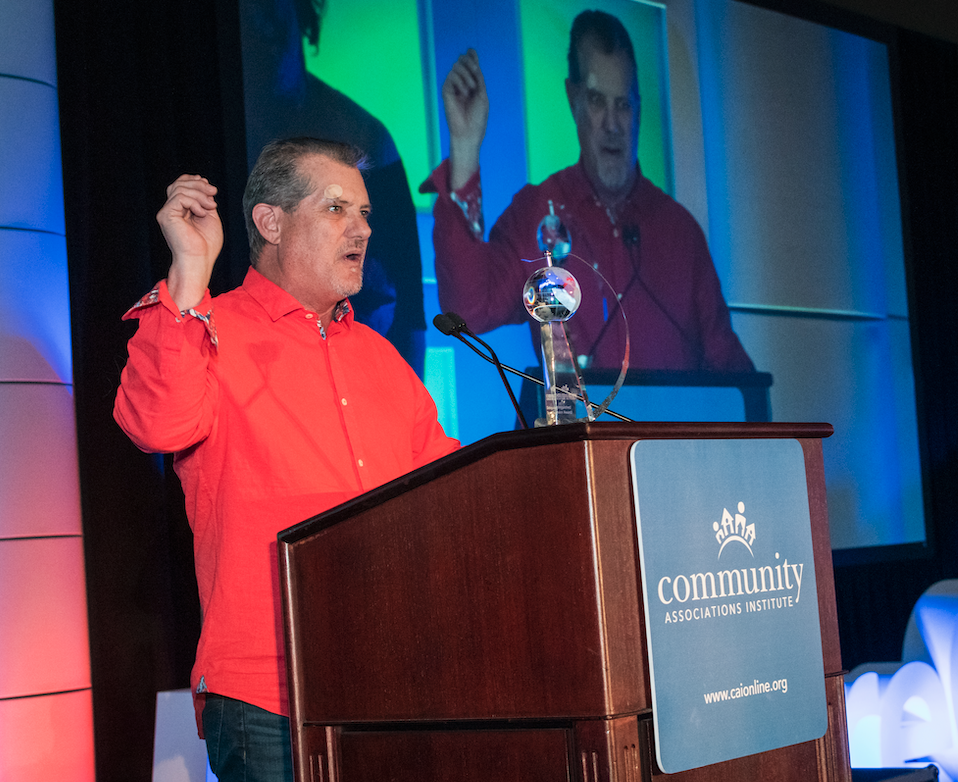
Rob Felix, CMCA, LSM, PCAM, RS, received CAI’s most prestigious award, the Distinguished Service Award for his long-standing, extraordinary contributions to CAI. Rob has been an industry leader and served in numerous CAI roles for more than four decades. He served on the Inaugural Business Partners Council, the Audit Committee, the community management task force of the Community Next Initiative, and on the Foundation for Community Association Research (FCAR) board. In addition, Rob has served on the CAMICB Board as Chair and Secretary/Treasurer and was Chair of the CMCA Exam Development Committee. Rob was instrumental in the move to expand international delivery of the CMCA exam and remains a driving force in shaping the future of CMCA credential. Finally, Rob is an educator – he has taught thousands of students in CAI manager courses, was the first person to teach the M-100 course in Dubai and has been the key trainer for new CAI faculty for over 20 years! Of course, Rob has earned many awards over the years but I was especially delighted to see him earn the Distinguished Service Award for his many contributions and dedication to CAI and the community association housing model.
Rob Felix
Noelle Hicks, Esq. was awarded the CAI Rising Star Award which honors a volunteer whose leadership abilities and professional contributions forecast even greater accomplishments in the future. Noelle made her debut as a national speaker at the 2021 Virtual Law Seminar with a powerful presentation on overcoming Racism in Community Associations. The session manuscript earned the 2021 best manuscript award from the College of Community Association Lawyers and was turned into CAI’s Diverse and Inclusive Communities Guide. Now, Noelle serves on CAI’s Diversity, Equity and Inclusion Committee. This award is so well-deserved and we are fortunate to have Noelle serving on our Board of Commissioners.
(L-R) Jim Dodson, CMCA, AMS, LSM, PCAM, 2022 CAI Immediate Past President, Jessica Towles, CMCA, AMS, PCAM, 2022 CAI President; Noelle Hicks, Esq., Vishnu Sharma 2022 CAI President-Elect
Each year, the Foundation for Community Association Research (FCAR) recognizes the incredible contributions a homeowner makes to his or her community and the industry writ large. Our very own Mike Traidman, was awarded FCAR’s Extraordinary Homeowner Leader of the Year Award. Mike has lived in his community in Rancho Mirage, CA for 20 years and served on the Mira Vista Homeowners Association Board for 12 years. During this time, Mike has served in many different roles ranging from President to Treasurer and on multiple committees. Mike not only excelled as a Mira Vista Board member but he took his volunteerism to another level through his work with the CAI-CV chapter and CAI National. In addition, Mike serves as the President of the Desert Cities HOA Council which has been providing education to local Coachella Valley HOAs for the past 10 years. Mike’s multi-faceted work in and outside of his community shows his remarkable dedication to the industry and the Coachella Valley in which he lives.
Mike Traidman
It’s a privilege to work alongside Rob, Noelle and Mike and on behalf of my fellow Board members and CAMICB staff we congratulate you on these well-deserved awards and thank you for your contributions and dedication to our field.
By Sandy Denton, CMCA, LSM, PCAM, Chair of the CAMICB Board of Commissioners
In its nearly 30-year history, CAMICB has benefitted from the dedication of countless leaders in our field, all volunteering their time, their skills, and their expertise to grow and strengthen the profession of community association management.
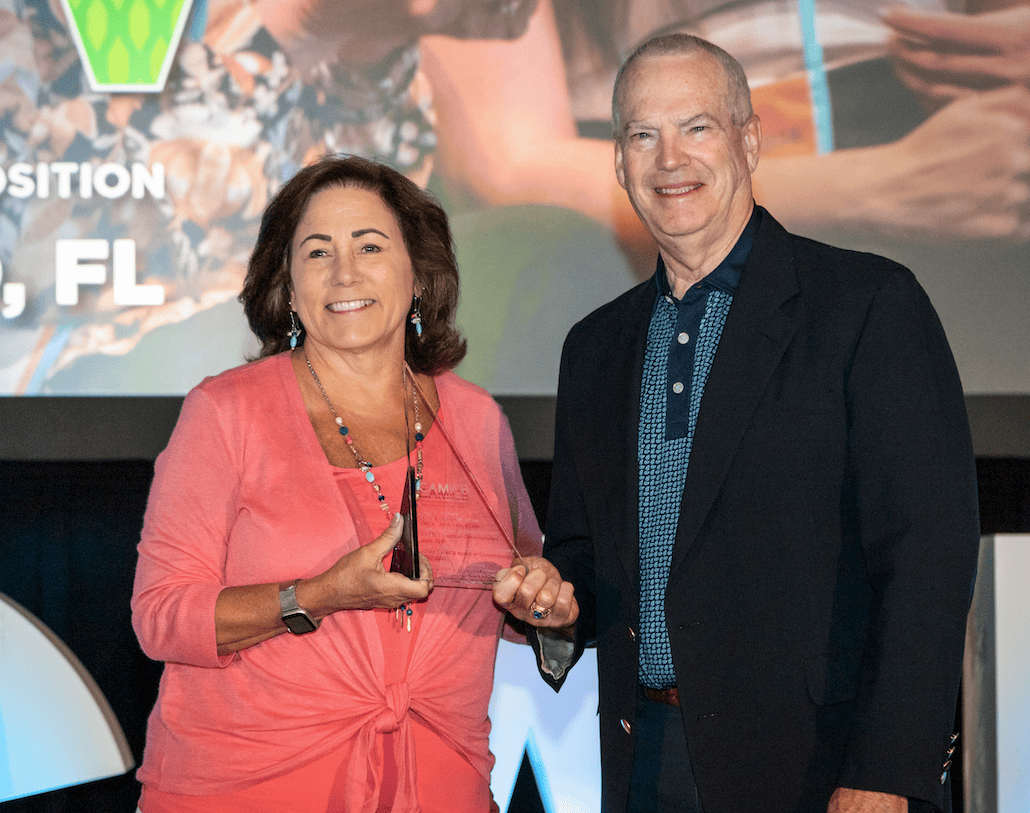
At the recent annual CAI Conference and Expo, I had the opportunity to offer a special recognition to one of those dedicated volunteers – Drew Mulhare, CMCA, LSM, PCAM – for his extraordinary, long-term dedication to CAMICB and his commitment to the development, enhancement, and global expansion of the CMCA credential.
Sandy & Drew: PC Brian Adams Photographics, Inc.
Drew served as a member of the CAMICB Board of Commissioners from 2014 through 2021, serving as Board vice chair in 2015-2016 and Chair of the Board of Commissioners from 2017-2021. We’re so fortunate that Drew remains an active member of the CMCA Exam Development Committee and serves as a consultant on key CAMICB initiatives. He has given generously of both his time and his professional expertise, and his vision has contributed substantially to the growing international recognition of the CMCA credential – The Essential Credential for professionals in community association management.
On behalf of the officers, commissioners and staff of CAMICB and on behalf of our profession, thank you, Drew, for your remarkable service.
At every organizational level, finding the right level of motivation has always been the key to successful employee development.
By Ron Karr for Training Magazine
At every organizational level, from new hires to senior management, finding the right level of motivation has always been the key factor in expanding competence and achievement. Since a company cannot achieve its ideal objective without such individuals, the main questions for effective development have always been:
What is true motivation?
How can it be cultivated?
How can we gain buy-in from employees on whose efforts our success depends?
The answers come in part from an unexpected source: neuroscience. The chemistry of the human brain, having ensured our species’ survival over the past 300,000 or so years, has a profound effect on our behavior today. That behavior can help individuals and groups succeed, but it also can de-motivate them, making the achievement of personal and professional goals all but impossible.
In a nutshell, there are three key hormones involved in gaining buy-in and increasing motivation. Cortisol (sometimes called the stress hormone) does many things for us. Most of them are good, like engagement and memory formation, but if cortisol levels rise sharply in response to interruptions, demands, or other outside stimuli, then our automatic, fight-or-flight mode kicks in and we become impervious to reflection and change.
Two other hormones, oxytocin and dopamine, are also part of our evolutionary heritage and have profound effects on motivation. The former is our bodies’ unconscious response to others’ genuine signals of friendliness, interest, and support. It stimulates feelings of trust and connection. The latter, dopamine, is known as the pleasure hormone. It’s our bodies’ way of rewarding ourselves for accomplishing activities that meet a real need. It also boosts our attention and regulates our movement, learning, and emotional responses.
This doesn’t mean training and development programs should start retaining neuroscience experts. But if we become more aware of these hormones and their effects, then we can significantly alter our approach when dealing with employees. In doing so, we will increase the possibility of greater buy-in and enable our people to attain greater competence and self-motivation.
A Case in Point
Some time ago, an industrial client of mine demonstrated a typical, management-employee impasse—one that was creating mutual frustration and de-motivation. As I was talking with the CEO, a line supervisor walked in, utterly flabbergasted over a welder who was “always on his damn cell phone!” The job was late, and the employee would not comply with repeated demands to get off the cell phone and get back to work.
As a result of the supervisor’s demands, the employee’s cortisol level invariably would have shot up, making him feel he needed to defend his actions. He was not interested in solving the issue but rather in defending himself from attack.
So with the CEO’s permission, I asked the supervisor to do a little role-playing exercise—with me as supervisor and him as the employee. I asked what he wanted to achieve professionally. The answer: Become a master welder. So the discussion centered on the employee’s aspirations, the quality of his work (which was good), and what it would take to make up for delays.
After this impromptu coaching session, the supervisor tried the approach and had a much different reaction. The subject of cell phone use was never mentioned. Instead, they discussed the master welder objective and ways to meet it. Cortisol levels went down, as the employee now was actively engaged and motivated to help find the solution for getting the job back on time.
Out of evolutionary necessity, our fight-or-flight response automatically conserves energy by shutting down unnecessary systems. Unfortunately, those “unnecessary” systems often include empathy, reflection, and reasoning. Under those conditions, no amount of explaining the rules can get through.
However, a genuine expression of empathy and interest often triggers an oxytocin-based response of trust and connection. The parties also experience a greater sense of control—which itself provides a dopamine-based reward. Emotionally, they feel a greater connection and an intrinsic motivation to achieve a mutually desirable outcome.
Implications for Training and Development
As I said, it does not take a neuroscience expert to take full advantage of these principles. Training and development, whether in formal settings or informal ones, can only benefit when the principals are aware of unconscious responses and can take steps to deal with them.
First, an instructor or mentor is also a human being. They, too, are subject to hormone-induced stress responses that limit their ability to think and act in everyone’s best interests. So the first exercise for a trainer or Human Resources professional in a stressful situation is to master what I call “The Art of the PAUSE.” When disruptions occur, always stop and ask questions such as, “What is really happening here? Am I simply reacting to an unwelcome disruption?”
Then ask, “Am I seeing all the objectives—not just mine but others’, as well?” Then, knowing it’s not your job to meet every single need, ask, “What can I actually do right now?” By practicing this yourself, you’ll be better able to apply it to your strategy for employee development.
Second, always recognize that emotional, hormonal responses cannot be artificially manipulated. Sincerity cannot be faked. If you express genuine friendliness, interest, and support for an employee’s objectives, then the likely result will be a sense of trust and connection triggered by a rise in oxytocin. However, people are usually well aware of counterfeit empathy, which will only produce elevated cortisol levels and resistance.
In coaching parlance, the ability to connect with employees on an empathetic level is known as being present. For trainers and development professionals, that means developing the ability to PAUSE, take responsibility, and maintain a mindset focused on accomplishing shared objectives.
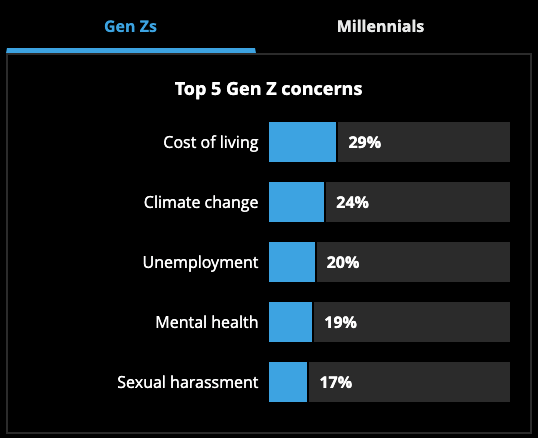
Marking its 11th annual edition, Deloitte’s 2022 Gen Z and Millennial Survey connected with respondents around the globe to gauge their views about work and the world around them. The survey, fielded between November 2021 and January 2022, and the subsequent qualitative interviews, held in April 2022, found Gen Zs and millennials navigating a very uncertain time. When Deloitte fielded last year’s survey, the world was in the midst of the second year of the COVID-19 pandemic, just as vaccines were starting to roll out. It had been a difficult year, but the survey revealed that Gen Zs and millennials were determined to create a better post-pandemic world. Fast forward to 2022 and, unfortunately, economic conditions and quality of life have deteriorated in many parts of the world. Now in the third year of the pandemic, we’re also facing alarming geopolitical conflicts, extreme climate events, inequality, and a steep rise in inflation. Rather than being a temporary condition, disruption seems to have become part of the new normal. This year’s survey found that Gen Zs and millennials are deeply worried about the state of the world and are fighting to reconcile their desire for change with the demands and constraints of everyday life. They are struggling with financial anxiety, while trying to invest in environmentally sustainable choices.
They feel burned out, but many are taking on second jobs, while pushing for more purposeful—and more flexible—work. They press their employers to tackle climate change, particularly when it comes to efforts they can get directly involved in, but businesses may still be missing opportunities to drive deeper and broader climate action. They have inspired organizations to take action to address workplace mental health, but they are not always comfortable talking about these issues or taking advantage of the resources available. The unprecedented circumstances of the past few years have prompted many people around the world to rethink their priorities, leading to the Great Resignation. This time of historic voluntary turnover presents significant opportunities for millennials and Gen Zs. As this year’s survey results indicate, the sustained workplace changes they’ve been asking for—including higher compensation, more flexibility, better work/life balance, increased learning and development opportunities, better mental health and wellness support, and a greater commitment from businesses to make a positive societal impact—are also the strategies that will help employers attract and retain talent.
To download the survey findings in its entirety — go to: https://www2.deloitte.com/global/en/pages/about-deloitte/articles/genzmillennialsurvey.html
Even for those deeply entrenched in the credentialing world, there’s a certain degree of confusion around some of the terminology used to describe specific paths professionals take to further their careers and skill sets. The field of community association management is no different so it’s important to educate managers, homeowners, and other community association professionals about the different options the profession has to offer and the value they hold.
According to the Institute for Credentialing Excellence (ICE), “credentialing” is an umbrella term used to refer to concepts such as professional certification, certificate programs, accreditation, licensure, and regulation.
ICE defines certification, licensure, assessment-based certificate, and accreditation in the following ways:
A certification program is designed to test the knowledge, skills, and abilities required to perform a particular job, and, upon successfully passing a certification exam, to represent a declaration of a particular individual’s professional competence, such as a community manager who has achieved the Certified Manager of Community Associations (CMCA®). In some professions, certification is a requirement for employment or practice.
Similarly, licensure tests an individual’s competence but is a mandatory process by which the government grants time-limited permission for that licensed individual to practice his or her profession, such as a real estate salesperson or real estate broker.
In contrast to certification and licensure, an assessment-basedcertificate program is an educational or training program that is used to teach learning objectives and assess whether those objectives were achieved by the student.
Accreditation is the process by which a credentialing or educational program is evaluated against defined standards and is awarded recognition if it is in compliance with those standards. The Certified Manager of Community Associations (CMCA®) is such a program. ICE currently offers accreditation to professional certification programs through the National Commission for Certifying Agencies (NCCA).
The CMCA credential is accredited by the National Commission for Certifying Agencies (NCCA) confirming it complies with NCCA’s stringent standards for a professional certification program. Accreditation validates the integrity of the CMCA program and is a mark of quality.
Specialty Designations
Community association professionals may also choose to bolster their careers and expand their level of expertise in certain areas. This is where specialty designations come into play. A “designation” is recognition of professional knowledge and expertise in a given subject matter or job skill. To earn designations, work experience is generally required. Certain specialty designations are offered through the Community Associations Institute (CAI) including, the Association Management Specialist (AMS), Large Scale Manager (LSM), Professional Community Association Manager (PCAM), Community Insurance and Risk Management Specialist (CIRMS) and Reserve Specialist (RS). This allows a community association professional to drill down into a specialized aspect of the business. In some cases, for example the PCAM and AMS designations, passing the CMCA examination is a prerequisite to applying for these designations.
I’ve experienced a wide disparity in the background and quality of the managers with whom I’ve worked,” said Ron Perl, Esq., a Partner at Hill Wallack LLP, who leads the firm’s community association practice group. “A manager who holds the CMCA assures me they have an important foundation in place – the ongoing education and knowledge necessary to successfully manage millions of dollars worth of other people’s property and a serious commitment to high ethical standards.”
Stephen Castle, CMCA, AMS, PCAM agrees all committed community association managers should hold the CMCA certification. “The CMCA certification demonstrates to employees and new managers a commitment to professionalism,” said Castle. “Further, CMCAs show their support for established national and international standards of knowledge and professional conduct for community association managers.”
The Certified Manager of Community Associations – The only accredited certification program in the world for managers of homeowner and condominium associations and cooperatives.
The CMCA Goes Global
As CAMICB grew to be the premiere certification body in the United States for community association managers, it also gained international recognition for its established body of knowledge and strict ethical standards. Over the past two decades, the CMCA certification program crossed borders and oceans in Australia, Bermuda, Canada, Mexico South Africa, and the United Arab Emirates. This global expansion secured a high level of professionalism for association management and common interest communities worldwide. In 2017, CAMICB launched the international CMCA examination.
About ICE
The Institute for Credentialing Excellence, or ICE, is a professional membership association that provides education, networking, and other resources for organizations and individuals who work in and serve the credentialing industry. ICE is a leading developer of standards for both certification and certificate programs and it is both a provider of and a clearing house for information on trends in certification, test development and delivery, assessment-based certificate programs, and other information relevant to the credentialing community.
Many employers offer some type of support for their CMCAs to earn the continuing education necessary to maintain their credential or the study time and preparation for non-CMCAs to successfully sit for the CMCA exam. While it may not be the first question that comes to mind when interviewing for a job – it’s important to ask what kinds of support system and benefits are in place. Employees should also be sure to review the Employee Handbook as most employers will reimburse managers for successful completion of a professional management development program.
According to Robert Felix, CMCA, LSM, PCAM, RS, owner of the Felix Reserve Group, an Industry Consulting/Reserve Study business, and President of Verity Property Management, “I believe we get to negotiate two things: compensation – including education – and time. Nothing speaks greater to a company’s support of their management team then allowing them to prepare for success. Permitting an employee to attend a preparatory class so they can pass the CMCA exam is a simple yet effective way to encourage professional development.”
Sandra Denton, CMCA, LSM, PCAM, General Manager for Sienna Associations agrees. “Giving employees paid time off to take a course and prepare for the CMCA exam puts them on a career path that benefits both the employee and the company. And, research shows that managers with certifications and designations ultimately earn more money than non-credentialed managers.”
At Sienna Associations, Denton notes that encouraging and supporting education for the staff is critical to the company’s success. “The more they know about the industry, the better able they are to serve our customers and reduce our risks, while taking pride in their work. Every year we budget for at least one educational course per staff member and we pay for many industry related credentials and designations/certifications. Further, when they earn them, we provide a special bonus.”
From an employer standpoint, Felix notes it’s a competitive marketplace and companies want their employees to stay, which they will do when they know the company is investing in them. “One only has to look at the number of companies seeking qualified managers to understand that you need an edge to attract good managers. Offering a program that costs less than $1,000 plus some continuing education allows a company to market its professional edge over its competitors.”
Felix also notes the important distinction between a job and a career. “Education allows employees to decide whether they’re in a job or a career. I ask that of my employees before starting them on an education track and making sure they understand the difference. A career involves commitment, energy, focus and desire. I want to see all of these in an individual before I invest in them. And, once invested, I follow along and continue to mentor them on their professional path. Leaving a clear thumbprint of support and opportunity for those who have the desire and drive is one of my greatest pleasures.”
For more information on CMCA exam prep and continuing education resources, go to www.camicb.org.
Free Online Resource Helps Candidates Successfully Prepare For The CMCA Exam
By Madeline Hay, CAMICB’s Manager of Exam Administration
Underscoring a quarter century of commitment to professionalism and excellence in community association management, CAMICB is excited to continue to celebrate the organization’s 25th Anniversary with the launch of a free, interactive online CMCA Exam Preparation e-Learning course.
The three-hour course, featuring a series of eight modules, is divided into two components. The first component features four learning modules focused on creating an examination review and preparation plan. The second component includes three scenario-based learning modules that are designed to put several of the knowledge areas tested on the CMCA examination in context using real-life scenarios. The three modules address knowledge areas that are challenging for many CMCA candidates: Risk Management & Insurance; Financial Controls; and Governance, Legal & Ethical Conduct. A final module is intended to offer some perspective on the exam preparation process and next steps.
Said Chair of the CAMICB Board of Commissioners Drew Mulhare, CMCA, AMS, LSM, PCAM, “CAMICB is always working to identify new tools to help CMCA candidates succeed on the exam. We’re excited to launch the CMCA Exam Prep e-Learning course – a free resource intended to put candidates on the path to the CMCA credential.”
The Course Modules
The exam preparation modules offer constructive test taking tips, discuss the composition of examination questions, give preparation advice, and provide an interactive self-assessment tool to help a candidate develop a study plan specific to that candidate’s needs and goals. The content-based modules ask the candidate to solve problems and answer questions using downloadable sample documents.
Each module takes approximately 10-25 minutes to complete. The course is designed to accommodate busy schedules and to allow candidates to work at their own pace, so they may stop and resume the modules as their schedule permits. Below is a brief description of the different modules and what candidates can expect.
Module 1: An Introduction
Learn what it takes to pass the CMCA exam. Get advice from working CMCAs about what worked for them as they were preparing for the test – and what didn’t. Find out some common misconceptions about the CMCA exam and uncover the key for understanding how to approach the exam questions.
Module 2: Devising a Study Plan, Part 1 – Prioritizing Topics
Discover how to establish and follow a solid study routine that’s tailored to your experience level. Get an in-depth look at the topic areas covered on the test and participate in a self-assessment exercise to determine which topics should be prioritized in your study plan.
Module 3: Devising a Study Plan, Part 2 – Strategies and Tips
Find out how to put your study plan into action. Learn practical tips and tricks to make the most of your prep time and take a closer look at some of the study resources available to you.
A recent course participant shared, “The study resources provided in the CMCA exam prep course are excellent. It gave me a much better understanding of what material to really focus on.”
Module 4: Test-Taking Strategies
Learn how to maximize your potential on exam day. Find out how taking practice tests can improve your performance on the exam, get some guidance on strategies to overcome test anxiety, and see what to expect when you go to the testing center.
Modules 5 and 6 use real-life scenarios that help you learn from detailed feedback. They also make use of downloadable sample files including Lakeside Terrace’s insurance declaration and financial documents to inform your decisions.
Said one course participant, “For me, the CMCA exam prep course was so much more effective than simply reading different texts.”
Apply your knowledge of risk management and insurance topics by putting yourself in the shoes of the community association manager for Lakeside Terrace Condominiums.
Module 6: Financial Controls – Refresher Content
Revisit your role as Lakeside Terrace’s community association manager as you encounter some scenarios that test key knowledge about financial controls.
Another real-life scenario allows you to visit Willow Grove Estates, where you have been hired as the association’s first community manager.
Module 8: Looking Back and Looking Forward
An opportunity to recall what you’ve learned and consider what you want to keep working on.
At CAMICB, we’re committed to offering a combination of study tools to enhance candidate performance. Therefore, we encourage exam candidates to develop a personal study plan incorporating a wide range of resources and reference materials. CMCA preparatory materials are all available online – most at no cost – to managers employed anywhere in the world. We’re thrilled to add our newest offering, the CMCA Exam Prep E-Learning Course, to our portfolio of resources.
Earning and maintaining this internationally-recognized credential propels a manager’s career forward, allowing for more advanced career opportunities and salaries that, on average, are 20 percent higher than non-credentialed managers. To get started and to learn more about the CMCA Exam Prep E-Learning course, visit www.camicb.org.
HOAs usually charge fees that add to monthly housing costs.
There are benefits of HOA living despite the fees and restrictions.
When you are buying a house, you’ll likely come across many neighborhoods where there is a homeowners association. HOAs often impose rules about what you can do with your home, and they also charge fees you’ll have to pay each month on top of your mortgage payment.
While the added cost of an HOA may seem undesirable, there are actually a few big benefits of living in a neighborhood with an association. In fact, here are some of the biggest upsides of living someplace with an HOA.
1. The HOA protects your property values
Your property values are affected by the quality of your neighborhood and by how your neighbors maintain their houses. After all, no matter how nice your own property is, no one will want to buy it if it’s next to a slum.
Homeowners associations set and enforce rules related to the upkeep of property in the neighborhood. They may also set other restrictions such as requiring approval before painting a house or adding lawn ornaments. These rules help keep the neighborhood looking nice, which in turn keeps property values higher.
2. The HOA maintains the neighborhood and amenities
HOAs usually maintain common areas, and some neighborhoods with strong associations have lots of amenities such as pools or golf courses.
These features can add value to your home since they are desirable to buyers, and they can also make it nicer for you to live in your neighborhood since you can take advantage of them.
3. Fees may include common utilities and maintenance tasks
In some cases, HOA fees include things like internet service, pool maintenance, or lawn care. When that is the case, it’s convenient to pay one common fee to get many different services rather than having to arrange for them individually and contract with companies to pay for them separately.
In some situations, you may actually end up saving money because it can be cheaper for internet companies or landscaping companies to provide their services to an entire neighborhood rather than to just individual households. The fees you’re paying could actually be a better value than paying for these services privately.
4. The HOA can deal with neighborhood disputes
When people live in close proximity to one another, it’s often inevitable that disputes arise. There could be issues for a huge number of reasons, from barking dogs to lawns that aren’t maintained to loud music playing and more.
When you live in an HOA neighborhood, you don’t have to directly deal with a neighbor who is causing you problems in your enjoyment of your own home. The HOA most likely has regulations related to common nuisances or issues that come up regularly. They’ll take care of addressing the issues that arise among neighbors so you don’t have to sour your relationship with those living near you or cope with the stress of a confrontation.
For all of these reasons, it’s worth considering an HOA neighborhood when you buy a property. Just remember you need to be comfortable with the rules the association sets as you’ll have to live by them too.