It’s a tricky dilemma for co-op and condo boards. A healthy reserve fund has always been a high priority, and in the wake of the Florida condominium collapse, lenders are scrutinizing those funds like never before. Yet a primary means for replenishing reserves — a flip tax on apartment sales — usually requires approval by a two-thirds super majority of shareholders or unit-owners, a dauntingly high bar.
Case in point: the board at a 118-unit co-op on Madison Avenue tried to pass a flip tax, also known as a transfer fee, four times without success. One of the main reasons the board continued to fail, says president Kathy Kahng, was the makeup of the building’s residents. More than half of the apartments were studios, and the average shareholder stayed about five years.
“If you know you’re only going to be here for a couple of years, what do you care about a transfer fee?” Kahng says. “Residents said, ‘Just charge me the assessment. I’m not voting for a transfer fee. I’m moving soon.’”
But in 2018, a confluence of events encouraged the board to try again. These included a mandatory building facade project growing in scope; more studio apartment owners buying neighboring apartments and combining them with their own, thus becoming more invested in the co-op’s long-term prospects; and the anticipation of an upcoming million-dollar elevator modernization project.
“We sent out letters, held meetings, knocked on doors and all that stuff,” Kahng recalls. But at the annual meeting the vote fell slightly short of the two-thirds of shares necessary for approval. With that result, the board changed its strategy. “We decided to focus on the 25 or 30 apartments that didn’t vote,” Kahng says
The board crafted a new message that carried a stick and a carrot. It told the shareholders that it was going to have to impose a hefty assessment to pay for the facade and elevator work, but if it could secure the votes of a few more apartments to approve the flip tax, the board would be able to reduce the assessment by 25%.
By Barbara Holland RJRealEstate.Vegas, Las Vegas Review Journal
Q: Our homeowners association has stated they will be increasing our monthly fees by 25 percent starting in January 2023. I reviewed our bylaws and CC&Rs and found that nowhere does it talk about increases or cap percentage. I reached out to the community manager asking him to direct me where this was stated. He responded with the following:
“The association’s bylaws and CC&Rs are silent in regards to a maximum percentage that the board of directors may increase the annual assessment rate. Nevada Revised Statutes are also silent thus the board of directors may increase the assessment to any level that they have deemed necessary to cover the association’s expenses.”
Is this correct? My understanding was that per Nevada NRS 116.3102 &116.311395 fees could only increase by 3 percent per year.
Please advise.
A: Nevada Revised Statute 116.3102 (o) (4) states that the fee must not increase more than 3 percent each year, but this section of the law does not pertain to assessments. If you read more closely the 3 percent maximum pertains to the opening or closing of any file for each year.
NRS 116.3115, .31151 and .31152 outline the requirements in establishing assessments and reserves. Assessments are to be made annually based upon an adopted budget. There are no NRS 116 laws that specifically regulate how much increase in assessments that an association could charge. In most cases, the association’s governing documents regulate the increase.
In your case, according to the community manager, the governing documents for your association do not have any restrictions as to the rate increase for assessments.
According to the U.S. City Average Consumer Price Index, in October 2012, the CPI index was 231.37 and in October 2022, the index was 298.012. This represents a 28.8 percent increase in the cost of living.
Here is the problem. boards do not like increasing assessments, period. Consequently, as the years went by where the CPI ranged around 1.5 percent to 2 percent each year, associations were falling behind as each year ended by not adjusting their assessments.. Now, to make the assessment adjustment, many associations are seeing large increases for 2023. More contractors are charging gasoline prices along with their service fees, which also have increased their labor costs. Forget about the issues of obtaining supplies in a timely manner or finding enough employees to service us.
As a footnote to my readers, expect significant increases in your assessments for 2023.
Q: Our homeowners association recently sent out a notice that it is raising our fees for the second year in a row, and it’s by $6 this time. The community I live in is actually two neighborhoods, and they have different names and very different set-ups. One neighborhood has larger homes with three- and four-car garages and private driveways. The other neighborhood consists of four homes that have a shared driveway (in which we are not allowed to park in the shared driveways or on the street without a paid permit). This increase in fees is a little ridiculous to me since the price for the shared driveways is being raised to $71.50 and the larger homes are only at $45. Is it allowed to have different fees for the same community? An almost $30 difference seems egregious and unfair. Especially because there are no amenities whatsoever.
Thank you for your help in advance.
A: Yes, legally there could be different levels of assessments.. There are many associations with multiple neighborhoods with different assessments depending upon their governing documents, For a more detailed response, you would need to send me a copy of the proposed budgets and that section in the CC&RS pertaining to assessments and shared operating costs.
Barbara Holland is an author and educator on real estate management. Questions may be sent to holland744o@gmail.com.
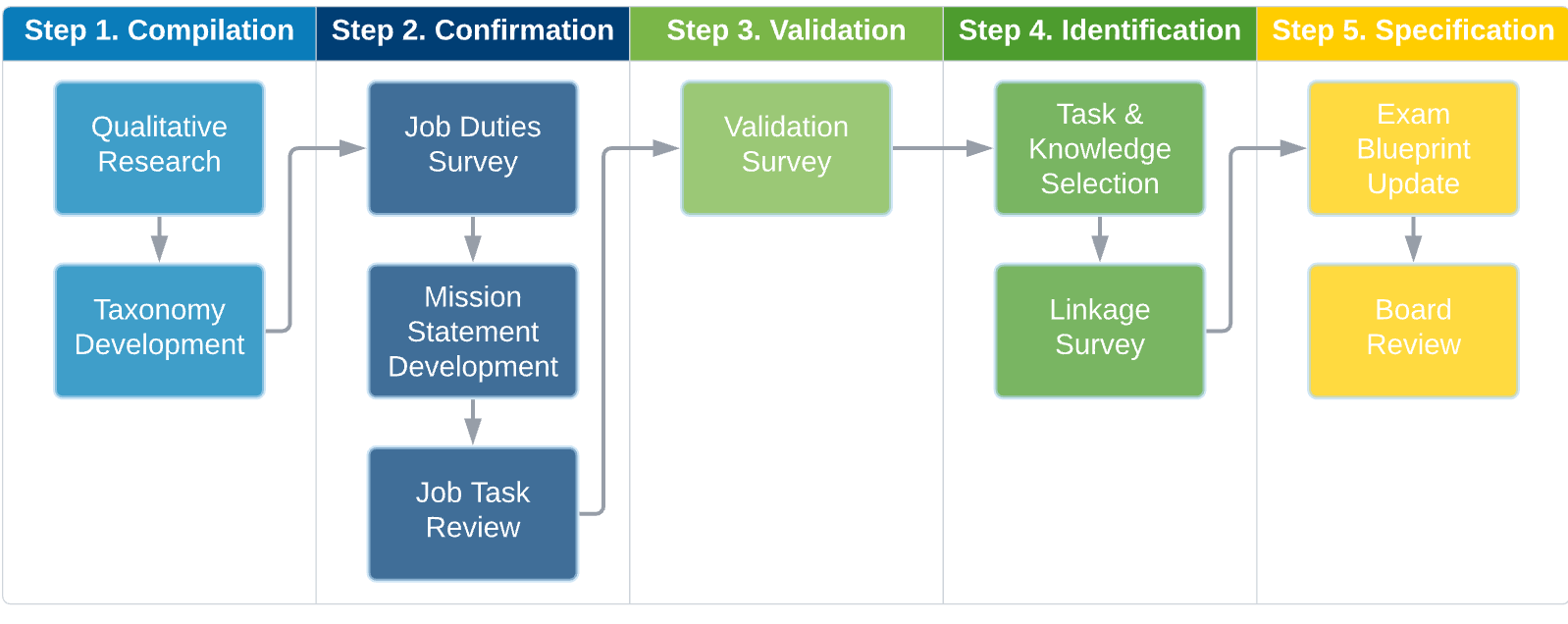
As I reflect back on my term as Chair of the CAMICB Board of Commissioners, I’m both proud and humbled by the work we accomplished over the past year. Updating, maintaining and validating the CMCA exam is a top priority for CAMICB and we recently concluded a Job Analysis Study – a vast research project used to identify the critical work functions carried out by CAMs and the knowledge and skills they need to work effectively. The project will culminate in a new CMCA examination blueprint. This enormous undertaking would not have been possible without an extraordinary Project Team that included 55 Subject Matter Experts, 20 of whom are from countries outside the United States, including the United Arab Emirates, Australia, Canada, South Africa and Spain.
This month, CAMICB was thrilled to support the 2022 IRECMS conference in Dubai alongside other international industry associations. With more than 40 international and local speakers and over 300 delegates and decision-makers in attendance, it was an action-packed couple of days. Speaking with, and hearing from, leaders in community association management from more than 10 countries resulting in lively discussions of ideas and creative solutions to propel the profession forward, was certainly a high point of my tenure as Chair.
Earlier this year, we adopted a new strategic plan with a number of exciting initiatives underway including a clear DEI philosophy with actionable items as well as a path to further the expansion of international delivery of the CMCA exam.
It’s been an honor and extraordinarily gratifying to serve as the CAMICB Board Chair and to work alongside so many of you in this incredible community of knowledgeable and dedicated managers. I’d like to recognize fellow board member Lori Loch-Lee CMCA, AMS, PCAM, whose term also ends this month, and whose unwavering support helped us achieve our goals.
Thank you all for your hard work, continued dedication and many contributions to our profession.
By Madeline Hay, CAMICB Director of Exam Administration
This summer we asked our vast community to participate in an important global survey of community association managers (CAMs) – and you did. More than 2,100 managers responded to CAMICB’s 2022 Job Analysis Survey that was sent to over 25,000 managers worldwide and ran from mid-June through the end of August. Thank you for taking the time to respond and share your experiences and insights.
Collection of this survey data is the cornerstone of a larger research project, known as a Job Analysis Study, which CAMICB conducts approximately every five years. The purposeof the Job Analysis (JA) is to identify the roles and responsibilities expected of early career CAMs as well as the knowledge and skills they need to perform those tasks successfully. The findings of the study are used to update the CMCA exam structure and content as necessary to ensure relevance to the community association management field of practice.
An overview of the team and methodological approach
To ensure broad representation from the profession, our Job Analysis Project Team included 55 Subject Matter Experts (SMEs), 20 of whom are from countries outside the United States, including the United Arab Emirates, Australia, Canada, South Africa and Spain. In addition, the project team consisted of entry-level and experienced CAMs familiar with the tasks and knowledge expected of early career managers as well as current professional issues.
It’s important to note that there were more than a dozen significant steps and qualitative research tasks conducted before developing and administering the Job Analysis Survey. The JA Team started by analyzing over 100 primary sources (training manuals, job descriptions, legal documents, research articles, etc.) to establish a preliminary framework of the job requirements that may be expected of a CAM. From there, they spent 10 months analyzing the types of job tasks and knowledge that early career managers need and classifying them into seven performance areas that describe the major operational aspects of the job.
Using the JA Survey responses collected from thousands of managers around the world, the project team identified which of these tasks are performed most often by early career managers and which are most important to success on the job. The tasks that survey respondents identified as the most common and critical were selected as the tasks that will be tested on the updated CMCA exam.
After finalizing the task list, the JA Team connected each task statement with the knowledge required to perform them competently. The resulting product is a comprehensive examination framework that details the tasks and corresponding knowledge that are expected of a Certified Manager of Community Associations.
As the final step of the study, the JA Team convened for a two-day working session to determine what percentage of the exam should be allocated to each performance area. These percentages will be stated in the forthcoming exam blueprint that will provide the structure and layout for the CMCA exam over the next five years.
Next steps – bringing a new exam form to fruition
To recap, the job analysis study is a research project used to identify the critical work functions carried out by CAMs and the knowledge and skills they need to work effectively. The final product of the study is the CMCA exam blueprint, a document that identifies which knowledge and skills will be measured by the exam and the proportion of the exam allocated to each performance area. After more than 16 months of work, the Job Analysis Study concluded in early December when the CAMICB Board of Commissioners approved the updated CMCA exam blueprint. The team will now carry out the practical steps to update the CMCA exam content to match the new blueprint. The following are some of the steps that will take place throughout 2023 and into 2024:
Item Development: Using approved source materials, the Project Team will draft new exam questions to assess the content areas on the exam blueprint. SME panels will conduct multiple reviews to evaluate the technical quality, fairness, and content validity of the items. The items that pass reviews will then be pilot tested to collect response data and those items that meet all statistical performance standards will be eligible for use on future forms of the exam.
Passing Score Study: CAMICB will conduct a passing score study to update the performance standard established for the CMCA certification program and, subsequently, update the minimum score required to pass the exam (i.e., the “cut score”).
Exam Publishing: CAMICB will publish the new exam blueprint well in advance of updating the exam forms, so that candidates have time to familiarize themselves with the changes they can expect to see in the exam content.
This extremely comprehensive process speaks to the importance the CAMICB Board of Commissioners places on conducting the CMCA program in full accordance with best practices in professional credentialing. We take this responsibility to the profession seriously and are extremely proud of the work we do to continue to establish the credential as a baseline for building the profession worldwide, placing the CMCA credential in an elite cohort of professional certification programs.
Leaders know that every person needs something a little different from their supervisors. Great leaders adjust their leadership approaches to customize to what their people need. Some people need more encouragement, while others need to be left alone.
Some people need frequent feedback, while others don’t like or need much direction.
Some people need public appreciation and recognition, while others prefer to work unnoticed.
Great leaders are smart enough to know that people are individuals, and needs differ by the person and can vary by the day.
What EVERYONE needs from their leadership right now:
Crystal clear vision. Everyone needs to know where we are going. Leaders need to clearly define the vision so everyone understands where the organization is going in the new year. The vision should be clear enough to be understood and exciting enough to get people enthused about the idea.
Clarified expectations. Every person must know what they need to do to be successful in the organization. Make sure everyone in the organization knows their roles and responsibilities. Everyone should realize that if they are late on a deadline or don’t do what they are supposed to do, it affects other people. This is a common problem. Even the best leaders sometimes hold up their teams because they left a report unsigned, or they didn’t make a decision in a timely manner.
Use of deadlines. People not only need to know what they need to do, they need to know when it needs to be done. We have all had situations where we needed a report, some information, or some project-specific numbers by a certain time and date, such as before a big meeting with a new client. If we don’t have the information before that specific meeting, we just don’t need it. If deadlines are not clear, we either lost the client, and therefore the time preparing the information was wasted, or the time was wasted because we couldn’t use the project. Great organizations use deadlines to manage work flow. Leaders help their teams stay on track by implementing systems that include deadlines, and those deadlines are promulgated, known, and adhered to by everyone involved.
More consistent information. Any time there is confusion or uncertainty people need more information on a more consistent basis. Uncertainty and fear, left alone, leads to speculation, assumptions, and unproductive behaviors. Leaders can mitigate these problems by communicating more frequently. Daily emails, social media blasts, and newsletters need to reinforce the message the lead is conveying. Many people need more than one message to pay attention to the message, so repeating the message more than once is usually necessary.
Guidance and direction. No one likes working for an arrogant boss, but people do like working for a confident boss. Great leaders have the ability to be calm in a crisis and provide the right guidance to help others move forward. People want to know that their leadership has a plan to move forward. To make sure leaders are considering a variety of options, they can hold town halls and focus groups and to encourage ideas. Once they consider ideas and they make decisions, leaders can increase trust and motivation by making their plans for the future clear and letting people know that they have considered other input.
Path for Success. People want to do a good job, and they need to have milestones and feedback to help them along the way. People need to know what they need to do so that both they and their supervisors view the milestones as accomplishments.
Quick wins. Anytime people have stress, they need quick wins. Leaders can help by breaking down large projects into smaller chunks to make the finish line seem closer. If a project is going to take 40 hours, people procrastinate because they don’t have 40 hours right now. Leaders can help by constructing the 40 hour project into 10 four-hour blocks. Completing one block gives people a win. Especially during times of stress, people need to feel a sense of accomplishment. It helps them stay focused, on track, and motivated.
People take their cues from their leadership. When leaders are transparent, motivated, and goal-oriented, their people will be as well.
There’s excitement surrounding the holidays and anticipation for the start of the new year. But also regret and disappointment about goals that may have faltered. The good news is that it’s never too late to pursue your dreams and make headway on your goals. Just because the year is ending, doesn’t mean you have to say goodbye to what you truly desire.
In fact, you can use the end of the year to your advantage and finish strong. One path you can take is to start laying the foundation for your big, ambitious goal so that you can start off the new year with a bang. Another approach you can take is to pursue a bunch of micro goals or habits—those small, but impactful wins—so you can finish the year with a huge sense of accomplishment.
We’ve outlined ways that you can support your big goal or micro goal to help you end the year on a high note. Regardless of the path you take, you’ll be guaranteed to end the year in fighting shape and ready to take on 2022 with confidence.
Get a head start on a big, dream goal
Big goals are intense and intimidating because they force us to look deep within ourselves, examine our weaknesses and insecurities, and quiet those debilitating voices that ask us, “Who do you think you are?”. Even Olympic athletes struggle with these same insecurities.
If you are feeling these big, overwhelming emotions, that’s okay. It means you’re taking your goal seriously. No one climbs Mount Everest thinking it’s going to be a breeze. Our big goals will test our will power, motivation, and skills—that’s why they are considered big goals in the first place.
Big goals can also be powerful and fulfilling. By putting ourselves through a series of tests and challenges, we reveal a side of ourselves that we didn’t know we had. We will come out stronger and more confident in ourselves and our abilities.
Another reason to set big, ambitious goals? Even if you don’t meet your expectations, you will achieve a lot more than you originally thought was possible. Think about it: Let’s say your current writing routine is to write 500 words a day. But then you set a big goal to write 1,000 words every day. Even if you only end up writing 800 words a day, that’s still more than what you would’ve written if you had stayed at your previous goal.
Another thing to keep in mind is to accept the reality that big, ambitious goals will not be fulfilled overnight. They take time and patience. If you can accept that timeline and embrace the process, starting a big goal at the end of the year can be a good strategy. You’ll start developing good habits to support your goal and lay down a strong foundation to launch you into 2022.
Accomplish micro goals
Another way you can finish the end of the year strong is to concentrate on micro goals. These are goals that are so small and easy, you’ll be able to achieve them. Micro goals can be related to personal development or your career or health.
According to this Harvard Business Review article writer Sabina Nawaz says: “It’s great to dream big, but the way to achieve big is to start small — through micro habits. Micro habits are small components of a larger habit. By breaking down an ambitious job into smaller, more achievable ones that you build over long periods of time, micro habits help you complete big goals.”
Examples of micro goals include:
Developing a morning routine
Updating your website
Brushing and flossing teeth before bed
Meditating for 10 minutes a day
Reading a book a month
Cooking a new recipe a week
Making your bed every morning
Walking 10,000 steps a day
Writing in a journal every day
Micro goals are incredibly appealing because those small changes can generate big results. Making your bed every morning may not seem like a big deal in the grand scheme of things, but the positivity you yield from that small act will encourage you to do another small act, then another, until you score a succession of wins.
Also, micro goals can help you achieve big goals. Waking up early every morning may seem like a mundane goal at first glance, but it is significant if you’re trying to wake up early to train for a marathon or write your novel. With micro goals, it’s about the cumulative effect and the long game. And the positivity and confidence you gain from these small wins will motivate you to keep going and go for the next big thing.
If you’re looking to end the year on a positive note, but don’t necessarily have the emotional energy to expend on big, ambitious goals, micro goals are a great option. And the pride and achievement you feel will sustain you into the next year and fuel your growth moving forward.
Up next, we’ll take a look at how to create an action plan for your goals, big or small.
Creating an action plan
Whether you’re looking to pursue an ambitious goal or a series of micro goals, you’ll need a solid strategy to support your vision. Here are steps you can take to create a solid plan.
Define your goal
What is the goal that you hope to achieve? Write it down in your planner. You’re more likely to commit to a goal if you take the time to write it and record it in your memory.
Some people like to visualize what it will feel like after they achieve a big goal. These positive feelings help remind them what it is that they’re working so hard for. Others like to put post-it notes and messages around their workspace to remind them of their goal.
Choose a strategy that works for you and helps you feel positively about your goal.
Identify your obstacles
Another tactic to help strengthen your game plan is to write down a list of potential obstacles you may encounter.
According to this article in the Mental Game of Tennis, it’s helpful to plan for potential challenges so that you’re not thrown off guard when they arise, and can better prepare for potential setbacks.
Being honest about your obstacles is also essential if you’re setting out to achieve micro goals. Incorporating new, positive habits takes discipline and self-awareness. After all, progress doesn’t happen overnight.
So if your micro goal is “go for a run in the morning” make a list of potential obstacles. Then, have a back up plan in place so that you can stay on track. So if your obstacle is “feeling tired in the morning” make a list of things that will motivate you to get out of bed. Maybe it’s a pot of coffee or a breakfast treat. Or maybe place your workout clothes on your bedside table so it’s easier to put them on and go.
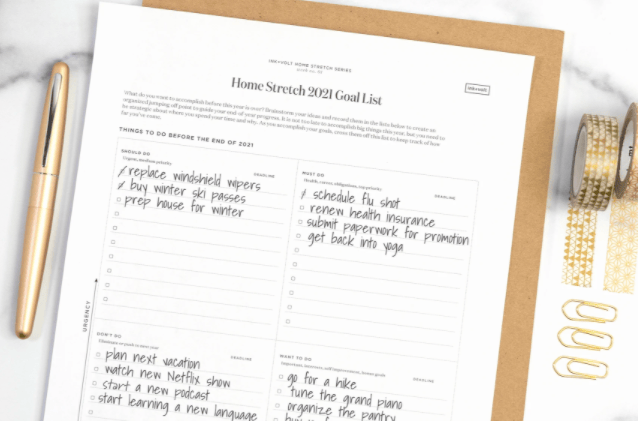
Make a list of targets you want to reach before the end of the year
Create weekly and daily goals to help you stay on track and keep you accountable.
So if your goal is to run 5K by the end of the year, then create a 4-5 week plan and set weekly goals. Maybe it means starting out by running for 10 minutes in Week 1 and then working your way up and building your endurance.
Having regular targets will help you stay on your path towards your goal. And by measuring your progress from week-to-week, you’ll know if you need to catch up or dial back or if you’re right on track.
Create a schedule
Add your tasks to your planner or calendar so that you’re more likely to do it. Also, by having a visual representation of your schedule, you’ll be able to see what days you’ll be busy and rearrange your schedule as necessary. This will come in handy during the holiday season. So if you want to schedule a run a few days before the holidays, look for free blocks of time on your calendar. This way, you won’t feel overwhelmed, and you’ll have the energy to work towards your goal.
Relish your winsIt’s important to acknowledge your progress every single day. Record your wins in your planner and decorate the entry with a sticker or fun, colorful washi tape. Taking pride in your work will help you see how much you truly accomplished at the end of the year, and set you up for success in the new year.
The past few years have had our heads spinning in so many ways. Now, despite a labor market where demand still outpaces supply, continued inflation is stoking fears that a recession may be coming. And most of us know that negative economic growth often leads to hiring freezes or layoffs.
Some leaders that we work with are revisiting 2023 plans to reexamine whether new headcounts are critical, whether significant capital expenditures can be delayed and if contracts can be renegotiated. Overall, they are proceeding with caution and feeling the pressure to deliver — or over-deliver — on key KPIs, while keeping their teams focused and optimistic.
But not all of the news is doom and gloom. “We’re still seeing hiring; we’re still seeing growth,” Insight Global CEO Bert Bean said in a recent Forbes article.
Bean continues to say that, “During a recession, all the nonsense gets stripped away. This is as true in our personal lives as it is at work. Recessions give you a great excuse to focus on the things that really matter.”
We have been through this with the pandemic and we are more resourceful and resilient than ever. This is true, especially for communicators who have been on the front lines ever since.
Regardless of what’s ahead, as the past few years have taught us, we still must prepare for anything that comes our way. So, how can you best navigate what’s ahead to ensure that you are doing all you can for yourself, your teams and your organization?
I believe that we can still keep our eye on cultivating great work, proactively protecting ourselves and our roles in the organization, and keeping our teams motivated along with doing what we need to prepare and be ready for anything with these simple steps.
If you notice your boss is stressed, ask how you can help them. You’d be surprised how much it matters when direct reports raise their hand to do more and offer to help ease pain points that arise.
Create opportunities for growth and development within your teams (coaching, learning, training — there are many ways to do this without using too much of your budget)- It will keep them positive and engaged while also helping to retain your talent.
Get creative and look for ways to drive alternative revenue streams — or savings and efficiencies — for the organization.
Make sure your team’s 2023 goals and priorities are fully aligned with the CEO and the board’s so there’s no doubt your efforts are supporting the business and contributing to the company’s financial goals.
Protect yourself, just in case:
Make sure your resume and LinkedIn profile are up to date.
Tend to your network — keep it robust and meaningful.
Look for thought leadership opportunities on LinkedIn — share your insights on events and news related to your area of expertise, write an article on a timely topic; and, become a more active participant in relevant conversations going on there.
Look for additional opportunities to be seen as an expert by speaking on panels, offering to moderate at industry events or even creating a podcast.
Think strategically about if and where you would like to work next by creating a target list that I call the 3 Ps: The Prospects, Pivots, and Passions.
Most of all, stay positive and future-focused. All of the above are good practices for you, whether the economy is soaring or sputtering. Putting in a little extra effort now to keep your skills fresh and your name in front of people is always worth it and can mean the difference between feeling confident or fearful about what’s ahead.
As Bert Bean observed, recessions “give us the chance to learn how to patiently wait on the right outcomes. We learn a lot about ourselves in the process.”
You got this.
Mary Olson-Menzel is the founder and CEO and Founder of MVP Executive Development and co-founder of Spark Insight Coaching.
CAMICB offers a number of online continuing education opportunities. Be sure to regularly check out our helpful list of On-Demand webinars available here for managers to view that are free or low-cost, and CAI Headquarters has an entire library dedicated to webinars available for continuing education credit available here. All of CAMICB’s continuing education opportunities can be found here.
CAMICB also offers the option for managers to seek out online opportunities that work best for them, and unapproved online options can be e-mailed to info@camicb.org for approval consideration.
For any questions, please reach out to CAMICB at info@camicb.org.
Steven Sladkus was eating lunch outdoors at a restaurant on East 52nd Street a few weekends ago when he noticed a commotion down the block. “I saw all these people congregating in front of a highrise building and so many fire trucks it looked like a 10-alarm fire,” Sladkus recalls. “Soon I heard there was a fire caused by an e-bike. When people see firefighters lowering people down the outside of a building with ropes, that’s a big wake-up call.”
Sladkus is a partner at the law firm Schwartz Sladkus Reich Greenberg Atlas, which represents some 300 co-op and condo boards. Soon after the Nov. 5 fire, which resulted in 43 injuries and was indeed caused by a lithium-ion battery used in an e-bike, Sladkus’s phone started ringing.
“We were inundated with calls from co-op and condo boards,” he says. “People were starting to realize there has been a sharp increase in these fires from last year, and this fire put the issue front and center.”
The law firm sent an email blast to its clients, alerting them that the city council would be holding a hearing on Nov. 14 to consider several bills that address the spike in fires caused by lithium-ion batteries. There have been nearly 200 such fires so far this year, according to the Fire Department of New York, resulting in 139 injuries and six fatalities.
“I’m not advising my clients to change,” Sladkus says. “But if boards are concerned, we’ve come up with language to change the house rules, since amending the proprietary lease in a co-op or the bylaws in a condo requires approval of a super-majority of residents. If a board is looking to make an immediate change, we’re advising them to amend the house rules to prohibit e-bikes in the building.”
Stuart Saft, a partner at the law firm Holland & Knight and the chairman of the Council of New York Cooperatives & Condominiums, advocates a similar but slightly different approach. “It doesn’t seem to be worth the trouble to amend the proprietary lease or bylaws,” he says, “so I prepared an amendment to the house rules. It says residents and guests cannot bring e-bikes, scooters or other mobility devices that use lithium-ion batteries onto the property. If they do bring one in and it causes a fire, then the resident is responsible for damages. Period. It seems like a soft way to deal with the problem.” Wheelchairs that use lithium-ion batteries would be exempt from the ban, Saft adds.
Hildalyn Colon Hernandez is an organizer with Los Deliveristas Unidos, a group that fights for the rights of food delivery workers, many of whom ride e-bikes for work. “I think the approach of banning is the wrong direction,” she tells CBS News. Instead, she suggests, the government should crack down on dysfunctional batteries and keep track of who is selling batteries. Many of the fires are caused by refurbished batteries or batteries that are not compatible with the charger.
Cracking down on lithium-ion batteries is precisely the goal of several bills that were aired at the city council hearing on Nov. 14. One of the bills, introduced by Oswald Feliz of the Bronx, would ban the sale of all uncertified batteries that aren’t labeled by a nationally recognized testing laboratory. There would be a $1,000 fine per violation. Another bill, introduced by Gale Brewer of the Upper West Side of Manhattan, would ban second-hand lithium-ion batteries that have been reconstructed or rebuilt using cells recovered from used batteries. Violators would be fined $200 for a first offense and $1,000 for each subsequent offense.
After witnessing the devastating fire on East 52nd Street, Sladkus stands by his advice for boards to ban devices that use lithium-ion batteries. “Nip the problem in the bud,” he says, “and don’t allow them at all.”
Gratitude doesn’t have to be complex to be powerful. Dr. Bob Nelson, author of 1,501 Ways to Reward Employees, offers seven simple tips.
By Bob Nelson for Chief Executive Magazine
1. It isn’t about money. “Money is compensation,” says Nelson. “Compensation is a right, recognition is a gift. Part of why recognition means so much is you don’t have to do it.”
2. Timing is everything. Nelson urges leaders to lose no opportunity to praise swiftly, sincerely and proactively. “You can do a great praising in 10 seconds in the hallway. The sooner you can catch people doing something right, the more you reinforce it, the more likely they’ll be repeated. So, if you see something, say something.”
3. Be sincere. “It has to come from the heart to be sincere, which sometimes is a difficult thing to teach someone. Some of the sincerity comes from specifics. Use specifics. Tell them what you heard, what you saw, what came to your attention. That gives it more credibility.”
4. Make it personal. “Which of course is tough because you can’t be everywhere all the time. But when you can add the personal touch, when you can do it face-to-face or with a direct phone call, that’s going to have more power.”
5. Praise, then stop. “A lot of executives…they’ll say something nice and then, they’ll take it away with what was wrong with the project, that there were typos or whatever it might be. My advice is to just stow that for now. Keep it 100 percent positive. Managers and leaders do this so infrequently—so don’t mess it up when you do it, keep it pure.“
6. Make it a habit. “I like to think of ways you can work it into your daily pattern, for instance, at a staff meeting Monday morning, that type of thing. You can use that initial start time to call out recognition of good things individually for the team, for the company. That’s very powerful.”
7. Be proactive. “You’ve got to actually look for opportunities to acknowledge and be grateful for people. If you’re just reactive, you end up being reactive around the mistakes. If you’re an executive, it has more punch, more power. Often it’s more symbolic, and it sends a message to other people that this is something we all need to do.”