It takes vision and determination to drive successful organizations forward and it’s not just one area of focus that creates a success story. From the very beginning, CAMICB has been the certification body with oversight responsibility for developing and delivering the CMCA examination, including the maintenance and promotion of the CMCA credential. In fulfilling that role for more than 25 years, the organization supports homeowners living in community associations by recognizing managers who’ve demonstrated an operational understanding of the tasks essential to performing the job of a community association manager.
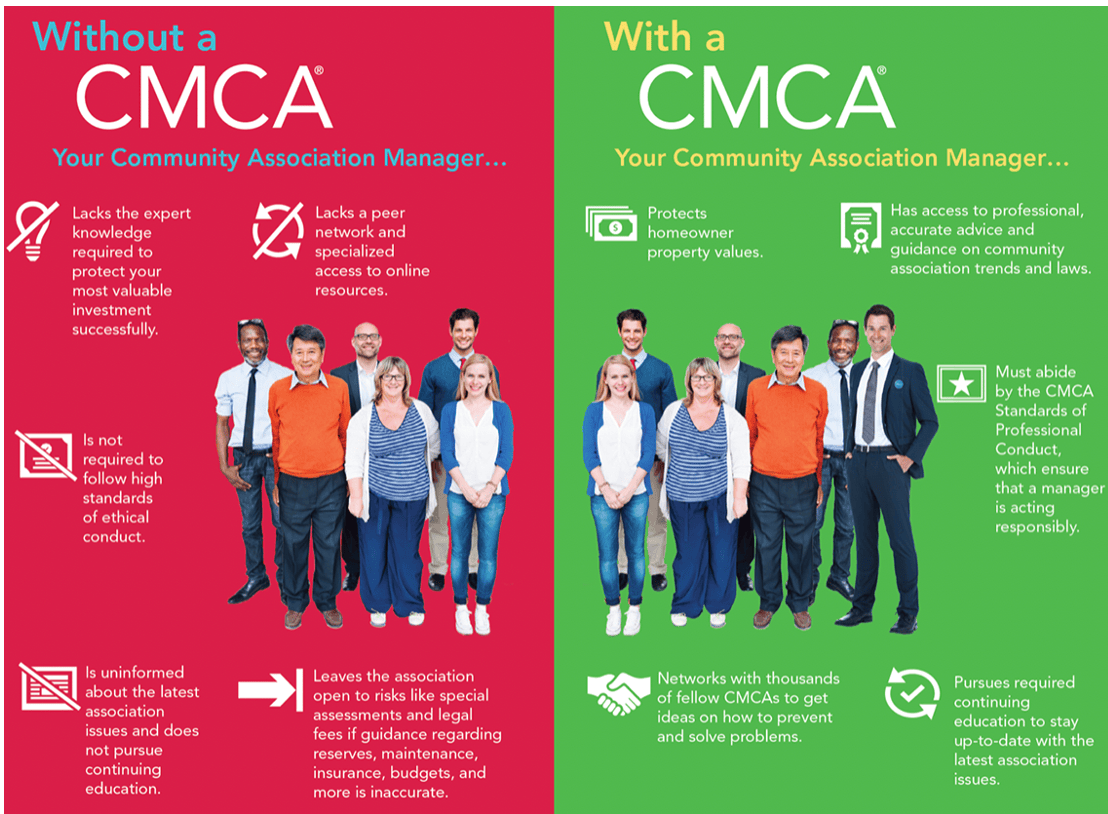
But supporting the community association management profession is far more than ensuring the CMCA credential is maintained at the highest possible standard. CAMICB must also make sure that homeowners, employers, the businesses that support community associations, legislative and regulatory bodies, and professional peers understand the value of the CMCA credential and the many benefits a credentialed manager, versus a non-credentialed manager, brings to your association.
A Behind The Scenes Look At CAMICB Operations
The CAMICB office is located in Northern Virginia and is comprised of a seven-member professional staff who execute operational matters. Staff members manage exam development, certification applications, credential renewal and recertification, the delivery of direct customer service to candidates and credential holders, and the conduct of all CMCA activities in full compliance with the rigorous standards of the CMCA’s domestic and international accrediting bodies.
Volunteers are at the heart of CAMICB’s work starting with a nine-member volunteer Board of Commissioners who govern the organization and are charged with representing the interests of the constituencies served by professional managers. To ensure a wide-range of talent and expertise are represented, the Board includes a minimum of five CMCA credentialed managers, up to three members drawn from a field serving the profession, and a public member.And, we are fortunate that the contributions of volunteers’ time, talent and expertise goes beyond the Board of Commissioners. For example, the CMCA exam is developed by a broad and diverse team of volunteer Subject Matter Experts (SMEs). Subject Matter Experts work under the direction of the CAMICB Director of Examination Administration and the exam development process is overseen by our test development partner, Human Resources Research Organization (HumRRO).
Additionally, a group of volunteer leaders oversee compliance with the CMCA Standards of Professional Conduct, a professional and ethical roadmap for CMCA credential holders. Full compliance with the Standards ensures the highest level of professionalism – and accountability – in working with boards and associations.
CAMICB Supports Managers From The Start Of Their Professional Careers Through Retirement
It’s important to note that while CAMICB is not an educational entity, it’s deeply committed to offering resources and guidance to CMCA candidates that will position them for success on the exam. In doing so, CAMICB offers a number of free tools to help candidates prepare for the CMCA exam including a comprehensive candidate handbook and study guide, an online preparatory course, an exam “Quizlet” tool and webinars focused on exam preparation. Further, staff work daily to offer individual support to candidates and credential holders.
A broader suite of resources and programs help support managers and the profession, including the following:
CAMICB offers managers who earn the CMCA credential a CMCA Digital Badge that credential holders can use as an easily shareable online “resume,” highlighting the value of earning and maintaining the CMCA credential. Credential holders are also offered several resources to assist them in promoting their credential.
CAMICB maintains a robust bank of approved continuing education programs – many offered at no cost – to assist credential holders with ongoing professional development and to assure that credential holders have access to the continuing education required to maintain their CMCA credential.
CAMICB maintains a public-facing directory of credentialed professional managers so that homeowners and potential employers can quickly confirm a credential holder’s active status. Interested parties can search by entering key terms such as last name, city, company, state, etc.
CAMICB offers the CMCA (ret.) program for retired professional managers. The program is for individuals who want to stay connected to an expanding group of committed professionals with no obligation to meet continuing education requirements.
The more than 73.5 million people in the United States who live in covenant-protected communities rely largely on CMCA certification as proof of ethical, knowledgeable, professional community association management and CAMICB is proud to support the highest level of professionalism in the field.
Hearing about what you’re not doing well at work can feel bad. That doesn’t make you “defensive” or “shut down to feedback.” It just means you’re human and that you care about your performance — both good things.
Even when you receive kind, clear feedback from a manager, peer, or employee, it can still be difficult to learn what you could be doing better. Say to yourself: “This is uncomfortable, and that’s okay. My reaction will pass.” And then do something that allows you to sit with the discomfort for a while. Meditate, take a walk, or journal. Remind yourself that the person is giving you feedback because they care about helping you.
But what happens when the person doesn’t care about you, or when the feedback is poorly delivered? What if the person was rude, insensitive, or unclear? Now is not the time to criticize the criticism. But how can you navigate your own emotional responses to different types of feedback? The only way out of feeling bad about critical feedback is through.
Mollie and Liz are experts in emotions at work and Kim is an expert in feedback at work. Kim’s radical candor framework explains the three most common ways people deliver feedback in a way that causes harm and elicits strong emotions: obnoxious aggression, manipulative insincerity, and ruinous empathy. Together, we’ve identified five key steps to take when you get poorly delivered feedback:
Name your emotion. Figure out how you’re feeling and don’t judge yourself.
Separate the wheat from the chaff. Look for something helpful in the feedback even if it wasn’t delivered well.
Reward the candor — even if you disagree. Note that this doesn’t mean pretending to agree. Sometimes the best reward for feedback you disagree with is a respectful explanation of why.
Offer feedback on feedback. Talk to the person about the impact of their delivery.
Fish or cut bait. Figure out if you can continue to improve the relationship or if this is someone you need to avoid.
As with most advice, this is much easier said than done. Here’s how to apply these steps in the face of three common types of poorly delivered feedback.
Obnoxiously Aggressive Feedback
What should you do when someone is yelling or using disparaging language? For example, a person once gave Kim some feedback by jabbing his finger in her face as he yelled, “You are the most aggressive woman I ever met!”
This type of feedback usually makes us feel a mix of anger, fear, defensiveness, and anxiety. In addition to the steps below, if you feel that you’re being bullied or verbally abused at work, it’s important to escalate that to a trusted leader or HR rep if you feel safe doing so. If there’s nobody you feel safe going to at work, it’s a sign to start looking for a new job.
1. Name your emotion.
Give yourself a minute. If you find your emotions are overwhelming, try to create space for yourself or remove yourself from the situation entirely. You might say something like, “I’d like to come back to this later” or “I’m having a strong reaction to your feedback, and I need a moment.” Liz has learned to evaluate her emotions on a scale from 1 (okay) to 10 (enraged or panicking). She aims to wait until she’s settled down to a 3 or 4 before taking action or even responding.
2. Separate the wheat from the chaff.
Once you’re calm, think about what was said, not how it was said. Is there some information, no matter how terribly imparted, that can be useful to you or help you succeed? Some people will never tell you what they’re thinking until they’re so angry that they aren’t able to communicate it well.
It may be the case that you disagree with the content of the feedback as well as the way it was delivered. That’s okay. But challenge yourself to find one thing the person said, or even one aspect of what they said, that you can agree with. There may be a whole bushel of chaff and only one grain of wheat. Find that grain, and use it to your advantage!
3. Reward the candor.
If you agree with any of the feedback, make changes and update the person on what you’re doing differently. If you disagree with it, offer a respectful explanation of why.
4. Offer feedback on feedback.
Is there a way to relay how their words and actions impacted you? In some situations, it may be effective to share how an overly harsh delivery affects your ability to perform well on the job. In a workshop Liz and Mollie led, for example, a participant shared that her boss used to yell at her frequently. One day she finally said to him, “I know that you’re upset right now, but when you yell at me, I’m not able to focus on my work.” Her boss apologized and realized that he was inadvertently hurting her performance. His outbursts became much less frequent.
5. Fish or cut bait.
Of course, sometimes when you talk to the person about how what they said impacted you, you’ll learn the person is trying to upset you. In those cases, telling them how they made you feel won’t work. Why tell them they succeeded in upsetting you?
Instead, limit how much you interact with the person. Once Kim told her boss he was being disrespectful; he replied he was offended that she didn’t genuflect enough, or appreciate how superior he was to her. She quit. As TV writer Elizabeth Craft advises, “If someone handed you a literal glass of poison, you would not drink it — so don’t drink the verbal poison. If someone’s coming at you negatively at work, just don’t ingest.”
Manipulatively Insincere Feedback
When people are worried about their own reputation more than helping you improve, they may say things they don’t really mean. Sometimes people say things to you that feel passive aggressive, or they praise you to your face but criticize you behind your back.
We all do this sometimes. Kim confesses that she had a direct report to whom she gave manipulatively insincere feedback. His work was riddled with careless mistakes. And he was popular and very sensitive. What if he started to cry when she pointed out the mistakes? Worried about her reputation as a leader rather than her direct report’s performance, she’d say something to him along the lines of, “Oh, Alex, this is a great start. You are so incredible. Maybe you can make this a little better.”
What can you do if someone is giving you praise that feels more like an ego salve than something real? How can you encourage them to say what they really think?
1. Name your emotion.
When confronted with this behavior, it’s easy to feel confused. If you find out the person is saying nice things to your face and bad things behind your back, you may feel angry, betrayed, or mistrustful. Take a deep breath. Figure out how you’re feeling.
2. Separate the wheat from the chaff.
Remember, you’re trying to get feedback that will help you grow. Try asking the person making the comment to clarify what they meant. You might say, “Can you share a bit more about what you mean by that?” or “What would you recommend I do differently?” By asking for more detail, you help prevent miscommunication and give yourself an opportunity to address any underlying issues.
It might be that the person is simply conflict avoidant. You might make them feel more comfortable sharing if you say something like: “I feel like you have valuable feedback for me, but I’m not sure what you’re trying to communicate. Can you tell me what you’re thinking more directly?”
Another tactic is to tell the person that you’re working on improving something, and ask them to help you: “I’ve been told I interrupt a lot. Can you help me by passing me this pen if you notice me interrupting someone during the meeting?”
3. Reward the candor.
When a well-intentioned person has a hard time giving feedback, it’s especially important to prove to them that not only is it safe to give you feedback, but that they’ll be rewarded richly if they do. When their feedback results in your action, the risk they took has paid off. Saying thanks is never enough — you need to fix the problem.
But when a person praises you to your face and criticizes you behind your back, it’s really hard to reward that kind of passive aggression because you’re not supposed to know what they think. You could ask: “Is there something I could do differently so next time you can tell me what you really think? You told me you thought the presentation went well, but I heard you told others it was terrible. I promise not to bite your head off if you tell me when I’m not hitting the mark. In fact, I’ll be grateful because your feedback is exactly what I need in order to do better.”
4. Offer feedback on feedback.
Now that you’re talking, you can ask the person if they can commit to talking to you directly rather than behind your back in the future.
5. Fish or cut bait.
If the person apologizes and seems sincere, you can begin to rebuild trust. But if they respond in a way that erodes trust further, aim to regulate your emotions so that their behavior affects you less. Try an imaginary time-travel technique called temporal distancing. “Imagine it is a day, a week, or a year later,” says Bob Sutton, author of books including The No Asshole Rule. “And you are looking back on it, and it really didn’t last that long or wasn’t nearly as bad as it seemed at the time.”
Ruinously Empathetic Feedback
Sometimes you get the sense the person is so worried about hurting your feelings or offending you that they won’t tell you what they really think. They care, but they’re not challenging you.
The part of Kim that was reluctant to tell her popular and sensitive employee Alex when his work wasn’t good enough because of her concern for her reputation as a leader was manipulative insincerity; the “too nice” part of her that was reluctant to tell Alex what he needed to know because she was afraid of hurting his feelings was ruinous empathy.
1. Name your emotion.
When someone is overly nice about their feedback, you may feel unsure about their intentions, or frustrated that they’re not telling you what you need to know to improve. You may wonder if they think you can’t handle the feedback. Maybe that makes you angry. Maybe their ruinous empathy makes them seem weak to you, and maybe that makes you feel disgusted. Emotional responses to ruinous empathy vary widely.
2. Separate the wheat from the chaff.
You might say, “While I appreciate that you think I’m doing a great job, I know that there is always room for improvement. When I repeatedly don’t get any constructive feedback from you, it makes me feel like you’re holding back. The only way I can improve is if you give me candid feedback.”
You may then need to sit through the other person’s discomfort. Many people who give overly nice feedback will try to wriggle out of saying anything critical. They might repeat, “No really, you’re doing great.” Their discomfort might make you feel that you should let them off the hook.
Push back against this instinct and stick with the conversation until you get a genuine response. One technique Kim recommends is to count to six before saying anything else. This forces the other person to endure the silence. After six seconds, if they still can’t come up with anything else in the moment, suggest finding a time to meet again.
3. Reward the candor.
This is really important if you ever want to get more feedback from the person. Be effusive in your thanks. If you agree with the feedback, fix the issue, and then ask if you over or under-corrected. If you disagree, first look for something they said that you can agree with. Then, respectfully explain why you disagree with the rest. If possible, agree to do it their way — even if you disagree. Maybe they’re right and you’re wrong. Even so, explaining your reasoning and still deferring to them is a sign of respect.
4. Offer feedback on feedback.
Having demonstrated how helpful their feedback was, tell them you’ll be asking for more. Let them know that while you appreciate their concern for your feelings, when they fail to tell you things that would help you do better work, it hurts your ability to succeed, and it doesn’t improve your relationship. Reassure them that you really do want them to be candid with you, and that you not only can take it, but will appreciate it.
5. Fish or cut bait.
Encouraging others to give you feedback often demands patience and takes work. But not everyone will offer it to you. If you’ve taken all the steps suggested above, and the person still will not share any direct feedback, look to others for candor. If your boss seems constitutionally unable to give real performance feedback and their boss is not holding them accountable, start looking for a new boss.
It’s difficult to manage your feelings when getting feedback that feels too harsh, overly nice, or somehow dishonest. We all struggle with feedback, so extend a little grace to yourself for having strong emotions, and to the other person for initiating a difficult conversation.
SF’s Millennium Tower now tilting more than ever to the west after early recovery
While the tower appears stable on the Mission side, new rooftop-based monitoring data shows the tower is now tilting a half inch more to the west than before being supported on the north side.
By Jaxon Van Derbeken for NBC Bay Area News
Despite initial progress in the first phase of the so-called fix earlier this year, the sinking and leaning Millennium Tower in San Francisco is now tilting more to the west than ever, according to monitoring data reviewed by NBC Bay Area’s Investigative Unit.
The tower is currently leaning more than 29 inches at the northwest corner of Fremont and Mission streets, much of the added tilt occurring during the digging needed to prepare to support the tower along two sides.
But earlier this year, fix engineers saw signs of progress when the building was partially supported by six piles sunk along the base of its north side along Mission Street. While the tower appears stable on the Mission side, new rooftop-based monitoring data shows the tower is now tilting a half inch more to the west than before being supported on the north side.
“As far as remedial work goes, this is just a mess,” said veteran geotechnical engineer Bob Pyke, a long time skeptic of the $100 million plan to fix the troubled tower. “You spend all this money, but you still have an uncertain result long term.”
In responding to questions about the tower, engineers in charge of the project cast doubt on the reliability of the rooftop-based data they had cited when they declared some early success.
The engineers have relied on two types of measurement to determine lean. One reflects rooftop measurements, the other, foundation-based determinations.
Back in January, fix engineer Ron Hamburger pointed to rooftop-based monitoring data as reflecting early success with the reversal of some of the tower’s western tilt following the transfer of the some of the tower’s load onto piles along Mission Street to the northwest corner.
But in recent weeks, the rooftop data is reflecting the loss of the improvement and a trend of worsening tilt. As a result, the tower is now leaning about a half-inch more to the west than before it was first supported along Mission.
In a statement, Hamburger indicated that the rooftop data is prone to weather fluctuations. He pointed to foundation-based data as being more reliable.
Foundation-based monitoring data fluctuated less when the tower was partly transferred to six piles in January.
It currently shows the tower is tilting more than ever to the west, but only by about a quarter of an inch. Hamburger said he considers that amount of added tilt “negligible.”
“We are fully confident that following transfer of the remaining design load to the piles,’’ Hamburger told us in a statement, “there will be no further …. movement of the roof to the west.”
But Pyke says the monitoring data proves the tower is once again defying fix engineers’ expectations. At the moment, Pyke says, there’s no way to know if the tower will work as hoped and stop tilting after some of the load is shifted to piles rooted to bedrock on the west side.
“The design team has always claimed that there is going to be some rebound after they connect the perimeter piles,” Pyke said. “So far the evidence seems to suggest that’s not going to happen.”
The tilting trend comes as fix engineers are moving forward with securing the foundation to the dozen piles sunk along Fremont Street. The plan is to have the building load partly shifted to those piles in a matter of days.
Get suggestions on how to best integrate AI into people’s everyday work.
By Francesca Di Meglio for HR Exchange
Artificial intelligence (AI) is creating a swirling sense of anxiety, depression, excitement, and joy all at once. Many people want to use AI to make their work easier, to become more efficient. However, they are also fearful that the robots may replace them.
Human Resources professionals have an obligation to prepare the workforce for a future in which AI is at the center. At the moment, the job requires calming people about their concerns and devising a clear and credible game plan for AI as tool and threat.
Recently, HR Exchange Network asked respondents on Terkel.io to share how they are working with their teams to understand AI’s role in the workplace. Here is what business and HR leaders had to say:
Create a Culture of Continuous Learning
“To prepare employees for the more extensive use of ChatGPT and other AI and automation tools that may replace some of their work, I focus on encouraging them to become lifelong learners.
I also intentionally use language about adaptation versus replacement, clarifying that my team’s jobs will evolve rather than disappear. I want to arm them with the skills they need to stay current in this ever-changing world.
For instance, I firmly believe in providing courses about advanced analytics, machine learning algorithms, and data science so employees can understand what is happening under the hood of new technology. This helps our team develop a better understanding of how these systems operate and may help them gain more meaningful roles as the development of artificial intelligence grows.”-Carly Hill, Operations Manager, Virtual Holiday Party
Integrate AI into Work Functions
“The extensive use of ChatGPT and other AI and automation tools is inevitable in the future of work. We, as a company, have been proactively preparing our employees through continuous learning and development programs.
We have integrated AI tools into our workflows to reduce manual workload and make operations more efficient. Our employees are encouraged to learn and explore these tools, and we have offered training sessions to upskill them on how to use AI tools and automation software.
We emphasize that AI and automation do not necessarily replace their job functions, but rather enhance their productivity and efficiency. We assure our employees that we are committed to their growth and will support them in adapting to the latest technologies to build a better future for our company.”-Jefferson McCall, Co-founder and HR Head, TechBullish
Use AI as a Tool
“We believe that the rise of AI and automation tools like ChatGPT represent an evolution of work rather than a replacement of human effort.
We make it clear to our employees that while AI is powerful, it doesn’t replace the unique human skills they bring to the table. Creativity, critical thinking, emotional intelligence, and nuanced understanding of complex issues are irreplaceable human strengths.
We’re also investing in training programs to help our employees understand and work alongside AI tools. The goal is to upskill our workforce, enabling them to use AI to augment their capabilities and improve productivity, rather than viewing it as a threat.
We see AI as a tool that can take over routine tasks, thereby freeing up our team members to focus on more complex, creative, and strategic aspects of their roles.”-Bowen Khong, CEO, GameDayr
Use AI to Enhance Efficiency
“We are training our employees to use ChatGPT and other AI and automation tools and to take advantage of these new technologies to increase their productivity. We are emphasizing to employees that these tools represent an opportunity to do more meaningful work and to improve their skills.
We are also emphasizing that these tools are not a replacement for employees, but rather an enhancement that can help them be more successful in their roles.”-Ranee Zhang, VP of Growth, Airgram
Be Honest: Robots Will Replace Some
“To prepare for the possible effects of AI and automation on their workforce, businesses should anticipate potential job losses because of automation and develop strategies for relocating affected workers.
To help workers adjust to shifting work requirements and schedules, businesses can consider offering alternatives like job sharing, flexible schedules, and remote work.
However, AI might also be investigated for its potential to supplement and improve the job of existing employees rather than replace them.
Data research, AI development, and automation engineering are just a few of the fields where AI is spawning new employment opportunities. These positions call for expertise in great demand, yet may be hard to fill.”-Aleksandar Ginovski, Career Expert, Resume Expert, and Product Manager, Enhancv
Consider Tools to Simplify AI
“While we are preparing our team for the inevitable integration of ChatGPT’s AI, we also want them to understand that companies are bringing out easier-to-use tools that make ChatGPT significantly easier to use.
Right now, many of those tools are glitchy and not all that helpful, but some are proving to be extremely powerful. So at our company, we are paying attention to the integration tools as much as the AI.”-Jason Vaught, Director of Content, SmashBrand
Embrace Artificial Intelligence
“For years, I have said to my students and employees to embrace technology and keep up with it. I have seen the difference that being tech-savvy (and the efficiency that comes with it) makes in hiring and layoff selections.
ChatGPT, AI, and automation are fascinating to me, not just for what they do but for the conflicting emotions they bring—fear and excitement. I see them more as how they help us leverage the unique skills our employees bring and let these tools enable us in our work. I contend that a core competency for the future of employees’ work will (it already does) require and demand a mindset for change.
Taking a less fatalistic view of technology, understanding and learning how it can help us, and using it helps diminish that anxiety, helps employees learn the technology, and start or continue their journey to embrace it.”-Patty Hickok, SPHR, GPHR, SHRM-SCP, Sr. Director Employee Relations, HRIS and HR Operations, NANA Regional Corporation
Be Transparent
“If you’re establishing a position for AI in your workplace, then it’s important that you let your employees know about AI and how it could affect their current positions. This is especially important for older employees who might need to be more adaptable to this type of technology.
Talk to your employees about the fact that AI and the range of automation tools are here to stay—and it’s only going to get bigger in the future. If your employees may find their positions at risk in the long run, tell them and be honest. This would allow employees to make important decisions, such as whether they want to stay in the career path they are in right now or rather want to move to a different career line.
At the same time, empower employees and show them how AI can be used alongside them in the workplace.-Joe Flanagan, Founder, 90s Fashion World
Stay on the Cutting Edge
“While AI and automation can replace some marketing tasks, they will not replace marketing employees altogether. Instead, AI and automation will free up marketing employees to focus on more creative and strategic tasks.
We are working on educating employees about the benefits of AI and automation. AI and automation can help marketing employees to be more productive, efficient, and effective.
Then, we move to help employees develop new skills. As AI and automation take over some marketing tasks, employees will need to develop new skills to stay relevant in the workforce. Some skills that will be in high demand include data analysis, creativity, and strategic thinking.
And finally, we are creating a culture of continuous learning. The marketing landscape is constantly changing, so creating a culture of continuous learning within your organization is important. This will help employees to stay up-to-date on the latest trends and technologies.”-Brenton Thomas, CEO, Twibi
Get Smarter with AI
“In the SEO industry, we’re preparing for AI tools like ChatGPT by integrating AI literacy into our training programs. Our teams are learning to use AI for deeper keyword research, smarter content optimization, and predictive SEO analytics.
We also encourage employees to develop soft skills like strategic thinking and creativity, which are vital in interpreting and leveraging AI-driven insights.”-Jaya Iyer, Marketing Assistant, Teranga Digital Marketing
Embrace Humanity
“I think it’s important that we don’t frame AI as the enemy; rather, it is going to be helpful across all industries and help with all sorts of tasks. But AI will not replace the human experience, and we need to set the understanding with employees that at the end of the day, AI can help increase the greater good in a business setting.
Given the value ChatGPT has already brought, AI will continue to present itself as intelligence that can be used universally. Rather than creating stigmas, managers should be continuously trying to answer the question: ‘What can AI do to help my current business processes, and how can my employees make AI-driven processes the best they can be?'”.-Ryan Igo, Revenue Marketing Manager, Surety Systems
Think of AI as an Ally
“Our message is clear: AI is not here to replace our employees but to assist and enhance their work. We emphasize that staying ahead means embracing these advancements. We encourage employees to view AI as a powerful ally that can streamline tasks and create new opportunities for growth and innovation.
By fostering a culture of continuous learning and reskilling, we empower employees to harness AI’s potential while emphasizing the irreplaceable value of their unique skills, creativity, empathy, and problem-solving abilities.”-Marco Genaro Palma, Co-founder, TechNews180
CAMICB offers a number of online continuing education opportunities. Be sure to regularly check out our helpful list of On-Demand webinars available here for managers to view that are free or low-cost, and CAI Headquarters has an entire library dedicated to webinars available for continuing education credit available here. All of CAMICB’s continuing education opportunities can be found here.
CAMICB also offers the option for managers to seek out online opportunities that work best for them, and unapproved online options can be e-mailed to info@camicb.org for approval consideration.
For any questions, please reach out to CAMICB at info@camicb.org.
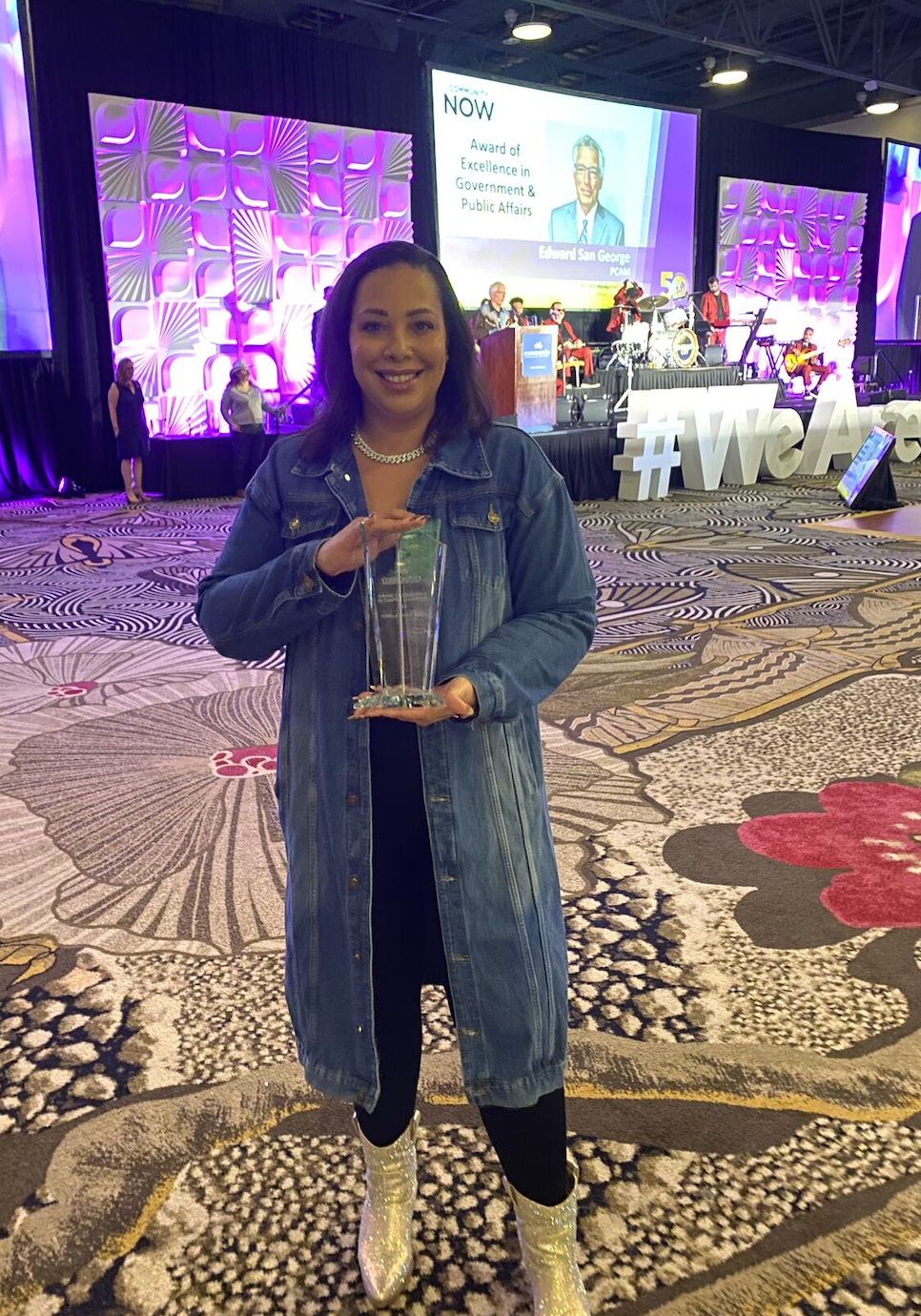
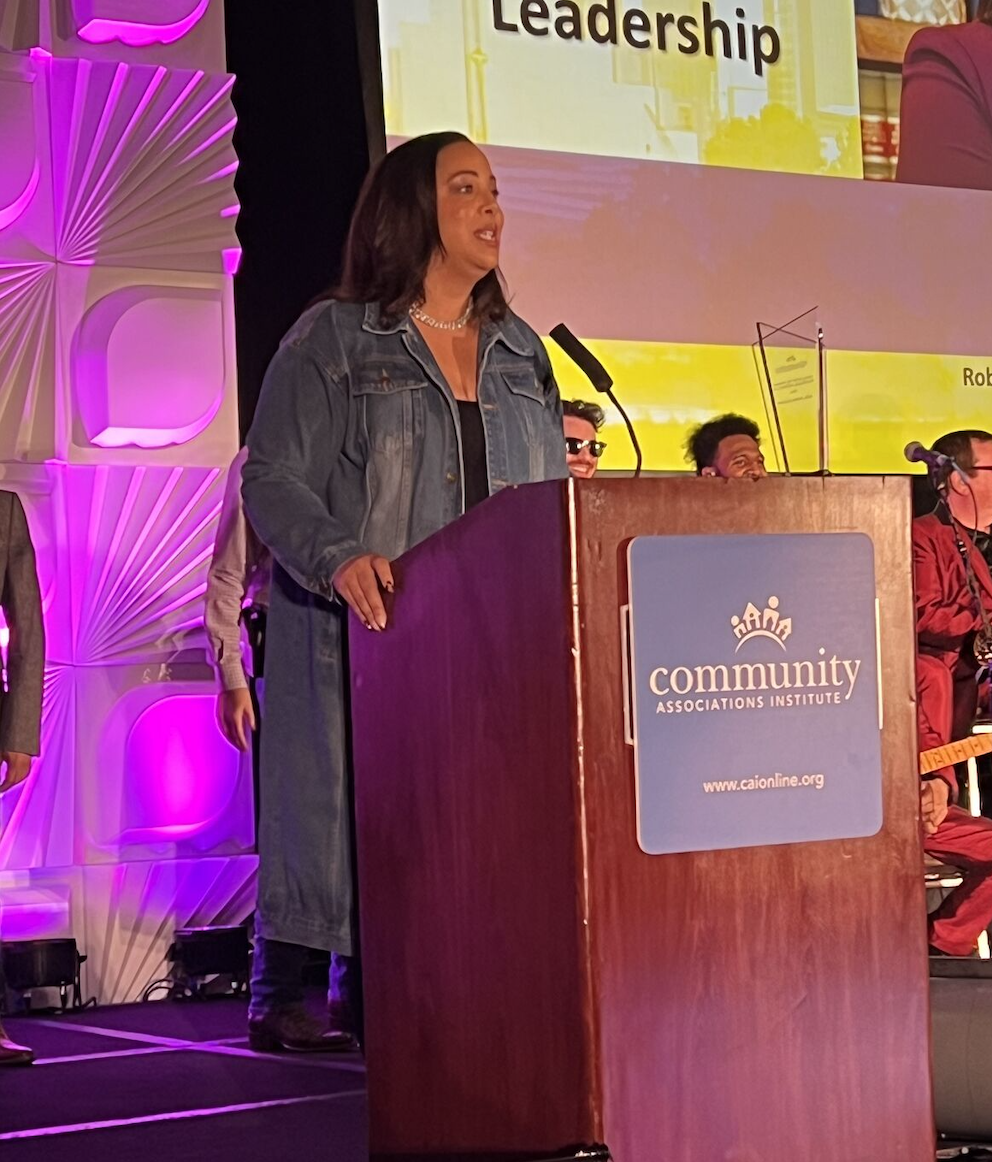
A highlight of the Annual CAI Conference is the unveiling of the CAI Volunteer Award recipients. The Awards program highlights the efforts of those who go above and beyond to demonstrate leadership, excellence, and dedication to support and advance community association governance, management, and living, as well as CAI programs and initiatives.
Congratulations to CAMICB Board Commissioner Noelle Hicks, Esq. who was awarded the CAI Award in Chapter Leadership! This Award of Excellence in Chapter Leadership honors an individual who has made significant contributions to advance national-chapter relations, and provided support and guidance to chapter leaders.
Noelle Hicks, Esq. is an Associate at Roberts Markel Weinberg Butler Hailey (RMWBH) PC and practices in the firm’s Real Estate Section as a member of the Community Association team, based in the firm’s Houston office. Noelle assists single-family residential, townhome, condominium, and some commercial associations with various aspects of property owners’ association law including the collection of delinquent assessments, complex deed restriction enforcement issues, developing and interpreting governing documents, and drafting and reviewing contracts. In addition, she works with her association clients on various issues such as ensuring compliance with state and federal laws, attending administrative hearings and board meetings on behalf of her clients.
There seems to be something of a trend among high-profile executives championing ambitious plans for change — stepping down from their lofty perches and into the trenches of the business.
Recent reports described how Laxman Narasimhan, the new CEO of Starbucks, spent several months before he assumed his role doing all sorts of things inside the company, including brewing and serving coffee at various locations. He devoted 40 hours to becoming certified as a barista, and then spent time at Starbucks shops in the U.S., Europe, and Japan. Narasimhan said it was “startling” to learn how hard it could be to pair the proper lid with the proper cup, one small sign of how complicated the company’s operations had become, and he experienced firsthand the different ways customers pay for their orders, from cash to loyalty cards to phone scans, and what that means for service times. The experience was so instructive, the CEO said in a letter to associates, that he plans to spend half a day each month working at different Starbucks locations, and he wants senior executives to do so as well.
Meanwhile, at Uber, change-minded CEO Dara Khosrowshahi recently decided that one way he could help the company become more attractive to drivers, who were not signing up in the numbers required for Uber to meet its targets, was for him to spend time as a driver himself. He delivered passengers, as well as food orders, in and around San Francisco, and experienced first-hand what so many drivers had been complaining about for years — from how hard it could be sign up with the company to how Uber punished drivers who rejected trips. His experience encouraged him to “reexamine every single assumption we’ve made” and helped shape Project Boomerang, his big change initiative.
These are fun and entertaining stories, and they reflect well on the CEOs. They are also an important reminder that one of the great risks for change leaders is that they get so immersed in crafting disruptive business models, deploying slick technologies, and approving flashy marketing campaigns, that they become isolated from those who truly make the business go — the customers who buy a company’s products or services and the people who deliver them. Ultimately, change programs work when they shape the behaviors and unleash the enthusiasm of the people closest to the work — the technologists who write code, the front-line employees who interact with customers, and customers themselves, who have the deciding vote on whether a company is doing something worthwhile.
Put simply, it’s hard to reach people’s hearts and minds if the CEO’s head is in the clouds.
Legendary management guru Tom Peters, who, at age 80, recently announced his retirement, has preached the gospel of MBWA—“Managing by Wandering Around”—for nearly all of his career. He and his In Search of Excellence coauthor Bob Waterman discovered the concept (and the acronym) when they spent time with Hewlett-Packard CEO John Young, himself a leadership legend. “I’m in love with the term,” Peters explains. “But I’m really in love with it as a metaphor. A metaphor for being in touch. A metaphor for not losing touch with your employees, your vendors, your customers. There is a discipline to getting out of your office, getting close to where the work is really done, and making sure that the normal course of affairs does not keep you from doing that.”
A few years ago, Harvard Business School professors Michael E. Porter and Nitin Nohria published a massive study based on the ultimate artifact of management discipline — the calendars and daily schedules of big-company CEOs. One of their key findings was that when CEOs spent time with colleagues (as opposed to customers, investors, or other external constituencies), they spent nearly half that time with direct reports, and another 32% with the top 100 managers. They spent only 6% of their time with rank-and-file employees. “CEOs face a real risk of operating in a bubble and never seeing the actual world their workers face,” Porter and Nohria warned, which hurts their “legitimacy and trustworthiness.”
It also hurts their feel for the intricacies of the business — opportunities for small-but-meaningful innovations and easy-to-implement workarounds that their high-level change programs might be missing as well as the hidden obstacles to adoption of their plans, or unlikely sources of support, they can’t identify from the corner office.
A few years back, I studied the remarkable turnaround of a health care company called DaVita, the second-largest dialysis provider in the United States. Then-CEO Kent Thiry championed all sorts of big strategic ideas and dramatic culture-change initiatives to transform a troubled organization in the life-or-death business of treating patients with end-stage renal disease. The campaign was so successful it attracted a big investment from Warren Buffet and became the subject of a business-school case study.
Early on in the turnaround process, Thiry designed a program called “Adopt a Center” in which senior executives (including the CEO himself) were required to develop a personal connection to a specific dialysis treatment facility — to spend time there, get to know the staff and patients, do work that did not require medical certification. When Thiry first told me about the plan, I assumed the idea was for executives to teach rank-and-file employees the basics of the business. This was a company, after all, that was fighting for its financial life. But that wasn’t the idea at all. The goal was for front-line caregivers to teach the executives why the business mattered. This was a company, after all, whose “customers” were literally fighting for their lives until they could receive a kidney transplant.
Later, as DaVita’s financial condition stabilized, Thiry raised his expectations for senior executives in a formal program called Reality 101. Every official with the title of vice president or above spends a week on the front lines of a dialysis center, helping to set up and tear down equipment, assisting in basic procedures such as blood-pressure monitoring, and experiencing in human terms the highs and lows, the laughter and tears, that everyone experiences in a typical week at one of these facilities. Reality 101 had an impact on front-line caregivers who worked alongside senior executives; they spent time with leaders who might have seemed like names on an org chart rather than colleagues, they came to understand a big-picture vision about change that might have felt abstract. But the impact that really disrupted individual mindsets, that shook people’s assumptions, was on senior executives who experienced the business in all its humanity.
One of the great threats to the long-term success of big organizations, Thiry argues, is when executives allow themselves to lose touch with what happens in the trenches, and when people in the trenches come to believe that the people in headquarters don’t understand their day-to-day struggles and problems. Reality 101 is one of many DaVita initiatives to maintain and strengthen a sense of empathy, not just between the company’s people and its patients, but between the company’s high-ranking executives and its front-line staff.
“This whole thing could not have happened if we relied simply on working through the executives,” Thiry told me. “The key to the transformation was that the front-line people, who got energized about the notion of a different kind of place to work and be a part of, swept along the executives. Two-thirds of the executives who got ‘converted’ in this process weren’t converted by me, they were converted by the energy and enthusiasm they saw in the centers. They experienced personally and emotionally how hard it is to take care of patients, how responsible you feel when you’re operating that equipment and delivering treatment. A lot of executives allow their empathy muscles to atrophy. Reality 101 reawakens the empathy muscle.”
That is a powerful insight, and it applies senior leaders in all sorts of fields, whether the business is serving coffee, driving passengers, or saving lives through dialysis. Leading change is both a top-down process and a bottom-up process, a matter of galvanizing ideas and unleashing passions. The goal is to educate and energize colleagues at every level, especially those on the front lines, about the power of your plans, and to be educated and energized by the pragmatic wisdom of their experiences. Even the most brilliant blueprint for change can benefit from a healthy dose of reality.
The Great Reshuffle continues as the shortage of frontline and hourly workers is still strongly felt across the labor market by industries in the private sector. Organizations are struggling with finding, hiring, and keeping good people yet ageism bias is rampant in the workplace, with many solid job seekers being overlooked. It is time to ask: Are older workers the answer to your hiring and retention issues?
Younger to middle-aged workers up to age 54 tend to look for employment that pays fairly while helping them fulfill their career vision. The mature worker in the 55-80 and beyond category seeks work for somewhat different reasons. Some have moved on from their earlier occupations and many of them will enjoy more years and even decades of good health. This, coupled with the ever-increasing cost of living and the uncertainty about Social Security has many of them rethinking what their futures look like.
Soft Skills and The Older Worker
Compassionate and empathetic. Warm and engaging. Able to size up customer situations charitably, and smoothly resolve service issues. Strong in the areas of relationship building and rapport with their workplace teammates. All qualities that workers aged 50 and up tend to bring to an organization. While every company’s customer service training should include these areas, with more experienced workers many of these soft skills are already in place–skills that are harder to teach than those of a more technical nature. Their customer service motivation tends to be strong. Seasoned in the best possible sense, mature employees can provide knowledge and a greater sense of stability to a team, not to mention loyalty to an organization. And many appreciate the opportunity to mentor younger members of their teams.
A Strong Work Ethic: Getting the Job Done Right
Older Gen Xers, Baby Boomers, and the post-WWll group aged 78-plus are famous for their strong work ethic. While not opposed to learning how to “work smarter” the idea of not working as hard is not in their collective wheelhouse. Generally speaking, they are already in the habit of showing up on time, meeting their deadlines, and are willing to spend additional time and effort to do something right. It is more of a “best it can be” approach than an “it’s good enough” mindset. Especially with the increasing use of AI for customer experience, our world offers increasingly quick results.
Diversity, Equity, and Inclusion (DEI): A Fresh Perspective on the Over 50 Crowd
Author and executive coach Dethra Giles believes many in HR overly focus on technical proficiencies when considering job applicants, despite that many older people are eager to learn and continue participating in today’s workplace. Worse, they assume older candidates might not have the ability to learn new technologies. Yet of the Baby Boomer generation in particular, two-thirds hold a college degree. They have strong entrepreneurial leanings and are twice as likely as Millennials to form new businesses. And since they aren’t necessarily looking for their next big career move, they are more likely to stick around, improving an organization’s employee retention rate.
Research is showing the main predictors of job performance–knowledge and expertise–keep increasing even into the eighth decade of life. For reasons including and beyond DEI, bringing more experienced employees on board is something to consider.
8 Ways to Attract Experienced Workers to Your Organization
In a recent Forbes article, Sara Zeff Geber, Ph.D. shared eight ways to attract and keep more highly experienced workers, based on an Activated Insights survey of 35,000 older workers in the US:
Offer meaningful roles connected to the organization’s mission
Think beyond rigid schedules; provide flexible scheduling
Make sure value and level of work matter more than tenure at the company
Shift leader mindset from transactional to one of empathetic engagement
Create the best environment with physical accommodations when needed
Encourage open and respectful communication among age groups
Have a zero-tolerance policy for ageism; highlight older workers as well as younger
Add fun to the mix, encouraging camaraderie within the work community
John R. DiJulius III, author of The Customer Service Revolution, is president of The DiJulius Group, a customer service consulting firm that works with companies including Starbucks, Chick-fil-A, Ritz-Carlton, Nestle, PwC, Lexus, and many more. Contact him at 216-839-1430 or info@thedijuliusgroup.com.
By Greg Smith, CMCA, AMS, PCAM , Chair of the CAMICB Board of Commissioners
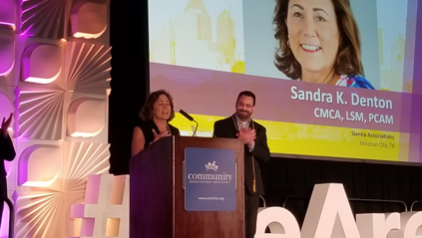
At the CAI Annual Conference and Expo in Dallas this month, I was thrilled to have the opportunity to offer a special recognition to a dedicated, passionate and devoted industry leader who has spent countless volunteer hours supporting and advancing the community association management profession and the CMCA credential.
Sandy Denton was Chair of the CAMICB Board of Commissioners for the past two years, but her service to CAMICB, and our profession, began long before that.
From her continued work as a Subject Matter Expert on the CAMICB Exam Development Committee for the past eight years, and her service on the Board of Commissioners from 2017 – 2022, to her former roles as CAI President as well as Chair of the Foundation for Community Association Research, Sandy remains a steadfast advocate for the profession and a devoted champion of the CMCA credentialing program. In fact, I believe Sandy is the first and only person ever to chair all three organizations—CAI, FCAR, and CAMICB!
I’ve had the privilege of knowing Sandy for many years; she’s one of those volunteers who consistently contributes in both visible and invisible ways. She’s the type of person you always know – or hear about – because she’s so impactful.
During her tenure as Chair of the CAMICB Board of Commissioners, it was very important to Sandy that CAMICB focus on diversity, equity, and inclusion. Under her leadership, we developed and adopted a DEI statement and approach which is now a significant element of our strategic plan. Sandy also felt strongly that we revisit and reestablish our strategic plan – not a small undertaking – which we accomplished at Conference last year thanks to her clear and thoughtful guidance.
To say it’s inspiring that Sandy contributed so much over the years while simultaneously building her own extraordinary career in her home state of Texas – is an understatement.
We’re grateful Sandy continues to generously share her time, knowledge and passion as an SME on the CAMICB Exam Development Committee, and she remains a renowned CAI faculty member and legislative advocate through her work on the CAI Government & Public Affairs Committee and the Texas Legislative Action Committee.
On behalf of the officers, commissioners and staff of CAMICB and on behalf of our profession, thank you, Sandy, for your extraordinary service and unwavering support.
Is this glass half full or half empty? The median asking price for homes in New York City jumped back over $1 million last month for the first time since June 2018, StreetEasy reports, signaling healthy values. But the 2,092 listings that went into contract represented a 29% drop from April a year ago, signaling a shortage of inventory.
With today’s elevated mortgage rates, it’s no surprise that sales this year have been more modest compared to 2021 and 2022, when unusually low mortgage rates led to surging buyer demand. The important trend to note right now is that buyers have not retreated from the market, even though mortgage rates have more than doubled since early last year.
The city’s housing market was on a correction course in 2019 due to a glut of unsold condo inventory. Now, market conditions are nearly the opposite of 2019: there’s a shortage of inventory relative to demand, particularly for pricier homes as buyers who can afford higher mortgage payments remain in the market.
The luxury segment — the top 5% of the market, priced above $3.5M — also saw steady buyer activity. In April 2023, 125 listings at this price point entered contract, compared to 146 in April of last year. The luxury market is normalizing after its record-breaking performance in 2021.
Buyers in the market for more affordable homes also saw strong competition, although it wasn’t as fierce as the market for more expensive homes. An average listing priced below $700,000 — roughly the bottom third of the current market by price point — received 13.7% more buyer inquiries in April of this year compared to April 2019. These homes are popular among first-time buyers or those hoping to downsize, due to lower carrying costs including monthly mortgage payments and maintenance fees.
The neighborhood with the most listings below $700,000 was Forest Hills, Queens, where in April there were 299 listings below this price point. Next up was Lenox Hill, Manhattan with 215 listings, and the next three were Jackson Heights in Queens (187), Riverdale in the Bronx (165), and Rego Park in Queens (145).