Roger Federer Just Gave the Best Graduation Speech I’ve Ever Heard. He Summed It All Up in Just 14 Words

In his commencement speech for the 2024 graduating class of Dartmouth College, tennis great Roger Federer gives a master class in emotional intelligence.

EXPERT OPINION BY JUSTIN BARISO, AUTHOR, EQ APPLIED @JUSTINJBARISO Inc. Magazine

Roger Federer is going viral.

This time, it’s not for a tennis victory. Rather, it’s for his remarkable commencement address, which he delivered on Sunday to the 2024 graduating class of Dartmouth College.

Federer’s speech is an amazing case study in emotional intelligent speaking: It’s funny, motivating, inspiring. It’s emotionally moving. And most important, it has valuable takeaways–not just for graduates, but for anyone trying to succeed at life.

If you have 20 minutes, I highly recommend you listen to the speech in its entirety. But Federer himself summed up the speech in three main points and 14 words:

Effortless is a myth.

It’s only a point.

Life is bigger than the court.

Let’s analyze each point, and see how you can apply them to your life and business. (If you find value in this article, you might be interested in my free emotional intelligence course, which delivers a new rule directly to your inbox every day for a week.)

Effortless is a myth

Federer said he would often become frustrated when he heard others say his play was “effortless.”

“The truth is I had to work very hard to make it look easy,” Federer said. “I got that reputation because my warmups at the tournaments were so casual that people didn’t think I’d been training hard. But I had been training hard, before the tournament when no one was watching.”

Federer went on to explain how hard work is the foundation of confidence and success, not only in tennis, but in life. Talent is not just a gift, he said; it’s also grit. Discipline, patience, trust in yourself, loving the process, managing your life–all of this is part of talent, and everyone has to work at developing these abilities.

I can definitely attest to the wisdom of these words. For years, I’ve studied the lives and habits of elite athletes, teams, coaches, and business leaders. I’ve discovered two things along the way:

1. Nothing is ever as easy as it looks.

2. When it comes to reaching your goals, it’s extremely helpful to know ahead of time the scope of practice and effort needed to become great at something.

For example, I remember a great story Amazon founder Jeff Bezos told about how long it takes to learn to do a handstand. Most people think it takes two weeks. In reality, it takes closer to six months. 

You can apply that principle to almost anything: learning a sport or an instrument, building a successful business, even writing a great email.

“From this day forward, some people are going to assume that because you graduated from Dartmouth, it all is going to come easy for you,” Federer continued.

“And you know what? Let them believe that–as long as you don’t.”

It’s only a point

Federer’s next point is an especially insightful one.

He explains that in the 1,526 singles matches he played in his career, he won almost 80 percent of those matches. However, he won only 54 percent of points in those matches.

“In other words, even top-ranked tennis players win barely more than half of the points they play,” Federer continued. “When you lose every second point on average, you learn not to dwell on every shot. You teach yourself to think, ‘It’s only a point.’ “

In the game of life, Federer explained, you will lose “points,” over and over. But this mindset helps you overcome self-doubt and negative energy. It frees you to fully commit to what comes next with intensity, clarity, and focus.

Over and over again, I’ve seen successful people make this same point. NBA superstar Stephen Curry. Tennis great Novak Djokovic. Shark Tank investor Barbara Corcoran.

“You want to become a master at overcoming hard moments,” said Federer. “That is, to me, the sign of a champion, the best in the world. And, not the best because they win every point. It’s because they know they’ll lose again and again, and have learned how to deal with it.

“You move on, be relentless, adapt, and grow.”

Life is bigger than the court

Federer next related how important it was for him to have a life beyond tennis. He wanted a rewarding life full of travel, culture, friendships, and family, all the while never forgetting where he came from.

Federer also wanted to serve others. It’s why he began a foundation at the age of 22 to help provide education to people in countries with fewer resources. At that age, Federer explained, he didn’t feel ready for anything other than tennis. But motivated by his mother, he took a chance and figured it out.

And while Federer says tennis provided so many memories, his off-court experiences have been just as impactful.

“Tennis, like life, is a team sport,” Federer continues. “Yes, you stand alone on your side of the net, but your success depends on your team, your coaches, your teammates, even your rivals. All these influences help you to make you who you are.”

Federer then credited his parents, his wife, and his four children for encouraging him, supporting him, and bringing joy to his life.

“Graduates, I know the same is true for you, your parents, your families,” Federer continued. “They made the sacrifices to get you here, and they have shared your triumphs and your struggles. They will always, always be in your corner … The friends who have pushed you and supported you to become the best versions of yourself.”

This is so true. As the famous poet John Donne wrote, “No man is an island.”

Recognizing that can not only help you get the emotional support you need when times get rough, it will make the victories more sweet, too.

Federer went on to sum up his entire speech, repeating those 14 key words:

Effortless is a myth.

It’s only a point.

Life is bigger than the court.

A true master class in emotional intelligence–and the best graduation speech I’ve ever heard.


6 Habits of Instantly Likable People

6 habits of instantly likable people: Some folks have qualities that draw others to them. Here are some habits they practice.

BY GWEN MORAN For FAST COMPANY

Have you ever met someone and liked them immediately? Not in a romantic way, but in a connected, warm, “gosh, I’d love to have coffee with that person” way?

Some people are just likable. Others seem to think well of them without much effort on their part. And being likable can have its benefits, says Jenny Woo, founder and CEO of Mind Brain Emotion and creator of 52 Essential Relationship Skills, an emotional intelligence training game. “It does have a payoff, and it matters,” she says, noting that being likable helps you connect with others. When you can do that, you can communicate better and connect with people who are different from you, both of which can help you be more effective in the workplace.

But there’s a fine line between working on your likability and ease of connection versus people-pleasing, which can be detrimental, she adds. And it might not be surprising that likable people have some habits and traits that help them connect.

THEY ARE PRESENT

“The most likable people are not thinking about their likability,” says social interaction expert Patrick King, author of The Science of Likability: 27 Studies to Master Charisma, Attract Friends, Captivate People, and Take Advantage of Human Psychology. King says likable people are, instead, “present and just focused on the conversation, listening, and being curious about their conversation partner.” In other words, they are focused on creating a connection rather than their own impression or image management.

THEY GIVE AND SHARE CREDIT

In the workplace, Woo says likability increases when people give credit where it’s due. “It’s about sharing the spotlight,” she says. While someone might not be conventionally gregarious and outgoing or might have a difficult personality, giving credit to someone who worked on a project or came up with an idea makes them feel valued—and that goes a long way toward likability.

THEY ARE AUTHENTIC

Showing up as who you truly are can enhance your likability, says executive coach J. Victor McGuire, founder of Coaching for Everyone, a nonprofit organization that offers affordable, high-quality coaching programs to BIPOC (Black, Indigenous, and people of color) individuals. “People are generally drawn to individuals who are genuine and who are transparent,” he says. “Coaches who are authentic in their interactions, for example, seem to be more trustworthy and relatable.” Authentic people may be seen as more trustworthy and reliable, too. 

THEY ARE CARING AND EMPATHETIC

McGuire says that people tend to like others who are caring and empathetic. When you show other people that you care about their well-being and feelings, you become more likable, he says, adding, “This helps build a strong, trusting relationship with others.”

THEY ARE GOOD AND ACTIVE LISTENERS

Being a good listener and helping people feel heard also enhances likability, King says. He builds rapport through listening and being curious. “[N]ever interrupt unless you are adding on to what they are saying and agreeing with them—and after you interrupt, you have to hand the microphone back to them. Many interruptions are self-serving,” he says. Another tip: Make sure that you are asking at least one question about the other person for every three times you talk about yourself. “This helps maintain balance, and creates the feeling that you actually care,” he says.

THEY’RE GOOD COMMUNICATORS

People tend to like you more when you’re straight with them—even if the news isn’t great. That’s according to a 2023 study published in the Personality and Social Psychology Bulletin, which also reveals that ambiguity can hurt your likability, as it may be perceived as a way to dodge the truth. The study found that when people are ambiguous with their language, even when it’s to “soften the blow,” others make personality judgments about them, finding them less warm, less extraverted, and more cautious.

WHAT’S NOT TO LIKE ABOUT LIKABILITY?

There is an important point about likability that can’t be ignored, Woo mentions. It’s an area where bias can creep in. “You absolutely have to be mindful” of stereotypes and biases that exist, she says, “whether [they’re related to] your gender, your preferences, your culture, heritage, how you look, your race.”

Some people feel like they need to “code switch” or hide or change some aspect of themselves to fit in or not seem threatening. That can take its toll, Woo says. However, that awareness can also help you handle issues when they arise—and leave a memorable impression when you break through stereotypes or preconceived notions and achieve connection and understanding, she says.

And that concept cuts both ways. We should look for such biases in ourselves. “Being open to new ideas is also about being open to other people’s ideas and opinions,” Woo explains. When we find ourselves not liking a person, it’s important to explore why. Sometimes there are legitimate reasons, Woo adds, but sometimes the issues are rooted in different cultures, communication styles, or other issues that can be overcome when we’re aware of them. 

You’re a new leader and you’ve already pissed off your team. Here’s how to win them back

New CEOs often face challenges when trying to assert their leadership style. This 3-step plan can help managers rebuild relationships with an alienated team.

BY CHANTAL LAURIE BELOW AND JO ILFELD for FastCompany

Accepting the role of CEO to a national nonprofit, Liza felt energized by the board’s challenge to evolve the organization’s mission and programming. Anticipating heavy work demands, she set early expectations with her team: she would work half days on Fridays and take a monthly mental health day to reflect and restore. Liza cited research reinforcing her decision and felt pride modeling her leadership values. After talking with her team, though, she noticed hesitation, even detecting long sighs and an eye roll. She wondered, “Are they trying to sabotage me?”

In our experience coaching hundreds of executives, Liza’s story is common. Many new-in-role leaders readily assert their leadership style, prepared to deliver on promises they made while interviewing to influence the trajectory of the organization. If a leader doesn’t fully understand the context, culture, and people within the existing organization, however, their visionary zeal can land poorly. When early mistakes aren’t addressed quickly, they can fester, destroying initial goodwill and leading to irreparably harmed relationships.  

If you’ve stepped into a new role and find yourself confused by the dynamics or sense you’re losing the support of your team, here are three steps you can take:

RESIST DOUBLING DOWN AND DEFENDING

When you sense your actions are received poorly, it’s tempting to justify your reasoning and explain your goals further. Liza presumed the staff didn’t understand the benefits of her self-care schedule so she moved to prove and defend the benefits of her reduced work week. When this created more distance versus alignment with her staff, Liza felt at risk.

Our human wiring for survival means we often instinctively move to fight or flee when we sense the threat that we don’t belong or our perspective isn’t valued. Liza “fought” by providing more data justifying her good judgment, essentially asserting “I’m right!” which only further distanced her from her team.

Through coaching, Liza saw how doubling down and defending sabotaged her. We practiced simple breathing exercises to calm her nervous system when her leadership decisions were threatened. We also explored questions that helped her widen her aperture and move into curiosity and connection mode:

  •  How might my team be trying to help me?
  • What am I not seeing that they see?
  •  How can I hold this more lightly?

In a more calm, open, and measured state, Liza felt ready to learn instead of defend, a powerful first step for any leader experiencing threat in their new role. 

INVITE OTHER PERSPECTIVES AND ENGAGE WITH CURIOSITY

Once Liza calmed, she understood that different perspectives might be at play. She knew that being a “martyr” led to burnout and resentment, so her boundary setting was reasonable. She also saw that asserting her nonnegotiables left the team without room to share their concerns; they felt dismissed, as though Liza was asserting, “This is what I need: ADAPT!”

In her next leadership team meeting she shared, “I realize in my haste to be honest, I failed to ask how that landed and what your needs and boundaries are. Can we discuss more?” When they explored the issue, rich information emerged: worries about overload in her absence, concerns she was abusing her authority by following a different schedule than the team, and fears she would be unavailable for urgent decisions. Reviewing these insights together, the team could determine how to honor self-care as an organizational norm while simultaneously ensuring equity and effectiveness.

When you’re new-in-role and feeling undercurrents of resentment and pushback, the most important first stance is curiosity. Take advantage of team or direct report 1:1 time to ask deeper questions and be genuinely curious about how your proposed changes are perceived. Invite humility into your leadership: you’ve been hired for your knowledge and experience, but your team can offer invaluable wisdom and perspective. 

BALANCE PATIENCE WITH URGENCY WHEN APOLOGIZING

Once Liza confirmed that her approach clashed with organizational norms and alienated people, Liza knew she needed to apologize. First, though, she had to progress through the emotional stages of 1) feeling hurt by being misunderstood to 2) feeling ganged up on, to 3) anger that her intentions were misconstrued. When Liza acknowledged her deepest negative feelings, she felt prepared to move forward effectively. 

Once you recognize a miscalculation, it’s tempting to “fix” it and apologize immediately. A “good” apology, though, has several steps according to Marjorie Ingall and Susan McCarthy’s book, Sorry, Sorry, Sorry: The Case for Good Apologies. First, listen; successful apologies ensure the other person knows they’ve been heard and understood. Then, explicitly say, “I am sorry.” Don’t couch apologies by distancing your responsibility, e.g. “I’m sorry you felt that way.” Also, explicitly share what you heard and learned from follow-up conversations to demonstrate your desire to grow and improve, e.g. “I see I asserted strong opinions that felt incongruent with the existing culture and it created understandable resistance. I should have been more thoughtful in my approach.”

Finally, “repair” relations with your team by articulating what you will do differently based on what you learned. In Liza’s case, she agreed that her boundaried schedule would be an experiment for three months and could be adjusted if it didn’t work out; she agreed to make herself available virtually for pressing decisions when away. And, she established a task force to implement restorative days that could be available to all employees. 

By taking time to fully comprehend her misstep, give a straightforward apology, and make it right with her team, Liza learned from her mistakes. She honored her values while also adapting to the needs of the organization to build trust and connection. 

The vision, ideas, and enthusiasm leaders bring to new roles are inspiring. It’s likely, though, that while finding their footing in a new context, leaders will misstep. This can erode credibility and even limit tenure. Missteps that are thoughtfully acknowledged and tended to, however, can deepen trust in a leader’s capacity and propel the organization forward. 

Why Gen Z, millennials are turning to ‘side jobs’ to stay afloat

By Tom Starner for Human Resource Executive

Deloitte’s 2024 Gen Z and Millennial Survey spotlights two generations of workers grappling with pressure: financial insecurity, high stress levels and mounting climate anxiety. According to Elizabeth Faber, Deloitte’s global chief people and purpose officer, they are also considering how rapidly evolving technology like generative AI will impact their jobs and longer-term career decisions. These stresses affect their career choices.

Among the most interesting findings of the global research—which surveyed nearly 23,000 respondents across 44 countries—is that a decent percentage of Gen Zs and millennials are likely to take on part- or full-time paying “side jobs” in addition to their primary jobs. About 45% of Gen Zs and 36% of millennials in this year’s survey say they have side jobs ranging from selling products or services online to flexible “gig” work like ridesharing or food delivery, pursuing artistic ambitions or working in a restaurant or retail job, among others.

The rise of side jobs among Gen Zs and millennials

The survey found that the top reason Gen Zs and millennials work side jobs is to relieve financial pressures. This is not surprising, given that the survey finds that the cost of living is their top concern for the third year running. Plus, more than half of both generations live paycheck-to-paycheck.

“Employers have an important role to play here, as they have the ability and responsibility to support the financial wellbeing of their employees, particularly during uncertain times,” Faber explains.

Faber adds that the “side hustle” has some upsides for Gen Zs and millennials, such as allowing them to monetize a hobby, develop new skills and relationships, and positively impact their community.

“Employers should be mindful of this as it will likely require offering flexibility so that employees have time to pursue their passions outside of work,” she says. “Ultimately, this is an important way for organizations to support their employees’ wellbeing and growth.”

What Gen Zs and millennials want from work

Especially in light of the prevalence of side jobs, work/life balance remains the top priority for both Gen Zs and millennials when choosing an employer. Maintaining a positive work/life balance is also the top thing they admire in their peers, well above other traditional success markers such as titles and material possessions.

That has yielded mixed results for return-to-office policies, with some Gen Zs and millennials reporting benefits like improved engagement and collaboration, while others are experiencing increased stress and decreased productivity.

Stress levels and mental health continue to be a concern, although there are some signs of improvement. Only about half of respondents rate their mental health as good or extremely good. And up to 40% of Gen Zs and 25% of millennials say they feel stressed all or most of the time (down from 46% and 39%, respectively, in 2023). While work is a big driver of this unease, respondents emphasize their finances and the health and welfare of their families as the top contributors to stress.

While employers need to focus on meeting the mental health needs of Gen Zs and millennials, they also should prioritize how they’re helping their workforce connect to the meaning of their work. Nearly nine in 10 Gen Zs and millennials say purpose is important to their job satisfaction, and they are increasingly likely to turn down work or employers that don’t align with their values.

“Gen Zs and millennials expect a lot from their employers and from business more broadly,” Faber says. She adds that what they are asking for is what most employees in the workforce, regardless of age, likely want: meaningful work within purpose-driven organizations, the flexibility to balance work and personal priorities, supportive workplaces that foster better mental health, and opportunities to learn and grow in their careers.

“Employers who work to get these things right will have a more satisfied, productive, engaged and agile workforce—one better prepared to adapt to a rapidly transforming world,” she says.

Co-op and Condo Boards Must Accommodate Hearing-Impaired Residents

Habitat Magazine

Co-op and condo boards are required by federal, state and local laws to make reasonable accommodations for residents suffering from a long list of disabilities. Failure to do so can result in potentially crippling financial penalties. One disability that draws little attention recently caused a problem: hearing impairment.

It happened at a Manhattan co-op, where a shareholder suffering from “profound deafness” is unable to understand voices coming over the apartment’s intercom. This shareholder has a question: “What is the law regarding a workable intercom phone for a person with disabilities?”

Intercoms are legally required in most New York City apartment buildings, replies the Ask Real Estate column in The New York Times. Co-op and condo boards and landlords in rental buildings have the added obligation of making reasonable accommodations for people with disabilities under the federal Fair Housing Act and state and city human rights laws.

An intercom that is functional for a hearing-impaired person would “almost certainly be considered reasonable under the law,” says Ali Frick, who practices discrimination law at Kaufman Lieb Lebowitz & Frick in Manhattan.

You can make a request in writing to the building’s management for an intercom that will accommodate your deafness. State what you are asking for, and why you require a different intercom — though you are not required to go into great detail about your disability, says Maureen Belluscio, managing attorney in the Disability Justice Program at New York Lawyers for the Public Interest. Just explain how different equipment will allow you to use the building’s services, and include information about any previous intercom requests you’ve made.

If the board fails to act, the shareholder will have a “very solid” discrimination case, in which a court would likely order the modification and even award monetary damages to compensate for things such things as emotional distress, says Andrew Lieb, who practices real estate and discrimination law at his eponymous firm, Lieb at Law.

The co-op board’s failure to address the request by engaging with the shareholder to find an acceptable solution — what is called the “cooperative dialogue,” — is a separate cause for legal action under city law, according to Lieb, who adds, “A visual interface is what this reader should demand and receive, not just a speakerphone. The reader has a right to understand the entire conversation rather than being relegated to a second-class citizen status within the co-op.”

In other words, it’s time for this co-op board to get busy.

Your Team Members Aren’t Participating in Meetings. Here’s What to Do.

by Luis Velasquez for Harvard Business Review

Sue, a former client of mine, was starting a new VP role at a fintech organization. She found out quickly that the team she inherited had a lower level of participation, collaboration, questioning, and general engagement than the one she had left behind. This was particularly evident in team meetings.

Sue’s challenges aren’t surprising given the widespread issues with meeting culture. Research has shown that 9 out of 10 people daydream in meetings, 50% find meetings to be unproductive, 25% of meetings are spent discussing irrelevant issues, and 75% of leaders have not received formal training on how to conduct a meeting.

Low team participation in meetings can lead to a decline in productivity for a few reasons:

  • Reduced collaboration. When people don’t contribute to the discussion or pay attention to what’s being said, the team fails to reap the full benefits of convening, and the meeting wastes everyone’s time.
  • Decision-making challenges. Low participation means fewer perspectives are considered, resulting in suboptimal decisions.
  • Team unity. Lack of participation can erode team cohesion, as some team members may feel disengaged or undervalued.
  • Wasted time and resources. Meetings with low participation may make team members feel their time could be better spent on other tasks.

Traditional advice for leaders who want to increase meeting participation call for clarifying expectations, setting clear agendas, and asking open-ended questions. While these strategies have their merits, they might not always work because they’re usually based on the leader’s assumptions about what the team needs, rather than facts about what they actually need. For example, despite implementing those traditional engagement strategies, some of Sue’s team members did not change their behavior, and their meetings weren’t any more effective.

Managers like Sue who want their teams to be more engaged in meetings need to foster a safe, inclusive team culture, which requires a deep understanding of their team’s unique dynamics. Consider both personal and group dynamics.

Personal Dynamics

Understanding and addressing your team members’ individual strengths, weaknesses, aspirations, and fears is key to fostering an inclusive and participatory environment. People’s self-perception and their individual personalities can discourage them from engaging. For example, introversion, a lack of confidence, impostor syndrome feelings, or feeling like their contributions aren’t valued or relevant could all make a person reluctant to share their thoughts.

Sue found that asking open-ended questions in team meetings didn’t lead to participation. However, when she posed open-ended questions in her one-on-one meetings, members felt a greater sense of psychological safety, and she was able to uncover valuable insights and encourage future engagement. 

So, conduct one-on-ones with the disengaged individuals. To set a positive tone, start each conversation by recognizing their valuable contributions to the team. Then, ask open-ended questions to explore how they feel about team meetings. For example: How do you feel about your role and contributions? Are there any personal challenges or concerns that might be impacting your active participation? What changes could we make to our meeting structure that would make you feel more inclined to participate? How can I support you in feeling comfortable expressing your ideas?

Finally, once you’ve identified the personal factors affecting the person’s participation, invite them to engage more actively. You could say:

I want you to know that your ideas and feedback are not only welcome but key for our success. For our next meeting, I’d love for you to share your thoughts on [specific topic/project]. I’ll make sure to create a space for you to express your ideas comfortably. Your perspective is unique and can help us see things we might otherwise miss. How does that sound?

Group Dynamics

The way team members interact with each other is also a critical factor in their meeting participation. For example, language barriers and cultural differences can easily create misunderstandings. Power dynamics including but not limited to those related to gender, sexual orientation, neurodivergence, and race can intimidate people into silence, as can dominant voices that tend to be louder than others.

Given those power dynamics, it’s critical that you show your team members that they’re valued and make it safe for them to participate.

Show they’re valued.

Here’s how to set clear expectations about your team’s behaviors while demonstrating that you value them and their contributions. The key here is to work on the culture for the benefit of the team, rather than focusing on one disengaged individual. Your goal should be to create a psychologically safe environment for your team, not just increasing participation.

  • Define desired team behaviors. Declare the type of team you would like to have and the behaviors you would like them to adopt to create a culture of support. For example, you could say, “As a team, we support each other, we tackle challenges together, and we communicate transparently and constructively.”
  • Model the behaviors. Show empathy in your interactions and actively participate in collaborative problem-solving. Your actions set the tone for the team’s culture.
  • Reinforce and recognize. Celebrate whenever a team member exhibits these behaviors. For example, “I would like to recognize something. Alex, the way you just acknowledged Jordan’s contribution embodies the supportive culture we want to have on our team — one where every team member’s input is recognized and appreciated. Alex, thank you for demonstrating this and setting a positive example for us all.”
  • Invite participation. Embedding the behaviors into every meeting and team interaction will, over time, encourage participation. For instance, when planning the next team meeting, you might say: “As we prepare for our discussion on [topic], let’s remember our team behaviors: we support each other, we tackle challenges together, and we communicate transparently and constructively. I encourage everyone to bring their insights and questions, as your unique perspectives enrich our team. Let’s make this a productive and inclusive meeting where every voice is heard.”

Make it safe to participate.

Group-level meeting factors such as ineffective facilitation, lack of structure, and noninclusive behaviors impact participation, as Tope Awotona, CEO of the scheduling software company Calendly, pointed out to me in a recent conversation. For example, predetermined or habitual speaking orders (e.g., always starting with most senior members) will inhibit spontaneity from other members. Subgroups within the team (e.g., more tenured team members vs. newer members) can also create echo chambers and an imbalance of power in discussions.

Fostering a supportive team culture is key to encouraging meeting participation. How likely are your team members to take the risk of offering their point of view? Is your team supportive or competitive? Are members open to considering diverse perspectives?

Consider adopting these changes at the group level to build psychological safety in meetings:

  • Introduce new rituals. Begin meetings by reaffirming the team’s culture and behaviors: “Welcome to Meeting X. We are Team Y, and we embrace three key behaviors: We support each other, we tackle challenges together, and we communicate transparently and constructively.” This sets a positive tone and clear expectations, and when done consistently, rituals can deliver performance.
  • Challenge existing rituals that may hinder participation. For example, to ensure issues are resolved during meetings, clarify that silence will be interpreted as agreement.
  • Enhance meeting structure and facilitation. Make sure agendas are clear and expectations are communicated in advance. Everyone should know the purpose of the meeting, why it’s important and relevant, and what’s expected from them. This helps team members feel more prepared and inclined to participate.
  • Empower varied participation. Rotate the meeting facilitation among all team members. Giving those who are typically less vocal a structured role can help empower them to speak. Offer multiple ways for team members to contribute, making sure to accommodate neurodivergent individuals. For example, allow for written input before, during, or after meetings to ensure everyone can contribute in a way that suits them.
  • Avoid and handle distractions. Recognize and know how to address common behaviors that derail meetings, like making assumptions or catastrophizing.
  • Confront power dynamics. Actively work to ensure all voices are heard equally. Make it a practice to acknowledge and, if necessary, paraphrase comments from women, people of color, and people from other underrepresented groups to amplify their voices.

. . .

As leaders, we must cultivate teams where every member’s contributions are not only heard but eagerly anticipated, and where every member feels safe to voice their opinion, even contrarian ones. It’s our job to be orchestrators of inclusive and safe cultures. We should amplify the quiet voices, challenge the status quo, and embrace diverse perspectives. Ask your team “What can we do better?” and let their answers guide you to a more engaged and participative meeting environment.

CMCAs Enthusiastically Demonstrate Their Commitment 

To Professional Development And Growth

By CAMICB Executive Director Matthew Green, CAE

Community association managers who hold and retain the CMCA credential demonstrate they’re accomplished professionals committed to developing their skills and knowledge by participating in ongoing continuing education (CE) coursework and professional development opportunities year-round.

Recertification, the process through which CMCAs retain their credential, is not just a requirement but a valuable opportunity for promoting and demonstrating continued competency in the association management profession. Over the last ten years, an impressive 88 percent of CMCAs, on average, successfully finished the recertification process.

By participating in CE opportunities that pertain specifically and primarily to community association operations or management, CMCAs contribute to their own professional growth and the development of the CMCA as a recognized standard for experienced managers.

The types of professional development CMCAs participate in encompass a variety of facilitated learning opportunities, ranging from college degrees and coursework, conferences, professional coaching, community workshops, seminars, symposiums, and webinars. In addition, courses may include accounting, human resources, and public administration.

A Sampling of CE Opportunities 

The following are some examples of the many different types of programs in which CMCAs participate, including CAMICB’s newest opportunity, volunteer service credits. 

Recognized course providers: The CAMICB Continuing Education Review Committee plays a crucial role in maintaining the quality and relevance of the CE opportunities available to CMCAs. They have a pre-approved coursework list for CMCA recertification continuing education credit. Any coursework approved by a state regulatory agency for manager licensing requirements will also be approved for CMCA recertification continuing education credit, further ensuring the credibility and value of these courses.

The CAMICB Continuing Education Review Committee must review and approve any in-house training management companies provide to qualify for CE credit. 

CMCA prerequisite coursework is also approved for continuing education. It’s important to note that CMCAs may not use the coursework to meet examination eligibility and continuing education requirements. For example, if a CMCA used CAI’s M100: The Essentials of Community Association Management as their prerequisite education to sit for the CMCA examination, they may not submit it for CMCA recertification continuing education credit. Coursework that meets the standard criteria may be submitted for review and approval to CAMICB. If the proposed coursework meets the requirements, it will be approved for a two?year cycle.

Volunteer service credits: Credit hours may be earned for volunteer service to organizations advancing community associations or the management profession. Credit hours for advocacy work supporting community associations and management professionals may also be granted. CAMICB must approve the organization and service hours before a credential holder submits their recertification application. The maximum total hours allowed for volunteer service during the two-year recertification cycle is 8 hours. Credential holders must provide objective evidence of their participation to receive continuing education credit for volunteer service.

CAI: CAI’s website (www.caionline.org) and local CAI Chapters offer an array of resources, networking, and professional development opportunities. To find a local chapter, go to: https://www.caionline.org/Chapters/Pages/Find-A-Chapter.aspx.  Your local chapter will also offer specific opportunities to impact your community, specifically your state. For example, in California, opportunities may be state-specific to drought, wildfires, the Davis Stirling Act, etc.

Coursework that supports the operations of a community: Credit may be awarded for attendance at local law seminars and local college or university courses about accounting, business practices, computers, or foreign languages. CAMICB calculates CMCA credit on an hour?for?hour basis (e.g., one hour of class attended equals one hour of CMCA credit). Courses related to buying and selling real estate are not acceptable.

Self-study: Self-study credits are limited to no more than four hours every two years and must be pre?approved by CAMICB. A written request for approval should include a description of the course or activity (including outline, syllabus, or summary, as applicable) and the estimated length of time. Institute of Real Estate Management (IREM) home study courses are not considered self?study.

Teaching credits: Teaching a course related to community association management can qualify for continuing education credit. Two credits are earned for each class hour the first time the course is taught. When the same course is re?taught, one hour of credit is earned for each class hour.

Authorship Credits: An article for a regional or national community association publication may qualify for continuing education credit. A copy of the published work and the total number of words written must be submitted to CAMICB. The determination of the number of hours depends upon the word length of the article; the longer the article, the more credits. Please note that copies of publications must be submitted within ample time for review before the recertification due date.

If you have questions about whether a particular course or activity is eligible for CE credits, please visit www.camicb.org or contact CAMICB at info@camicb.org—we’re here to help! 

Radiator Cozy Saves Co-Op $37,000, Cuts Carbon Emissions

Greenwich Village, Manhattan

HABITAT Magazine

For co-op and condo boards struggling to cut their buildings’ carbon emissions enough to comply with Local Law 97, the solution might be a prosaic piece of equipment that’s hiding in plain sight: the humble radiator.

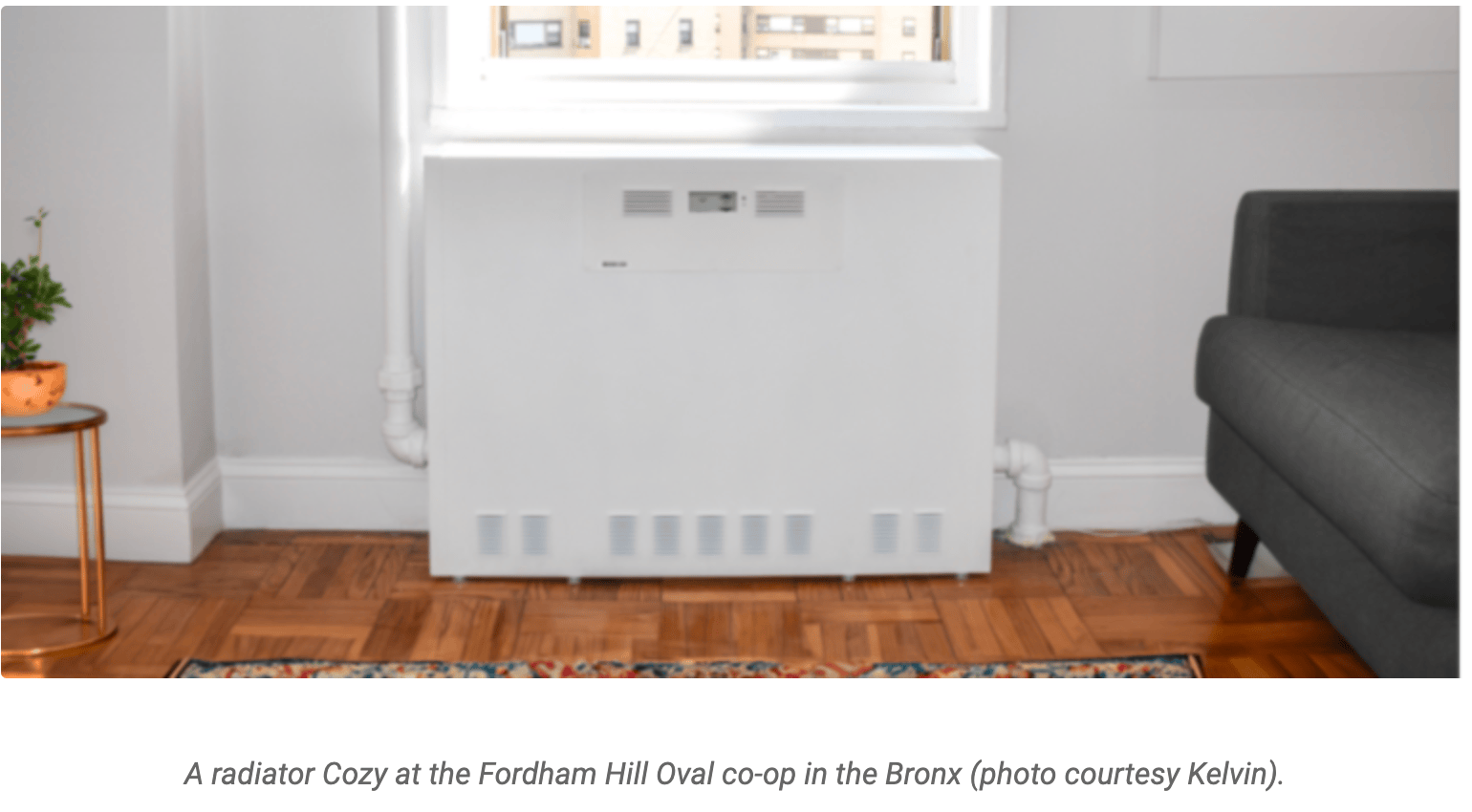
Tired of having to open windows in overheated apartments in mid-winter — and literally watching money fly out of those open windows — the board at the 175-unit co-op at 2 Charlton St. in Greenwich Village has embraced a new technology called the radiator Cozy. Manufactured by Brooklyn Navy Yard startup Kelvin, these “smart” radiator covers trap steam heat, then use sensors to release heat based on the desired temperature of the room. When the room needs heat, the fan within the Cozy circulates hot air through the room. The trapped steam can also be sent to other parts of the building that may need heat — a welcome fix for the many New York City buildings where some apartments are sweltering hot while others are underheated.

More than 60% of the units at 2 Charlton St. have installed Cozys, Crain’s reports, and the building has recouped its investment, having saved $37,662 in fuel costs and 168.2 tons of carbon emissions. That’s enough to bring the building into compliance with Local Law 97. As a bonus, apartments are now comfortable.

“It’s New York City, life isn’t exactly perfect, but this is a major step in the right direction,” says Chris McGinnis, a member of the co-ops board who first brought the Cozy to the attention of his fellow board members in 2021.

The Cozy costs about $850 per unit, including installation, but there are ways to shrink that number. The cover qualifies for incentives in the Biden administration’s Inflation Reduction Act, and combined federal and state incentives cover between 50% and 70% of the Cozy’s cost, making the potential price tag of each radiator cover around $200.

As Habitat reported recently, there’s another funding option. The board at the 1,130-unit Fordham Hill Oval co-op in the Bronx became the first property in the city to take advantage of a no-money-down subscription model offered by Kelvin in conjunction with ClearGen, part of a portfolio set up by the Blackstone investment management company to fund clean energy projects. The co-op will pay for 2,400 Cozys  through a  monthly $15 fee per unit for 15 years. The cost will be offset by the estimated 24% savings in annual energy bills, amounting to more than $170,000.

“Based on future revenue from projects, ClearGen will fund the entire project upfront,” says Marshall Cox, Kelvin’s CEO and founder.

Already stretched thin by numerous capital projects, including electrical upgrades, facade repairs and the installation of smart building-wide sensor technology, the Fordham Hill Oval co-op board jumped at the chance to cut carbon emissions by installing radiator Cozys without putting a penny down.

“That,“ says board treasurer Blandon Caenave, “was why board members were convinced it was the way to go.”

CITY OF SURPRISE OFFERS FREE VIRTUAL CLASSES TO ENHANCE HOA AND CONDO BOARD MANAGEMENT

By Aisha Khan for Phoenix Hoodline

Homeowners and board members in the City of Surprise can cool off with some summer learning thanks to free virtual classes on managing their associations. The City is offering the Virtual HOA/Condo Academy, featuring a slate of topics relevant to homeowners associations (HOAs) and condominium boards.

Attorney Beth Mulcahy, leading the charge, will conduct the informative sessions via Zoom and Facebook Live, starting this month and continuing through the end of the year, according to the City of Surprise website. Participants must register to join the online classes, which aim to decode the complexities of HOA and condo management.

The summer series kicks off with “Charting Your Course: A Comprehensive Guide to Board Roles & Responsibilities in HOAs/Condos” on May 21, promising a rundown of board member duties. It’s followed by June’s class on navigating the treacherous waters of HOA politics and frequent queries, aptly titled “Untangling the Web: Navigating Politics and FAQs in HOAs/Condos”.

The curriculum covers a range of pressing issues, from amending governing documents to enforcing community rules. Future classes will delve into fiscal matters, such as creating budgets and reading financials, and the realities of running a successful community association. Special sessions include a deep dive into new laws affecting HOAs and condos, and through an end-of-year session, homeowners can even bring their burning questions about holiday decorations.

Filling a niche for reliable and accessible homeownership education, Surprise’s Virtual HOA/Condo Academy aims to strengthen the savviness of its residents and community leaders. For further details or questions about the program, residents can get in touch by emailing surprisecares@surpriseaz.gov.

Emotional Intelligence Enables Community Managers To Swiftly Address And Resolve Conflicts

By Lydia Pelliccia and Matthew Green, CAE

A smart, skilled and well-rounded community association manager is critical to a community’s success. The profession is known for its daily variety as each day brings new opportunities, challenges and rewards. A key component of a managers’ job is the ability to collaborate and solve problems.

According to Opportunities Knock: Opening the Door to Careers in Community Association Management, published by Community Associations Institute (CAI), the Foundation for Community Association Research (FCAR), and Community Association Managers International Certification Board (CAMICB) having multiple responsibilities, among other factors, is significant in community association managers’ overall sense of satisfaction.

According to an FCAR manager survey, cited in the January 2022 publication noted above, “Solving problems is listed as the main contributor to job satisfaction by 84% of community managers, followed by variety in their tasks each day (73%), and helping people (72%).”

“A community manager’s job is multi-faceted and being a moderator/conflict resolution specialist is an important role,” said Kayte Comes, MBA, MNML, who is the Executive Director of the CAI-Arizona Chapter.  “Any time you have to deal with someone’s most valued possession and money, people become uneasy.  If a community manager wants to be successful in their job, they must learn to not shy away from conflict but embrace it as a challenge.  Comes went on to explain that understanding human nature and body language goes a long way.  “Being aware of your own triggers and behaviors when confronted – and how to control your emotions – helps a manager gain strong conflict resolution skills.”

Comes notes, situations that require these skills can arise when a manager is communicating with their Board – or homeowner – on a variety of topics. For example,  questions about assessments, potentially fines or collections, architectural designs and the proper way to submit information, as well as neighbor to neighbor issues that have been brought to the manager’s attention.

Finetuning Emotional intelligence (EI) Skills

The CAI-Arizona chapter provides community managers the opportunity to participate in emotional intelligence courses. Joelle Hadley, the founder and president of The Culture Coaches, and the co-founder of The Southwest Institute for Emotional Intelligence, describes emotional intelligence in the following way: Balanced emotions are contagious. Emotional Intelligence is a professional and personal skill-set using the self and social awareness of emotions and understanding their impact on those around us. It’s the ability to manage the negative emotions of ourselves and others while motivating positive and effective emotions needed for performance. EI is rooted in the neuroscience of how our brain interacts with outside influences and with our neo cortex, otherwise known as the thinking brain. 

Comes has been participating in these types of classes since she began supervising staff nearly 35 years ago. “This is the best way to understand your communication style and to recognize the many different styles of personalities that a community manager might interact with on a daily basis,” said Comes. “Understanding how you react in certain situations will ensure you are always prepared and professional,” Comes added. She also notes that developing these skills is not something that happens overnight and one can never get enough EI training.

Comes observed that her managers continually express how much they get out of these courses and how it helps them grow both personally and professionally. Afterall, EI skills are needed every day in the community association management industry. A manager who has strong EI skills will succeed.

Resource Corner

Making use of the wide variety of professional development resources available to managers is critical to staying on top of industry news, trends, best practices and any changes arising in the profession.  Below is a sampling of industry resources.

Chapter Mediation Services – CAI chapters often offer mediation services. For example, the CAI AZ Chapter offers these services, for a fee https://www.cai-az.org/Mediation. 

The Culture Coaches – Master certified and accredited trainers and coaches who deliver effective and impactful speeches, workshops, and individual coaching in the EI arena. Visit www.theculturecoaches.comto view the different options in emotional intelligence.

CAI Publications – CAI offers a number of publications covering the topic of conflict resolution, including Perfect Phrases for Conflict Resolution: Phrases for Encouraging a More Productive and Efficient Work Environment and Conflict Resolution: How ADR Helps Community Associations, which can be found here: https://cai.caionline.org/eWeb/DynamicPage.aspx?site=CAI&WebCode=storeCatList&catKey=bcfed0fd-1ce2-4ecd-8cd2-42507b8c36bd&catName=Conflict+Management.  CAI also offers webinars on the topic, https://cai.mycrowdwisdom.com/diweb/catalog?q=conflict+resolution

Management Company Websites – Many management companies have blogs, case studies and other articles available to the public that cover conflict resolution strategies.

CAI Exchange – An online forum that allows members to collaborate and connect with colleagues. Topics range from emergency notification systems to budgeting for insurance in the coming year to managing board member actions, neighbor disputes and everything in between. 

Emotional Intelligence Enables Community Managers To Swiftly Address And Resolve Conflicts is the fourth in a series of articles, produced by CAMICB staff, that delve into the important issues and topics affecting community association managers.

Lydia Pelliccia is a freelance writer. Matthew Green is executive director of Community Associations Managers International Certification Board.