Unknown's avatar

About CMCA ~ The Essential Credential

CAMICB is a more than 25 year old independent professional certification body responsible for developing and delivering the Certified Manager of Community Associations® (CMCA) examination. CAMICB awards and maintains the CMCA credential, recognized worldwide as a benchmark of professionalism in the field of common interest community management. The CMCA examination tests the knowledge, skills, and abilities required to perform effectively as a professional community association manager. CMCA credential holders attest to full compliance with the CMCA Standards of Professional Conduct, committing to ethical and informed execution of the duties of a professional manager. The CMCA credentialing program carries dual accreditation. The National Commission for Certifying Agencies (NCCA) accredits the CMCA program for meeting its U.S.-based standards for credentialing bodies. The ANSI National Accreditation Board (ANAB) accredits the CMCA program for meeting the stringent requirements of the ISO/IEC 17024 Standard, the international standards for certification bodies. The program's dual accreditation represents compliance with rigorous standards for developing, delivering, and maintaining a professional credentialing program. It underscores the strength and integrity of the CMCA credential. Privacy Policy: https://www.camicb.org/privacy-policy

The end of COVID-19: What the workforce thinks about returning to the office

by Brandon Vigliarolo in CXO For TechRepublic

As vaccination rates increase it’s time to start thinking about the world post-pandemic, and business leaders should use this Glassdoor survey as a way to gauge how they respond.

A survey of United States workers performed by Glassdoor found that the national workforce has some very particular opinions about what the workplace should look like in the post-pandemic world, including the fact that 86% want to continue working from home at least part of the time.

The COVID-19 pandemic started just around a year ago, and it seems like we may finally be glimpsing a light at the end of the Zoom-heavy tunnel we’ve been in for the past 12 months. Vaccination rates are increasing in the U.S. and around the globe, and President Joseph Biden said there will be enough vaccines for every American who wants one by mid-May. 

With those facts in mind, it’s time for the business world to start thinking about what comes next. “Employers must take employee feedback into account to determine what is best for their workforce, including how to best support employees who plan to get the vaccine, and employees who do not,” said Carina Cortez, Glassdoor chief people officer. 

Seventy percent of employees, the survey found, want COVID-19 vaccines to be required for employees who want to return to the office. Those numbers are higher for employees ages 35 to 44, of whom 84% want a vaccine mandate, as opposed to only 58% of 18- to 34-year-olds.

Most may want a vaccine requirement, but most don’t consider that a necessary condition for employment: Only 23% said they would quit if they were required to return to the office before all employees were vaccinated.  

Strong opinions on the vaccination of coworkers is reflected in the rate at which respondents said they plan to get vaccinated. Seventy-six percent said they’ll get the shot once it’s available to them, and as with the opinion on requirements, there’s a split between age groups. Eighty-one percent between ages 35 and 44 said they plan to get the vaccine, while only 66% of the 18-34 group plan to. A quarter of respondents said they don’t plan to get the vaccine.

Most employees would also appreciate employer incentives for getting the vaccine, with 69% saying companies should offer financial incentives like cash bonuses or extra PTO. Sixty-eight percent said they would be more likely to get the vaccine if such an incentive program was in place in their business. 

Lastly, it seems that employee opinions on working from home, as mentioned above, are near universal: 86% said they want to continue working remotely at least part of the time once offices reopen. Seventeen percent even take a hard-line position on their remote work: They’d consider quitting if they were required to return to the office five days a week, regardless of their opinion on vaccine requirements, incentives, or the like. 

“Remote work is here to stay” has been a common refrain since mid-2020, with plenty of experts weighing in on what seems to be the likely course of the future of business. Glassdoor’s findings reflect that employees agree with those assessments, and business leaders would do well not to ignore their opinions as the world starts to reopen and prepare for life in a post-COVID world. 

How To Embed the CMCA Digital Badge into your Email Signature

Adding a hyperlinked badge image to your email signature is a great way to make sure your professional network is aware of your certifications, credentials and other badge-worthy recognition.  Watch this video for a quick tutorial on how to add your badge to an email signature, using Outlook and Gmail as examples. 

These instructions are for PC users. If you’re on a Mac, click here for instructions on adding your badge to email using Gmail.  If you’re having any trouble with adding your badge to your particular email client, contact the Acclaim Support Team. They’ll be happy to help you troubleshoot. 

Step-by-step: Outlook

  1. ?From Acclaim, click the badge you’d like to embed in your email signature. Click the blue ‘Share’ button. 
  2. Click the ‘Download’ icon. Choose the small image – that will fit best in your email signature. 
  3. Click the ‘URL’ icon and copy it to your clipboard. 
  4. Over in Outlook, create your new email signature by opening a new message, then clicking ‘Signature.’
  5. Click ‘New’ to create a new signature. If you’d like to modify an existing signature, highlight it. 
  6. Name your new signature.
  7. Type any text you’d like in the signature, then click the ‘Image’ icon. 
  8. Locate the badge image you downloaded, then click ‘Insert.’
  9. Next, hyperlink the image  by clicking the badge, then selecting the ‘Hyperlink’ icon.
  10. Paste the URL you copied from Acclaim. 
  11. Click OK to save your new signature. 

Step-by-step instructions: Gmail

  1. From Acclaim, click the badge you’d like to embed in your email signature. Hover your mouse over the badge and right click to copy it.
  2. Within Gmail’s settings, access your email signature.
  3. Right click to paste the badge image into the signature. If the image appears too large, click the badge and select Small from the options presented.
  4. Back in Acclaim, click the blue ‘Share’ button underneath your badge.
  5. Next, click the ‘URL’ icon and copy it to your clipboard.
  6. Within your email signature, highlight the badge image and create a hyperlink with the URL you just copied. 
  7. Click OK to save your new signature.

Delaying Elections Can Backfire for Co-op and Condo Boards

Frank Lovece in Board Operations for HABITAT magazine

A forced election can lead to an unwindable tug of war for co-op and condo boards.

It’s perfectly understandable that some co-ops and condos have postponed their annual meetings and board elections. Amid the upheavals caused by the pandemic – including working from home alongside equally frazzled family members – distracted board directors may not realize that a year has already flown by. Or they may simply want to adhere to the health and safety protocols of avoiding large public gatherings.

But pandemic stress and safety concerns aside, boards can no longer afford to miss their due dates. With a recent change to the Business Corporation Law (BCL) that now allows for virtual annual meetings, buildings that fail to hold theirs in time could find themselves facing not only a revolt from residents but also legal headaches and hefty fines.

“You don’t want to get to the point where people have to force an annual meeting,” says Steve Wagner, a partner at the law firm Wagner, Berkow & Brandt. “That’s like a shot across the bow.”

Essentially, the October 2019 amendment to the BCL allowing virtual meetings gives more teeth to shareholders to demand action. Section 603 of the BCL states that if 13 months have passed without the election of “a sufficient number of directors to conduct the business of the corporation,” the board must call for a special election within two weeks. If it doesn’t, holders of 10% of the shares entitled to vote may demand, in writing, a special meeting to be held not less than 60 or more than 90 days later.

Some co-op bylaws may require that 20% or 25% of shareholders sign the petition, as opposed to 10. But either way, the board secretary has five business days to give notice of the requested meeting. Fail to do so, and the annual meeting can be called by any single person who signed the petition – and the optics aren’t good. “It makes the board look ineffective,” Wagner says. “That’s one reason why, in my experience, anytime I’ve sent a 603 demand, the board has responded promptly.”

As for condos, which are governed under the New York State Condominium Act and not the BCL, their boards aren’t off the hook, either. “I’ve never seen a provision of condo bylaws that didn’t include the right to a special meeting,” Wagner says. “The unit-owners can get together to call for an annual meeting exactly the same way shareholders can.”

There’s another incentive for boards to move quickly: When shareholders convene a meeting, whoever shows up is considered a quorum. One person can constitute a quorum. Even though a Section 603 petition strictly limits shareholders from conducting any business other than holding elections, that alone can be damaging. The last thing any board wants is to be forced by a handful of shareholders to hand over control. It’s an unwindable tug of war that boards should avoid. 

“It goes without saying that you don’t want the people you’re fighting with running an election,” Wagner says. “You want it to be orderly, proper and transparent, but if it comes down to a special meeting, you’ve lost control.”

Venice paramedics administer COVID-19 vaccines to homebound residents

Earle Kimel Sarasota Herald-Tribune

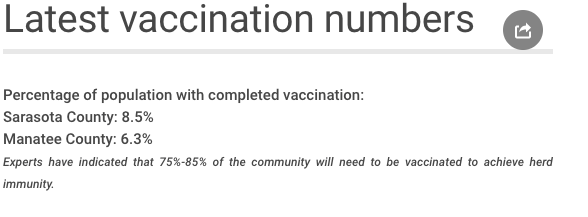
VENICE – Quietly over the past two weeks, paramedics with Venice Fire Rescue have been participating in a state pilot program to administer COVID-19 vaccines to homebound residents.

On Tuesday, Venice Fire Rescue Chief Shawn Carvey told the Venice City Council that paramedics have been administering between 10 and 20 doses per day.

“We’re the only department in this area that works under that program; we’re very fortunate to be part of that program,” Carvey said.

“The feedback from the community is, we’ve received happiness and tears,” he added.

As part of the process, Carvey said Venice Fire Rescue reached out to different community leaders, including the Central Venice Coalition and other homeowners associations the department regularly visits as part of its community outreach to establish a list of qualified homebound recipients.

“We have liaisons that our department works with at a lot of those different associations,” Carvey said. “They started emailing us lists of people that may be or definitely are homebound.

Fire Department administrative assistant Tammy Short has been calling people on that list to determine eligibility.

“We look for people who are physically unable to make it to a vaccination site,” Carvey said. “It may be because you’re wheelchair-bound or you’re severely immunocompromised so you can’t get there.”

He added that someone who simply doesn’t have a car would not qualify, since there are other ways to get to a vaccination site.

Also, “if somebody is homebound and they’re under 65, they do qualify for this program,” Carvey said.

Now that Short has established a list of questions and criteria to determine whether someone is homebound, Carvey said individuals can call the main administration number at 941-480-3030 to be put on the list.

Venice Fire Rescue is the only department in Sarasota County that’s enrolled in the pilot program.

“We’ve spoken to other departments around this area; they’re definitely looking at doing something like this,” Carvey said.

The vaccine doses Venice receives are part of 1,500 shots a week that Gov. Ron DeSantis set aside for the pilot program.

Carvey said the city had been working with the Florida Department of Health Emergency Medical Services System.

“Maybe I called at the right time and we were selected,” he added.

Carvey was told that only four or five departments are enrolled in the program, including departments in Miami Dade and Palm Beach counties.

Carvey said Venice currently has between 40 and 60 doses left and has already put in for an additional 100 to 200 doses.

“We know there’s a bigger need than 180 right now,” he added.

Once the state allocates the first doses of vaccine, it automatically sets aside the second dose too, Carvey said.

So far, the city has received doses of the Moderna vaccine.

A firefighter/EMT and paramedic use the fourth ambulance Venice acquired once it took over EMS service in October to visit homebound patients, so the city’s overall emergency response system is not diminished.

Earle Kimel primarily covers south Sarasota County for the Herald-Tribune and can be reached at earle.kimel@heraldtribune.com. Support local journalism with a digital subscription to the Herald-Tribune.

Is Now A Good Time To Change Careers? MoreWorkers Are Feeling Good About It.

In an exclusive ‘Fast Company’-Harris Poll, 59% of middle-income workers said they’re thinking about changing jobs. Remote work continues to be a draw.

Last year changed everything for workplaces across America. But now that 2020 is finally behind us, changes are still afoot. They’re just more self-directed.

A new survey conducted by Harris Poll exclusively for Fast Company found that the majority (52%) of U.S. workers are considering a job change this year, and as many as 44% have actual plans in place to make the leap.

As for who’s contemplating a job hop, the most likely candidates were those whose annual household income is between $50,000 and $75,000 (the middle-income bracket). Fifty-nine percent of those individuals said they’ve thought about making a switch.

Prior to the pandemic in 2018, 51% of workers were planning to change jobs that year according to data from Statista.

But the poll indicated that even more managers and highly skilled workers are prepared to change jobs. Close to half (48%) of six-figure salaried workers are plotting their switches and as many as 66% of them are feeling more confident about their decision to change jobs than they did six months ago. Across the board, 21% of workers surveyed felt there were “better opportunities available to [them] at other companies.”

And those opportunities aren’t just found in steps up the corporate ladder. As the jobs market continues to rebound, it’s safe to say that the great remote work experiment thrust upon many American workers last March has changed perceptions about where they want to work. Flexibility is in high demand for workers looking for new positions.

Remote work and work-from-home options are valued by 68% of currently employed workers, and 43% of women asserted that these options are “very important,” versus 33% of men. Eighteen percent of workers said they’d prefer to have more flexible hours in a new job.

By Lydia Dishman for Fast Company

Co-op and Condo Boards Must Not Succumb to Pandemic Fatigue

William D. McCracken for Habitat Magazine

Pandemic fatigue is real. My family and I have been lucky in that none of us has gotten sick so far, but I still had a moment of grim contemplation when we started planning for our daughter’s eighth birthday for March – the second consecutive birthday she will spend in lockdown.

My colleagues and I have heard similar stories from our co-op and condo clients. Recent weeks have been particularly hard, probably a combination of the cold, dark days, the cross-currents of anxiety about the new virus variants and the stuttering rollout of the vaccines – plus the sheer mounting toll of time and loss.

The symptoms are showing. We’re getting more and more reports of residents resisting mask-wearing mandates and asking for pandemic protocols to be watered down. However, with all sympathy to frustrated residents suffering from acute cases of pandemic fatigue, now is not the time for co-op and condo boards to relax efforts to combat the virus. On the contrary, boards should consider tightening rules for what we can reasonably hope to be the final surge of the virus this spring.

One request we have heard repeatedly is for gym spaces to be re-opened, but we have cautioned boards about doing so. First, the science is clear that the virus transmits most efficiently in poorly ventilated indoor spaces, which describes most gym spaces very well. Second, in order for gyms to operate in compliance with the law, there are significant expenses required to get them cleared for reopening, and then to continuously monitor and clean them after they are opened. Safety aside, the end result is likely to be that the building incurs significant expenses for something that relatively few people will use.

Time to pick and choose. Boards also should not be relaxing any rules in place on visits or deliveries, because every close contact that can be avoided will reduce transmissions of the virus. On the other hand, for those buildings that have closed their terraces and roof decks of significant size, they might consider re-opening them. The same science that says that indoor spaces are risky says that outdoor spaces are relatively safe, at least with masking and social distancing. And access to outdoor space is likely to help alleviate pandemic fatigue.

Speaking of masks, boards should make sure that management is strictly enforcing existing mask mandates. Even those rules might not be enough with the new, more transmittable virus variants circulating. In fact, people are increasingly trading in cotton masks for medical-grade masks, or even “double masking.” Although boards might not want to issue such a requirement to their residents, they might at least consider upgrading the quality of masks supplied to staff.

Boards should also encourage vaccinations. Obviously, boards cannot force their residents to get vaccinated or make vaccination appointments for them, and even requiring staff to get vaccinated is potentially problematic. But anything that will help achieve mass vaccination is worth doing. This could include things as simple as posting information about vaccination sites, or providing paid time off for vaccination appointments and incentive pay to staff members who get vaccinated.

For co-op and condo boards and residents suffering from pandemic fatigue, I encourage you to hold the line a little longer. If the authorities can work out the logistical problems with the vaccines and convince enough people to get them when available – and if boards can help facilitate the process – we may be able to finally get out of this pandemic before too much longer. Continued vigilance is a must. Relaxing now is not an option. It’s true what they say: no rest for the weary. 

William D. McCracken is a partner at the law firm Ganfer Shore Leeds & Zauderer. He can be reached at wmccracken@ganfershore.com.

Poll: 56% of US workers say they’ll get a COVID-19 vaccine

By Katie Clarey for HR Drive

Dive Brief:
  • Fifty-six percent of employed adults said they would get a COVID-19 vaccine if available to them, according to the Feb. 3 results of a Morning Consult survey of 16,970 employed U.S. adults, conducted between Oct. 29, 2020, and Jan. 29, 2021. That figure rose to 61% during the survey’s final week.
  • Workers in higher education were the most likely to report they’d sign up for a poke in the arm, with 77% saying they would be willing. Willingness reached a low among food and beverage workers, at 47%.
Katie Clarey/HR Dive, data from Morning Consult 
  • The firm’s most recent weekly report found lower willingness rates among women, people without higher education and respondents from rural areas. Black and Hispanic respondents were less likely to say they’d get a vaccine as well.

Dive Insight:

Vaccine incentives may boost workers’ willingness to get vaccinated, but employers say they need need clarity over how incentives such as cash awards may interact with anti-discrimination laws.

Morning Consult’s findings closely mirror a January poll from analytics firm Perceptyx, which found that 53% of 1,000 U.S. workers would “likely” consent to a vaccination if one became available.

The Perceptyx poll indicated employer incentives may encourage more workers to receive a vaccine. Fifty-six percent said they would get vaccinated if they were encouraged by their employers. And 60% said they would line up for a shot if their employers offered a $100 award.

Several household names have announced plans to tie bonuses to vaccines. Kroger, for instance, announced it will give a $100 one-time payment to workers who get the vaccine. 

It’s questionable whether such incentives will play nice with anti-discrimination laws. The Society for Human Resource Management and 41 other business groups asked the U.S. Equal Employment Opportunity Commission to clarify “the extent to which employers may offer employees incentives to vaccinate” without infringing upon the boundaries established by the Americans with Disabilities Act and other laws in a Feb. 1 letter.

Some employers have opted to incentivize vaccinations by offering workers paid time off to receive the vaccine and deal with any side effects. McDonald’s, for example, said it will give workers at company-owned restaurants four hours of PTO, and Chobani announced it will cover up to six hours of time for employees to receive the vaccine.

Incentives involving PTO are less of a concern for employers; in fact, some state and local laws may require employers to provide PTO for workers to recover from the side effects, according to management-side attorneys.

How COVID-19 has us doing more in less time

New research suggests that productivity for some remote workers has risen since 2019—and identifies what part of the week is the most productive.

By Stephanie Vozza for FAST COMPANY

Could the office be detrimental to our productivity? Since many companies shifted to remote working arrangements, workday hours have shrunk, however employee productivity remained steady and even increased, according to data collected by Prodoscore, provider of employee visibility and productivity intelligence software. Looks like we’re accomplishing more in less time.

The study found that calendar time had dropped nearly 23% compared to the year prior, registering an average of 116 minutes of productive time per day. However, productivity levels from May to August 2020 were up 5% compared to the same timeframe in 2019.

Prodoscore also pinpointed when its users are getting more done, with the window of greatest productivity from 10 a.m. to 1 p.m. Tuesday is the most productive day of the week, followed by Wednesday and Thursday. And it’s no surprise that productivity is the lowest on Friday.

The data challenges the assumption many managers had pre-pandemic that employees would be less productive when working from home than they are in an office, says Tom Moran, Prodoscore’s chief strategy officer. “Leaders adapted quickly, offering flexibility for their workforce,” he says. “With fewer in-person meetings eating up their day, employees have more opportunities to be productive. The cut down on interruptions allowed more time for executing. Employees could get more done in a shorter period of time.”

BUT THERE’S BAD NEWS

Flexibility does have a downside. Working hours may have declined, but the Monday-through-Friday workweek became a thing of the past as more employees put in time over the weekends. The study found that employees worked 42% more on Saturdays and 24% more on Sundays in 2020 than they did on those days in 2019.

The always-on mentality can lead to burnout, and managers should be aware. “People torching out is a reality,” says Moran. “Companies need to keep the humanity piece top of mind. It could come back to taking a digital detox, empowering employees to walk away when they need to reset their digital health. Organizations need to make sure their employees feel comfortable disconnecting.”

For example, Moran suggests combating Zoom fatigue by having occasional “walkie-talkie” sessions instead of video conferences, connecting with team members during a walk outdoors.

“Look for ways to stay real and stay present as a human,” he says. “What’s challenging with video is that it can become robotic. It can feel that our personal life and our work life are not separate, but they were never really separate. When something bad happens at home, it often carries over into work, and a bad experience at the office carries into your personal life.”

KEEP THE PRODUCTIVITY MOMENTUM GOING

Once companies start returning to the workplace, leaders can take the lessons they learned during the pandemic and use them to develop a high-performance culture for their unique workforce. “Culture isn’t esoteric,” says Moran. “It’s not a physical space. It’s how employees engage and come together in a real way for common objective”

Having the workforce together can provide a false sense of collaboration benefits, says Moran. “Some people operate more efficiently at home while others may do better on-site or at a Starbucks,” he says. “Understanding where people are most productive can empower employees to do what’s best for them by in the environment of their choice.”

It’s important to remember that people join company to be part of something bigger than themself. “Leaders who have this awareness can have a new way look at their workforce,” says Moran. “If technology is leveraged in the right way, it helps organizations overall with continuance of culture.”

Co-ops and Condos Can Get Electric Car-Charging Stations for Free

By Bill Morris in Green Ideas/New York State for HABITAT magazine

Electrification – it’s a word that should be in the vocabulary of every co-op and condo board member. It describes the coming shift away from fossil fuels to the electrical powering of just about everything, from building heating and cooling systems to public transit networks to private motor vehicles. In order to combat climate change, that electricity will have to come from green – that is, renewable – sources, including solar, wind, geothermal and possibly even nuclear power plants.

In a major pivot toward electrification, General Motors recently pledged to stop making gasoline-powered passenger cars, vans and sport utility vehicles by 2035. With nearly 20 million electric vehicles (EV) expected to be on the nation’s roads in the next decade, New York State has just released major new incentives that will cover up to 100% of costs for EV charging stations at both privately and publicly accessed facilities, including garages and outdoor parking areas in co-ops and condos. 

“This is a big deal,” says Michael Scorrano, the managing director at En-Power Group, an engineering and energy infrastructure company. “The state is trying to take the angst away from people who are hesitant to buy an electric vehicle.”

En-Power Group is a state-approved contractor that can secure the incentives and oversee the installation of all infrastructure, software and hardware at an EV charging station. The incentives come from two sources: Con Edison’s EV Make-Ready Program, which covers infrastructure costs, including wiring; and the New York State Energy Research & Development Authority’s Charge Ready NY Program, which pays for the charging ports.

“The problem for multifamily buildings that have EV charging stations is that they need to be able to recoup the cost of the service,” Scorrano says. “The software measures the amount of electricity used to charge each vehicle. We can handle all aspects of the process – scoping out the property’s infrastructure, filing applications, hiring licensed electricians and overseeing installation of the charging ports along with the software that will recover the cost of charging every vehicle.”

The incentives in the new state program cover from 50% to 100% of the infrastructure and installation costs. The level of incentives depends on such factors as whether the charging facility will be public or private, if it contains generic or proprietary chargers (such as those required for Tesla vehicles), and if the facility is located within one mile of a “disadvantaged” neighborhood. According to Con Edison maps, virtually all of New York City meets this last criterion.

As Scorrano points out, the incentives are designed to encourage more drivers to buy electric cars. The state wants 850,000 “zero-emission vehicles” on the road by the end of 2025; there were about 17,000 in 2019, according to The Albany Business Review. Gov. Andrew M. Cuomo also wants EV charging stations at every rest area on the New York State Thruway by the end of 2024.

New Vaccine Management Solutions Rolled Out

By Dave Zielinski

HR technology vendors have unveiled new vaccine management solutions designed to help HR leaders track the immunization status of their workers, monitor vaccine supplies and assess the shifting COVID-19 risk status across their organizations. Workday, ServiceNow and Salesforce are among vendors that have released tools that combine vaccination information with HR data to help leaders improve workforce planning during the pandemic.

Creating Online ‘Command Centers’

Workday’s solution allows HR leaders to evaluate vaccine availability and worker vaccination status along with enabling employees to confidentially self-report vaccination information, said Barbry McGann, executive director, Office of CHRO Solution Marketing. The technology features vaccine management dashboards and compliance reports to track vaccine supply and distribution and can monitor the health and safety of workers by job profile, vaccine prioritization groupings, location and more, McGann said. 

Companies using Workday’s analytics software can pull in immunization data from third-party systems, like the U.S. Centers for Disease Control and Prevention or the World Health Organization, that can be combined with real-time HR data and immunization information for more-informed insights.

“HR leaders can use the solution for scenario planning, to prioritize immunizations, and to reopen and bring eligible and immunized workers back to the workplace,” McGann said. Such planning helps model factors like office space demands, personal protective equipment needs and workforce availability.

ServiceNow, which provides cloud-based platforms that automate HR processes, also has released a new solution designed to help organizations streamline their COVID-19 vaccination campaigns. The solution promises to address the challenges of vaccination at large volumes, which includes distribution, administration and monitoring of the vaccine.

The application creates a “command center” of sorts on ServiceNow’s existing platform that deploys self-service tools to enable vaccine recipients to gather information, schedule appointments, and receive pre-visit information and appointment notifications from vaccine providers.

The technology also can send appointment reminders to employees, notify organizations when more COVID-19 vaccines are available and communicate when new segments of the population are being prioritized for vaccination.

“Distributing, administering and monitoring vaccinations is the greatest workflow challenge of our time,” said Bill McDermott, president and CEO of ServiceNow.

Salesforce, a customer relationship management platform, also announced a new vaccine management solution to help organizations more efficiently and safely manage vaccine programs at larger volumes. Called Vaccine Cloud, the technology allows government agencies to monitor their vaccination progress with improved data and insights, including securing enough doses and monitoring patient outcomes; helps healthcare organizations streamline vaccination processes such as inventory management, staff training and education; and enables businesses to use a simplified registration and appointment scheduling process, personalized communication and reminders about second shots for employees. The solution also will let people choose whether to share their vaccination or health status, which can help bring employees back to offices.

Data Privacy and Security Issues

Experts say using these technologies to collect, store and analyze employee vaccination data comes with legal risks and requires appropriate care in handling.

“Whatever tool is used, employers should be careful to ensure that in receiving the vaccine data, they are not also receiving other medical information from or about employees,” said Adam Sencenbaugh, a partner with law firm Haynes and Boone in Austin, Texas.

Sencenbaugh said in collecting vaccine-related data, employers should ensure that whatever technology or process they use isn’t making any disability-related inquiry covered under the Americans with Disabilities Act.

“The Equal Employment Opportunity Commission has stated that simply asking for proof of receipt of a vaccine is not such an inquiry, but further questions, such as asking why an employee did not or perhaps could not receive a vaccine, might be,” he said.

Elisa Lintemuth, an employment attorney with Dykema Gossett in Grand Rapids, Mich., said organizations using vendors to manage and track vaccine information should be mindful of state data privacy laws. “We recommend that employers securely store immunization records in confidential medical files separate from personnel records,” she said.

Dan Clarke, president of IntraEdge, a privacy compliance platform in Chandler, Ariz., said it’s important that organizations keen on collecting and monitoring employee vaccination data not overlook such data privacy and security issues.

“Vaccine data should be treated as sensitive medical information, and companies need to remember they have to comply with specialized COVID-19 laws in addition to existing data privacy and security regulations,” Clarke said. “Tracking and storing vaccination records is more complex than simply asking employees whether they’ve been vaccinated or not.”

Dave Zielinski is a freelance business writer and editor based in Minneapolis.