CAMICB is a more than 25 year old independent professional certification body responsible for developing and delivering the Certified Manager of Community Associations® (CMCA) examination. CAMICB awards and maintains the CMCA credential, recognized worldwide as a benchmark of professionalism in the field of common interest community management. The CMCA examination tests the knowledge, skills, and abilities required to perform effectively as a professional community association manager. CMCA credential holders attest to full compliance with the CMCA Standards of Professional Conduct, committing to ethical and informed execution of the duties of a professional manager.
The CMCA credentialing program carries dual accreditation. The National Commission for Certifying Agencies (NCCA) accredits the CMCA program for meeting its U.S.-based standards for credentialing bodies. The ANSI National Accreditation Board (ANAB) accredits the CMCA program for meeting the stringent requirements of the ISO/IEC 17024 Standard, the international standards for certification bodies. The program's dual accreditation represents compliance with rigorous standards for developing, delivering, and maintaining a professional credentialing program. It underscores the strength and integrity of the CMCA credential.
Privacy Policy: https://www.camicb.org/privacy-policy
Habitat Magazine:; The co-op board at 31 E. 72nd St. has sued a shareholder, claiming she’s a hoarder.
Responding to every co-op and condo board‘s worst nightmare, the board at 31 E. 72nd St. is suing 86-year-old shareholder Joan Disse, alleging evidence of hoarding, a rodent infestation and a water leak that damaged the ceiling, The New York Post reports.
Disse has owned the one-bedroom apartment since 1965 but has not lived in it for years. Documents filed in the lawsuit include a “friendly hand-written note” by the co-op board’s president, Guy Maitland, who is also Disse’s neighbor on the floor, “inquiring if the defendant needed assistance to remedy the situations at issue in this lawsuit.” Other court documents include photos of the interior of the apartment showing stacks of books, boxes of clothing and household goods and other possessions that make the rooms virtually impassible.
Maitland’s note says the ceiling has “extensive damage from leaks,” and the unit is “in a very unsanitary and unhygienic state. Sooner or later, there will most likely be an intervention by the fire department, which has gotten more intensive in its enforcement measures over recent years.”
The co-op’s lawyer, Deborah Koplovitz, a partner at Herrick Feinstein, did not return messages seeking a comment.
Maitland’s note went unanswered by Disse last summer, the lawsuit says. It claims that Disse, who has “apparently left the apartment vacant for many years,” is required to maintain the interior in good repair, but is instead “keeping it as a quasi-storage facility.”
The board wants to send its own crew to clean up if Disse won’t — and is also seeking access for quarterly inspections. But a building’s super or staff, even if they have keys, cannot enter and clean up without the owner’s permission unless there’s an emergency, says Adam Leitman Bailey, a real-estate lawyer not connected to the case.
Disse says she has kept up with maintenance payments and assessments, but has not lived full-time in New York for at least a dozen years, having returned to her native St. Louis to care for her elderly stepfather and mother, both now deceased. Her mother died in 2010 at age 97. After that, Disse said, “I would go to New York for a day or two and that would be all. A day in New York would make you really happy if you live in the Midwest.”
A bill introduced in the Texas House last week would prohibit homeowners associations from restricting what forms of payment landlords can accept, including Section 8 Housing Choice Voucher payments.
Filed by Rep. Chris Turner, D-Grand Prairie, the bill would amend Section 202 of the Texas Property Code to prohibit associations from enforcing provisions that limit, or have the effect of limiting, allowed forms of payment. The bill explicitly includes payment made in whole or part by a voucher or any other federal, state or local housing assistance or subsidies.
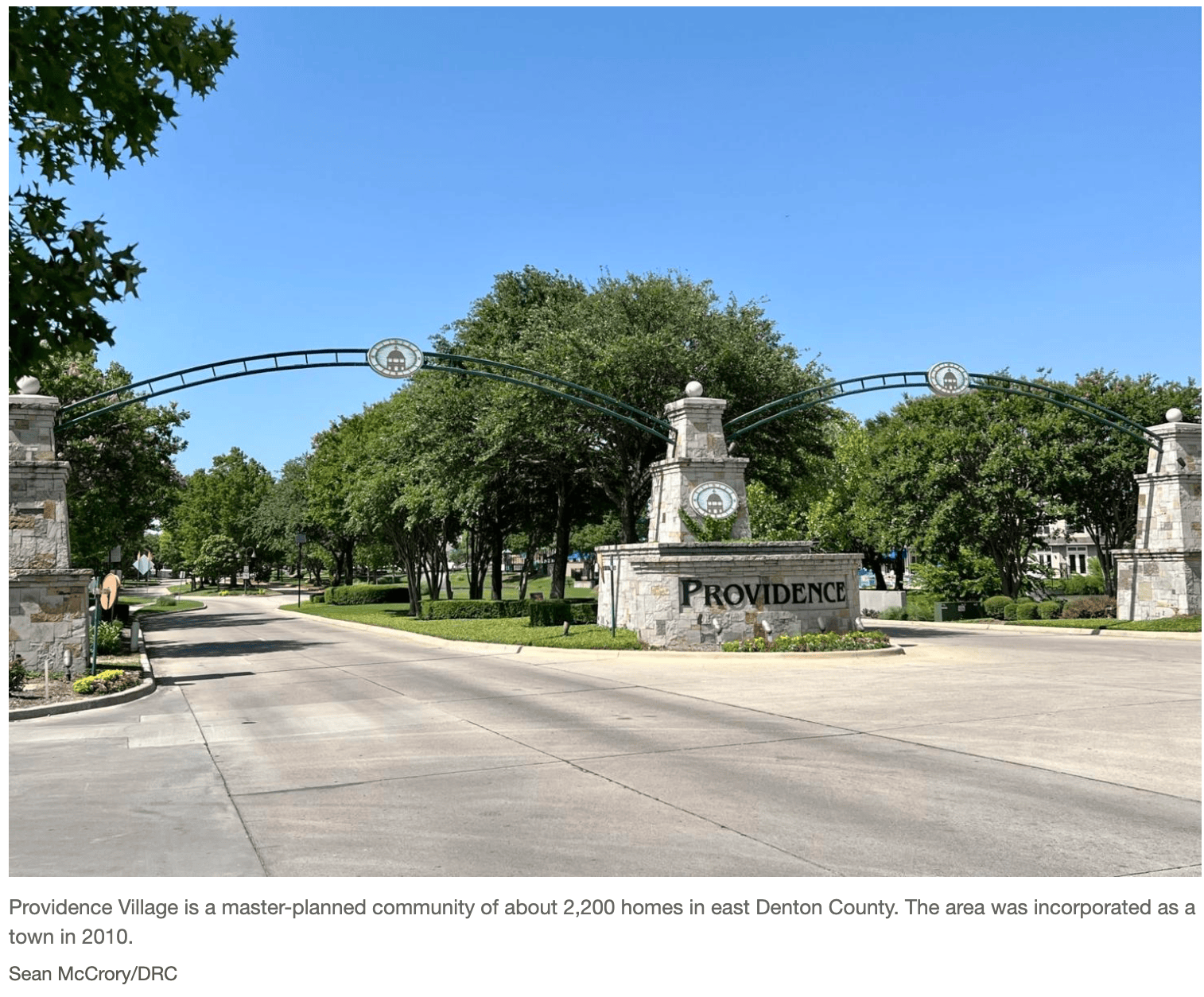
The controversial rules originally set would fine landlords with Section 8 tenants $300 weekly until the renters were ousted, but after public backlash, the association announced tenants would be allowed to finish their leases.
Implementation of the Section 8 ban and other provisions of the leasing rules were halted altogether in August pending an investigation launched by the U.S. Department of Housing and Urban Development into whether the rules violate the Fair Housing Act, which prohibits discrimination based on race and other factors.
More than 157 majority-Black households in Providence Village stood to be impacted by the rules, with at least one family saying they were forced into a motel in anticipation of the ban.
In the last legislative session, Turner was chair of the Texas House’s Business & Industry Committee, which traditionally handles landlord-tenant relations, HOAs and real estate. After following the developments out of Providence Village, Turner brought up the issue during an interim committee hearing last September relating to the implementation of Senate Bill 1588, which also governs homeowners associations. Turner gauged any possible opposition to a future bill with a representative for the Texas Legislative Action Committee, which represents homeowners associations, and none was anticipated by the representative.
“HOAs have a valuable role to play in a lot of neighborhoods — I live in an HOA, and I think my HOA does a good job — but an HOA should not have the ability to interfere in a property owner’s private lease agreement with a renter,” Turner said. “We have in Texas, unlike in other places, a shortage of housing, and affordable housing in particular. So if someone qualifies for a housing voucher through HUD, they have the right to use the voucher to live where they want to live, provided they can cover the expenses.”
Other HOAs also could stand to be impacted by the bill if it passes — Savannah has had a similar ban on the books for years. Proponents of the bans in both neighborhoods say an uptick in violent crime they associate with voucher recipients has underscored their support for the leasing rules.
Once the House speaker appoints committees around early February, the bill would move to a hearing and committee vote before it could be scheduled for a House floor debate. Though most bills never make it into law, Turner hopes his colleagues will agree the issue is a straightforward one.
“This is, I think, a very simple bill; it’s very clear-cut,” Turner said. “It’s a private property rights issue — you can’t have a third party dictating to a property owner what sort of payment they can accept or not accept to lawfully rent their property. If we saw this practice continue, it sets a dangerous precedent, and I think it’s contrary to federal law — I think it would be very problematic for our state.
“I hope that my colleagues will see this bill is simply a matter of common sense and one that safeguards the rights of not only tenants, but also property owners.”
If passed, the law would take effect Sept. 1.
No updates have been released by HUD or Providence HOA as to whether the investigation remains ongoing. A July lawsuit brought by High Opportunity Neighborhood Realty, which leases 21 properties in the neighborhood including to voucher recipients, is also ongoing. Mediation is set to be complete by Feb. 20, and a final pretrial conference is set for Aug. 31.
One in 2 employees only feel “somewhat valued” and 1 in 10 don’t feel “valued at all,” according to a January 2023 report by Workhuman. In its monthly Human Workplace Index, 46.4% reported the former and 10.7% reported the latter.
Notably, 48.8% of women surveyed said they feel undervalued.
Additionally, at a rate of 49.3%, workers of color were more likely to tell Workhuman they felt undervalued compared to the average.
Dive Insight:
Based on emerging data, it’s no surprise that people of color and women are feeling exceptionally undervalued. Not only are burnout and financial anxiety on the rise — insights put forth by isolved’s 2023 HR trends report — but companies are starting to demonstrate a lack of care regarding diversity, equity and inclusion.
A Glassdoor DEI audit published at the end of 2022 suggested that the DEI progress ignited by the police shooting deaths of Breonna Taylor and George Floyd — and the subsequent corporate antiracism conversations — has started to flicker. A chief economist for the job review company observed to HR Dive that “noncore functions” like HR, learning and development, and DEI are among first areas of business to suffer during economic decline.
Workhuman researchers noted the same, saying, “As economic uncertainty continues into the new year, these DEI initiatives are often some of the first to go, making this an invaluable opportunity for forward-thinking organizations to stand out amongst their competitors.”
Instead of letting DEI fall by the wayside, Workhuman experts suggested applying pressure. “Prioritizing an authentic culture of diversity, equity, inclusion, and belonging” is a solution for employees feeling undervalued, they said. This shift in talent strategy may have benefits that outlast the recession and the Great Resignation.
Researchers added, “A place where employees don’t feel valued likely isn’t a place they want to return to.”
Free Online Resource Helps Candidates Successfully Prepare For The CMCA Exam
By Madeline Hay, CAMICB’s Manager of Exam Administration
Underscoring a quarter century of commitment to professionalism and excellence in community association management, CAMICB is excited to continue to celebrate the organization’s 25th Anniversary with the launch of a free, interactive online CMCA Exam Preparation e-Learning course.
The three-hour course, featuring a series of eight modules, is divided into two components. The first component features four learning modules focused on creating an examination review and preparation plan. The second component includes three scenario-based learning modules that are designed to put several of the knowledge areas tested on the CMCA examination in context using real-life scenarios. The three modules address knowledge areas that are challenging for many CMCA candidates: Risk Management & Insurance; Financial Controls; and Governance, Legal & Ethical Conduct. A final module is intended to offer some perspective on the exam preparation process and next steps.
Said Chair of the CAMICB Board of Commissioners Drew Mulhare, CMCA, AMS, LSM, PCAM, “CAMICB is always working to identify new tools to help CMCA candidates succeed on the exam. We’re excited to launch the CMCA Exam Prep e-Learning course – a free resource intended to put candidates on the path to the CMCA credential.”
The Course Modules
The exam preparation modules offer constructive test taking tips, discuss the composition of examination questions, give preparation advice, and provide an interactive self-assessment tool to help a candidate develop a study plan specific to that candidate’s needs and goals. The content-based modules ask the candidate to solve problems and answer questions using downloadable sample documents.
Each module takes approximately 10-25 minutes to complete. The course is designed to accommodate busy schedules and to allow candidates to work at their own pace, so they may stop and resume the modules as their schedule permits. Below is a brief description of the different modules and what candidates can expect.
Module 1: An Introduction
Learn what it takes to pass the CMCA exam. Get advice from working CMCAs about what worked for them as they were preparing for the test – and what didn’t. Find out some common misconceptions about the CMCA exam and uncover the key for understanding how to approach the exam questions.
Module 2: Devising a Study Plan, Part 1 – Prioritizing Topics
Discover how to establish and follow a solid study routine that’s tailored to your experience level. Get an in-depth look at the topic areas covered on the test and participate in a self-assessment exercise to determine which topics should be prioritized in your study plan.
Module 3: Devising a Study Plan, Part 2 – Strategies and Tips
Find out how to put your study plan into action. Learn practical tips and tricks to make the most of your prep time and take a closer look at some of the study resources available to you.
A recent course participant shared, “The study resources provided in the CMCA exam prep course are excellent. It gave me a much better understanding of what material to really focus on.”
Module 4: Test-Taking Strategies
Learn how to maximize your potential on exam day. Find out how taking practice tests can improve your performance on the exam, get some guidance on strategies to overcome test anxiety, and see what to expect when you go to the testing center.
Modules 5 and 6 use real-life scenarios that help you learn from detailed feedback. They also make use of downloadable sample files including Lakeside Terrace’s insurance declaration and financial documents to inform your decisions.
Said one course participant, “For me, the CMCA exam prep course was so much more effective than simply reading different texts.”
Apply your knowledge of risk management and insurance topics by putting yourself in the shoes of the community association manager for Lakeside Terrace Condominiums.
Module 6: Financial Controls – Refresher Content
Revisit your role as Lakeside Terrace’s community association manager as you encounter some scenarios that test key knowledge about financial controls.
Another real-life scenario allows you to visit Willow Grove Estates, where you have been hired as the association’s first community manager.
Module 8: Looking Back and Looking Forward
An opportunity to recall what you’ve learned and consider what you want to keep working on.
At CAMICB, we’re committed to offering a combination of study tools to enhance candidate performance. Therefore, we encourage exam candidates to develop a personal study plan incorporating a wide range of resources and reference materials. CMCA preparatory materials are all available online – most at no cost – to managers employed anywhere in the world. We’re thrilled to add our newest offering, the CMCA Exam Prep E-Learning Course, to our portfolio of resources.
Earning and maintaining this internationally-recognized credential propels a manager’s career forward, allowing for more advanced career opportunities and salaries that, on average, are 20 percent higher than non-credentialed managers. To get started and to learn more about the CMCA Exam Prep E-Learning course, visit www.camicb.org.
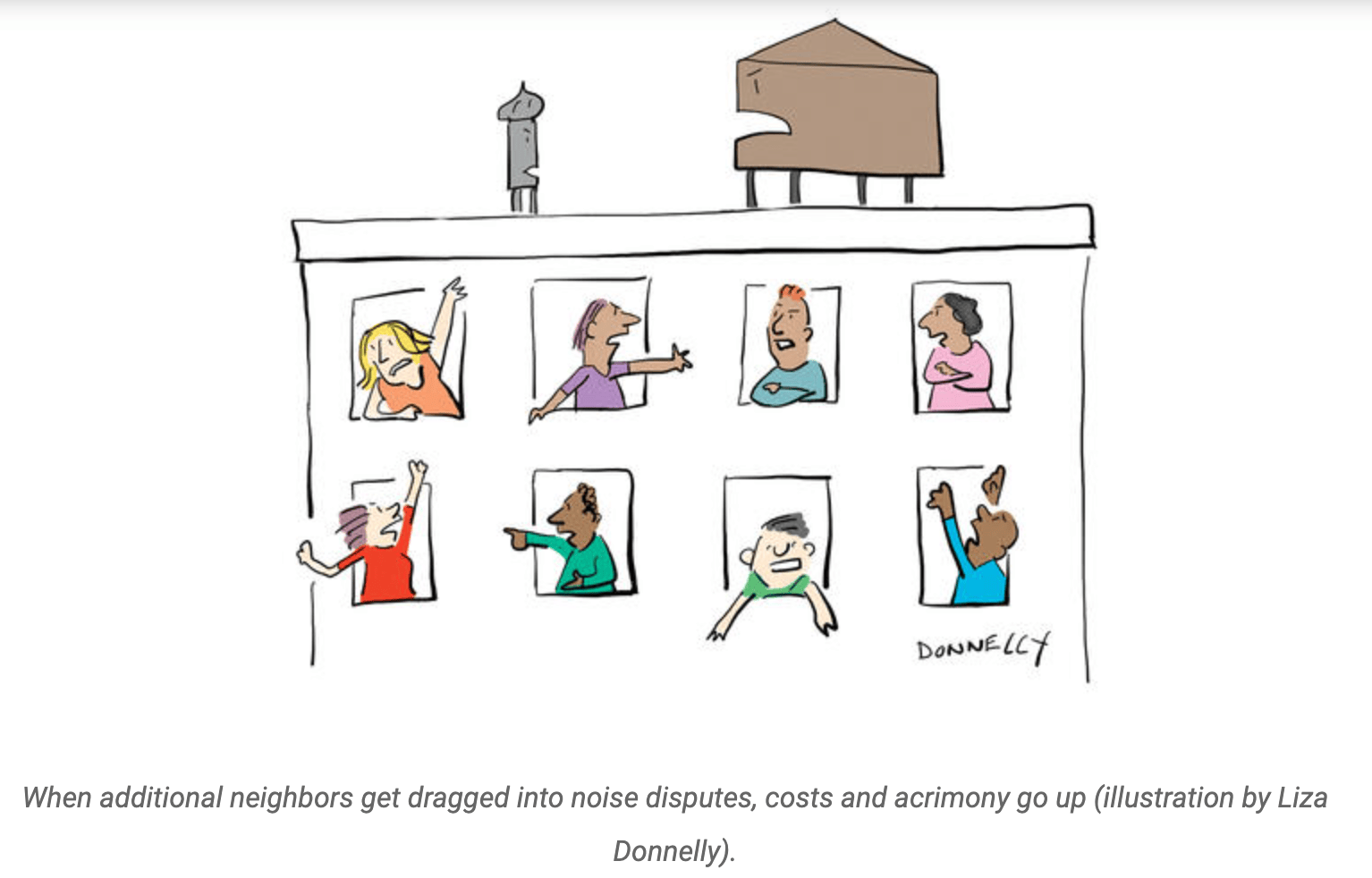
Fights between neighbors involving noise complaints are common in co-ops and condos, but when such disputes escalate into lawsuits, they do not often end up in the Appellate Division of the Supreme Court of New York. However, the case of Silverman v. Park Towers Tenants Corp. did just that. In addition, this case had a ripple effect when another resident was added as a third-party defendant and drawn into the fray.
Park Towers acts to evict.Michael and Deborah Toussie own an apartment in Park Towers, a co-op in Gramercy Park. Their daughter, Danielle Toussie, lived alone in the apartment. The Silvermans, who live next door, alleged that Danielle regularly played music too loudly and slammed doors, and that she and her parents engaged in harassing conduct. Based upon the Silvermans’ complaints to the co-op board and to management about the Toussies’ alleged objectionable conduct, Park Towers brought an eviction action against the Toussies.
A round robin of lawsuits. The Silvermans also brought an action against the Toussies for nuisance and against Danielle for intentional or negligent infliction of emotional distress. The Silvermans also brought an action against Park Towers for not stopping the activities of the Toussies. The Toussies counterclaimed for intentional and negligent infliction of emotional distress. The Toussies brought in as a third-party defendant another neighbor on the floor, Mei Yei Mak, who was a close friend of the Silvermans, claiming Mak contributed to their harassment. Then the Toussies brought an action against the co-op, claiming the board had no right to bring an eviction action against them based on the Silvermans’ false complaints.
Mak made a motion to dismiss the Toussies’ counterclaim, which alleged that she engaged in a “deliberate, systematic and malicious campaign of harassment and intimidation” against Danielle in concert with the Silvermans. The “campaign” allegedly included obtaining unauthorized access to Danielle’s private Instagram account, accosting and yelling at her in common areas, taking photos of her without her permission, and making false noise complaints about her to the board.
What happened in court.The court considered the various elements of a cause of action for intentional infliction of emotional distress: extreme and outrageous conduct; intent to cause, or disregard of a substantial probability of causing, severe emotional distress; a causal connection between the conduct and the injury; and severe emotional distress. The court stated that the conduct must be “utterly intolerable in a civilized community.” The court also noted that where an individual act may not qualify, a longstanding campaign of deliberate, systematic and malicious harassment is actionable.
The court held that while the Toussies alleged enough outrageous conduct so as to make their claims against the Silvermans plausible (though not yet proven), it rejected Mak’s motion to dismiss the harassment claims against her. Mak appealed the decision. The Appellate Division affirmed the Supreme Court ruling, with a modification: it held that the court should have dismissed the counterclaim against Mak for negligent infliction of emotional distress and only allowed the action for intentional infliction of emotional distress. The court held that since the Toussies did not allege that Mak had any legal obligations to them, the negligence claim must fail.
Lessons to be learned. When a board steps in to try to resolve an issue between residents, it might find itself named as a defendant. Likewise, if a neighbor gets involved by, say, sending correspondence to the board, the neighbor may also get drawn into the case. It is only logical to assume that the more parties added, the more time and money they will have to expend and that animosity will increase.
Attorneys:
For appellant: Erik Groothuis of counsel, Schlam Stone & Dolan, New York
For respondents: Bruce H. Wiener of counsel, Warshaw Burstein, New York
Andrew P. Brucker is a partner at the law firm Armstrong Teasdale. The statements and views in this article are his own and not necessarily those of the firm.
It’s a tricky dilemma for co-op and condo boards. A healthy reserve fund has always been a high priority, and in the wake of the Florida condominium collapse, lenders are scrutinizing those funds like never before. Yet a primary means for replenishing reserves — a flip tax on apartment sales — usually requires approval by a two-thirds super majority of shareholders or unit-owners, a dauntingly high bar.
Case in point: the board at a 118-unit co-op on Madison Avenue tried to pass a flip tax, also known as a transfer fee, four times without success. One of the main reasons the board continued to fail, says president Kathy Kahng, was the makeup of the building’s residents. More than half of the apartments were studios, and the average shareholder stayed about five years.
“If you know you’re only going to be here for a couple of years, what do you care about a transfer fee?” Kahng says. “Residents said, ‘Just charge me the assessment. I’m not voting for a transfer fee. I’m moving soon.’”
But in 2018, a confluence of events encouraged the board to try again. These included a mandatory building facade project growing in scope; more studio apartment owners buying neighboring apartments and combining them with their own, thus becoming more invested in the co-op’s long-term prospects; and the anticipation of an upcoming million-dollar elevator modernization project.
“We sent out letters, held meetings, knocked on doors and all that stuff,” Kahng recalls. But at the annual meeting the vote fell slightly short of the two-thirds of shares necessary for approval. With that result, the board changed its strategy. “We decided to focus on the 25 or 30 apartments that didn’t vote,” Kahng says
The board crafted a new message that carried a stick and a carrot. It told the shareholders that it was going to have to impose a hefty assessment to pay for the facade and elevator work, but if it could secure the votes of a few more apartments to approve the flip tax, the board would be able to reduce the assessment by 25%.
By Barbara Holland RJRealEstate.Vegas, Las Vegas Review Journal
Q: Our homeowners association has stated they will be increasing our monthly fees by 25 percent starting in January 2023. I reviewed our bylaws and CC&Rs and found that nowhere does it talk about increases or cap percentage. I reached out to the community manager asking him to direct me where this was stated. He responded with the following:
“The association’s bylaws and CC&Rs are silent in regards to a maximum percentage that the board of directors may increase the annual assessment rate. Nevada Revised Statutes are also silent thus the board of directors may increase the assessment to any level that they have deemed necessary to cover the association’s expenses.”
Is this correct? My understanding was that per Nevada NRS 116.3102 &116.311395 fees could only increase by 3 percent per year.
Please advise.
A: Nevada Revised Statute 116.3102 (o) (4) states that the fee must not increase more than 3 percent each year, but this section of the law does not pertain to assessments. If you read more closely the 3 percent maximum pertains to the opening or closing of any file for each year.
NRS 116.3115, .31151 and .31152 outline the requirements in establishing assessments and reserves. Assessments are to be made annually based upon an adopted budget. There are no NRS 116 laws that specifically regulate how much increase in assessments that an association could charge. In most cases, the association’s governing documents regulate the increase.
In your case, according to the community manager, the governing documents for your association do not have any restrictions as to the rate increase for assessments.
According to the U.S. City Average Consumer Price Index, in October 2012, the CPI index was 231.37 and in October 2022, the index was 298.012. This represents a 28.8 percent increase in the cost of living.
Here is the problem. boards do not like increasing assessments, period. Consequently, as the years went by where the CPI ranged around 1.5 percent to 2 percent each year, associations were falling behind as each year ended by not adjusting their assessments.. Now, to make the assessment adjustment, many associations are seeing large increases for 2023. More contractors are charging gasoline prices along with their service fees, which also have increased their labor costs. Forget about the issues of obtaining supplies in a timely manner or finding enough employees to service us.
As a footnote to my readers, expect significant increases in your assessments for 2023.
Q: Our homeowners association recently sent out a notice that it is raising our fees for the second year in a row, and it’s by $6 this time. The community I live in is actually two neighborhoods, and they have different names and very different set-ups. One neighborhood has larger homes with three- and four-car garages and private driveways. The other neighborhood consists of four homes that have a shared driveway (in which we are not allowed to park in the shared driveways or on the street without a paid permit). This increase in fees is a little ridiculous to me since the price for the shared driveways is being raised to $71.50 and the larger homes are only at $45. Is it allowed to have different fees for the same community? An almost $30 difference seems egregious and unfair. Especially because there are no amenities whatsoever.
Thank you for your help in advance.
A: Yes, legally there could be different levels of assessments.. There are many associations with multiple neighborhoods with different assessments depending upon their governing documents, For a more detailed response, you would need to send me a copy of the proposed budgets and that section in the CC&RS pertaining to assessments and shared operating costs.
Barbara Holland is an author and educator on real estate management. Questions may be sent to holland744o@gmail.com.
As I reflect back on my term as Chair of the CAMICB Board of Commissioners, I’m both proud and humbled by the work we accomplished over the past year. Updating, maintaining and validating the CMCA exam is a top priority for CAMICB and we recently concluded a Job Analysis Study – a vast research project used to identify the critical work functions carried out by CAMs and the knowledge and skills they need to work effectively. The project will culminate in a new CMCA examination blueprint. This enormous undertaking would not have been possible without an extraordinary Project Team that included 55 Subject Matter Experts, 20 of whom are from countries outside the United States, including the United Arab Emirates, Australia, Canada, South Africa and Spain.
This month, CAMICB was thrilled to support the 2022 IRECMS conference in Dubai alongside other international industry associations. With more than 40 international and local speakers and over 300 delegates and decision-makers in attendance, it was an action-packed couple of days. Speaking with, and hearing from, leaders in community association management from more than 10 countries resulting in lively discussions of ideas and creative solutions to propel the profession forward, was certainly a high point of my tenure as Chair.
Earlier this year, we adopted a new strategic plan with a number of exciting initiatives underway including a clear DEI philosophy with actionable items as well as a path to further the expansion of international delivery of the CMCA exam.
It’s been an honor and extraordinarily gratifying to serve as the CAMICB Board Chair and to work alongside so many of you in this incredible community of knowledgeable and dedicated managers. I’d like to recognize fellow board member Lori Loch-Lee CMCA, AMS, PCAM, whose term also ends this month, and whose unwavering support helped us achieve our goals.
Thank you all for your hard work, continued dedication and many contributions to our profession.
By Madeline Hay, CAMICB Director of Exam Administration
This summer we asked our vast community to participate in an important global survey of community association managers (CAMs) – and you did. More than 2,100 managers responded to CAMICB’s 2022 Job Analysis Survey that was sent to over 25,000 managers worldwide and ran from mid-June through the end of August. Thank you for taking the time to respond and share your experiences and insights.
Collection of this survey data is the cornerstone of a larger research project, known as a Job Analysis Study, which CAMICB conducts approximately every five years. The purposeof the Job Analysis (JA) is to identify the roles and responsibilities expected of early career CAMs as well as the knowledge and skills they need to perform those tasks successfully. The findings of the study are used to update the CMCA exam structure and content as necessary to ensure relevance to the community association management field of practice.
An overview of the team and methodological approach
To ensure broad representation from the profession, our Job Analysis Project Team included 55 Subject Matter Experts (SMEs), 20 of whom are from countries outside the United States, including the United Arab Emirates, Australia, Canada, South Africa and Spain. In addition, the project team consisted of entry-level and experienced CAMs familiar with the tasks and knowledge expected of early career managers as well as current professional issues.
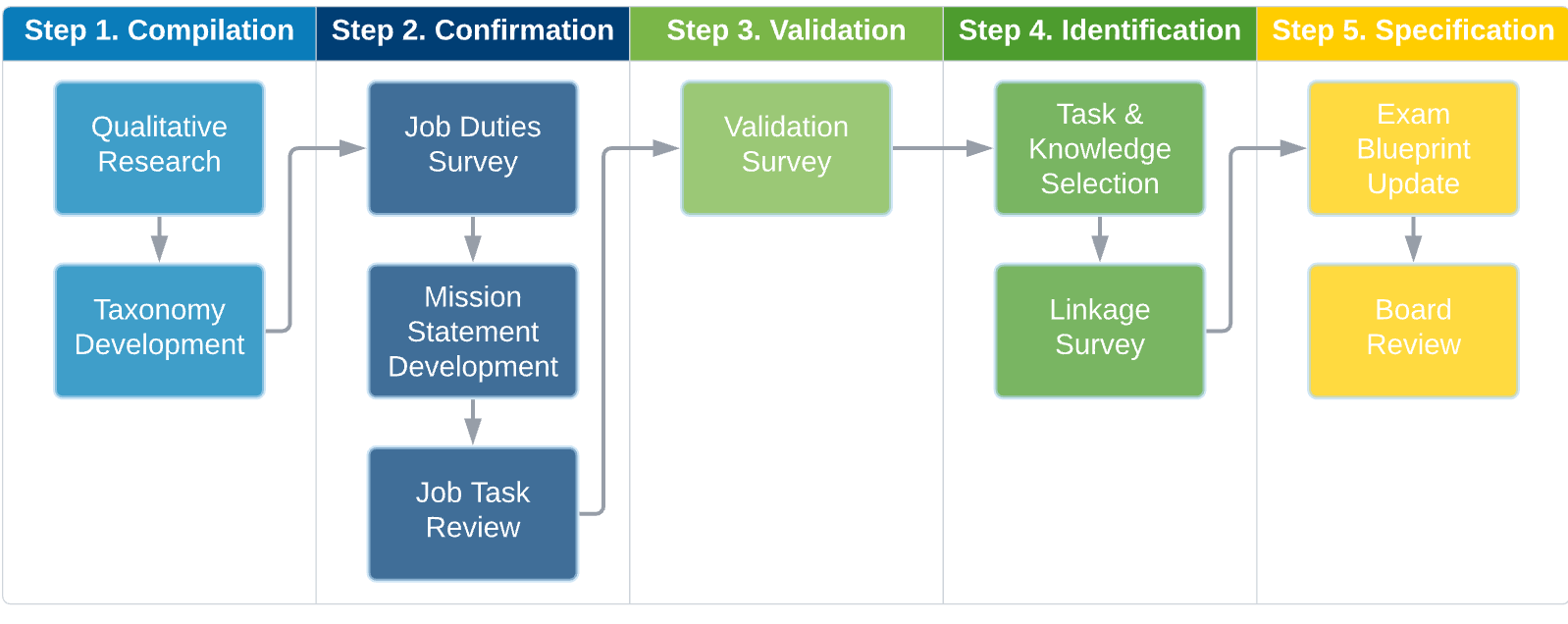
It’s important to note that there were more than a dozen significant steps and qualitative research tasks conducted before developing and administering the Job Analysis Survey. The JA Team started by analyzing over 100 primary sources (training manuals, job descriptions, legal documents, research articles, etc.) to establish a preliminary framework of the job requirements that may be expected of a CAM. From there, they spent 10 months analyzing the types of job tasks and knowledge that early career managers need and classifying them into seven performance areas that describe the major operational aspects of the job.
Using the JA Survey responses collected from thousands of managers around the world, the project team identified which of these tasks are performed most often by early career managers and which are most important to success on the job. The tasks that survey respondents identified as the most common and critical were selected as the tasks that will be tested on the updated CMCA exam.
After finalizing the task list, the JA Team connected each task statement with the knowledge required to perform them competently. The resulting product is a comprehensive examination framework that details the tasks and corresponding knowledge that are expected of a Certified Manager of Community Associations.
As the final step of the study, the JA Team convened for a two-day working session to determine what percentage of the exam should be allocated to each performance area. These percentages will be stated in the forthcoming exam blueprint that will provide the structure and layout for the CMCA exam over the next five years.
Next steps – bringing a new exam form to fruition
To recap, the job analysis study is a research project used to identify the critical work functions carried out by CAMs and the knowledge and skills they need to work effectively. The final product of the study is the CMCA exam blueprint, a document that identifies which knowledge and skills will be measured by the exam and the proportion of the exam allocated to each performance area. After more than 16 months of work, the Job Analysis Study concluded in early December when the CAMICB Board of Commissioners approved the updated CMCA exam blueprint. The team will now carry out the practical steps to update the CMCA exam content to match the new blueprint. The following are some of the steps that will take place throughout 2023 and into 2024:
Item Development: Using approved source materials, the Project Team will draft new exam questions to assess the content areas on the exam blueprint. SME panels will conduct multiple reviews to evaluate the technical quality, fairness, and content validity of the items. The items that pass reviews will then be pilot tested to collect response data and those items that meet all statistical performance standards will be eligible for use on future forms of the exam.
Passing Score Study: CAMICB will conduct a passing score study to update the performance standard established for the CMCA certification program and, subsequently, update the minimum score required to pass the exam (i.e., the “cut score”).
Exam Publishing: CAMICB will publish the new exam blueprint well in advance of updating the exam forms, so that candidates have time to familiarize themselves with the changes they can expect to see in the exam content.
This extremely comprehensive process speaks to the importance the CAMICB Board of Commissioners places on conducting the CMCA program in full accordance with best practices in professional credentialing. We take this responsibility to the profession seriously and are extremely proud of the work we do to continue to establish the credential as a baseline for building the profession worldwide, placing the CMCA credential in an elite cohort of professional certification programs.
Leaders know that every person needs something a little different from their supervisors. Great leaders adjust their leadership approaches to customize to what their people need. Some people need more encouragement, while others need to be left alone.
Some people need frequent feedback, while others don’t like or need much direction.
Some people need public appreciation and recognition, while others prefer to work unnoticed.
Great leaders are smart enough to know that people are individuals, and needs differ by the person and can vary by the day.
What EVERYONE needs from their leadership right now:
Crystal clear vision. Everyone needs to know where we are going. Leaders need to clearly define the vision so everyone understands where the organization is going in the new year. The vision should be clear enough to be understood and exciting enough to get people enthused about the idea.
Clarified expectations. Every person must know what they need to do to be successful in the organization. Make sure everyone in the organization knows their roles and responsibilities. Everyone should realize that if they are late on a deadline or don’t do what they are supposed to do, it affects other people. This is a common problem. Even the best leaders sometimes hold up their teams because they left a report unsigned, or they didn’t make a decision in a timely manner.
Use of deadlines. People not only need to know what they need to do, they need to know when it needs to be done. We have all had situations where we needed a report, some information, or some project-specific numbers by a certain time and date, such as before a big meeting with a new client. If we don’t have the information before that specific meeting, we just don’t need it. If deadlines are not clear, we either lost the client, and therefore the time preparing the information was wasted, or the time was wasted because we couldn’t use the project. Great organizations use deadlines to manage work flow. Leaders help their teams stay on track by implementing systems that include deadlines, and those deadlines are promulgated, known, and adhered to by everyone involved.
More consistent information. Any time there is confusion or uncertainty people need more information on a more consistent basis. Uncertainty and fear, left alone, leads to speculation, assumptions, and unproductive behaviors. Leaders can mitigate these problems by communicating more frequently. Daily emails, social media blasts, and newsletters need to reinforce the message the lead is conveying. Many people need more than one message to pay attention to the message, so repeating the message more than once is usually necessary.
Guidance and direction. No one likes working for an arrogant boss, but people do like working for a confident boss. Great leaders have the ability to be calm in a crisis and provide the right guidance to help others move forward. People want to know that their leadership has a plan to move forward. To make sure leaders are considering a variety of options, they can hold town halls and focus groups and to encourage ideas. Once they consider ideas and they make decisions, leaders can increase trust and motivation by making their plans for the future clear and letting people know that they have considered other input.
Path for Success. People want to do a good job, and they need to have milestones and feedback to help them along the way. People need to know what they need to do so that both they and their supervisors view the milestones as accomplishments.
Quick wins. Anytime people have stress, they need quick wins. Leaders can help by breaking down large projects into smaller chunks to make the finish line seem closer. If a project is going to take 40 hours, people procrastinate because they don’t have 40 hours right now. Leaders can help by constructing the 40 hour project into 10 four-hour blocks. Completing one block gives people a win. Especially during times of stress, people need to feel a sense of accomplishment. It helps them stay focused, on track, and motivated.
People take their cues from their leadership. When leaders are transparent, motivated, and goal-oriented, their people will be as well.