
BY RYAN PENDELL for Gallup
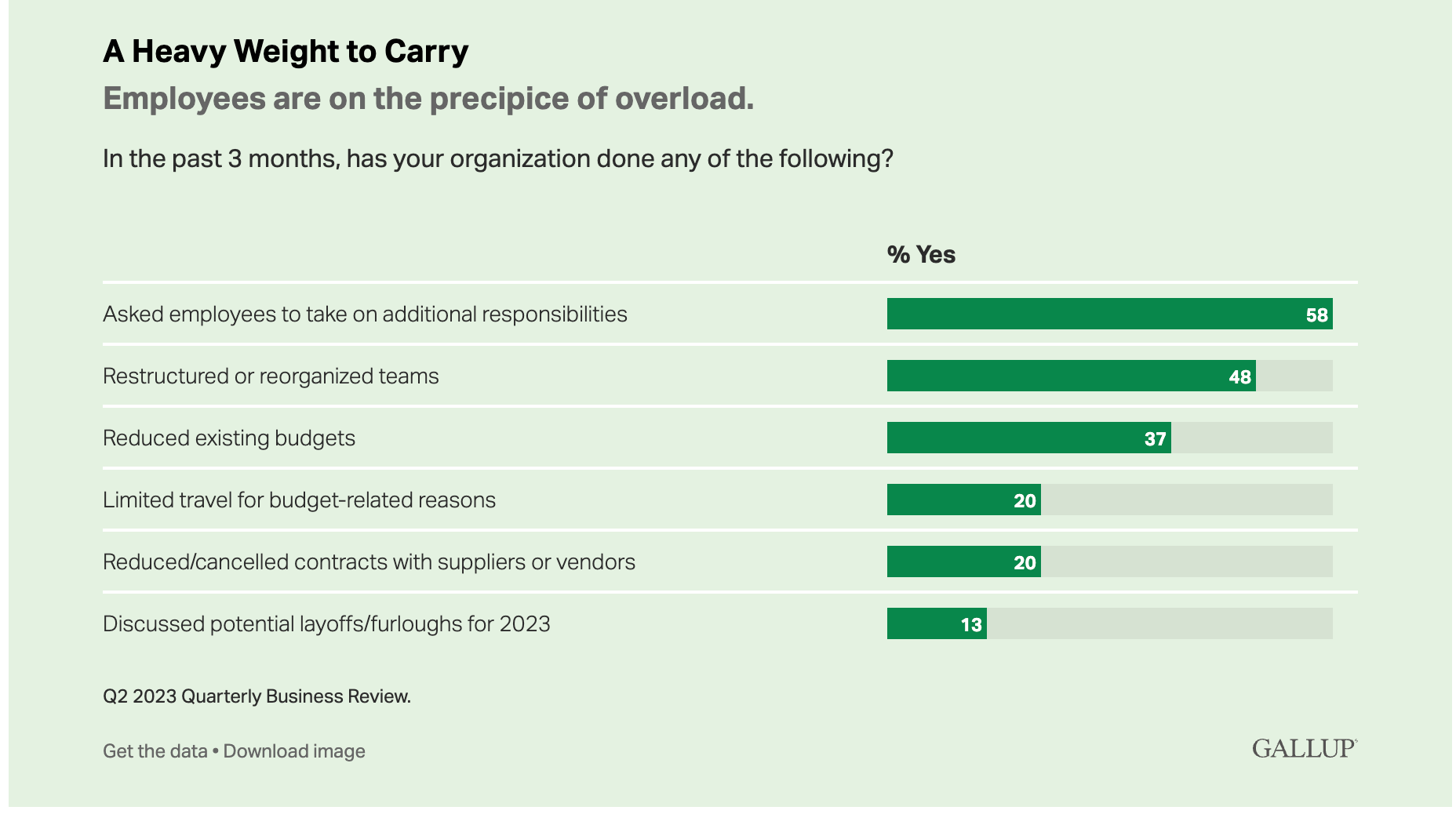
Fifty-eight percent of employees say their organization has asked workers to take on additional responsibilities, according to Gallup’s first-quarter survey of the U.S. workforce.
This comes in the middle of a tight labor market. Job openings remain high, and layoffs have fallen below 2019 levels, according to the BLS.1
The Busy Few
One consequence of a labor shortage is a higher demand for individual worker productivity. Employers look to their current workforce to fill the gaps of essential job openings that remain unfilled.
However, the risk is increased employee stress and burnout. When employees say that their organization has asked them to take on additional responsibilities, they are also:
- 2.5x as likely to feel burned out at work very often or always
- 55% more likely to watch for or actively seek a new job
- 39% less likely to be engaged at work
- half as likely to think their employer cares about their wellbeing
Feedback loop: Employers are in danger of overloading their people, leading to increased sick days, disgruntled employees and departures, making their workforce problems even worse than before.
Fit New Work to Individual Strengths and Aspirations
The current labor shortage is unlikely to change anytime soon.
- Forty-eight percent of senior leaders and team managers say that their organization is hiring new people and expanding the size of their workforce.
- Forty-four percent of Fortune 500 CHROs agree.
In order to grow, employers need to increase the productivity of their people — without burning them out or driving them to competitors. That means maximizing human potential in sustainable ways.
Keep this in mind: New responsibilities can supercharge career development, if communicated clearly and structured carefully. When possible, roles and responsibilities should be customized to match individual talents to organizational needs. Team leaders should assign new work with an eye toward individual strengths. When people have the chance to do things they are naturally good at, they are less stressed, even as they accomplish more.